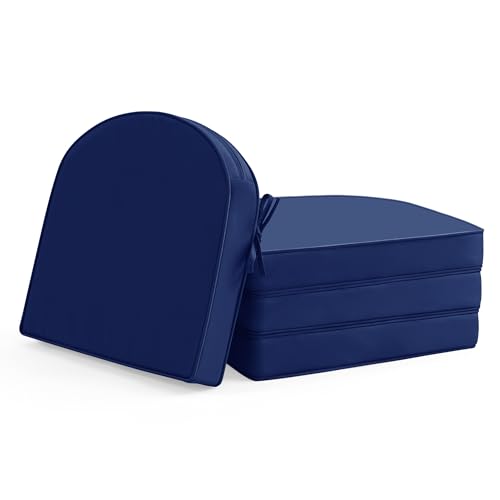
Outdoor Chair Cushions for Wrought Iron Chairs: The Complete Buying Guide
Wrought iron chairs are built to last, but their hard metal seats need the right cushion to become comfortable. This guide explains sizing, tie systems, fabric choices, fill types, and maintenance so you can pick cushions that fit properly and stay put in real outdoor conditions.
Why this guide matters: If you already own wrought iron patio chairs, you have probably noticed that generic cushions slide, bunch up, or wear out quickly. Wrought iron frames have specific seat dimensions and thin metal bars that behave differently from wood or wicker. The information below is organized to help you measure accurately, understand which cushion constructions work best on metal frames, and match fabric performance to your local climate.
Wrought iron furniture has a long history in gardens and porches because the material is strong, stable, and visually elegant. The trade-off is that bare metal seats and backs are unforgiving during long dinners or lazy afternoons. A well-chosen cushion solves that problem, but only if it is sized correctly and built for outdoor exposure. Before ordering, it helps to review general outdoor chair cushion sets to understand how cushions are commonly bundled and described, then narrow down to the styles designed for metal frames.
This page covers the practical decisions that matter: measuring your chair, choosing between seat-only and high-back cushions, understanding tie and grip systems, comparing fabric and fill options, and setting up a realistic care routine. It also includes a tier-based comparison table so you can evaluate options by construction quality rather than relying on guesswork. If your chairs are part of a larger seating arrangement, you may also want to look at metal chairs with cushions to see how cushions are paired with metal frames in complete sets.
Why Wrought Iron Chairs Need Specific Cushions
Wrought iron chairs are not a single standardized product. They range from slender bistro chairs with round seats to wide dining chairs with curved backs and armrests. That variety creates three practical challenges for cushion selection:
- Thin metal bars and open frames: Many wrought iron seats are made of slats or a grid rather than a solid panel. A cushion without enough structure can sag between the bars, which makes the seat feel uneven and accelerates foam breakdown.
- Smooth, hard surfaces: Metal offers very little friction. Without ties or a grip backing, cushions slide forward every time someone sits down or stands up.
- Curved backs and arms: Decorative scrollwork and curved backrests can interfere with a cushion that is too thick or too tall. A high-back cushion needs to sit inside the frame, not push against it.
The solution is a cushion that combines accurate dimensions, a firm enough fill to bridge open frames, and a secure attachment method. Cushions built for wood or wicker do not always address these issues, which is why it is worth looking specifically at products described for metal seating. The same logic applies when comparing waterproof outdoor chair cushions — the waterproofing matters, but fit and attachment matter just as much.
How to Measure Your Wrought Iron Chair Correctly
Measurement is the single most important step. A cushion that is one or two inches off can look untidy, slide around, or leave pressure points. Use a flexible tape measure and record each dimension in inches.
- Seat width: Measure the widest point of the seat surface from left to right, inside the arms if the chair has them. If the seat tapers, measure both the front and back edges and note the narrower figure.
- Seat depth: Measure from the front edge of the seat to the point where the backrest begins. Do not include the backrest itself.
- Seat corner radius: If the seat has rounded corners, note the approximate curve. Square cushions on rounded seats leave gaps; rounded cushions on square seats can overhang.
- Back height (for high-back cushions): Measure from the seat surface up to the highest point you want the cushion to reach, usually just below the top rail of the backrest.
- Back width at the top: Curved backrests are often narrower at the top than at the seat. Measure across the backrest at the height where the cushion will sit.
- Clearance for ties: Confirm that the frame bars where ties will wrap are accessible and not blocked by decorative scrollwork.
Measurement tip: Write down your chair's dimensions and keep them with your order confirmation. If you later add a second set of cushions for a different season or a different chair model, you will have a reliable reference instead of re-measuring from scratch.
Standard wrought iron dining chairs commonly accept seat cushions around 16 to 20 inches wide and 16 to 18 inches deep, but this is only a starting point. Bistro chairs and accent chairs often use smaller rounds or squares. High-back cushions for metal dining chairs typically add a back panel of 18 to 24 inches in height. If you are outfitting several chairs at once, sets such as high-back patio chair cushions in a set of four can simplify matching, provided the dimensions align with your frames.
Seat-Only vs. High-Back Cushions: Which Fits Your Chair?
The two main formats serve different needs. Choosing between them depends on the chair's backrest design and how you use the furniture.
Seat-Only Cushions
A seat-only cushion covers just the sitting surface. It is the simpler option and works well when the chair's backrest is already comfortable, decorative, or shaped in a way that a back panel would obscure. Seat-only cushions are easier to remove, dry, and store, and they tend to fit a wider range of chair designs because there is no back panel to align.
On wrought iron chairs, seat-only cushions benefit from a firm fill that bridges slatted seats. A thin, soft cushion on an open metal grid will compress into the gaps and feel lumpy. Look for a cushion with a denser core or a built-in base layer that distributes weight across the frame.
High-Back Cushions
A high-back cushion combines a seat pad with an attached or separate back panel. This is the better choice when the wrought iron backrest is uncomfortable, especially on dining chairs where people lean back for long meals. High-back designs also create a more upholstered look and can soften the visual hardness of decorative metal scrollwork.
The trade-off is fit complexity. The back panel must match the height and width of your chair's backrest, and the hinge or seam between seat and back must align with the seat-to-back transition. If your chair has a pronounced curve or an ornate top rail, measure carefully and favor adjustable or separate back panels over one-piece designs. For larger dining arrangements, high-back patio chair cushions in a set of six can be a practical way to keep a matching look across the table.
Tie Systems and Grip: Keeping Cushions in Place
Movement is the most common complaint about cushions on metal chairs. Wrought iron frames are smooth and often slatted, so a cushion without a positive attachment will creep forward or sideways. There are three main attachment approaches, and the best products combine at least two.
- Corner ties: Fabric ties at each corner wrap around the chair frame and knot or loop closed. This is the classic solution for wrought iron chairs because the open frame gives ties something to grip. Look for ties that are stitched into a reinforced seam rather than tacked on, and check that the tie length is enough to wrap around thicker frame bars.
- Non-slip backing: A textured or silicone-dotted underside adds friction against the metal seat. This works best on solid or closely slatted seats and is a useful backup when ties are present but not perfectly tight.
- Rear straps or elastic loops: Some high-back cushions use a strap that runs behind the backrest to hold the back panel upright. This is helpful on chairs with open scrollwork where a conventional tie has nothing to anchor to.
In practice, four corner ties plus a grip backing is the most reliable combination for wrought iron dining chairs. If your chair has arms, confirm that the side ties can pass between the arm and the seat without pinching. For chairs without arms, rear ties are especially important because there is no arm to block forward sliding.
Fabric Choices for Outdoor Cushions on Metal Chairs
Fabric determines how a cushion looks after a season of sun, rain, and use. The three most common outdoor fabric families each have distinct strengths.
Solution-Dyed Acrylic
Solution-dyed acrylic is the benchmark for outdoor upholstery. The color is added to the fiber before it is spun, so it resists fading far better than surface-dyed fabrics. It is soft to the touch, breathable, and available in a wide range of solids and patterns. It is water-resistant rather than fully waterproof, so it handles light rain and morning dew but should not be left out in a downpour. This is the usual choice for premium and luxury tier cushions.
Olefin (Polypropylene)
Olefin is a synthetic fiber that is naturally resistant to moisture, mildew, and stains. It is durable and holds color well, though it can feel slightly less soft than acrylic. Olefin is common in mid-range and premium outdoor cushions and performs well in humid climates. It is a solid choice for chairs that see frequent use and occasional wet weather.
Polyester Blends
Polyester blends are widely used in entry-level and mid-range cushions. They offer good color retention and a smooth hand feel, but standard polyester is less fade-resistant than solution-dyed acrylic over multiple seasons. Higher-grade polyester with a water-repellent finish can perform well for casual use, especially if cushions are brought inside during bad weather.
Beyond the fiber, check the cover construction. Reinforced seams, double-stitched edges, and a hidden zipper for cover removal all extend useful life. A zippered cover lets you wash the fabric separately and replace foam if it compresses over time. If you are comparing a range of options, browsing outdoor chair cushions in a set of four is a useful way to see how fabric descriptions and construction details are presented across products.
Comparing Cushion Tiers by Construction Quality
Because outdoor cushions vary enormously in construction, it helps to group them into tiers based on materials and build quality rather than any single specification. The table below summarizes what each tier typically delivers. Use it as a decision framework, not as a substitute for reading individual product details.
| Tier | Typical Fabric | Fill & Construction | Attachment | Best For |
|---|---|---|---|---|
| Entry-Level | Polyester blend, basic water-repellent finish | Single foam layer, stitched closed, no removable cover | Two or four basic ties | Occasional use, covered porches, seasonal setups |
| Mid-Range | Olefin or higher-grade polyester, fade-resistant | Foam core with fiber wrap, reinforced seams, some zippered covers | Four corner ties plus non-slip backing | Regular family dining, mixed sun and shade |
| Premium | Solution-dyed acrylic or performance olefin | High-density foam, wrapped core, removable zippered cover | Four ties, grip backing, rear strap on high-back models | Full-sun patios, daily use, humid climates |
| Luxury | Designer solution-dyed acrylic, stain-resistant finish | Layered foam and fiber, tailored seams, replaceable inserts | Reinforced ties, silicone grip, adjustable rear straps | Design-focused outdoor rooms, long-term installations |
A mid-range cushion with a firm core and four well-stitched ties often outperforms a premium cushion that is the wrong size. Prioritize fit and attachment first, then move up in fabric quality as your exposure and usage increase. If your chairs sit in direct sun for most of the day, the jump from mid-range to premium fabric is usually the most meaningful upgrade.
Advantages and Limitations of Cushions on Wrought Iron Chairs
Advantages
- Transforms hard metal seating into comfortable dining and lounging chairs
- Protects clothing from hot or cold metal surfaces
- Adds color and softness that balances ornate ironwork
- Removable cushions make seasonal storage straightforward
- Replaceable covers and inserts extend the usable life of the chair
Limitations
- Poorly sized cushions slide or bunch on smooth metal seats
- Open slatted seats can cause thin foam to sag
- Constant sun exposure fades lower-grade fabrics
- Cushions left out in rain take time to dry fully
- Ornate scrollwork can interfere with ties and back panels
Most limitations are manageable with the right product and routine. Ties and grip backing solve movement, a firmer fill solves sagging, and a simple storage habit solves weather damage. If you prefer the look of metal without cushions for part of the year, a cushionless outdoor furniture setup can be a useful reference for styling, but for wrought iron dining chairs the comfort difference is significant enough that most people keep cushions on for the full season.
Care and Maintenance for Long-Term Performance
Outdoor cushions last longer when they are cleaned before dirt becomes embedded and dried thoroughly after rain. A simple routine works for most fabric types.
- Brush weekly: Remove leaves, pollen, and grit with a soft brush. Grit works into seams and abrades fibers over time.
- Spot clean promptly: Use mild soap and lukewarm water with a soft cloth. Rinse with clean water and blot excess moisture. Avoid harsh detergents on solution-dyed acrylic unless the manufacturer specifies otherwise.
- Air dry upright: Stand cushions on edge so water drains away from the foam core. Laying them flat traps moisture against the fabric and slows drying.
- Store during off-season: Bring cushions indoors or into a dry, ventilated storage container during winter or extended rainy periods. A breathable cover is better than a sealed plastic bag, which can trap condensation.
- Check ties and seams: Inspect attachment points at the start of each season. Re-stitch or reinforce loose ties before they tear through the cushion edge.
If your cushions are part of a broader patio setup, the same care principles apply to other fabric items such as umbrellas and furniture covers. For a deeper routine, you can compare approaches used for outdoor chair cushions offered in clearance assortments, where care instructions are often the main difference between a short-lived purchase and a durable one.
Common Mistakes to Avoid When Buying
- Ordering by chair type instead of measuring: Two wrought iron chairs that look similar can differ by two inches in seat depth. Always measure the actual chair.
- Choosing a cushion that is too thick for the frame: A very thick cushion can push the user forward on a curved metal back, making the chair less comfortable rather than more.
- Ignoring the seat surface: A soft cushion on a slatted seat will sag into the gaps. Choose a firmer core for open frames.
- Overlooking tie length: Ties that are too short cannot wrap around thicker frame bars. Check the stated tie length or product photos showing the ties in use.
- Assuming water-resistant means waterproof: Most outdoor cushions resist moisture but are not designed for standing water. Plan to bring them in during heavy storms.
Avoiding these mistakes is mostly a matter of slowing down at the measurement and product-detail stage. A few minutes with a tape measure and a close read of the construction description will prevent most returns and disappointments.
Frequently Asked Questions
What size cushions fit standard wrought iron chairs?
Most wrought iron dining chairs accept seat cushions in the range of 16 to 20 inches wide and 16 to 18 inches deep. High-back styles add a back panel that usually measures 18 to 24 inches tall. Always measure your specific chair before ordering because wrought iron frames vary widely between manufacturers and decorative designs.
How do I keep cushions from sliding on wrought iron chairs?
Look for cushions with four corner ties, a non-slip silicone backing, or both. Corner ties wrap around the iron frame and hold the cushion in place, while a textured underside adds grip on smooth metal seats. On chairs with arms, confirm that the side ties can pass between the arm and the seat without pinching.
Are outdoor cushions for wrought iron chairs waterproof?
Many cushions are water-resistant rather than fully waterproof. Solution-dyed acrylic and olefin covers resist moisture and fading, and a polyurethane or silicone backing blocks water from reaching the foam core. For full rain protection, choose cushions labeled water-resistant and bring them inside during heavy storms. If you are specifically comparing wet-weather options, this overview of waterproof outdoor chair cushion sets explains how the construction differs.
Can I leave cushions outside all year?
It is not recommended. Even weather-resistant fabrics degrade faster under constant sun, rain, and temperature swings. Bring cushions indoors or store them in a dry, ventilated container during off-season months and heavy weather. This is especially important in climates with freezing winters or prolonged rainy seasons.
How do I clean cushions for wrought iron chairs?
Brush off loose dirt, then spot clean with mild soap and lukewarm water using a soft cloth. Rinse thoroughly and air dry standing upright so water drains away from the foam core. Avoid harsh bleach on solution-dyed fabrics unless the manufacturer explicitly allows it. For a broader set of maintenance habits, see the care guidance for replacement cushions for outdoor furniture, which follows the same fabric-care principles.
Ready to Make Your Wrought Iron Chairs Comfortable?
Start with accurate measurements, then match the cushion format and fabric to how your chairs are actually used. The recommended products below are selected for the dimensions and attachment features that work best on metal frames.
View Recommended Cushions