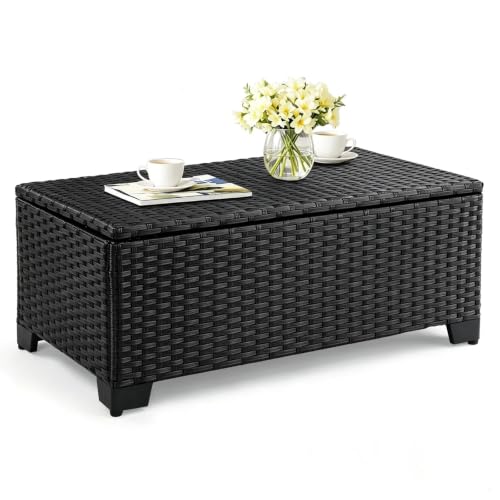
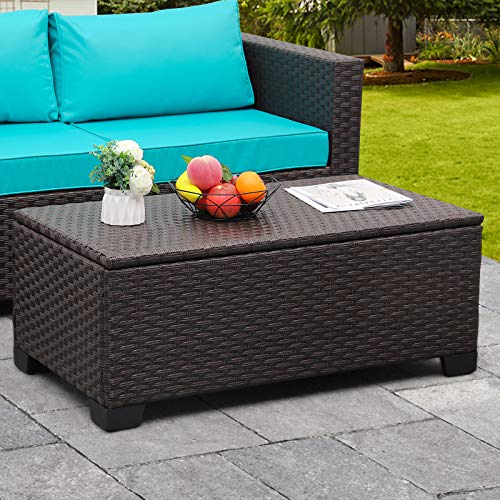
Outdoor Coffee Table with Cushion Storage: Complete Buying Guide
Turn a cluttered patio into a tidy retreat. Learn how to choose a storage coffee table that protects your cushions, fits your seating layout, and survives the seasons.
Explore Recommended OptionsWhy this guide matters: A storage coffee table solves two patio problems at once — a central surface for drinks and a dry home for folded cushions. The right model keeps moisture out, matches your sofa height, and stays functional year after year. The wrong one traps damp air and warps within a season. Below we break down exactly what separates the two.
What Is an Outdoor Coffee Table with Cushion Storage?
An outdoor coffee table with cushion storage is a low, central patio table with a hinged or removable lid that opens to a sealed compartment. That compartment is sized to hold folded seat and back cushions when the weather turns or when you want a cleaner look. It sits at coffee-table height — typically between 12 and 18 inches — so it pairs naturally with deep-seat sofas and sectionals.
The concept sounds simple, but the engineering behind a good one is not. The lid must shed rain, the interior must breathe enough to prevent mold, the hinge must survive UV exposure, and the whole unit must stay rigid when someone leans on it. Buyers in the research stage should focus on three pillars: material durability, storage sealing, and dimensional fit. Get those right and the table becomes a long-term investment. Get them wrong and it becomes a rusted box with a wobbly top.
Why Buy a Storage Coffee Table Instead of a Separate Deck Box?
Many homeowners start by pairing a plain coffee table with a plastic deck box in the corner. That works, but it fragments the space. A combined unit offers distinct advantages:
- Space efficiency: One footprint instead of two. On a compact balcony or a narrow deck, that reclaimed floor area matters.
- Visual coherence: A single piece of furniture reads cleaner than a table plus an unrelated storage bin. Design-conscious buyers notice this immediately.
- Convenience: Cushions are stored exactly where you sit. No walking to a shed, no lifting a heavy lid across the patio.
- Cushion lifespan: Cushions that live indoors or in a dry compartment last dramatically longer than those left out in sun and rain. This is the quiet benefit most buyers underestimate.
If your priority is pure storage volume, a dedicated deck box still wins. But if you want a tidy, unified seating zone, the integrated approach is the better long-term fit. If you are still mapping out your seating area, our guide to outdoor coffee tables covers the full category and helps you compare styles.
Key Features That Separate Good From Great
Not all storage tables are built to the same standard. When you compare models, weigh these features carefully.
1. Material and Finish
The frame material determines how the table ages. Powder-coated aluminum resists rust and stays light enough to reposition. High-density polyethylene (HDPE) — often sold as poly lumber — is impervious to moisture and UV, making it a favorite for coastal climates. Sealed teak and acacia offer warmth but demand annual oiling. Steel is strong but only worth considering when the coating is explicitly rated as rust-proof.
Look at the hardware too. Stainless-steel hinges and screws outlast zinc-plated ones by years in humid conditions. A storage table is only as good as its weakest fastener.
2. Lid Sealing and Drainage
This is the single most important feature. A gasketed lid with a slight overhang sheds water away from the interior. Some designs add ventilation slots or a raised interior floor so condensation drains away from cushions. Avoid tables where the lid sits flush with no seal — those are essentially open boxes with a decorative cover. For buyers in rainy regions, sealing quality should outweigh every other consideration.
3. Hinge and Lift Mechanism
A soft-close hinge prevents the lid from slamming on fingers and reduces wear over time. Gas-strut lifts are a premium feature that holds the lid open while you load cushions — genuinely useful when both hands are full. Entry-level models often use simple piano hinges; these work but require gentler handling.
4. Interior Dimensions
Measure your folded cushions before you shop. A compartment that is deep enough but too narrow forces awkward stacking. As a rule of thumb, allow at least two inches of clearance on every side of the folded cushion stack so air can circulate. Interior height matters most: cushions compress, but they do not shrink.
5. Load Rating and Structural Rigidity
Every storage table should comfortably hold drinks, trays, and a book. Only some are rated for seating. If you want a table you can also perch on, confirm the manufacturer lists a seating load rating. Do not assume — a hollow storage box can buckle under concentrated weight even when the top panel looks thick.
Comparing Storage Coffee Table Tiers
Use this tier framework to orient your search. Each tier reflects market positioning and build quality — not a specific figure.
| Tier | Typical Materials | Sealing & Hardware | Best For |
|---|---|---|---|
| Entry-level | Resin, basic steel with powder coat | Simple lid, standard hinges, limited gasketing | Covered porches, seasonal use, first patio setup |
| Mid-range | Powder-coated aluminum, HDPE | Gasketed lid, soft-close hinges, drainage channels | Year-round use in mixed climates, family patios |
| Premium | Sealed teak, marine-grade aluminum | Gas-strut lift, full perimeter seal, stainless hardware | Coastal homes, exposed decks, design-focused spaces |
| Luxury | Solid hardwood, custom finishes | Precision-fitted lid, concealed ventilation, rated seating load | Custom outdoor living rooms, high-exposure sites |
A mid-range model usually delivers the best balance for most homeowners — the sealing and hinge upgrades over entry-level are the features you actually feel day to day. Premium tiers make sense when the table sits fully exposed to salt air or heavy rain.
Sizing and Placement: Getting the Fit Right
A coffee table that is too tall blocks sightlines; one that is too low feels disconnected from the sofa. The general guideline is to keep the table top within one to two inches of the seat cushion height. For most deep-seat sofas, that means a table height between 12 and 18 inches.
Length matters as much as height. A table should span roughly two-thirds of the sofa's width to anchor the seating group without crowding walkways. Leave at least 14 inches between the table edge and the sofa front so people can move in and out comfortably.
Think about the lid swing as well. A hinged lid needs clearance behind the table, which can conflict with a sofa back or a wall. Removable-lid designs avoid this problem but are heavier to lift. If your layout is tight, a side-opening or split-lid design may be the smarter choice. For compact spaces, our roundup of small outdoor tables explores options that keep circulation open.
Placement Ideas That Work
- Sectional anchor: Center the table in front of the long side of an L-shaped sectional. This is the classic layout and the easiest to get right.
- Conversation pairing: Between two facing sofas, choose a rectangular table that mirrors the gap. Avoid round tables here — they waste space at the ends.
- Balcony corner: A small square storage table tucked into a corner frees up the center for foot traffic while still holding two cushions.
- Fire pit companion: Position a storage table just outside the heat radius of a fire pit so cushions stay cool and dry. Our guide to coffee tables with storage compares weatherproof options for exposed placements.
Maintenance: Keeping the Storage Dry and the Table Solid
Storage tables fail in one of two ways: water gets in, or the finish breaks down. Both are preventable with a simple routine.
- Dry cushions before storing: This is non-negotiable. Even a slightly damp cushion trapped in a sealed compartment invites mildew within days.
- Air the compartment monthly: Open the lid on a dry day and let it breathe for a few hours. This releases any condensation that built up.
- Use desiccant packs: Rechargeable silica packs absorb residual humidity. Replace or recharge them seasonally.
- Clean the seal: Wipe the gasket with mild soap and water. Dirt and grit degrade the seal and let water past.
- Inspect hardware: Tighten hinges and check for surface rust every few months. Catching it early prevents structural failure.
- Cover in extreme weather: A fitted cover protects the finish during long off-seasons. Our waterproof storage table guide covers covers and sealing in more depth.
Pre-Purchase Checklist
- Measure sofa seat height and match table height within 1–2 inches.
- Fold your thickest cushion and record the stack dimensions.
- Confirm the compartment offers at least 2 inches of clearance around the stack.
- Verify the lid has a gasket or overlapping lip for rain shedding.
- Check whether the hardware is stainless or rust-proof coated.
- Decide if you need a lid that opens against a wall — if so, choose a removable or split lid.
- Confirm the load rating if you plan to sit on it.
- Review the warranty terms for finish and hardware separately.
Ready to compare models? Browse hand-picked storage coffee tables that balance sealing, durability, and design.
View Recommended Products