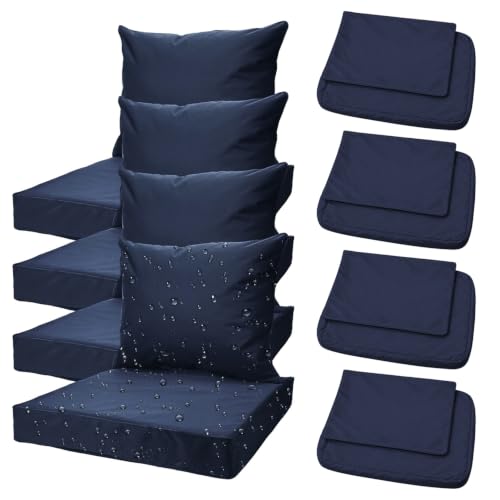
Outdoor Deep Seating Replacement Cushion Covers
Bring tired patio sofas, sectionals, and lounge chairs back to life with covers that fit properly, resist the elements, and feel comfortable season after season.
Explore the Buying GuideWhy replacement covers make sense: Deep seating frames are built to last, but their cushions are the first component to fade, flatten, or stain. Instead of replacing an entire set, a well-chosen set of replacement covers restores comfort and appearance while keeping the original structure in service. This guide walks through the measurements, materials, and construction details that separate a cover that lasts from one that disappoints within a season.
What Makes Deep Seating Cushions Different
Deep seating refers to patio furniture with a seat depth of roughly 24 to 30 inches, compared with 18 to 22 inches on conventional dining chairs. The extra depth allows a relaxed, reclined posture, which is why deep seating sofas, sectionals, and outdoor conversation sets feel closer to indoor living room furniture than to traditional patio seating.
Because the cushions are thicker and larger, replacement covers must account for three dimensions rather than two: seat depth, seat width, and cushion thickness. A cover sized for a standard patio chair will not stretch across a deep seat pad, and forcing it accelerates seam failure and zipper breakage. Accurate measurement is the single most important step in the entire buying process.
Most deep seating arrangements use two distinct cover types: a seat cushion cover, which is typically box-shaped with a zipper along one edge, and a back cushion cover, which may be thinner, tapered, or filled with a softer material. Some sets also include bolster or corner wedge cushions. Buy covers for each type separately rather than assuming a single universal size will fit every piece.
Anatomy of a Quality Replacement Cover
Understanding construction helps you judge a cover before it arrives. Four components matter most:
- Outer fabric: Solution-dyed acrylic and high-grade polyester are the two dominant choices. Solution-dyed fibers hold color through the core rather than on the surface, so they resist fading under prolonged sun exposure far better than surface-dyed alternatives.
- Seam construction: Double-stitched or reinforced seams reduce the chance of splitting at stress points. Look for bound edges, which add structure and slow fraying.
- Closure system: Hidden zippers with corrosion-resistant pulls are standard on mid-range and premium covers. A zipper that runs the full length of one side makes inserting a thick pad considerably easier.
- Filling compatibility: Many replacement covers are sold as covers only, while others ship with inserts. Confirm which you are ordering, because a cover designed for a 5-inch pad will look loose over a 7-inch insert.
If your current inserts are still supportive but the fabric has worn through, cover-only products are the efficient path. If the foam has flattened or crumbled, plan to replace both the insert and the cover so the finished cushion sits correctly.
How to Measure for a Precise Fit
Measure your existing cushion, not the furniture frame. Lay the cushion flat on a hard surface and record the following:
- Width: the shorter horizontal edge of the seat pad, measured seam to seam.
- Depth: the longer horizontal edge running front to back.
- Thickness: the vertical height at the center of the cushion, not at a compressed corner.
- Back cushion height and width: measure from the bottom seam to the top seam, then across the widest point.
Add roughly one inch of tolerance in each direction when comparing to a cover's listed dimensions. A cover that matches your cushion exactly can be difficult to install and may strain at the corners. Covers that are too large will bunch and trap water in the folds.
For curved or sectional arrangements, it helps to confirm whether the original cushions were shaped to follow the frame. Dedicated replacement cushions for curved sectionals are cut to match the arc, while generic covers will leave visible gaps at the inner curve.
Fabric and Weather Resistance
Outdoor covers live under UV radiation, rain, humidity, and temperature swings. The fabric choice determines how the cover ages. The three families below cover the majority of the market:
| Tier | Typical Fabric | Best For |
|---|---|---|
| Entry-level | Polyester blends with a water-repellent finish | Covered porches and patios with limited direct sun |
| Mid-range | Solution-dyed acrylic or high-grade polyester | Most open patios and decks with regular sun exposure |
| Premium | Solution-dyed acrylic with reinforced backing and mold-resistant treatment | Full-sun exposure, coastal climates, and year-round use |
Water repellency and waterproofing are not the same thing. A water-repellent finish causes droplets to bead and roll off, but seams and zippers remain permeable. Fully waterproof covers rely on a laminated backing or welded seams, which reduce breathability. On an outdoor sofa, breathability matters because trapped moisture encourages mildew inside the cushion.
If your furniture sits in an area that receives heavy, sustained rain, consider waterproof cushion covers paired with a breathable insert or a quick-dry foam core. For a broader comparison of filler and fabric combinations, the outdoor cushion guide covers how different materials behave over time.
Buying Factors That Actually Matter
Once sizing and fabric are settled, the remaining decisions are about fit, maintenance, and how the covers will integrate with the rest of your setup.
| Factor | What to Look For | Why It Matters |
|---|---|---|
| Zipper access | Full-length or three-sided zipper with a metal pull | Makes installation and removal for washing far easier |
| Seam reinforcement | Double stitching and bound edges | Prevents splitting at corners where stress concentrates |
| Tie attachments | Fabric ties or elastic loops at the rear edge | Keeps covers anchored to the frame on windy days |
| Colorfastness | Solution-dyed fibers with a UV rating | Limits fading and uneven color change across the set |
| Care instructions | Machine-washable or spot-clean guidance | Determines how practical long-term upkeep will be |
Pay attention to whether the cover is designed for a specific furniture system. Covers cut for one brand's deep seating module often have offset zipper placement or a different corner radius. When in doubt, compare the listed dimensions against your own measurements rather than relying on a brand name match.
Installing Replacement Covers Correctly
Installation is straightforward but a rushed job shortens the cover's life. A few habits make a measurable difference:
- Let new covers relax in the sun for an hour before fitting. Wrinkles from packaging usually smooth out on their own.
- Insert the cushion with the zipper open, working the corners in first and the center last.
- Close the zipper slowly and check that fabric is not caught in the teeth before pulling it fully shut.
- Smooth the cover from the center outward, then secure any ties or loops to the frame.
If a cover feels excessively tight, confirm the insert thickness against the cover's stated capacity before forcing the zipper. A strained zipper is the most common failure point on replacement covers.
Care and Seasonal Maintenance
Routine care extends the usable life of replacement covers and protects the cushions underneath.
- Routine cleaning: Brush off loose debris, then rinse with a mild soap solution and a soft brush. Avoid abrasive pads, which dull solution-dyed fabric.
- Drying: Stand cushions on edge so air circulates through both faces. Avoid leaving them flat on a damp surface.
- Storage: In off-season months, clean and fully dry covers before storing them in a breathable container. Sealed plastic traps residual moisture.
- Bird droppings and tree sap: Address these promptly; prolonged contact can stain even colorfast fabrics.
Storing cushions in a dedicated container reduces exposure to dirt and damp. An outdoor cushion storage box keeps covers and inserts organized between uses, and pairing it with a cushion storage solution suited to your available space prevents the pile-up that leads to creasing.
Matching Covers to Your Furniture Type
Deep seating covers are not interchangeable across all frame styles. The correct cover depends on the shape and filling of the original cushion.
- Standard deep seating sofas and loveseats: Rectangular seat pads with a matching back cushion are the most common configuration. Measure each piece individually, since the seat and back may differ in thickness.
- Sectionals and curved arrangements: Corner and wedge pieces need covers cut to the correct angle. Generic rectangular covers will buckle at the inner curve.
- Deep seating with thinner back cushions: Back covers are often less thick than seat covers. Using a seat cover on a back cushion produces a baggy fit that collects water.
- Mixed-material frames: Wicker and rattan frames sometimes use cushions with slightly different dimensions than metal or wood frames of similar width. Measure the existing pad rather than the frame opening.
If your set includes multiple seating pieces, a coordinated set of covers keeps the appearance consistent. Covers bought piecemeal over time often show subtle color variation between production runs.
Frequently Asked Questions
Can I use replacement covers over my existing cushions?
Yes, provided the existing cushions are still supportive and the cover's dimensions account for their thickness. Covers are designed to slip over a pad, not to replace one. If the foam has lost its resilience, replace the insert as well so the cover sits flat and does not sag at the center.
How do I know if my furniture qualifies as deep seating?
Measure the seat depth from the front edge to the back of the seat platform. A depth of roughly 24 inches or more indicates deep seating. Standard patio dining chairs typically fall between 18 and 22 inches. If you are unsure, the measurement of your existing seat cushion is the reliable reference point.
Are replacement covers sold with the cushion inserts?
It depends on the product. Some listings include both cover and insert, while others sell the cover only. Confirm which configuration you are ordering before checkout. If the listing is cover-only, check the stated maximum insert thickness so your existing pad fits without straining the zipper.
How often should deep seating covers be replaced?
With routine cleaning and proper storage, a quality solution-dyed cover typically lasts several seasons before visible fading or seam wear appears. Covers left outdoors year-round without protection age faster. Replacing covers when seams begin to fray or the fabric feels brittle is more effective than waiting for a full failure.
Can replacement covers be machine washed?
Many are machine-washable on a gentle cycle with mild detergent, but always follow the manufacturer's care label. Avoid high heat in the dryer, which can shrink fabric and degrade water-repellent finishes. Air drying flat or on edge preserves the fit best.
Will new covers match the color of my original set?
Exact color matching across production runs is not guaranteed, especially if the original set is several seasons old and has faded. For a coordinated look, replace all covers in the set at the same time rather than mixing old and new pieces.
Replacement covers are one of the most efficient ways to extend the life of deep seating furniture. Focus on accurate measurements, a fabric suited to your exposure level, and construction details like reinforced seams and reliable zippers.
With those three elements confirmed, you can restore comfort and appearance without replacing the frame.