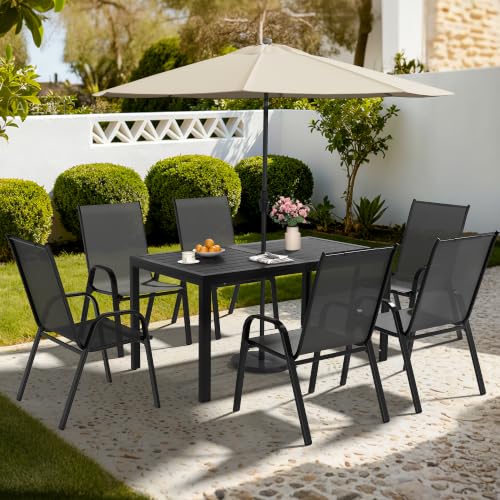
Outdoor Patio Table with Umbrella and Chairs
Everything you need to choose a shaded dining set that fits your space, stands up to the weather, and makes outdoor meals effortless.
START THE GUIDEAn outdoor patio table with umbrella and chairs is the anchor of a functional backyard dining area. It combines three decisions that affect one another: table dimensions, canopy coverage, and chair comfort. Get the proportions right and the set feels natural, inviting, and easy to move around. Get them wrong and the same set feels cramped, wobbly, or unusable on a breezy afternoon. This guide walks through the practical details — sizing, materials, umbrella mechanics, and placement — so you can narrow your options with confidence before you shop.
Quick orientation: If you are still comparing broader furniture categories, start with the outdoor patio table and chairs overview. If shade is the priority and you want a dedicated hole built into the tabletop, the patio table and chairs with umbrella hole guide covers the structural trade-offs in more detail.
How to Choose the Right Set
The most common mistake is choosing chairs first and the table second. Work in the opposite direction: measure the available footprint, decide how many people need to sit comfortably, then select a table shape that supports that number without blocking walkways. The umbrella follows from the table — its span should cover the seating zone, not just the tabletop.
Measure the footprint first
- Clear walking path: leave at least 24 inches between the table edge and walls, railings, or planters so chairs can pull out without scraping.
- Chair pull-out zone: add another 12 to 18 inches behind each chair for comfortable sitting and standing.
- Umbrella clearance: confirm the canopy does not collide with roof overhangs, pergola beams, or hanging lights.
- Door swing: check that patio doors and gates open fully without hitting the table or chairs.
Match the shape to the space
Round tables
Best for compact decks and square patios. A round table with a centered umbrella spreads shade evenly and lets everyone reach the middle without stretching. Four chairs fit comfortably around a 42- to 48-inch round top.
Rectangular tables
Suited to narrow patios and long porches. A 60- to 72-inch rectangle seats six when chairs are placed on the long sides. An offset or tilt umbrella works better here than a centered pole, which can crowd the middle seats.
Square tables
A practical middle ground for four-person dining. Square tops fit into corners neatly and pair well with a centered umbrella. They also work as game tables when the chairs are lightweight and easy to reposition.
Bar-height tables
Useful when you want standing conversation and a better view over railings. Bar-height sets need taller umbrellas and more careful wind management because the higher center of gravity increases tipping risk.
Tabletop and Frame Materials Compared
Outdoor dining sets live in sun, rain, and temperature swings, so material choice matters more than styling. The table below groups common options by tier so you can compare durability and maintenance without getting stuck on numbers.
| Material | Tier | Best For | Maintenance Notes |
|---|---|---|---|
| Powder-coated aluminum | Essential tier | Everyday dining, humid climates | Wipe clean; rust-resistant; lightweight enough to move seasonally |
| High-density polyethylene (HDPE) | Essential tier | Family patios, coastal areas | Soap-and-water cleaning; resists fading and moisture; no sealing required |
| Sealed acacia or teak | Balanced tier | Warmer natural look, covered patios | Re-oil once or twice a year; cover during prolonged wet spells |
| Tempered glass top with metal frame | Balanced tier | Compact balconies, modern styling | Easy to wipe; avoid sudden temperature shocks; use a cover in freezing weather |
| Cast aluminum with reinforced frame | High-end tier | Wind-prone areas, long-term use | Heavier build resists tipping; touch up minor finish chips to prevent corrosion |
| Commercial-grade extruded aluminum | Top-tier | High-traffic patios, hospitality-style setups | Minimal upkeep; welded joints and thicker gauge hold alignment over time |
A useful rule of thumb: entry-level aluminum and resin sets are well-specified for casual weekend use, while mid-range hardwood and cast aluminum options reward buyers who plan to leave the set outside year-round. Premium and top-tier frames are worthwhile investments when the set doubles as a daily dining table or sits in an exposed, windy spot. If you prefer a storage-friendly layout that keeps cushions and accessories out of the weather, pair your dining set with outdoor patio furniture with storage for cushions.
Umbrella Types and Shade Coverage
The umbrella is not an accessory — it determines how usable the table is at midday. Two specifications matter most: canopy span and base weight. A canopy should extend roughly 12 to 18 inches beyond the table edge on each side. A base should be heavy enough that the umbrella does not lean in a moderate breeze.
Center-pole umbrella
The classic choice for round and square tables with a built-in hole. It keeps the canopy centered over the table and uses no extra floor space, but the pole can interrupt conversation lines.
Offset cantilever umbrella
Moves the pole to the side, freeing the tabletop and covering a wider area. Best for rectangular tables and lounging zones; needs a heavy base and more clearance behind the set.
Tilt umbrella
Adjusts the canopy angle as the sun moves. Practical for morning-to-evening use, though the tilt mechanism adds a maintenance point that should be checked each season.
Wind management deserves its own plan. Close or lower the canopy when the set is unattended, choose a cross-braced base over a simple plate, and avoid placing the table on an exposed corner where gusts accelerate. For patios that need a permanent shade structure, a set with a dedicated umbrella hole pairs well with a weighted base and a cover for the off-season. Homeowners who want a single integrated shade solution often compare umbrella sets against a patio table and chairs with umbrella bundle, which simplifies compatibility between the pole diameter and the table opening.
Choosing Chairs That Fit the Table
Chair height and table height must match. Standard dining tables sit around 28 to 30 inches high and pair with chairs that have a seat height of 17 to 19 inches. Bar-height tables sit around 40 to 42 inches and require chairs with a seat height of 28 to 30 inches. Mixing the two creates knee clearance problems and an awkward reach to the tabletop.
- Armrest clearance: confirm chairs slide fully under the table edge; thick armrests can block the last few inches.
- Stackability: stackable chairs simplify seasonal storage and make it easy to clear the table for serving.
- Cushion attachment: look for ties or hook-and-loop straps so seat pads stay put in wind and rain.
- Weight and portability: lightweight resin chairs are easy to rearrange; cast aluminum chairs stay put in gusts but are harder to move.
Comfort is cumulative: a set that is slightly too tight encourages people to skip the patio and eat indoors. If your space is limited, a bar-height patio table and chairs arrangement can preserve floor area while still seating four. For a more relaxed lounge feel around the same table, consider swivel chairs with cushions that rotate toward the conversation rather than forcing diners to reposition.
Setup, Placement, and Seasonal Care
A well-placed set lasts longer and performs better. Position the table so the umbrella shade falls over the seating area during the hours you actually use the patio, not just at noon. On a west-facing deck, that may mean an offset umbrella rather than a centered pole. On a covered porch, a smaller canopy or no umbrella at all may be the better fit.
Stabilize the base
Set the umbrella base on a level surface and check it after heavy rain. Loose pavers and soft ground allow the base to shift, which stresses the pole and the table hole over time.
Protect the finish
Wipe spills promptly, rinse pollen and bird droppings with mild soapy water, and touch up chips on metal frames before corrosion starts. Wood tops benefit from a fresh coat of sealant before the wet season.
Manage wind
Use a cover or close the umbrella when the set is not in use. In gust-prone areas, choose a heavier frame and a base rated for the canopy span rather than relying on table weight alone.
Plan off-season storage
Stack chairs, fold or remove the canopy, and store cushions in a dry bin. A cover sized to the table and umbrella prevents standing water and leaf buildup that shorten the set's service life.
If your patio also serves as a lounging zone, coordinate the dining set with a patio set with a fire pit table so the two areas share materials and color tones. For narrow layouts, a high-top table and chairs setup can double as a serving station during gatherings. And if the dining set is part of a larger redesign, browse the broader outdoor patio furniture collection to keep scale and finish consistent across seating, dining, and shade pieces.
Final Pre-Purchase Checklist
- Measure the patio footprint and confirm a 24-inch walking path around the table.
- Decide seating count first, then choose a table shape that fits without crowding.
- Confirm chair seat height matches table height (standard or bar height).
- Check whether the table has an umbrella hole or whether a freestanding base is needed.
- Match canopy span to the seating zone, not just the tabletop.
- Choose a base rated for wind exposure in your area.
- Verify the frame material suits year-round outdoor conditions.
- Plan for off-season storage of cushions, canopy, and chairs.
Ready to Compare Options?
Use the checklist above to narrow your shortlist, then review the recommended sets below to see which configurations match your space and seating needs.
VIEW RECOMMENDED SETSFrequently Asked Questions
What size outdoor patio table with umbrella and chairs fits a small deck?
A round table measuring around 36 to 42 inches across with two to four chairs is the most efficient fit for a compact deck. Rectangular tables in the 48-inch range also work when placed along the longest side, leaving a clear walking path of at least 24 inches.
Do I need an umbrella hole in the table or a freestanding umbrella base?
An umbrella hole through the tabletop keeps the canopy centered and saves floor space, making it ideal for dining sets. A freestanding umbrella base offers more flexibility because the umbrella can be moved independently, but it requires dedicated floor area and a heavier weighted base for stability.
Which tabletop material holds up best in direct sun and rain?
Powder-coated aluminum, high-density polyethylene, and sealed teak or acacia all perform well outdoors. Aluminum and resin resist moisture and fading with minimal care, while sealed hardwood requires periodic re-oiling but delivers a warmer, more natural look. Tempered glass is easy to wipe down but should be paired with a protective cover in freezing conditions.
How do I keep an umbrella table set from tipping in wind?
Use a weighted base rated for your umbrella span, close the canopy during gusts, and avoid placing the set on an elevated or exposed corner. Cross-braced bases and half-umbrella designs are practical for narrow areas where full canopies catch too much wind.