Outdoor Sofa Furniture: The Complete Buyer's Guide
Everything you need to choose a patio sofa that fits your space, survives the seasons, and looks beautiful for years. From frame materials to cushion care, this guide turns research into confident decisions.
Jump to Buying ChecklistAn outdoor sofa is the anchor of any patio, deck, or balcony. It defines where conversation happens, where guests settle in, and how your outdoor room feels the moment you step outside. But choosing the right one is not simply a matter of picking a shape you like. Frame material, cushion construction, fabric grade, size, and maintenance all determine whether your sofa becomes a long-term investment or a seasonal regret.
This guide walks you through each decision in the order you will actually face it: how you plan to use the space, which materials match your climate, how to size the sofa correctly, and how to keep it looking its best. By the end, you will have a clear shortlist and the vocabulary to compare options confidently. If you are still exploring the broader category, our outdoor sofa hub covers the full range of styles and configurations.
Why an Outdoor Sofa Belongs in Your Plan
Patios with a sofa are used differently than patios with only dining furniture. A sofa invites lingering: morning coffee, evening conversation, a book in the shade. It turns an outdoor area into a room. That shift in use is why so many homeowners eventually add a sofa even after they have already bought a dining set.
A sofa also solves a practical problem. Individual chairs scatter and need rearranging every time guests arrive. A single sofa creates an instant conversation zone, and pairing it with a outdoor side table or two gives every seat a place for a drink. If you are building out the full space, the sofa is usually the piece that determines the layout of everything else.
Planning tip: Decide the sofa's position before buying anything else. Once the sofa is placed, the coffee table, rug, shade, and lighting all fall into a natural relationship with it.
Outdoor Sofa Styles and Configurations
Outdoor sofas come in several configurations, and the right one depends on how many people you host and how much space you have.
Two-Seat Loveseat
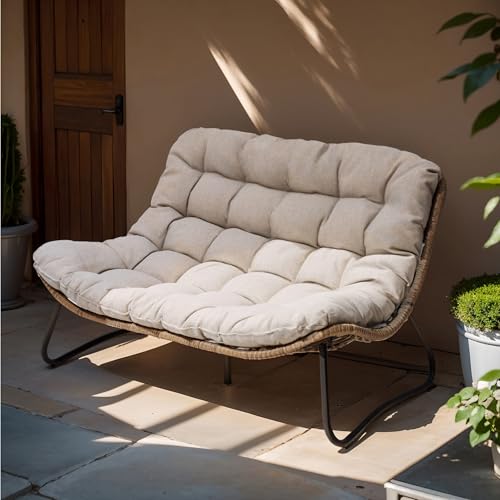
The compact option. A loveseat suits balconies, small decks, and patios where the sofa shares space with a dining set. It seats two adults comfortably and pairs naturally with a pair of outdoor swivel chairs to create a complete conversation circle.
Three-Seat Sofa
The most common choice for family patios. A standard three-seat sofa accommodates three adults and anchors a coffee table and rug setup. If your patio can only hold one large seating piece, this is usually the most versatile pick.
Sectional and L-Shape
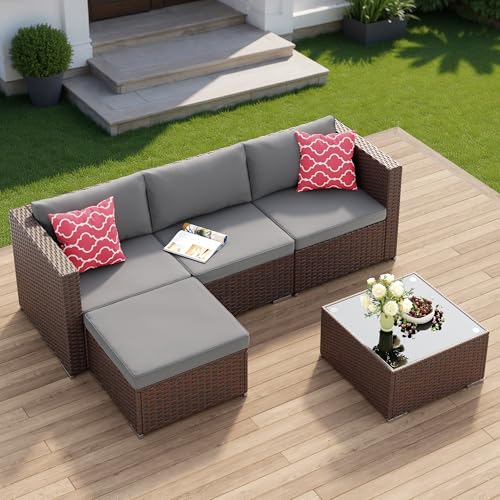
Sectionals wrap a corner and maximize seating in a defined area. They work best on larger patios and covered porches. Look for modular designs that can be separated and rearranged. If waterproof cushioning matters in your climate, our guide to an outdoor sectional with waterproof cushions covers the key construction details.
Sofa with Chaise
A chaise end adds a lounging position without a separate lounger. This hybrid works well for patios that need to serve both conversation and sunbathing. Our overview of an outdoor sofa with chaise explains how to balance the lounging end with the seating end.
Sofa with Fire Pit Table
Pairing a sofa with a fire pit table creates a year-round focal point. The sofa defines the seating arc; the fire provides warmth and ambiance. This combination is popular for evening entertaining and shoulder-season use. See our guide to an outdoor sofa set with fire pit table for layout advice.
Frame Materials Compared
The frame is the skeleton of your sofa, and it is the part you cannot replace. Choose it carefully.
Powder-Coated Aluminum
The most practical frame for most climates. Aluminum does not rust, is lightweight enough to move, and accepts a durable powder-coated finish that resists chipping and fading. It is the backbone of most mid-range and premium outdoor sofas. A well-welded aluminum frame with a thick coating will outlast several sets of cushions.
Teak and Hardwoods
Teak is the classic luxury choice. Its natural oils make it resistant to rot and insects, and it weathers to a silver-grey patina if left untreated. Other hardwoods such as eucalyptus and acacia offer similar looks at different quality tiers, but require more regular sealing. Wood frames are heavier and suit permanent placements rather than balconies you rearrange often.
PE Wicker and Rattan
Woven resin over an aluminum frame delivers the woven look without the fragility of natural rattan. High-quality PE wicker resists UV fading and moisture. Inspect the weave density and the frame underneath; a tightly woven surface over a sturdy aluminum core is the sign of a well-built piece.
Steel and Wrought Iron
Strong and traditional, steel frames need a rust-proof finish to survive outdoors. High-grade steel with a reinforced coating can perform well, especially in covered areas, but any chip in the finish invites corrosion. These frames are heavy and best treated as permanent installations.
Climate note: Coastal and humid climates favor aluminum and high-grade resin wicker. Dry, sunny climates are kinder to wood, though UV fading remains a concern for any finish. Always confirm the frame's weather-resistant coating before committing.
Cushions and Fabrics That Last
Cushions are where outdoor sofas succeed or fail. A beautiful frame with weak cushions feels uncomfortable within a season. Three factors matter most.
Fabric
Solution-dyed acrylic is the benchmark. The color is baked into the fiber rather than applied on top, so it resists fading and holds up to cleaning. Polyester blends are common at entry level and perform adequately in covered spaces but fade faster in direct sun. Look for fabrics described as mildew-resistant and UV-stable.
Foam
High-density, quick-dry foam retains shape and sheds water. Lower-density foam feels comfortable at first but compresses and holds moisture. A wrapped foam core with a soft outer layer gives the best balance of support and comfort. Removable, washable covers are a practical bonus.
Fill and Construction
Seat cushions should be firm enough to support an adult without bottoming out. Back cushions can be softer. Zippered covers make cleaning realistic. If your sofa will sit in uncovered rain, prioritize quick-dry foam and drainage-friendly construction.
Comfort check: Sit on the sofa for at least ten minutes before deciding. Seat depth between 22 and 25 inches suits most adults; deeper seats feel more lounging-oriented but are harder for shorter guests to get out of.
How to Size Your Outdoor Sofa
Sizing mistakes are the most common and the most frustrating. A sofa that is too large crowds the patio; one that is too small leaves the space feeling unfinished.
Start with the actual footprint of your patio, not the listed dimensions of the furniture. Then apply these working rules:
- Walkway clearance: Leave at least 18 inches between the sofa and any wall, railing, or other furniture so people can pass.
- Coffee table gap: Allow 14 to 18 inches between the sofa's front edge and the coffee table.
- Seat width per person: Budget about 24 inches of seat width for each adult.
- Depth: A sofa with a 30 to 36 inch overall depth fits most patios without dominating them.
For small spaces, a two-seat loveseat plus a pair of chairs often works better than a three-seat sofa. Our guide to an outdoor small round table and 2 chairs shows how compact sets can still feel complete. For a full set that includes seating for a group, an outdoor sofa set bundles the sofa with matching chairs and a table in one coordinated purchase.
Quality Tiers Without the Guesswork
Outdoor sofas fall into recognizable quality tiers. Understanding what each tier delivers helps you compare fairly without relying on numbers. The table below uses universal tier descriptors rather than figures, so it stays useful regardless of market conditions.
| Tier | Frame & Construction | Cushions & Fabric | Best For |
|---|---|---|---|
| Entry-level | Thinner aluminum or steel, basic welds, standard powder coating | Polyester blend fabric, lower-density foam, fewer zippered covers | Covered porches, seasonal use, first patio setup |
| Mid-range | Solid aluminum frame, reinforced joints, quality powder coating | Solution-dyed acrylic or high-grade blend, high-density foam | Year-round patios, family use, mixed sun and shade |
| Premium | Heavy-gauge aluminum or teak, precision welds, rust-proof finish | Premium solution-dyed acrylic, quick-dry foam, removable covers | Full-sun exposure, coastal climates, long-term investment |
| Luxury | Architectural frames, custom finishes, commercial-grade hardware | Designer performance fabrics, tailored cushions, replaceable components | Statement patios, hospitality-grade durability, custom layouts |
As a rule, each step up the tier ladder buys smoother mechanisms, tighter tolerances, and longer fabric life. The jump from entry-level to mid-range is usually the most noticeable in day-to-day comfort. The jump from premium to luxury is largely about design and customization rather than raw durability.
Care, Storage, and Winter Protection
An outdoor sofa that is cared for properly can last a decade or more. The routine is simple.
Weekly
- Brush off debris and wipe the frame with a damp cloth.
- Shake out cushions and stand them on edge to air after rain.
Seasonal
- Deep-clean fabric covers according to the manufacturer's instructions; most solution-dyed acrylic covers can be gently washed and air-dried.
- Inspect welds and coating for chips; touch up any bare metal immediately to prevent corrosion.
- Tighten any hardware that has loosened over the season.
Winter
- Clean and fully dry the sofa before storage.
- Use a breathable, waterproof cover rather than a sealed plastic sheet, which traps condensation.
- Bring cushions indoors or store them in a waterproof outdoor storage box.
- In extreme climates, move the sofa to a sheltered area such as a covered porch or garage.
Cushion storage deserves special attention. A dedicated waterproof storage box for cushions keeps fabric dry and extends its life significantly. For the full seasonal routine, see our weatherproofing guidance linked from the footer.
The Buying Checklist
Before you commit to an outdoor sofa, confirm each of the following. This checklist is designed to be copied and used while you shop.
- Measured patio footprint and walkway clearance
- Confirmed seat count and seat width per person
- Frame material suits your climate
- Fabric is solution-dyed acrylic or high-grade blend
- Foam is high-density and quick-dry
- Cushion covers are removable and washable
- Frame finish is described as rust-proof or weather-resistant
- Hardware and welds inspected on arrival
- Storage plan for cushions in place
- Cover purchased for off-season protection
If a sofa clears every item on this list, it is ready for real outdoor life. If it fails two or more, keep looking.
Frequently Asked Questions
What is the best material for an outdoor sofa?
Powder-coated aluminum frames paired with high-density foam cushions wrapped in solution-dyed acrylic fabric offer the best balance of durability, low maintenance, and weather resistance. Teak is an excellent premium natural option, while PE wicker over aluminum is a popular mid-range choice.
How do I measure for an outdoor sofa?
Measure the available width, depth, and clearance of your patio or deck. Leave at least 18 inches of walkway space around the sofa and allow 14 to 18 inches between the sofa and a coffee table. Always confirm the sofa's exterior dimensions, not just the seating area.
Can outdoor sofa cushions be left outside in the rain?
Quick-dry foam cushions with solution-dyed acrylic covers can handle occasional rain, but prolonged exposure accelerates wear. Store cushions in a waterproof storage box or bring them indoors during heavy storms and off-season months to extend their lifespan.
How many people fit on a standard outdoor sofa?
A standard three-seat outdoor sofa seats three adults comfortably. Two-seat loveseats suit couples or compact balconies, while four-to-five-seat sectionals are ideal for large families and entertaining. Allow roughly 24 inches of seat width per person.
How do I protect my outdoor sofa in winter?
Clean and dry the frame and cushions, then cover the sofa with a breathable, waterproof furniture cover. If possible, store cushions indoors. For extreme climates, move the sofa to a sheltered area such as a garage or covered porch during the coldest months.
Ready to Choose Your Outdoor Sofa?
You now have the framework: the right frame material for your climate, the cushion construction that lasts, the size that fits your space, and the care routine that protects your investment. Browse our recommended outdoor sofa furniture below to compare options that match what you have learned.
Explore Recommended Sofas