
Outdoor Table with 2 Inch Umbrella Hole: The Complete Buying Guide
Everything you need to know about choosing a patio table with a 2-inch umbrella hole — sizing, materials, stability, and shade compatibility — so you can buy with confidence.
Quick summary: An outdoor table with a 2-inch umbrella hole is a patio dining table whose central opening accepts umbrella poles that measure two inches across. The hole size affects which umbrellas fit, how stable the shade feels in wind, and how the table handles rain drainage. This guide walks you through every decision point so you can match the right table to your umbrella, your space, and your household.
You already know you want a shaded outdoor dining area. What most shoppers still need is clarity on fit and durability — and that is exactly what this guide delivers.
Why a 2-Inch Umbrella Hole Matters More Than You Think
The umbrella hole is one of the most overlooked specifications on a patio table, yet it determines whether your shade setup actually works. A 2-inch hole is a common standard for full-size patio umbrellas, and it sits at the sweet spot between lightweight poles and heavy-duty shade systems.
Compatibility with full-size umbrellas
Most market umbrellas with poles around 1.5 to 2 inches in diameter are designed to pass through a 2-inch opening with a small clearance. That clearance matters: it allows the umbrella to rotate slightly without binding, and it lets rainwater drain around the pole rather than pooling on the tabletop.
Stability under wind load
A wider hole accommodates a thicker pole, and a thicker pole generally means a stronger frame and a larger canopy. If you plan to use a nine-foot or ten-foot umbrella, a 2-inch hole is often the more sensible match. Thinner holes can technically fit an adapter, but adapters can wobble and wear over time.
Drainage and tabletop protection
Rainwater needs somewhere to go. A 2-inch hole gives water a clear path off the tabletop around the pole. Tables with tight, undersized holes tend to collect water at the base of the umbrella, which accelerates wear on finishes and can stain tabletops over a season or two.
Rule of thumb: Measure the actual pole diameter of your umbrella before shopping. If your pole measures 1.9 inches, a 2-inch hole provides a comfortable fit. If it measures exactly 2 inches, look for a table with a slightly larger opening or a fitted ring insert to avoid binding.
Choosing the Right Table Size for Your Umbrella Hole Setup
The hole is only useful if the table itself fits your space and your household. Size decisions should come before material decisions, because a beautifully built table that crowds your deck is still the wrong table.
| Table Size | Seats | Best For | Umbrella Fit Note |
|---|---|---|---|
| 32–36 inch round | 2–3 | Balconies, small decks, breakfast corners | Pairs well with 6–7 ft umbrellas; confirm pole clearance |
| 42–48 inch round | 4 | Standard patios and family dining | Ideal for 7.5–9 ft umbrellas with 2-inch poles |
| 48–60 inch round | 4–6 | Entertaining and larger families | Best matched with 9–10 ft umbrellas |
| 60 inch square | 4–8 | Symmetrical patios, uniform seating | Check that the umbrella base clears the table edge |
| 72 inch rectangular | 6–8 | Long decks and covered porches | Some designs use dual holes or off-center placement |
Leave room for the umbrella base and chairs
Your table does not exist in isolation. Plan for at least 24 inches of clearance between the table edge and any wall, railing, or planter, so chairs can slide out comfortably. If your umbrella uses a freestanding base rather than a through-table pole, you need additional floor space beneath or beside the table.
Round versus rectangular with a centered hole
Round tables place the hole naturally at the center, which gives even shade coverage and symmetric seating. Rectangular tables with a single centered hole can leave the ends of the table less shaded. If you entertain eight people regularly, consider a rectangular table paired with a cantilever umbrella instead, or look for models with reinforced center support.
For a broader look at table-and-chair pairings, explore our outdoor table and chairs with umbrella hole guide, which covers coordinated sets in more detail.
Table Materials: What Holds Up Around an Umbrella Hole
The area around the umbrella hole endures concentrated stress and moisture. The pole rubs against the opening every time the wind shifts, and water funnels through that same opening. Material choice directly affects how long the table stays solid and presentable.
Resin and Plastic
Lightweight and easy to move. Molded tops often include a reinforced ring around the hole, which helps resist cracking. Best for occasional use and covered spaces. Look for UV-stabilized resin to reduce fading.
Aluminum with Powder Coating
Rust-resistant and comparatively light. Powder-coated frames hold color well and handle regular sun exposure. Check that the hole has a metal or plastic collar insert to protect the coating from pole abrasion.
Steel with Rust-Proof Finish
Heavier and very stable, which is a real advantage when a large umbrella catches the wind. Prioritize a rust-proof finish and inspect welds near the center hub, where stress concentrates.
Teak and Hardwood
Warm appearance and naturally weather-resistant. Wood tabletops with a 2-inch hole need periodic sealing around the opening, since that is where moisture enters end grain most easily.
Tempered Glass with Metal Frame
Easy to wipe clean and visually light. Insist on a grommet or ring insert at the hole; unprotected glass edges are the most common failure point on glass-top patio tables.
Stone, Concrete, and Composite
Heavy and extremely stable, making them excellent anchors for large umbrellas. The trade-off is limited portability. Confirm the hole is cast or drilled cleanly with a smooth interior.
Details that separate durable tables from the rest
- Collar or grommet insert: A protective ring at the hole reduces abrasion and prevents water from seeping into the core material.
- Reinforced center hub: The underside of the hole should show extra bracing or a welded plate, especially on metal tables.
- Sealed edges: On wood and composite tops, edges around the opening should be sealed from the factory.
- Weight distribution: A stable table resists tipping when the umbrella canopy catches a gust. Heavier bases and wider leg spans help.
For material comparisons beyond tabletops, our guide to outdoor tables covers frame construction, finish options, and long-term care in depth.
Umbrella Compatibility, Stability, and Shade Planning
A 2-inch hole opens the door to a wide range of umbrellas, but the table alone does not create a stable shade setup. The base, the pole, and the canopy all interact.
Match the umbrella base to the canopy size
The rule most often repeated by patio specialists is that canopy size and base weight should scale together. A compact seven-foot umbrella is manageable with a lighter base, while a ten-foot canopy needs a substantially heavier base, or better yet, a weighted base paired with a through-table pole for added security.
Through-table versus cantilever umbrellas
A through-table umbrella passes directly through the 2-inch hole and stands in the center of the table. This is the classic configuration and it distributes shade evenly. A cantilever umbrella stands to the side on its own base, so the table hole is unused — though it remains useful for drainage. If your patio has limited floor space in the center, cantilever designs can be a practical alternative.
Wind and safety considerations
- Close or remove the umbrella when strong winds are forecast, regardless of base weight.
- Check that the table hole has enough clearance that the pole does not bind during gusts.
- Place the table on level ground; uneven surfaces increase tipping risk.
- Use a base with a locking collar if your umbrella crank allows it.
Practical tip: If you plan to leave the umbrella up through the season, add a fitted cover for the umbrella and check the table hole collar every few weeks for wear. Small replacements are far easier than refinishing a tabletop.
Shade strategy extends beyond the umbrella itself. Our outdoor shade guide explores how to layer umbrellas with pergolas, sails, and natural shade for full-day comfort.
Buying Checklist: Before You Commit
Use this checklist to evaluate any outdoor table with a 2-inch umbrella hole you are considering. It covers the questions that matter most once you are past the browsing stage.
Measurements and fit
- Measure your umbrella pole diameter and compare it with the table opening.
- Confirm the table fits your space with at least 24 inches of chair clearance.
- Check the umbrella base footprint against your floor area.
- Verify the table height aligns with your existing chairs or included seating.
Construction and durability
- Look for a reinforced collar or grommet insert around the hole.
- Inspect center-hub bracing on metal and glass tables.
- Confirm the finish is rated for outdoor exposure and UV resistance.
- Check that the tabletop edges around the opening are sealed.
Practical use
- Decide whether you need folding capability or a fixed frame.
- Consider weight if you plan to move the table seasonally.
- Plan storage for cushions and the umbrella during off-season.
- Review the warranty terms for frames and finishes.
If you are comparing complete dining configurations rather than a standalone table, our outdoor table and chairs with umbrella overview can help you weigh set-based options against building your own combination.
Recommended Outdoor Tables with 2-Inch Umbrella Holes
⚠️ AFFILIATE DISCLOSURE: This website contains affiliate links. As an Amazon Associate, we earn from qualifying purchases. If you make a purchase through these links, we may receive a small commission at no additional cost to you. Read our full affiliate policy.

SERWALL 2-Tier HDPE Outdoor Side Table with Umbrella Hole, Weatherproof Rectangular Adirondack Side Table, Black
Check price on Amazon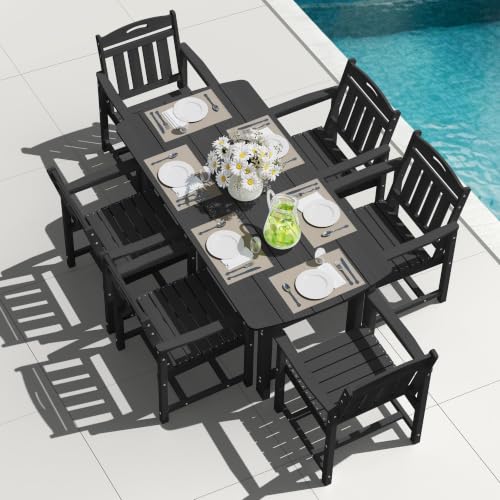
SUUNYN HDPE Outdoor Dining Set, Patio Table and Chairs Set, All-Weather 7-Piece Outside Table and 6 Chairs, 2" Umbrella Hole, Outdoor Furniture for Garden, Poolside, Backyard, Deck | Black
Check price on Amazon
Tangkula 37" Square Patio Dining Table for 4, Acacia Wood Outdoor Table | Built-in 2" Umbrella Hole, Slatted Tabletop, Metal Frame, Bottom Shelf, Outside Table for Backyard, Garden, Deck, Poolside
Check price on Amazon
GIANTEX Umbrella Table, Outdoor Side Table with 2" Umbrella Hole, Rattan Umbrella Stand Holder, Heavy Duty Metal Frame, Patio Bistro Table for Deck Garden Poolside, Mix Gray (HDPE Tabletop)
Check price on Amazon
GIANTEX Umbrella Table, Outdoor Side Table with 2" Umbrella Hole, Rattan Umbrella Stand Holder, Heavy Duty Metal Frame, Patio Bistro Table for Deck Garden Poolside, Mix Brown (HDPE Tabletop)
Check price on Amazon
GIANTEX Umbrella Table, Outdoor Side Table with 2" Umbrella Hole, Rattan Umbrella Stand Holder, Heavy Duty Metal Frame, Patio Bistro Table for Deck Garden Poolside, Black (HDPE Tabletop)
Check price on Amazon
ZOTORUN 30" Round Dining Table Cast Aluminum Patio Bistro Table, Outdoor Dining Table with 2" Umbrella Hole, Weather-Resistant Table
Check price on Amazon
Tangkula Outdoor Wicker Table, Rattan Coffee Table with Umbrella Insert Hole, HDPE Tabletop & Sturdy Metal Frame, Patio Umbrella Side Table Stand for Backyard, Garden, Poolside (Mix Brown)
Check price on AmazonFrequently Asked Questions
Will a standard patio umbrella fit a 2-inch hole?
Most full-size market umbrellas have poles between 1.5 and 2 inches in diameter, so a 2-inch hole accommodates the majority of them with a small clearance. Always measure your specific pole before buying. If the pole measures exactly 2 inches, a slightly larger opening or a fitted ring insert will prevent binding.
What happens if the umbrella pole is too thin for the hole?
A loose pole can wobble in the wind, which stresses both the pole and the table opening over time. You can solve this with a collar adapter or a fitted ring insert, which reduces play while keeping drainage around the pole. Avoid forcing a thin pole to stay centered with makeshift wedges, as these trap water and accelerate wear.
Do I need an umbrella base if the table has a hole?
Yes. A through-table umbrella still requires a base beneath the table to hold it steady. The hole keeps the pole upright and centered, but it does not anchor the umbrella. Base weight should scale with canopy size, and heavier bases are essential for larger canopies in exposed, windy locations.
Is a glass tabletop safe with an umbrella through the hole?
Tempered glass tables are designed for umbrella use when the hole is properly finished with a protective ring or grommet. The ring distributes pressure and prevents the pole from contacting the raw glass edge, which is the most vulnerable point. Inspect the ring periodically and replace it if it shows cracks or significant wear.
How do I keep rain from pooling around the umbrella pole?
A 2-inch hole provides enough clearance for water to drain past the pole when the table is on level ground. Tilting the table slightly is not recommended. Instead, check that the hole is not obstructed by debris, and confirm the table sits level so water flows off the tabletop naturally rather than collecting near the center.
Can I use a 2-inch hole table with a cantilever umbrella?
You can, but the hole will not be used for the pole. Cantilever umbrellas stand on their own base to the side of the table, which frees the center for serving dishes and decor. The hole still contributes to drainage. This pairing works well when floor space around the table is limited or when you want uninterrupted table space.
What table size works best with a large umbrella?
Round tables between 42 and 60 inches in diameter pair naturally with umbrellas in the 7.5 to 10 foot range. Larger canopies benefit from heavier table frames and bases for stability. Rectangular tables can work with centered holes, but the ends of the table receive less shade, so consider a cantilever design for long tables with eight or more seats.
Ready to Choose Your Table?
Use the checklist above to narrow your options, then compare the recommended models to find the right fit for your patio.
Explore Recommended Tables