Outdoor Table and Chairs with Umbrella Hole: The Complete Buying Guide
Everything you need to choose a shade-ready patio dining set — from hole sizing and table shape to chair clearance, umbrella stability, and long-term care.
Explore the GuideWhy this guide matters: An umbrella-ready table is more than a table with a hole. The pole opening, tabletop material, frame weight, and chair layout all affect how well the set performs in sun, wind, and everyday use. This guide walks you through each decision so you can buy with confidence.
What Is an Outdoor Table and Chairs with Umbrella Hole?
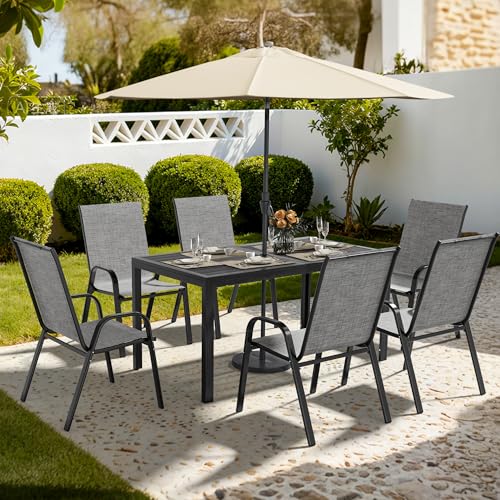
An outdoor table and chairs with umbrella hole is a patio dining set designed with a pre-drilled opening in the center of the tabletop. The hole allows an umbrella pole to pass through the table and anchor into a base beneath it. This setup provides overhead shade exactly where people sit, without needing a separate freestanding shade structure.
These sets are popular for backyards, decks, balconies, and poolside areas because they combine dining space and shade in one footprint. The umbrella hole is usually centered on round and square tables, but it can also appear on oval and rectangular tables. Some sets pair a standard center-hole table with a matching umbrella, while others sell the table and chairs alone so you can choose the umbrella separately.
If you are still comparing broader patio layouts, the outdoor setting guide can help you plan the overall arrangement before you commit to a specific table shape. For shade-only planning, see the outdoor shade overview.
Why Choose an Umbrella-Ready Dining Set?
Integrated Shade
The umbrella sits directly over the table, so shade lands on the dining area rather than off to the side. This is especially useful for lunchtime and afternoon use.
Space Efficiency
One footprint covers both dining and shade. That makes these sets a strong fit for smaller decks and compact patios where separate shade structures would crowd the area.
Flexible Umbrella Options
You can pair the table with a standard center-pole umbrella, a tilt umbrella, or a vented canopy. The hole also makes it easy to swap umbrellas seasonally.
Clean Visual Lines
A center-mounted umbrella keeps the tabletop balanced and leaves the perimeter open for chairs. The result is a tidy, symmetrical dining setup.
Key Buying Factors
1. Umbrella Hole Size and Pole Compatibility
The most important measurement is the hole diameter. Most outdoor dining tables use a hole between 1.5 inches and 2 inches. Before buying, measure the diameter of your umbrella pole and confirm the table's opening. Some tables include reducer rings that let a smaller pole fit securely in a larger hole.
If you already own an umbrella, match the table to the pole. If you are buying both, choose a set where the hole and pole are designed to work together. A loose fit can let the umbrella wobble; an undersized hole will not accept the pole at all. For wider pole options, compare the outdoor table with 2-inch umbrella hole format.
2. Table Shape and Seating Capacity
Round and square tables distribute shade most evenly around a center pole. Oval and rectangular tables offer more surface area for serving dishes, but the pole position can interrupt the center of the table. Consider how you plan to use the set:
- Round tables: Best for even shade and conversation. A 42-inch round typically seats four; 48 to 60 inches can seat four to six.
- Square tables: Good for compact corners and four-person meals. Shade coverage is balanced.
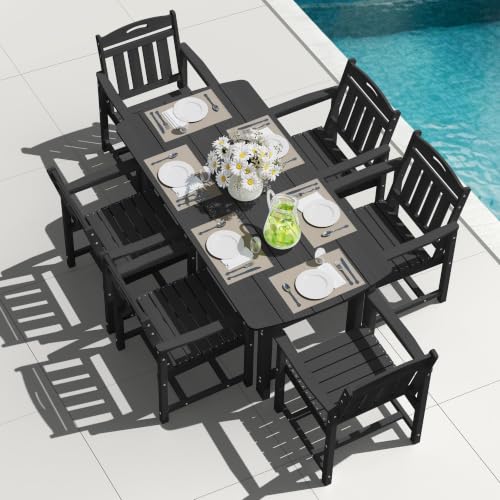
- Oval tables: More serving space, but the pole may sit between place settings. Check chair clearance carefully.
- Rectangular tables: Best for larger groups. Consider an offset umbrella if the center pole feels intrusive.
For specific seating counts, see the outdoor table and chairs set for 4 and the outdoor table and chairs set for 6.
3. Tabletop Material
The tabletop must handle sun, rain, and the repeated pressure of an umbrella pole. Common materials include:
| Material | Best For | Considerations |
|---|---|---|
| Powder-coated steel | Durable everyday use | Heavy-duty feel; check for rust-proof finish at welds and hole edges |
| Aluminum | Lightweight rearranging | Resists corrosion; may need a heavier base in windy spots |
| Wood (teak, acacia, eucalyptus) | Warm natural look | Requires sealing; hole edges need periodic inspection |
| Tempered glass | Sleek modern style | Easy to wipe clean; confirm the hole is factory-cut and edge-polished |
| Resin or high-density plastic | Low-maintenance casual use | Entry-level to mid-range options; check UV resistance |
If glass is your preference, review the tempered glass table top replacement guide for fit and safety details.
4. Frame Construction and Stability
A table with an umbrella acts as a lever in the wind. The frame needs enough weight and bracing to stay planted. Look for reinforced legs, cross-bracing, and a stable leg shape. Welded joints generally outperform bolted joints in heavy-duty frames. If the set will sit in an exposed area, choose a mid-range or premium frame with a solid build and pair it with a properly rated umbrella base.
The umbrella base matters as much as the table. A base that is too light for the canopy size can tip in gusts. Check the base rating against the umbrella's canopy diameter, and consider filling a weighted base with sand or water if the manufacturer allows it.
5. Chair Comfort and Clearance
Chairs must slide under the table without hitting the legs or the umbrella pole. Check the seat height against the table apron height, and confirm that armrests clear the tabletop. Stackable chairs are convenient for storage; swivel chairs make it easier to get in and out. If you want a matching upgrade later, compare outdoor swivel dining chairs with cushions.
Cushions add comfort but also need care. Look for quick-dry foam and removable, washable covers if the set will stay outside.
6. Umbrella Type and Wind Management
Center-pole umbrellas are the natural match for a hole-in-table setup. Tilt mechanisms help block low sun, and vented canopies release wind pressure. In gusty locations, a crank-and-tilt umbrella with a vent is a practical mid-range choice. Always close the umbrella when it is not in use or when strong winds are forecast.
For alternative shade approaches, see the outdoor umbrella holder guide and the outdoor umbrella bases overview.
How to Size the Set for Your Space
Measure the available patio or deck area before choosing a table. Leave at least 24 to 36 inches of clearance around the table so chairs can pull out comfortably. For a round table, add the table diameter plus chair depth on both sides to estimate the total footprint.
- Two-person setups: A 24 to 32-inch table with two chairs works for balconies and small decks. See outdoor table and chairs set for 2.
- Four-person setups: A 42 to 48-inch round or square table is a common balanced size.
- Six-person setups: A 60-inch round or a rectangular table with a center hole. Confirm pole placement does not block legroom.
- Eight-person setups: Rectangular tables are usually more practical; consider an offset umbrella to keep the table surface clear.
For compact areas, the outdoor table and chairs for small deck guide covers layout trade-offs. If you want a more casual arrangement, compare the outdoor table and chairs collection.
Setup and Safety Checklist
- Assemble on a level surface. A sloping deck can make the umbrella lean and stress the table hole.
- Insert the pole through the hole before fully tightening the base. This helps align the pole and reduces binding.
- Secure the base. Use a base rated for the canopy size; add weight only as the manufacturer permits.
- Check the hole edge. A smooth, factory-finished edge protects the pole and reduces wear.
- Test chair clearance. Push chairs in and out to confirm they clear the legs and pole.
- Close the umbrella in wind. Even a sturdy set can be stressed by gusts when the canopy is open.
Care and Maintenance
Regular care keeps an umbrella-ready table stable and looking good. Wipe the tabletop after meals, rinse the hole area to clear debris, and inspect the frame for loose bolts each season. For metal sets, touch up any scratches with a matching rust-proof coating. For wood sets, reseal the surface and the hole edge as recommended by the manufacturer.
Store cushions in a dry place during off-season months. If the set stays outside, use breathable covers rather than sealed plastic, which can trap moisture. For broader seasonal routines, see the outdoor care section.
Quick Comparison: Which Tier Fits Your Needs?
| Tier | Best For | Typical Characteristics |
|---|---|---|
| Entry-level | Occasional use, covered patios | Lighter frames, simpler hole finishing, basic umbrellas |
| Mid-range | Regular family dining | Reinforced frames, smoother hole edges, better UV resistance |
| Premium | Frequent use, exposed decks | Heavy-duty construction, premium materials, refined finishes |
| Luxury / commercial-grade | Hospitality or high-wind areas | Flagship-tier frames, professional-grade hardware, long-term investment |
Use this table as a relative guide. A well-specified mid-range set often performs better than an entry-level set in windy or sunny locations, while premium and commercial-grade sets are built for heavier use and longer service life.
Frequently Asked Questions
What size umbrella hole does an outdoor table need?
Most outdoor dining tables use a 1.5-inch to 2-inch umbrella hole. Measure your umbrella pole before buying and confirm the table's hole diameter and any included reducer rings.
Do I need an umbrella base with a table that has an umbrella hole?
Yes. The table supports the pole, but an umbrella base or weighted stand is still required to keep the umbrella stable in wind. Choose a base rated for your umbrella canopy size.
What table shape works best with a center umbrella?
Round and square tables work best with a center umbrella because the pole sits in the middle and shade is distributed evenly. Oval and rectangular tables can work well too, especially with an offset umbrella.
How many chairs fit around a round table with an umbrella hole?
A 42-inch round table typically seats four, while a 48-inch to 60-inch round table can seat four to six. Always check chair width and table clearance before choosing a set.
Can I use an offset umbrella with a table that has a center hole?
Yes. The center hole can remain capped while an offset umbrella provides shade from the side. This is a good option for rectangular tables where a center pole would interrupt the seating layout.
Ready to Compare Umbrella-Ready Sets?
Review the recommended products below to compare materials, seating capacity, and umbrella compatibility. Each listing is selected for the outdoor table and chairs with umbrella hole category.
View Recommended Products