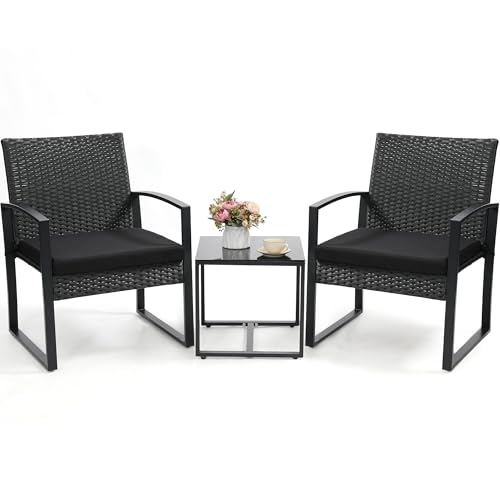
Outdoor Table and Chairs for Small Deck: The Complete Buying Guide
Everything you need to choose a compact dining set that fits your deck, seats your guests comfortably, and survives the seasons. Sizing rules, material comparisons, layout tips, and top-tier picks explained.
Start With SizingWhy this guide matters: A small deck is not a limitation — it is a design constraint that rewards smart choices. Choosing the wrong table shape or chair footprint can turn a cozy space into a cluttered one. This guide walks you through measuring your deck, picking the right footprint, selecting durable materials, and arranging your set so the space feels intentional rather than crowded.
What You Will Find in This Guide
1. Measure Your Deck Before You Shop
The single biggest mistake buyers make is ordering a set that looks right in a showroom but swallows their deck. Before browsing any outdoor table and chairs for a small deck, take three measurements:
- Usable width and depth: Measure the clear floor area, not the wall-to-wall distance. Subtract built-in benches, planters, and grill zones.
- Door swing clearance: The door leading to the deck needs at least 36 inches of swing space. A table placed too close will block entry.
- Walkway width: Leave a minimum of 24 inches for a single-person path and 36 inches for a comfortable two-person path around the table.
A practical rule: the table footprint plus 30 inches of clearance on every seating side should fit inside your usable area. If it does not, size down. A slightly smaller table that leaves room to move will always feel better than a larger table that pins you against the railing.
Quick reference: A deck under 8 by 8 feet is best served by a two-person bistro set or a compact three-piece set. A deck between 8 and 10 feet can handle a four-person round or square set. Decks over 10 feet wide open up rectangular four- to six-person options.
2. Round vs Square vs Rectangular Tables
Shape is the most consequential decision for a compact deck. Each shape changes traffic flow, seating count, and how the space feels.
| Shape | Best For | Seats | Trade-Off |
|---|---|---|---|
| Round | Square decks, corner nooks, smooth traffic flow | 2 to 4 | Less usable surface area than square |
| Square | Corners, wall-adjacent placement, maximum seating per inch | 4 | Sharp corners need clearance |
| Rectangular | Long narrow decks, railing-side placement | 4 to 6 | Requires more length; can crowd walkways |
For most small decks under 10 feet, a round table between 30 and 42 inches in diameter is the safest choice. It eliminates corner hazards, allows chairs to tuck in at angles, and visually softens the space. If your deck has a protected corner, a square table is a strong alternative because it can be pushed flush against two walls, freeing the center of the deck.
If you are working with a narrow balcony-style deck, a rectangular table placed parallel to the railing is the most efficient use of linear space. Pair it with a compact outdoor table and chairs set for 2 to keep the walkway clear.
3. How Many Chairs Actually Fit?
The number of chairs you can seat depends on the table size, chair width, and how much elbow room you are willing to sacrifice. Here is the practical breakdown:
| Table Size | Comfortable Seating | Maximum Seating | Notes |
|---|---|---|---|
| 24–30 inch round | 2 | 3 | Best for bistro sets and coffee-style dining |
| 36 inch round | 3 | 4 | Sweet spot for small deck four-person sets |
| 42 inch round | 4 | 4 | Most generous four-person round option |
| 30 inch square | 2 | 4 | Maximum seating achieved by pushing into a corner |
| 36 inch square | 4 | 4 | Balanced four-person square option |
Chair width matters as much as table size. Standard dining chairs are 18 to 22 inches wide. Armchairs add 4 to 6 inches per side. If you choose armchairs, budget for a table one size larger than you would otherwise need. A four-chair set with cushions is a common configuration that works well on mid-sized decks when the chairs are stackable or foldable.
Seating tip: A three-piece set with two chairs and a small round table often feels more spacious than a four-chair square set on the same footprint, because the round shape leaves visual breathing room in the corners.
4. Materials That Survive the Outdoors
Small decks often lack full roof cover, so your table and chairs will face sun, rain, and temperature swings. Material choice determines how long the set looks good and how often you need to maintain it.
Aluminum
Aluminum is the default recommendation for small decks. It is lightweight enough to move for cleaning or re-arranging, it will not rust, and powder-coated finishes hold up well across seasons. A mid-range aluminum set with a powder-coated frame and a tempered glass or slatted top is a balanced choice for most households. Look for welded joints rather than riveted ones on the premium end of the aluminum category.
Steel
Powder-coated steel is heavier and generally more rigid than aluminum. It is a good fit if wind is a concern and you do not plan to move the set often. The trade-off is weight and the risk of rust if the coating chips. Entry-level steel sets often have thinner coatings, while high-end tier steel sets use thicker powder coats and stainless hardware.
Wood
Teak and acacia are the two woods worth considering for outdoor dining. Teak is the premium option: it naturally resists moisture and insects and develops a silver-gray patina if left untreated. Acacia is a solid mid-range choice with good weather resistance when properly sealed. Both are heavier than aluminum, so confirm your deck can support the additional load, especially on elevated structures.
Wicker and Rattan
All-weather wicker over an aluminum frame gives a softer, more residential look. It works well on covered decks and porches but requires more care in fully exposed locations. Synthetic wicker rated for outdoor use will resist fading better than natural rattan.
Plastic and Resin
High-density polyethylene (HDPE) and resin sets are the most weather-proof option and the easiest to clean. They are a strong pick for starter-tier decks, rental properties, or households that want zero maintenance. The visual finish has improved significantly in recent years, and top-tier resin sets can mimic wood grain convincingly.
| Material | Tier | Best For | Maintenance |
|---|---|---|---|
| Aluminum | Mid-range to premium | Most small decks, movable sets | Low — wipe down, occasional rinse |
| Powder-coated steel | Entry-level to mid-range | Windy decks, stationary setups | Low to moderate — watch for chips |
| Teak | Premium to luxury | Covered decks, long-term investment | Moderate — oil annually if desired |
| Acacia | Mid-range | Warm look, sealed surfaces | Moderate — reseal yearly |
| All-weather wicker | Mid-range to high-end tier | Covered porches, softer aesthetic | Low — brush clean, cover in winter |
| Resin / HDPE | Starter to mid-tier | Fully exposed decks, low-maintenance homes | Very low — soap and water |
Whatever material you choose, confirm that the hardware is stainless steel or coated to resist corrosion. On small decks, furniture sits close to railings and receives more splash-back from rain, so hardware quality matters more than it does on a covered patio.
5. Space-Saving Features to Look For
Beyond size and shape, the right features can make a compact set feel twice as usable. Prioritize these when comparing options:
- Drop-leaf or folding tables: A table that folds down to a narrow console when not in use is ideal for decks that double as walkways. Look for a locking mechanism that holds the leaf securely when deployed.
- Stackable or nesting chairs: Stackable chairs free up floor space when you need to clear the deck for cleaning or entertaining. Nesting chairs tuck under each other and are the most space-efficient option.
- Fold-flat chairs: Folding chairs can be stored in a closet or against the wall during the off-season, which is especially useful on decks with no storage shed nearby.
- Umbrella hole: A center umbrella hole lets you add shade without a freestanding base that eats floor space. Verify the hole diameter before buying an umbrella — standard is 1.5 to 2 inches. See our guide to tables with an umbrella hole for compatible options.
- Built-in bench seating: A bench-and-table combo can seat more people in less depth than individual chairs. This works best along a railing or wall where the bench can be pushed flush.
- Lower profile chairs: Chairs without arms have a smaller footprint and tuck under the table more completely. If armrests are important to you, choose chairs with slim arms that still clear the table apron.
If your deck is multi-purpose — dining by day, lounge by evening — a four-person set with stackable chairs gives you the flexibility to clear the table area quickly. For very tight spaces, a small round table with two chairs is the most space-efficient dining configuration available.
6. Layout and Clearance Rules
Even a well-chosen set can feel wrong if it is placed poorly. Follow these layout principles:
- Anchor the table, not the center of the deck. Placing the table slightly off-center toward a railing or wall opens up the walkway and makes the deck feel larger.
- Leave 30 to 36 inches between the table edge and any wall or railing. This is the minimum space needed to pull a chair out and sit down comfortably.
- Keep the door path clear. The table should not intrude into the door swing zone. If space is tight, choose a round table that lets traffic flow around it.
- Use vertical space. Hang string lights overhead and mount planters on railings to draw the eye upward and reduce the visual weight of furniture.
- Define the dining zone with a rug. An outdoor rug under the table visually separates dining from circulation and makes the set feel deliberate rather than dropped in.
- Add shade strategically. A patio umbrella through the table hole or a shade sail overhead extends usable hours without consuming floor space.
Clearance formula: Table width + 60 inches (30 inches per seating side) = minimum deck width needed. If your deck is narrower, reduce table size or choose a bench configuration that pushes flush against a wall.
7. Pre-Purchase Checklist
Before you finalize any order, run through this list. It catches the most common sources of buyer regret on small decks.
Measurements
- Usable deck width and depth confirmed
- Door swing clearance measured
- Walkway width of at least 24 inches verified
- Table footprint plus 30-inch clearance fits the usable area
Set Configuration
- Table shape matches deck geometry (round for square, rectangular for narrow)
- Seating count matches realistic guest count
- Chairs are stackable, folding, or nesting if storage is limited
- Umbrella hole diameter verified against your umbrella pole
Materials and Durability
- Frame material suited to exposure level (covered vs fully exposed)
- Hardware is stainless steel or coated
- Finish is rated for UV and moisture resistance
- Weight is manageable for the deck structure and for you to move
Logistics
- Assembly requirements reviewed
- Return policy and warranty terms confirmed
- Cover or storage plan in place for the off-season
8. Frequently Asked Questions
What size table fits a small deck?
For a small deck, choose a round or square table between 30 and 42 inches in diameter or width. This leaves enough clearance for chairs and walkways. Always leave at least 30 inches of clearance around the table for comfortable seating and movement.
Is round or square better for a small deck?
Round tables are typically better for small decks because they have no sharp corners, allow smoother traffic flow, and can fit into awkward angles. Square tables maximize seating per inch along walls, making them ideal for corner placements.
What materials work best for outdoor dining sets on a deck?
Aluminum and powder-coated steel are the best choices for small deck dining sets. They are lightweight, rust-resistant, and easy to move. Teak and acacia are premium wood options that naturally resist moisture. Avoid heavy cast iron on elevated decks unless the structure is rated for extra load.
How many chairs fit around a small deck table?
A 30-inch round table comfortably seats two to three people. A 36 to 42-inch round or square table seats four. For decks under 8 feet wide, a two-chair bistro set or a three-piece set is usually the most practical choice.
Should I choose a set with cushions?
Cushions add comfort but require care on exposed decks. Choose quick-dry foam and solution-dyed acrylic covers that resist fading and mildew. If your deck is fully exposed, consider a set with sling or mesh seats instead, which dry faster and need less maintenance. For cushioned options, see our guide to four-chair sets with cushions.
How do I protect my set during winter?
Use a fitted, breathable cover and store cushions indoors. If your set is stackable or foldable, disassemble what you can and store it in a shed or garage. For a full protection strategy, review our weatherproofing guide.
Ready to Choose Your Small Deck Dining Set?
You now have the sizing rules, shape guidance, material comparisons, and layout principles needed to pick a set that fits your deck and your lifestyle. Browse our recommended products below to compare features and find the right configuration.
Browse Recommended Sets