Outdoor Table and Chairs: The Complete Buyer's Guide
Everything you need to know before choosing an outdoor dining set — table shapes, chair styles, material durability, and sizing for your space. Make a confident, well-informed decision for your backyard.
Explore the GuideWhy this guide matters: An outdoor table and chairs set is one of the most-used purchases for any patio or deck. It anchors family meals, weekend gatherings, and quiet morning coffees. But the wrong choice — too large for the space, or built from materials that won't survive your climate — can turn a smart purchase into a headache. This guide walks you through every decision point so you can buy once and enjoy for years.
1. Start With Your Space, Not the Set
Before browsing styles, measure your patio or deck. The right set depends on available footprint and how chairs need to move around the table. As a practical rule, allow at least 36 inches of clearance on each side of the table where chairs will be pulled out — tighter spaces suit bench seating or a compact two-chair setup.
Small Balcony or Compact Deck
A two-person bistro-style set or a round table with two chairs keeps the footprint tight while still supporting outdoor dining. Folding or stackable chairs maximize flexibility.
- Round or square tables work best
- Look for outdoor table and chairs set for 2
- Consider a small round table and 2 chairs configuration
Standard Patio
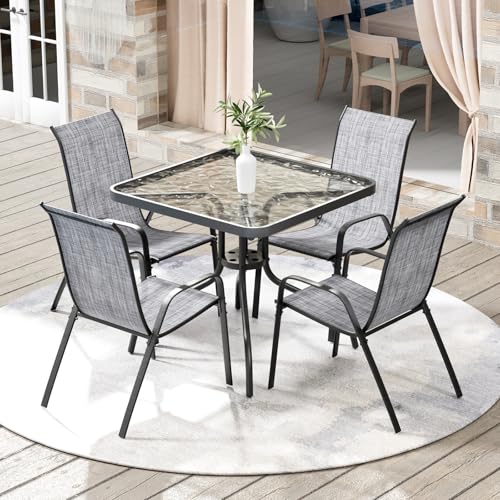
A four-seat set is the most popular choice. Rectangular tables suit narrow patios, while round tables encourage conversation and fit more naturally on square footprints.
- Rectangular or round tables both work
- Explore outdoor table and chairs set for 4
- Add an umbrella for shaded lunches
Large Deck or Entertaining Space
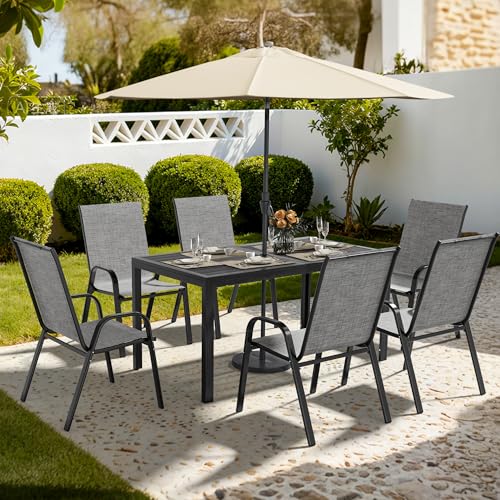
Six- and eight-seat sets are ideal for families and hosts. Choose a sturdy table with a reinforced frame and consider extending or modular options if your guest count varies.
- Look for outdoor table and chairs set for 6
- Or scale up with a set for 8
- Bench seating adds capacity efficiently
2. Table Shapes and What They Do Best
Shape affects flow, seating capacity, and how the set feels in your space. Round tables soften tight corners and are easier to walk around. Rectangular tables maximize seating along a wall or railing. Square tables are a middle ground that works well on compact patios. Oval tables combine the seating of a rectangle with the softer edges of a round design.
Round Tables
Best for conversation, small spaces, and square footprints. No one sits at a "corner," and chairs can be tucked in evenly. A round table with a central umbrella hole is a classic patio choice — see outdoor tables with umbrella holes for compatible options.
Rectangular Tables
Best for narrow patios and larger groups. The linear layout makes serving easy and pairs naturally with benches. If you plan to host, a table and chairs for 6 people in a rectangular format is a strong default.
Square Tables
Best for compact spaces that still need four seats. A square table fits neatly against a wall or in a corner and keeps the set balanced. Pair with swivel chairs for easier entry and exit.
3. Materials: The Most Important Decision
Material determines how much maintenance your set needs, how it handles weather, and how long it lasts. There's no single "best" material — only the best match for your climate and habits. Below is a practical comparison using universal quality tiers rather than any figures.
| Material | Best For | Weather Resistance | Maintenance Level | Market Position |
|---|---|---|---|---|
| Powder-Coated Aluminum | All climates, humid or coastal areas | Excellent — rust-proof finish | Low: wipe down as needed | Mid-range to premium |
| Teak | Natural, warm aesthetic; long-term investment | Excellent with proper sealing | Moderate: oil annually | Premium to luxury |
| Acacia | Natural wood look on a balanced tier | Good when sealed | Moderate: reseal yearly | Entry-level to mid-range |
| All-Weather Wicker | Cozy, textured look; covered porches | Good, but protect from prolonged rain | Low to moderate | Mid-range |
| Powder-Coated Steel | Heavy-duty, windy locations | Very good; watch for chips | Low: touch up chips promptly | Mid-tier to high-end tier |
| HDPE Resin | Low-maintenance family patios | Excellent: UV-stable, no rot | Very low: hose off | Entry-level to mid-range |
4. Chair Styles and Seating Comfort
Chairs do most of the comfort work. Armrests make long meals easier; swivel bases help guests get in and out without dragging chairs. Stackable and folding chairs are invaluable for small spaces. Consider a swivel dining chair with cushions if you value easy conversation flow — swivel chairs let guests turn toward each other without moving the frame.
Armchairs
The most comfortable all-around option. Arms support elbows during long meals and make the chair easier to rise from. Ideal for guests of all ages.
Swivel Chairs
Best for conversation and easy entry. The rotating base reduces the space needed behind the chair — useful on tighter patios. Cushioned swivel chairs add warmth to metal frames.
Stackable & Folding Chairs
Practical for seasonal use and small storage. Stackable chairs are popular in commercial-grade and family settings. Pair with a solid table for a flexible dining setup.
Benches
Efficient seating for larger groups. A bench along one side of a rectangular table fits more people in the same footprint. Look for outdoor table with benches sets for a cohesive look.
5. Features Worth Prioritizing
Umbrella Compatibility
If your patio gets direct sun, choose a table with a center umbrella hole. Confirm the hole diameter matches your umbrella pole — most standard poles fit a 2-inch hole. See outdoor table umbrellas for compatible pairings, and check table and chairs with umbrella hole options for a matched set.
Tabletop Surface
Glass tops are easy to wipe but need care in wind; slatted metal tops shed rain; stone and composite tops are heavy and stable. A tempered glass table top replacement can restore a damaged frame at a fraction of a new set.
Frame Construction
Look for welded or reinforced joints, stainless hardware, and a rust-resistant coating. A solid build with reinforced corner brackets outlasts a lighter frame with decorative trim every time.
Storage & Flexibility
Tables with built-in storage keep linens and small items handy. If your guest count varies, an extending or modular set adapts better than a fixed size. Consider an outdoor table with storage for multipurpose use.
6. Cushions, Care, and Longevity
Cushions transform a functional metal set into something you want to sit in for hours. Choose quick-dry foam and solution-dyed fabrics for outdoor use — they resist fading and dry fast after rain. Store cushions in a waterproof box or bring them inside during wet seasons.
For the frame, a seasonal routine keeps the set looking new: rinse with mild soap, inspect for chips or loose bolts, and cover the set during winter or long absences. If you're planning a full patio refresh, our guide on outdoor settings covers how to layer furniture, shade, and lighting around your dining set. For shade and comfort pairing, review outdoor shade solutions.
7. Frequently Asked Questions
What size outdoor table and chairs set should I choose?
Choose a set for 2 if you have a balcony or small deck, a set for 4 for a standard patio, and a set for 6 or 8 if you entertain often. Leave at least 36 inches of clearance around the table so chairs can slide out comfortably.
Which material is best for outdoor tables and chairs?
Aluminum is lightweight and rust-resistant, teak and acacia offer natural beauty, all-weather wicker suits a cozy look, and powder-coated steel is heavy-duty. Match the material to your climate and how much maintenance you want to do.
Do outdoor tables and chairs need to be covered in winter?
Yes. Weatherproof covers protect frames, tabletops, and cushions from rain, snow, and UV damage. Store cushions indoors or in a waterproof storage box when not in use to extend their lifespan.
How do I choose between a round and rectangular table?
Round tables suit compact, square spaces and conversation-focused setups. Rectangular tables fit narrow patios and larger groups better. Measure your footprint and allow chair clearance before deciding — shape should follow the space, not the other way around.