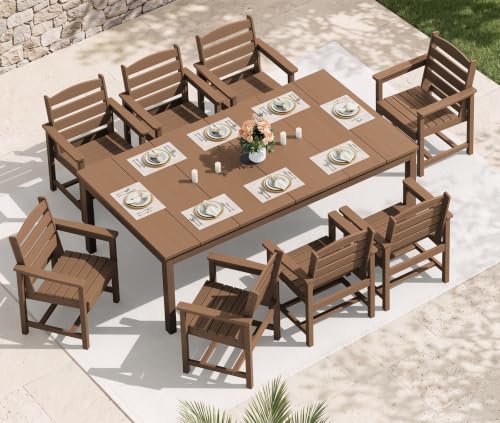
Outdoor Table and Chairs Set for 8: The Complete Buying Guide
An eight-seat outdoor dining set turns a patio into the social center of the home. It is the piece that hosts weekend brunches, holiday gatherings, and long summer evenings with friends. But choosing the right set involves more than picking a style you like — size, material, layout, and long-term care all determine whether your table becomes a beloved fixture or a source of frustration. This guide walks you through every decision so you can buy with confidence.
Why an Eight-Seat Set Deserves Careful Planning
A table for eight is a significant piece of furniture. It anchors the entire dining zone, dictates how people move around your patio, and must survive years of sun, rain, and use. Buyers who plan ahead end up with a set that fits their space naturally and serves them for a decade or more. Those who rush often discover the table crowds a walkway, the chairs are uncomfortable for taller guests, or the frame shows wear after a single season.
The good news is that the market offers well-engineered options across every tier — from entry-level resin sets that are easy to maintain to premium hardwood tables built for generational use. The key is matching the tier to your habits. If you entertain large groups weekly, a mid-range or premium set with reinforced joinery pays off. If your patio is a seasonal retreat, an essential-tier set with good weather resistance may serve you perfectly.
Measuring Your Space Before You Shop
The single most common mistake with eight-seat sets is underestimating the footprint. A rectangular table sized for eight typically measures 84 to 96 inches long and 40 to 44 inches wide. Add 24 to 36 inches of clearance on every side so chairs can slide out and guests can walk behind them. In practice, that means a clear area of roughly 10 x 8 feet — more if you want a serving cart or buffet nearby.
Measure the patio or deck twice: once wall to wall, and once with any planters, railings, or steps accounted for. If your space is tight, consider a set with a narrower table profile or a bench on one side instead of chairs. You can also compare layouts using our guide to outdoor table and chairs for a small deck if your patio is on the compact side.
Quick Sizing Cheat Sheet
Rectangular table for 8: 84–96 in long x 40–44 in wide. Round table for 8: 60–72 in diameter. Oval table for 8: 84–96 in long x 42–48 in wide. Minimum clearance around any shape: 24 in, ideally 30–36 in for comfortable circulation.
Table Shapes: Rectangular, Oval, or Round
Shape affects both conversation and traffic flow. Rectangular tables maximize usable surface and suit long, narrow patios. They also make it easy to add a second table for larger events. Oval tables soften the visual weight of a large set and guide guests around the perimeter, which feels elegant on spacious lawns. Round tables encourage eye contact across the group but need a wider footprint — a 60 to 72 inch diameter works for eight, though elbow room is tighter than on a rectangular model.
If your dining area doubles as a serving station, a rectangular or oval table with a sturdy top and an umbrella hole is the most practical choice. For pure conversation seating, round is hard to beat. Both shapes are available across entry-level, mid-range, and premium tiers.
Materials: Durability Meets Maintenance
Material choice is where most of the long-term satisfaction comes from. Each option below has a distinct personality and care routine.
Powder-Coated Aluminum and Steel
Aluminum is the most popular frame material for eight-seat sets because it is light enough to move, resists rust, and holds a clean finish. Powder-coated steel adds weight and rigidity, which helps a large table stay rock-solid. Both handle rain and sun well. Look for a rust-proof finish and reinforced welds on high-use joints. Mid-range and premium aluminum sets typically include thicker gauge tubing and better hardware.
Teak and Dense Hardwoods
Hardwood tables bring warmth and a natural grain that synthetic materials cannot replicate. Teak is the benchmark because its natural oils resist moisture and insects. It does require periodic sealing or oiling to keep its color, but many owners appreciate the rich patina that develops over time. Hardwood sets sit in the premium to luxury tiers and are a long-term investment for buyers who love the look.
Resin, HDPE, and Wicker
High-density polyethylene (HDPE) and resin sets are the easiest to own. They do not rust, do not need sealing, and wipe clean with soap and water. Wicker and rattan-style sets use woven resin over an aluminum frame, offering a softer, more decorative look without the fragility of natural rattan. These sets dominate the entry-level and essential tiers and are excellent for families with children.
Glass and Stone-Look Tops
Tempered glass tops keep large tables visually light and are easy to wipe down, though they need careful handling around children. Stone-look and ceramic tops resist scratches and heat, and they pair beautifully with metal frames. If you like the look of natural stone without the weight, a ceramic or composite top is a smart compromise. For a deeper comparison of table base and top options, see our breakdown of outdoor table bases for round glass tops.
| Material | Tier | Weather Resistance | Maintenance | Best For |
|---|---|---|---|---|
| Powder-coated aluminum | Essential to mid-range | Excellent (rust-proof finish) | Wipe clean | Everyday family use, humid climates |
| Powder-coated steel | Mid-range | Very good with proper coating | Wipe clean, inspect joints | Windy patios needing weight |
| Teak / hardwood | Premium to luxury | Excellent when sealed | Oil or seal annually | Design-focused patios, long-term investment |
| HDPE / resin | Entry-level to essential | Excellent (no rust, no rot) | Soap and water | Families, low-maintenance households |
| Wicker / rattan-style resin | Entry-level to mid-range | Good; check UV rating | Brush and rinse | Decorative looks, covered patios |
| Ceramic / stone-look top | Mid-range to premium | Excellent surface durability | Wipe clean, avoid harsh abrasives | Scratch resistance, heat tolerance |
Chairs and Bench Seating: Comfort Details That Matter
An eight-seat set lives or dies by its chairs. Look for seat heights around 17 to 18 inches and a seat depth of at least 17 inches. Armrests add comfort but require extra clearance; armless chairs tuck neatly under the table, which helps on smaller patios. Stackable chairs simplify winter storage and make impromptu reconfiguration easier.
Cushions transform a firm metal or wood seat into a lounge-worthy experience. Choose quick-dry foam wrapped in solution-dyed acrylic fabric, which resists fading and mildew. Removable, machine-washable covers are a practical bonus. If you plan to leave cushions outdoors, confirm they are rated for full weather exposure. For a set that blends seating styles, mixing a bench on one side with four chairs and two end chairs is a classic arrangement — our guide to outdoor tables with benches covers the trade-offs.
Shade, Umbrellas, and Accessories
A large table deserves shade. If your table has an umbrella hole, pair it with a sturdy base rated for the canopy size. Offset and cantilever umbrellas free up the table center and work well over eight-seat sets where the hole position is inconvenient. For patios without a hole, a freestanding umbrella or a shade sail over the dining zone keeps midday meals comfortable.
Accessories that earn their place include a lazy Susan for round tables, a table runner for visual warmth, and a nearby serving cart or sideboard. Lighting is the finishing touch — string lights overhead or a centerpiece lantern extend the evening. Browse our ideas on outdoor shade and outdoor string lights to plan the ambiance.
Layout and Flow: Making Eight Seats Feel Effortless
Place the table so the longest sightline faces the best view, and keep serving traffic from crossing behind seated guests. If your patio is adjacent to a kitchen or grill, position the table so the cook can join the conversation without squeezing past chairs. Leave a clear path at least 36 inches wide to doors and steps.
On a deck, check that the table's weight is distributed across joists rather than a single span. On a lawn, place a hard surface or a stabilized base under the legs to prevent sinking. If your set includes a fire feature, review our notes on an outdoor table with a built-in fire pit for safety clearances and fuel options.
Care and Seasonal Storage
Routine care is simple and extends the life of any set. Wipe spills promptly, rinse metal frames monthly, and inspect bolts at the start of each season. Seal hardwood once a year or when water stops beading on the surface. Store cushions indoors during heavy rain and winter, and cover the frame with a breathable cover that lets moisture escape.
- Clean glass and ceramic tops with a non-abrasive cleaner to preserve the finish.
- Touch up chips on powder-coated frames before rust can develop.
- Tighten hardware after the first month of use, then annually.
- Stack or cover chairs during off-season to reduce UV exposure.
- Keep the umbrella base filled and the canopy closed during high winds.
A dedicated storage solution keeps cushions dry and extends fabric life. Our waterproof storage box for cushions guide explains what to look for in a weather-tight container.
How to Compare Sets Before You Decide
When you are comparing options, focus on the details that predict longevity: frame gauge, weld quality, hardware material, cushion fabric rating, and warranty length. A mid-range aluminum set with reinforced welds usually outlasts a flashier entry-level set with thin tubing. Ask whether replacement cushions and parts are available, and check the assembly instructions — a well-designed set should go together with standard tools in under two hours.
Read the fine print on weather warranties and confirm the return window before ordering online. If you are still deciding between a full dining set and a more relaxed layout, our overview of outdoor table and chairs options can help you match the configuration to your entertaining style.
Ready to Find Your Perfect Eight-Seat Set?
Explore curated options across materials and tiers, then compare features side by side before you decide.
Explore Recommended OptionsFrequently Asked Questions
How much space do I need for an outdoor table and chairs set for 8?
Plan for at least 10 x 8 feet of clear space. A rectangular eight-seat table typically measures 84 to 96 inches long and 40 to 44 inches wide, and you need roughly 24 to 36 inches of clearance on each side for chairs to pull out comfortably.
What is the best material for an eight-seat outdoor dining set?
Powder-coated aluminum and high-grade steel offer the best balance of durability and low maintenance, while teak and other dense hardwoods suit buyers who want a natural look and are prepared for periodic sealing. Resin and HDPE are excellent for families who want weather-proof simplicity.
Should I choose a round, oval, or rectangular table for eight people?
Rectangular tables give the most usable surface area and fit well on long patios and decks. Oval tables soften traffic flow and look elegant on larger lawns. Round tables encourage conversation but need a wider footprint, so they suit square or circular patio layouts best.
Do I need an umbrella hole in an eight-seat table?
An umbrella hole is highly recommended for eight-seat tables because the large surface benefits from overhead shade. Check that the hole is at least 1.5 to 2 inches wide and pair it with a heavy base positioned under the table center.
How do I protect an eight-seat outdoor dining set in winter?
Clean and dry the frame and cushions, apply a protective sealant to wood, and use breathable furniture covers that allow airflow. Store cushions indoors and stack chairs in a sheltered area if possible. Aluminum and resin frames tolerate cold well but should still be covered to prevent debris buildup.