Outdoor Table with Built-In Fire Pit: The Complete Buying Guide
One piece of furniture, two jobs: a dining surface by day and a warm, glowing gathering point by night. Learn how to choose the right fire pit table for your patio, deck, or backyard.
Jump to Buying Checklist Updated for the current outdoor living seasonWhat Is an Outdoor Table with a Built-In Fire Pit?
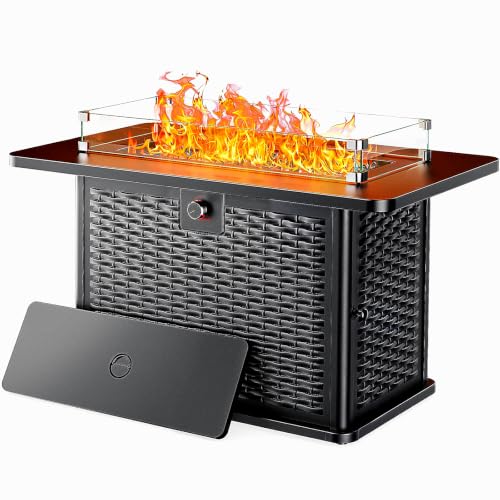
An outdoor table with a built-in fire pit is a hybrid patio centerpiece that pairs a flat, usable tabletop with a central fire feature. During daylight hours it functions as a dining table, coffee table, or conversation hub. After sunset, the integrated burner transforms it into a warm, ambient focal point — no separate fire pit or fire bowl required.
Most models share a common architecture: a sturdy frame, a heat-resistant tabletop with a central cutout, a recessed burner pan, and a lid or cover that converts the fire opening into a continuous flat surface when not in use. Many designs also include a hidden compartment for a propane tank, built-in ignition controls, and a glass or lava-rock media bed that diffuses the flame.
The category splits into two broad formats. Dining-height fire pit tables sit at standard meal height and often pair with four to six chairs, making them a natural match for an outdoor table and chairs with fire pit arrangement. Chat-height fire pit tables sit lower, closer to coffee-table height, and pair with lounge seating or deep-cushion chairs. Some shoppers specifically want a table with the fire pit in the middle so the flame remains the visual and social anchor of the group.
Why Homeowners Choose a Fire Pit Table
A dedicated fire pit is wonderful, but it occupies floor space that many patios simply do not have. A fire pit table solves that constraint by stacking two functions into a single footprint. The practical benefits tend to fall into a few clear buckets:
- Space efficiency. One footprint serves dining, lounging, and warmth — especially valuable on balconies, small decks, and compact patios.
- Extended season. A steady flame takes the chill off cool evenings, stretching usable outdoor time into spring and autumn.
- Social gravity. A central flame naturally draws people together. It gives a gathering a focal point without the need for a television or a loud speaker system.
- Clean integration. Because the fire is contained within the table, embers, ash, and sparks stay controlled — a meaningful advantage over open wood bowls.
- Design cohesion. The table and fire feature share a single material palette and silhouette, which reads more intentional than mismatched furniture.
For households that entertain regularly, a fire pit dining table can replace both a dining set and a separate fire feature. For quieter households, a chat-height model paired with comfortable lounge seating often becomes the most-used piece on the property.
Fuel Types Compared: Propane, Natural Gas, and Wood
Fuel choice shapes installation, operating convenience, flame character, and safety requirements. It is the single most consequential decision in the buying process, so it deserves careful thought before you compare tabletop finishes or seating counts.
| Fuel Type | Best For | Ignition & Control | Installation Notes | Flame Character |
|---|---|---|---|---|
| Propane | Portable setups, renters, decks without gas lines | Push-button or electronic ignition; adjustable dial | Tank stored in a base compartment or nearby; refillable cylinders | Clean, steady, blue-to-yellow flame |
| Natural Gas | Permanent built-in installations, high-use households | Electronic ignition; plumbed control valve | Requires a licensed gas line connection and local inspection | Consistent flame, no tank swaps |
| Wood-Burning | Traditional ambiance, rustic and farmhouse settings | Manual lighting; flame management by airflow | Needs non-combustible base, spark screen, and ash management | Crackling, variable, deeply atmospheric |
Propane: The Default Choice for Most Buyers
Propane models dominate the market because they require no permanent utility work. A standard cylinder lasts through many evenings of moderate use, and swapping a tank takes seconds. The trade-off is that you must plan for refills and store the cylinder somewhere accessible — ideally inside a dedicated base cabinet so it stays out of sight and away from weather.
Natural Gas: The Permanent Solution
If you already have a gas stub on your patio, a natural gas fire pit table eliminates tank logistics entirely. It delivers the most convenient long-term experience, but installation is a professional job: the line must be sized correctly, the connection must be inspected, and the burner must be rated for natural gas rather than propane. Converting a propane unit to natural gas is rarely advisable unless the manufacturer explicitly supports it.
Wood-Burning: Maximum Ambiance, Maximum Attention
Wood delivers the sensory experience that gas cannot replicate — the crackle, the shifting flame, the faint smoke. It also demands the most care: a non-combustible hearth, a spark screen, proper ash disposal, and strict clearance from wooden structures. Wood-burning tables are best suited to ground-level patios with generous clear space rather than tight wooden decks.
Tabletop and Frame Materials
The materials determine how the table ages, how it handles heat, and how much maintenance it demands. Because a fire pit table combines a hot zone with a flat food-safe surface, material quality matters more than on an ordinary patio table.
Tabletop Surfaces
- Slate and stone. Excellent heat resistance and a naturally elegant look. Genuine stone can chip and is heavy; composite stone offers similar visuals with less weight.
- Ceramic and porcelain tile. Durable, easy to wipe clean, and available in many finishes. Look for frost-rated tiles if the table stays outdoors year-round.
- Powder-coated steel and aluminum. Lightweight and highly weather-resistant when the coating is intact. Aluminum resists rust better than steel in coastal climates.
- Tempered glass. Modern and easy to clean, but it must be rated for thermal shock and should be paired with a burner that sits well below the glass plane. A tempered glass tabletop replacement is worth keeping in mind if the original surface ever cracks.
- Concrete and composite. Heavy and stable, with a contemporary industrial look. Composite blends resist cracking better than solid concrete in freeze-thaw cycles.
- Wood. Warm and traditional, but on a fire pit table it is usually confined to the frame or to slatted surrounds rather than the surface directly above the burner. Look for sealed teak, acacia, or eucalyptus with a weather-resistant finish.
Frames and Bases
Stainless steel and powder-coated aluminum are the most common frame materials. Stainless steel offers the best corrosion resistance and a premium feel; aluminum is lighter and easier to reposition. Wicker and rattan-wrapped bases soften the look and suit coastal or bohemian schemes, though the synthetic versions are far more weather-durable than natural fibers. Whatever the frame, check that the burner pan is a distinct, heat-rated component rather than a decorative insert — this is where budget construction often shows.
Safety and Clearance Essentials
A fire feature is only as safe as its installation and surroundings. Before ordering any model, verify local regulations — many jurisdictions regulate open flames on balconies and decks, and some prohibit wood-burning entirely in certain zones.
- Clearance. Plan for at least 3 feet of open space on all sides for comfortable circulation, and up to 7 feet from combustible materials such as wooden railings, pergolas, fabric umbrellas, and vinyl siding.
- Stable footing. Fire pit tables are heavy. Place them on a level, solid surface — masonry, stone, or a reinforced deck — never on soft ground or uneven pavers.
- Overhead check. Confirm there is no low roof, awning, or overhanging branch within the manufacturer's stated clearance. An outdoor shade solution such as a cantilever umbrella should be positioned so fabric never sits directly above an active flame.
- Ventilation. Gas units need airflow. Never operate a fire pit table in an enclosed porch, garage, or screened room without the manufacturer's explicit approval.
- Child and pet awareness. The tabletop edge around the burner becomes hot. Choose a model with a raised burner rim or a glass wind guard, and establish a no-touch zone for younger family members.
- Extinguishing. Keep a fire extinguisher or a bucket of sand nearby for wood-burning units. For gas models, know where the supply valve is and how to shut it off quickly.
Seating Capacity, Shape, and Configuration
Seating determines how the table actually lives in your space. The right answer depends on whether you plan to host meals, lounge with a book, or gather a group for evening conversation.
Round vs. Square vs. Rectangular
- Round. The most social shape. Everyone can see everyone, and there is no head of the table. Round fire pit tables suit four to six people and work well in compact or irregular spaces.
- Square. Efficient and symmetrical, with a generous central fire zone. A natural fit for four chairs and a balanced patio layout.
- Rectangular. Best for dining and for larger groups. A rectangular fire pit dining table can seat six or eight while keeping the flame centered. If you want a dedicated dining arrangement, an outdoor table and chairs set for six is a useful reference point for footprint planning.
Matching Chairs to the Table
Dining-height fire pit tables pair naturally with standard patio dining chairs, including swivel and rocking styles that make it easier to turn toward the flame. Chat-height tables work best with lounge chairs, deep-cushion seating, or a sectional. If your space is tight, a compact table and chairs set for two keeps the fire feature without overwhelming the patio.
Also consider traffic flow: a fire pit table should not block the path between the house and the yard. Leave a clear walkway behind the seating so guests can move without squeezing past chair backs.
Quality Tiers Explained
Fire pit tables span a wide range of construction quality. Rather than tracking shifting market figures, use these universal tier descriptors to position a model relative to the category. The distinctions usually show up in burner engineering, frame thickness, finish durability, and the quality of the ignition system.
Starter Tier
Basic propane units with manual or simple push-button ignition, thinner steel frames, and lighter tabletop materials. Best for occasional use and covered patios.
- Simpler burner design
- Lighter overall weight
- More frequent finish touch-ups
Balanced Tier
The sweet spot for most households. Better burner engineering, smoother ignition, thicker frames, and more refined tabletop finishes. Good value for its tier.
- Reliable electronic ignition
- Durable powder-coated finishes
- Hidden tank storage on many models
High-End Tier
Superior materials, refined flame control, and thoughtful details such as glass wind guards, integrated covers, and heavier stone or porcelain surfaces.
- Stainless or high-grade steel burners
- Consistent flame across the media bed
- Longer expected service life
Flagship Tier
Designer-grade construction with premium stone or architectural concrete surfaces, commercial-grade burners, and bespoke sizing or finish options.
- Professional-grade components
- Architectural material palette
- Long-term investment piece
As a rule of thumb, entry-level models prioritize a low barrier to entry, while mid-range and premium tiers focus on flame consistency, finish longevity, and ease of use. If the table will be used several evenings a week, a balanced-tier or high-end-tier model is usually the more efficient long-term choice.
Placement and Design Tips
A fire pit table is a focal point, and focal points need breathing room. The best placements treat the table as the anchor of a defined zone rather than as an afterthought squeezed into leftover space.
Define the Zone
Use the table to organize the patio into a clear gathering area. A rug or a change in paving material can visually contain the seating group so it reads as a distinct room. Keep the fire feature centered on the group — an off-center fire looks accidental.
Coordinate the Surrounding Furniture
Think of the fire pit table as the center of a conversation circle. Paired lounge seating, a patio sofa, or a set of swivel chairs should face the flame rather than the view. Side surfaces matter too: a small outdoor side table between chairs keeps drinks off the fire table itself.
Balance the Evening Atmosphere
Fire provides warm, low-level light. Layer it with soft overhead or perimeter lighting so the surrounding area is not plunged into darkness beyond the flame's reach. String lights or low bollards create depth without competing with the fire's glow.
Account for Wind
An exposed, windy patio can make even a well-built burner flicker. A glass wind guard or a sheltered corner position stabilizes the flame and reduces fuel waste. If your patio is a wind tunnel, orient the seating so guests are not sitting directly in the crosswind.
Consider the Whole Outdoor Room
Zoom out and plan the patio as a system. A fire pit table pairs well with a defined outdoor setting that includes dining, lounging, and shade zones. If your plan includes a larger seating arrangement, an outdoor sofa set with a fire pit table can unify the whole composition.
Maintenance and Weather Care
A fire pit table is a long-term investment, and a modest maintenance routine protects both its appearance and its safe operation.
- Cover it. When not in use, a fitted cover keeps rain, pollen, and leaf litter out of the burner and off the tabletop. Never cover a unit that is still warm.
- Clean the burner. Inspect burner ports periodically for spider webs, debris, or corrosion. A soft brush and a damp cloth are usually sufficient; avoid harsh abrasives on stainless steel.
- Protect the surface. Wipe spills promptly, especially on stone and concrete, which can absorb oils. Use coasters and trivets to reduce scratching.
- Store the tank safely. Propane cylinders should be stored upright, out of direct sun, and away from heat sources. Disconnect the tank if the table will sit unused for an extended period.
- Winterize. If freezing temperatures are common, drain and cover the unit, and store removable media such as glass or lava rock indoors to prevent cracking.
- Inspect the ignition. Test the ignition system at the start of each season. If it becomes sluggish, clean the electrode and check the battery, if applicable.
If your table will share space with cushions and soft furnishings, pair it with a weatherproof cushion storage box so textiles stay dry between gatherings.
Buying Checklist: What to Confirm Before You Commit
Use this checklist to narrow the field quickly. It moves from the decisions that are hardest to change to the details that are easiest to adjust later.
- Fuel. Propane, natural gas, or wood — and do you have the infrastructure and clearance for it?
- Height and format. Dining height for meals, chat height for lounging, or a convertible design?
- Footprint. Measure your patio and confirm the table plus chairs plus a walkway fits comfortably.
- Seating count. Does the table seat the number of people you realistically host?
- Tabletop material. Stone, tile, metal, glass, or composite — and is it rated for heat and frost?
- Burner quality. Stainless or high-grade steel, with a reliable ignition system and a consistent flame.
- Safety features. Wind guard, lid or cover, adjustable flame control, and a clear shutoff valve.
- Clearance. Confirm the required distance from railings, walls, umbrellas, and overhead structures.
- Local regulations. Verify that open flames are permitted on your deck or balcony, and check HOA rules.
- Tier fit. Match the construction tier to how often the table will be used, not to a one-time impulse.
Frequently Asked Questions
Can a fire pit table be used for dining?
Yes. Dining-height fire pit tables are designed for meals, and most include a lid or cover that converts the burner opening into a continuous flat surface when the fire is off. When the flame is lit, use the perimeter of the tabletop for plates and glasses rather than reaching over the burner.
Do fire pit tables produce a lot of smoke?
Propane and natural gas models burn cleanly and produce essentially no smoke. Wood-burning tables do produce smoke, which is part of their appeal for some people but a drawback for others. Smoke output depends heavily on dry wood and proper airflow.
How long does a propane tank last?
Runtime depends on the burner output and the flame setting. A standard cylinder used at a moderate flame typically supports several evenings of use. Keep a spare cylinder on hand if you entertain frequently, and always store it upright and away from heat.
Is a glass wind guard worth adding?
On an exposed or breezy patio, yes. A wind guard stabilizes the flame, reduces fuel waste, and protects the flame from sudden gusts. On a sheltered patio it is optional but still adds a polished look and an extra layer of separation around the burner.
Can I convert a propane table to natural gas?
Only if the manufacturer explicitly offers a conversion kit and the burner is rated for both fuels. Unapproved conversions can produce unsafe combustion and may void warranties. When in doubt, buy the correct fuel version from the start or consult a licensed gas professional.
Will the tabletop become too hot to use?
Quality fire pit tables are engineered so the tabletop surface outside the burner zone stays within a comfortable range, but the rim around the flame does get hot. Always follow the manufacturer's guidance, keep hands and flammable items clear of the burner, and supervise children and pets.