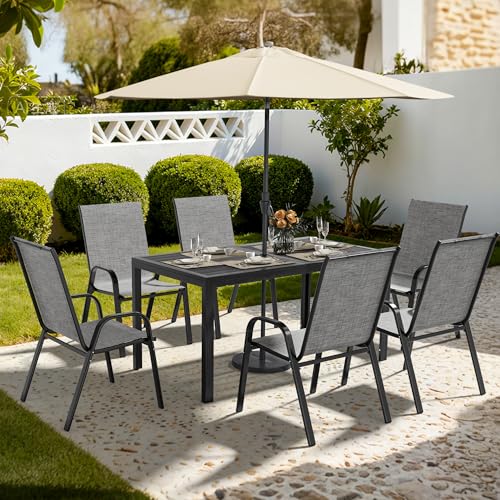
Outdoor Table and Chairs Set for 6: The Complete Buying Guide
Everything you need to choose a six-seater patio dining set that fits your space, your family, and the way you actually entertain outdoors.
Why this guide matters: An outdoor table and chairs set for 6 is one of the largest and most-used purchases you will make for your backyard. It becomes the anchor of every barbecue, birthday dinner, and lazy Sunday brunch. Getting the size, material, and layout right the first time saves you from years of frustration. This guide walks you through the decisions that actually matter.
Why a Six-Seater Set Is the Sweet Spot for Most Households
A six-person outdoor dining set hits a practical middle ground. It is large enough to seat a family of four plus guests, yet compact enough to fit on a standard deck or patio without swallowing the whole space. Compared to a four-seater, it gives you breathing room for serving dishes and elbow space. Compared to an eight-seater, it leaves room for a lounge zone or a fire pit conversation area.
If your yard is on the smaller side, our guide to outdoor table and chairs for small spaces can help you decide whether six seats will still feel comfortable. For larger gatherings, you may want to compare with an outdoor table and chairs set for 8 before committing.
Measuring Your Space Before You Shop
The most common mistake buyers make is ordering a set that technically fits but leaves no room to walk around it. Use these rules of thumb as a starting point:
- Table footprint: A rectangular six-seater typically measures around 60–72 inches long and 36–40 inches wide. Round six-seaters generally run 54–60 inches in diameter.
- Chair pull-out zone: Allow at least 24 inches behind each chair so guests can push back and stand up comfortably. Thirty-six inches is ideal if people will walk behind seated guests.
- Total clearance: Add the table depth, chair depth, and pull-out zone together to estimate the true footprint you need to keep clear.
- Umbrella clearance: If you plan to add shade, confirm the table has a center hole and that the umbrella base will not block legroom. Our outdoor table with umbrella hole and chairs guide covers this in detail.
Sketch your patio on paper, mark doors, stairs, and grill zones, then place the table footprint on the sketch. This five-minute exercise prevents most sizing regrets.
Table Shapes and What Each One Does Best
The shape of your table changes how the set feels in the space and how conversations flow around it.
| Shape | Best For | Things to Consider |
|---|---|---|
| Rectangular | Long patios, families with kids, buffet-style serving | More efficient use of narrow spaces; head-of-table seating works well |
| Round | Square patios, smaller footprints, easy conversation flow | No head-of-table seat; pairs naturally with a center umbrella |
| Oval | Transitional spaces that want a softer look | Combines the length of rectangular with the flow of round |
| Square | Compact decks and symmetrical layouts | Usually seats four comfortably; six requires a larger top |
For a deeper look at round options, see our guide to the outdoor table base for round glass top. If you prefer a more structured dining experience, an outdoor table and chairs for 6 people overview covers the full range of configurations.
Materials: The Decision That Determines Longevity
Material choice affects how the set looks, how heavy it feels, how much maintenance it needs, and how long it lasts in your climate. Here is how the main categories compare in plain terms.
Aluminum and Powder-Coated Metal
Aluminum frames with a powder-coated finish are the most popular choice for six-seater sets because they balance weight and durability. They resist rust better than steel, feel lighter to move, and hold up well in humid or coastal conditions. Mid-range and premium aluminum sets often use thicker gauge frames and reinforced welds, which translate to a sturdier feel at the table. Pair them with a rust-proof finish and you have a set that can stay outside year-round in many climates.
Teak and Hardwood
Teak and other dense hardwoods are the long-term investment option. They age gracefully into a silver-gray patina if left untreated, or stay honey-brown with periodic oiling. Wood sets feel warm and substantial, and they suit both traditional and modern patios. The trade-off is weight and maintenance. If you want wood without the upkeep, look for factory-sealed finishes and store the set or cover it during harsh winters.
Wicker, Rattan, and Resin Weave
All-weather resin wicker over an aluminum frame gives you the woven look without the fragility of natural rattan. These sets are comfortable, forgiving of scratches, and available in many colorways. Higher-tier resin weaves use denser, UV-stabilized strands that resist fading and cracking. Entry-level woven sets can show wear faster in intense sun, so check the UV rating if your patio gets full afternoon exposure.
Steel and Cast Iron
Steel sets feel heavy-duty and stable, which some buyers prefer for windy locations. The catch is rust. Look for galvanized or powder-coated steel with a rust-proof finish, and expect to touch up chips over time. Cast iron is the most permanent-feeling option but is best suited to covered porches where it will not sit in standing water.
Glass, Stone, and Composite Tabletops
Tabletop material matters as much as the frame. Tempered glass is easy to wipe down and keeps the set visually light. Stone and composite tops resist scratches and heat but add weight. If you plan to replace a damaged top later, our guide to outdoor tempered glass table top replacement explains what to check before ordering.
Chair Types and Comfort Features
The chairs in a six-seater set get more direct contact with your guests than the table does, so do not treat them as an afterthought.
Swivel and Rocking Chairs
Swivel chairs make it easy for guests to turn toward the conversation or step out without dragging the chair across the patio. Rocking and gliding chairs add a relaxed, porch-like feel. Our guides to outdoor swivel dining chairs with cushions and outdoor swivel rocking chairs with cushions break down the mechanisms and what to look for.
Cushions: Thickness, Fabric, and Drainage
A cushion of 2–3 inches is standard for dining chairs; 4 inches or more feels plusher but raises the seat height. Look for solution-dyed acrylic or olefin fabrics that resist fading and mildew, and check that the cushion core has drainage channels so it does not stay waterlogged after rain. If storage is tight, a set with quick-dry foam cushions is a practical choice.
Armrests and Seat Width
Armrests add comfort but increase the total footprint of each chair. On a tight patio, armless chairs on the long sides of a rectangular table can buy you several inches. Seat widths of 18–20 inches are comfortable for most adults; narrower seats feel cramped over a long dinner.
Shade, Storage, and Accessories That Complete the Set
A dining set works harder when it is paired with the right supporting pieces.
Umbrellas and Shade
A center-hole table plus a weighted base is the simplest shade solution for a six-seater. Choose a canopy sized so the umbrella's shadow covers the table and the seated guests, not just the middle. Our outdoor table and chairs with umbrella set guide covers pairing options, and the outdoor umbrella holder overview explains base weights and stability.
Cushion Storage
Six chairs means six seat cushions and often six back cushions. A dedicated storage box keeps them dry and extends fabric life. Explore outdoor storage box for cushions waterproof options and outdoor storage for patio furniture cushions for size guidance.
Lighting and Ambiance
String lights overhead and a small centerpiece transform a plain dining set into an evening gathering spot. Browse outdoor string lights and outdoor table decor ideas to finish the look.
Side Tables and Serving Space
If the tabletop gets crowded with plates and serving dishes, a side table or two takes pressure off the main surface. See outdoor side table and outdoor side tables for compact options that tuck beside the dining set.
Quality Tiers: How to Read the Market Without Prices
Outdoor dining sets fall into recognizable tiers. Understanding what each tier typically delivers helps you choose the right set for how you plan to use it.
| Tier | Typical Characteristics | Best For |
|---|---|---|
| Entry-level | Lighter frames, basic powder coating, thinner cushions | Occasional use, renters, seasonal setups |
| Mid-range | Thicker aluminum or sealed wood, denser weave, better cushion foam | Everyday family use, most climates |
| Premium | Reinforced welds, UV-stabilized materials, solution-dyed cushions, refined finishes | Frequent entertaining, full-sun or coastal exposure |
| Luxury / commercial-grade | Solid hardwood or heavy-gauge metal, replaceable parts, contract-grade fabrics | Year-round outdoor use, hospitality-level durability |
Mid-range sets usually offer the best balance for a family that eats outside several times a week. Premium and luxury tiers make sense when the set will live outdoors permanently or when you want the option to replace individual components rather than the whole set.
Layout Ideas for a Six-Seater Dining Zone
Where you place the set matters as much as what you buy.
- Anchor near the grill: Keep the dining table within a few steps of the cooking zone so serving is easy. If you are building out the cooking area, our outdoor setting guide covers combined layouts.
- Define the zone with a rug: An outdoor rug under the table visually separates dining from lounging and makes bare feet more comfortable.
- Leave a walkway: If the patio is a pass-through to the yard, position the table so there is a clear path around at least one side.
- Pair with a lounge corner: A six-seater table plus a small sofa or sectional creates a full outdoor living room. See outdoor sofa set and outdoor sectional with waterproof cushions for pairing ideas.
- Add a fire feature nearby: A fire pit table or a fire pit adjacent to the dining zone extends the season. Explore outdoor table and chair set with fire pit for combined options.
Weatherproofing and Seasonal Care
Even weather-resistant sets last longer with a simple care routine.
- Clean regularly: Wipe spills promptly and rinse frames monthly with mild soap and water. Avoid abrasive cleaners on powder-coated surfaces.
- Cover or store cushions: Cushions are the fastest-wearing component. Bring them in during storms and store them in a dry box when not in use.
- Check fasteners: Tighten bolts at the start of each season; vibration loosens hardware over time.
- Treat wood annually: Teak and hardwood benefit from an annual cleaning and optional oiling if you want to keep the original color.
- Use covers in winter: A breathable cover protects the set from snow, ice, and UV degradation during the off-season.
For a broader maintenance checklist, browse our outdoor care resources and the outdoor table and chairs overview.
Frequently Asked Questions
How much space do I need for an outdoor table and chairs set for 6?
Plan for the table footprint plus at least 24 inches of pull-out space behind every chair. A rectangular set typically needs a clear area of roughly 10 by 10 feet to feel comfortable, while round sets can work in slightly smaller footprints.
Is a round or rectangular six-seater table better?
Round tables encourage conversation and suit square patios. Rectangular tables use narrow spaces more efficiently and make serving easier. Choose based on the shape of your patio rather than on trend.
Which material lasts longest outdoors?
Teak and other dense hardwoods, along with premium aluminum with a rust-proof finish, hold up best over many years. Resin wicker over aluminum is a strong practical choice for most climates when it carries a UV-stabilized weave.
Can a six-seater set fit on a small deck?
Yes, if you choose a compact rectangular or round table and armless chairs. Measure carefully and consider a drop-leaf or extendable table that shrinks when not in use. Our outdoor table and chairs for small deck guide has detailed layouts.
Do I need to bring cushions inside every night?
Not necessarily, but bringing them in during rain and overnight dew extends their life significantly. If nightly storage is impractical, choose quick-dry foam and solution-dyed fabric, and use a covered storage box when storms are forecast.
What is the best way to protect a dining set in winter?
Clean and dry the set, tighten hardware, store cushions indoors, and cover the frame with a breathable, fitted cover. In severe climates, move smaller chairs into a shed or garage.
Ready to Compare Six-Seater Sets?
Use our curated product picks below to compare features, materials, and configurations side by side.
View Recommended Sets