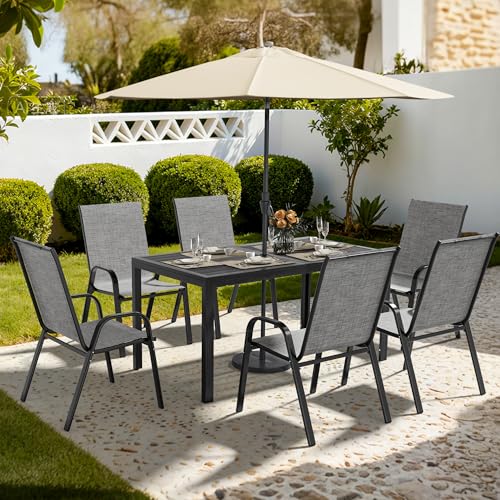
Outdoor Table and Chairs with Umbrella Set: The Complete Buying Guide
Everything you need to know before choosing an outdoor dining set with integrated shade — from frame materials and table sizes to umbrella stability and long-term care. Make a confident, well-informed decision for your patio, deck, or garden.
Explore the GuideWhy this guide matters: An outdoor table and chairs with umbrella set is one of the most practical purchases for any backyard. It combines dining, entertaining, and shade in a single coordinated package. But the differences between sets are bigger than they look — frame construction, table stability, umbrella mechanics, and cushion durability all affect how the set performs season after season. This guide walks you through each decision so you can match the right set to your space and lifestyle.
What Makes a Great Umbrella Dining Set
A well-designed outdoor table and chairs with umbrella set solves three problems at once: it gives you a dedicated place to eat outdoors, it provides reliable shade during sunny hours, and it keeps the seating coordinated so your patio looks intentional rather than pieced together. The best sets balance stability, weather resistance, and comfort — without forcing you to compromise on any one of them.
Before comparing individual sets, it helps to understand the core components. The table is the anchor: it must be heavy enough to resist tipping when the umbrella is open, and its surface should handle sun, rain, and occasional spills. The chairs determine comfort and how easily the set accommodates guests. The umbrella and base are the shade system — and they deserve as much attention as the furniture itself.
Table Construction and Stability
Table frames are typically built from powder-coated aluminum, high-grade steel, or solid wood. Aluminum is lightweight, rust-resistant, and easy to reposition — a strong choice for most residential patios. Steel offers heavier-duty stability and a more grounded feel, though it requires a well-maintained finish to resist corrosion. Wood, especially teak and acacia, brings natural warmth and ages gracefully when properly sealed.
Tabletop options range from tempered glass and slatted metal to solid wood and composite surfaces. Tempered glass is easy to wipe clean and reflects light nicely, while slatted tops drain rainwater quickly. If you plan to use an umbrella through the table, confirm that the umbrella hole is properly reinforced — a plastic ring or metal grommet protects the surface from wear around the pole.
Chair Comfort and Practicality
The chairs in a set are where you will spend the most time, so prioritize comfort and ease of use. Stackable chairs simplify storage during the off-season, while swivel chairs make it easier to get in and out of the table. Cushions add comfort but need to be weather-rated and quick-drying; otherwise they trap moisture and degrade faster. Look for removable, washable covers and cushions with drainage channels.
Armrests improve comfort for longer meals, and a slightly reclined back angle reduces fatigue. If the set will serve children or older guests, check that chairs are stable and not overly lightweight — a chair that slides or tips easily undermines the whole dining experience.
Umbrella and Base: The Shade System
The umbrella is what distinguishes this category from a standard dining set, and it is also the component most affected by wind. A center-pole umbrella passes through the table and is held by a base beneath it. The base must be heavy enough for the canopy size — undersized bases are the leading cause of umbrella instability. Cantilever umbrellas, which hang the canopy from a side arm, are an excellent alternative when you want shade offset from the table center or when the table has no umbrella hole.
Canopy fabric should be solution-dyed or otherwise UV-stable to resist fading. Ventilated canopies allow wind to pass through and reduce lift. Crank and tilt mechanisms add convenience, letting you adjust shade as the sun moves. Whichever style you choose, make a habit of closing the umbrella during strong winds and when the set is not in use.
Materials and Weather Resistance
Outdoor furniture lives in a demanding environment. Powder-coated finishes, stainless hardware, and rust-proof fasteners are baseline expectations for a set that will last. Wicker and resin weaves add texture and resist fading when wrapped around a weather-rated frame. Cushion fabrics should be rated for outdoor use, and any wood components should be sealed or naturally rot-resistant.
Maintenance requirements vary by material. Aluminum and resin sets usually need only occasional cleaning. Wood sets benefit from periodic sealing. Steel frames should be inspected for scratches and touched up to prevent corrosion from spreading. Choosing a material that matches how much upkeep you are willing to do is just as important as choosing a style you love.
Understanding Quality Tiers
Rather than focusing on numerical figures, it helps to think about outdoor dining sets in terms of quality tiers. The tier reflects construction standards, materials, and expected longevity — and it should guide your expectations more than any single specification.
Entry-Level Tier
Lighter frames, simpler joints, and basic umbrella mechanisms. A solid starting point for balconies, small patios, and occasional use. Expect good value for its tier when the set is stored or covered during harsh weather.
Mid-Range Tier
Thicker frames, better powder coating, more comfortable chairs, and smoother umbrella cranks. This is the balanced tier for most households — well-specified for the category and built for regular seasonal use.
Premium & Luxury Tiers
Reinforced construction, high-grade cushions, refined finishes, and heavier bases. A long-term investment for homeowners who entertain often and want the set to remain a centerpiece for years.
Across all tiers, the fundamentals stay the same: stable table, comfortable chairs, and a shade system that matches the wind conditions of your space. A mid-range set with a properly sized base will often outperform a premium set that is poorly matched to its environment.
Choosing the Right Size for Your Space
Size is the most common source of buyer regret. A set that is too large crowds the patio and makes movement awkward; a set that is too small leaves the space feeling underused. The right choice depends on both the dimensions of your outdoor area and how many people you typically host.
| Set Size | Best For | Space Consideration |
|---|---|---|
| Two-person set | Balconies, small decks, couples | Compact footprint; leave clearance for chair pull-out on both sides |
| Four-person set | Most small-to-medium patios | The most versatile option; allow walking space around all sides |
| Six-person set | Family dining, regular entertaining | Needs a dedicated dining zone; confirm umbrella base clearance |
| Eight-person set | Large decks, frequent gatherings | Plan generous circulation space; consider a cantilever umbrella |
Measure your space before shopping, and mark the footprint with tape on the ground. Account for chair pull-out space, walking paths, and the umbrella base. If you are working with a tight area, explore outdoor table and chairs for small spaces or a compact outdoor table and chairs set for 2 to keep the dining zone functional without overwhelming the patio.
Umbrella Hole vs. Cantilever Shade
The two main shade strategies for a dining set are a center-pole umbrella through the table and a cantilever umbrella positioned beside it. Each has trade-offs worth understanding before you commit.
Center-Pole Umbrellas
A center-pole umbrella is the classic solution. The table must have an umbrella hole, ideally reinforced, and the base sits beneath the table to hold the pole steady. This setup places shade directly over the dining area and keeps the footprint compact. It is the most common configuration for outdoor table and chairs with umbrella sets, and replacement canopies and bases are widely available.
The main limitation is that the pole occupies the center of the table, which can interfere with serving dishes and centerpieces. Weighted bases also take up space beneath the table, so confirm that chair legs and feet do not collide with the base.
Cantilever Umbrellas
A cantilever umbrella hangs the canopy from an offset arm, leaving the table center clear. This is ideal for tables without an umbrella hole, for sets where you want shade to one side, and for larger tables where a center pole would be inconvenient. Cantilever umbrellas typically require heavier bases and more open floor space beside the table.
If your table lacks a hole, or if you prefer the flexibility of repositionable shade, a cantilever umbrella is worth considering. You can pair it with a standard outdoor table and chairs set and still achieve excellent coverage.
Practical tip: Whatever shade system you choose, match the umbrella size to the table size. An umbrella that is too small leaves diners in the sun; one that is too large catches more wind and requires a heavier base. A canopy that extends roughly one to two feet beyond the table edge on each side is a reliable rule of thumb.
Placement, Setup, and Everyday Use
Where you place the set matters as much as which set you choose. Position the table so the umbrella casts shade over the seating area during the hours you use it most. Avoid placing the set in a wind corridor between buildings, and keep it away from low-hanging branches that could interfere with the canopy.
On decks, confirm that the structure can support the combined weight of the furniture, the base, and the people using it. Distribute weight near supporting beams where possible. On patios, ensure the surface is level so chairs sit flat and the umbrella stands upright.
Assembly and Stability Checks
Most sets assemble with basic tools in under an hour. Tighten all bolts firmly but avoid overtightening, which can strip threads or crack finishes. After assembly, test the table for wobble and adjust the feet if the set includes leveling glides. Open the umbrella fully and check that the base holds it steady; if the canopy sways noticeably with light wind, add weight to the base or reposition the set.
Seasonal Care
Routine care extends the life of any outdoor dining set. Wipe tables and chair frames with mild soap and water, rinse, and dry thoroughly. Store cushions in a dry place during off-season months or when heavy rain is expected. Close the umbrella when not in use, and consider a fitted cover for the table and chairs during extended periods of inactivity. Inspect the frame for scratches each season and touch up the finish where needed to prevent corrosion.
A Practical Shopping Checklist
Use this checklist to compare sets efficiently and avoid overlooking details that matter later:
- Table stability: Does the table feel solid when the umbrella is open? Is the umbrella hole reinforced?
- Umbrella base: Is the base included, and is it rated for the canopy size?
- Chair comfort: Are the seats deep enough, and do the cushions drain and dry?
- Frame finish: Is the powder coating even and complete, including under the table and on joints?
- Hardware: Are bolts and fasteners rust-resistant?
- Storage: Do the chairs stack or fold if you need to clear the space?
- Replacement parts: Are canopies, bases, and cushions available separately?
- Footprint: Does the set fit your measured space with room for chair pull-out and walking paths?
If you are still refining your outdoor layout, browsing related options like an outdoor table and chairs with umbrella hole or an outdoor table with 4 chairs and umbrella can help you narrow the field before committing to a final choice.
Frequently Asked Questions
What size outdoor table and chairs with umbrella set should I choose?
What materials work best for an outdoor dining set with umbrella?
How important is an umbrella hole in the table?
How do I stabilize an umbrella on a windy patio?
What is the difference between an entry-level and a premium outdoor dining set?
Ready to Compare Outdoor Dining Sets?
Use the checklist above to evaluate sets with confidence, or explore related configurations to find the right fit for your patio, deck, or garden.
View Recommended Options