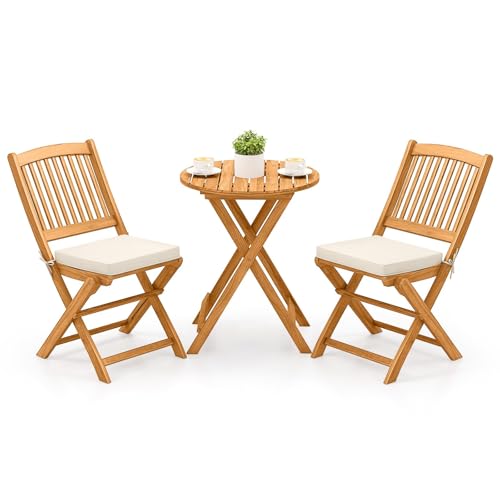
Outdoor Table and Chairs for Small Spaces
Compact dining sets, clever layouts, and practical buying advice for balconies, tiny patios, and snug decks. Learn how to seat two to four people comfortably without sacrificing style or function.
Why the Right Small-Space Set Makes a Difference
A small balcony, narrow deck, or compact patio does not mean you have to give up outdoor dining. The right outdoor table and chairs for small spaces can turn an unused corner into a functional dining nook, a morning coffee spot, or an evening gathering place for two.
The challenge is that most patio furniture is designed for generous footprints. Oversized rectangular tables and bulky armchairs crowd narrow walkways, block doors, and make a space feel smaller than it is. Compact sets solve this by pairing efficient table shapes with slim chairs, folding mechanisms, and stackable frames.
This guide walks you through the decisions that matter most: table shape, chair style, material durability, and how to measure your space so the set fits on day one — not after a return. By the end, you will know exactly which type of compact set suits your balcony, patio, or small deck.
Quick rule of thumb: Leave at least 24 inches (about 60 cm) of clearance around the table so chairs can slide in and out comfortably. On a balcony, also account for the swing of any door that opens onto the space.
Best Table Shapes and Sizes for Compact Areas
Table shape has a bigger impact on usable space than raw dimensions. A round table that fits into a corner often feels more spacious than a rectangular table of the same surface area. Here is how the common options compare.
Round Tables
Round tables are the most space-efficient choice for tight areas. With no corners, they allow chairs to tuck in from any angle and make traffic flow smoother. A 30- to 36-inch round table comfortably seats two, while a 40- to 42-inch model can seat three or four with slimmer chairs. For a classic two-person setup, a bistro-style small round table and two chairs is one of the most reliable configurations.
Square Tables
Square tables offer slightly more usable surface per side than round tables and pair well with straight walls and railings. A 32- to 36-inch square table seats four when chairs are pulled in tight. They are a strong pick for a narrow patio where the table sits parallel to a wall.
Small Rectangular Tables
Rectangular tables work best when placed lengthwise along a wall or railing. They suit narrow balconies where depth is limited but length is available. A two-seat rectangular table can function as a slim console when not in use. For a full dining setup with more seating, an outdoor table and four chairs with cushions can still work if the table is kept modest in width.
Recommended Footprints
Two-Person Balcony Set
Table footprint of roughly 24–30 inches across, paired with two slim or folding chairs. Best for balconies under 50 square feet.
Four-Person Compact Set
A 32–40 inch round or square table with four stackable chairs. Suits patios and decks in the 50–90 square foot range.
Multi-Use Fold-Down Set
A wall-mounted or folding table that collapses when not in use. Ideal for micro-balconies where floor space must stay clear.
Materials That Hold Up in Small Outdoor Spaces
Small spaces often mean less airflow and more exposure to splash, humidity, and concentrated sun. The material you choose determines how much maintenance the set needs over the seasons.
Powder-Coated Aluminum
Aluminum is lightweight, rust-resistant, and easy to move — a major advantage when you need to rearrange a tight space. Powder-coated finishes resist scratching and fading. This is the most common frame material for mid-range compact sets and a dependable baseline for balconies.
High-Density Polyethylene (HDPE)
HDPE is a weatherproof resin that will not rot, splinter, or absorb moisture. It is heavier than aluminum but requires almost no upkeep. Look for UV-stabilized HDPE to prevent color fading in sun-exposed spots.
Weather-Treated Wood
Acacia and teak are popular for small dining sets because they bring warmth and pair well with compact bistro styling. Both need occasional oiling to maintain their finish, but they age gracefully. Avoid untreated softwoods, which warp quickly in damp conditions.
Steel and Wrought Iron
Steel frames feel sturdy and hold up well when finished with a rust-proof coating. They are heavier, which can be a drawback on a balcony with weight limits. Wrought-iron bistro sets are a classic choice for a compact, permanent look.
Maintenance tip: On a covered balcony, wipe down frames and table surfaces monthly. In exposed areas, rinse and dry the set after heavy rain and store cushions indoors when not in use.
Space-Saving Features Worth Prioritizing
Function beats form in a small space. These features make a measurable difference in how much room a set actually consumes.
Folding Tables and Chairs
Folding mechanisms let you collapse the set and reclaim floor space. A folding bistro table paired with two folding chairs can be stored against a wall or inside a closet. This is the most flexible option for renters and micro-balconies.
Stackable Chairs
Stackable chairs reduce the visual clutter of empty seating and free up walkway room when guests are not around. They pair well with fixed round or square tables.
Tuck-Under Design
Chairs with low arms or armless profiles slide fully under the table, shrinking the set's total footprint. If your balcony is tight, prioritize armless or slim-arm chairs.
Drop-Leaf Tables
A drop-leaf table has hinged sides that fold down, letting you shrink the table from a four-person surface to a slim two-person console. It is one of the most space-efficient designs for a narrow patio or a deck that doubles as a walkway.
Built-In Storage
Some compact tables include a lower shelf or storage compartment. These keep small items like napkins, planters, or grilling tools off the tabletop and off the floor. If storage is a priority, see our guide to outdoor tables with storage.
Compact Outdoor Table and Chair Tiers Compared
Compact sets vary widely in build quality and feature set. The table below groups them into universal tiers so you can match a set to how you plan to use it — without relying on transient market figures.
| Tier | Typical Build | Best For | Durability Outlook |
|---|---|---|---|
| Entry-Level | Light steel or resin frames, basic finishes | Renters, seasonal use, covered balconies | Solid for light use; may need replacement after several seasons outdoors |
| Mid-Range | Powder-coated aluminum, UV-stabilized resin, treated wood | Year-round use on patios and decks | Good value for its tier; resists rust and fading with routine care |
| Premium | Heavy-gauge aluminum, solid acacia or teak, reinforced joints | Daily use, exposed patios, design-focused spaces | |
| Top-Tier | Marine-grade hardware, commercial-grade finishes, precision joinery | High-traffic decks, long-term investment, coastal exposure | Built to last many seasons with minimal upkeep |
Within each tier, look for reinforced joints, a weather-resistant coating, and a tabletop that can handle both sun and rain. Entry-level sets are a reasonable starting point for a covered balcony, while mid-range and premium sets make more sense for uncovered patios that see year-round weather.
Layout and Measurement Tips for Tight Spaces
Before ordering a set, measure the space and map the layout. A few minutes with a tape measure prevents the most common small-space mistake: a table that technically fits but leaves no room to move.
- Measure the usable floor area. Exclude the swing path of doors and the space needed for railings, planters, and walkways.
- Plan 24 inches of chair clearance. Chairs need room to pull out and slide back in. If that space overlaps a doorway, consider a folding or drop-leaf design.
- Choose the table shape for the footprint. Round for corners and tight flow; square for wall-adjacent setups; narrow rectangular for balconies with length but limited depth.
- Keep the walkway clear. Leave at least one unobstructed path from the door to the railing. This keeps the space usable even when the table is fully set.
- Use vertical space. Wall-mounted planters, hanging lights, and hooks reduce the need for floor-level storage. If space is very tight, browse ideas for an outdoor setting that layers vertical elements.
- Add shade carefully. A compact umbrella or a wall-mounted shade keeps sun off the table without consuming extra floor area. Explore outdoor shade options sized for small patios.
Reality check: A set that looks compact in a product photo can still feel bulky in a 40-square-foot balcony. Check the assembled footprint — including chairs pulled out — before you commit.
Find the Right Compact Set for Your Space
Browse our recommended outdoor tables and chairs selected for balconies, small decks, and tight patios. Each option is chosen for compact footprints, durable materials, and practical features.
Explore RecommendationsFrequently Asked Questions
What is the best table shape for a small outdoor space?
Round and square tables generally work best in small spaces because they fit more efficiently into corners and allow smoother traffic flow around them than long rectangular tables. Round tables are especially useful in tight, irregular spaces.
How many chairs can fit around a compact patio table?
Most compact round or square tables comfortably seat two to four people. A two-seat bistro setup is ideal for balconies, while a four-seat square table suits small patios and decks. Slim or armless chairs allow more seating within the same footprint.
Should I choose folding or fixed outdoor table and chairs?
Folding and stackable designs are the most practical for small spaces because they can be collapsed and stored when not in use. Fixed sets offer a sturdier feel but require permanent floor space and are better suited to patios that stay set up year-round.
What materials hold up best on a small balcony?
Powder-coated aluminum, high-density polyethylene (HDPE), and weather-treated acacia or teak are excellent choices. They resist moisture, require minimal maintenance, and stay lightweight enough for compact spaces. Avoid untreated softwoods, which can warp in damp conditions.
How much clearance should I leave around a small patio table?
Leave at least 24 inches (about 60 cm) of clearance on the sides where chairs need to pull out. On a balcony, also account for door swing and at least one unobstructed walkway between the door and the railing.