Outdoor Setting Guide: Plan a Space That Works for Everyday Living
Everything you need to know before committing to an outdoor setting — from zoning and scale to materials, shade, and long-term care. Read the full guide, then compare the recommended pieces below.
See Recommended SettingsWhy this guide matters: An outdoor setting is more than a furniture purchase — it is a layout decision. Getting the zones, scale, and materials right the first time is what separates a backyard that gets used daily from one that sits empty. This guide walks you through each decision in order, so by the end you will know exactly which configuration suits your space and how to keep it in shape for years.
What Counts as an Outdoor Setting?
An outdoor setting is the complete arrangement of furniture, shade, and accessories that turns a patio, deck, or yard into a usable living area. It is not a single product — it is the combination of seating, surfaces, cover, and finishing touches working together. A well-planned outdoor patio furniture arrangement typically includes four layers: a seating or dining core, a table surface, shade overhead, and lighting or decor to extend usable hours into the evening.
Because the setting is defined by how the pieces relate to one another, the order of decisions matters. Choose the core function first, then scale, then materials, then shade, and finally accessories. Buyers who reverse this order often end up with beautiful individual pieces that do not fit the space or each other.
Step 1 — Define the Primary Use
Before comparing any furniture, decide what the setting needs to do most of the time. Most outdoor settings fall into one of four functional cores:
Dining Core
Built around a table with matching chairs or benches. Best when meals, gatherings, and shared activities dominate. Requires more floor clearance per seat than a lounging setup because chairs need room to pull out. See our outdoor dining furniture overview for configuration options.
Lounge Core
Built around deep seating, sofas, or sectionals with a low coffee table. Best for conversation, reading, and relaxed evenings. Uses more floor area per seat but fewer seats overall. Explore outdoor lounge furniture for layout ideas.
Conversation Core
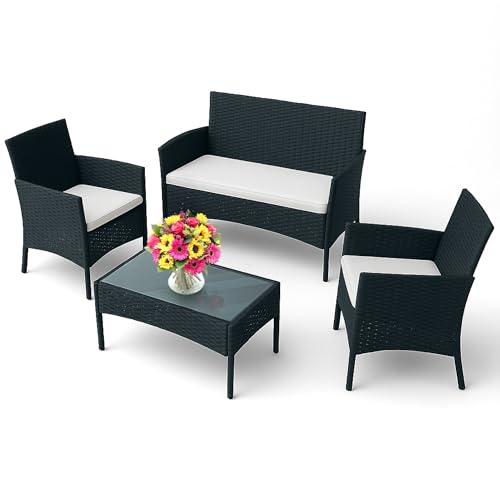
Built around a compact grouping — a loveseat, two chairs, and a side table — arranged to face inward. Best for small patios and balconies where a full dining set would overwhelm the space. Browse patio conversation sets for scaled-down options.
Entertainment Core
Built around a focal feature such as a fire pit, bar-height table, or game surface. Best when hosting is the priority. A table and chair set with a fire pit combines dining and evening ambiance in one footprint.
If your space is large enough, combine two cores — for example, a dining zone at one end and a lounge zone at the other. The critical rule is separation: each zone needs its own visual boundary, whether that is a rug, a change in surface material, or simply a gap of open walkway.
Step 2 — Match Scale and Layout to the Space
Scale is the most common reason an outdoor setting feels wrong even when every individual piece is well made. A large dining set in a narrow patio blocks circulation; a small bistro set on a wide deck looks lost. Measure the available area first, then subtract walkway width before selecting furniture dimensions.
Clearance Rules of Thumb
For dining settings, allow enough space behind each chair for a person to push back and stand — roughly the depth of the chair plus a comfortable step. For lounging settings, leave a clear path between the seating edge and any wall, planter, or railing. For fire pit arrangements, maintain a generous perimeter so guests can move without stepping into the heat zone. These clearances matter more than the furniture footprint itself; a set that fits on paper but leaves no room to move will not get used.
Practical tip: Mark the proposed footprint on the ground with painter's tape before ordering. Walk around it, pull an imaginary chair out, and check whether doors and steps still open freely. This five-minute step prevents most layout regrets.
Layout Patterns That Work
Rectangular patios suit parallel arrangements — a sofa facing a pair of chairs across a coffee table, or a dining table aligned with the long axis. Round and square patios suit radial arrangements that face a central point. Narrow spaces suit linear arrangements along one wall, with side tables and planters filling the opposite edge. If your patio is tight, conversation sets for small spaces are purpose-built for these constraints, and a small screened-in porch setup guide covers the specific challenges of enclosed areas.
Step 3 — Choose Materials and Quality Tier
Outdoor settings are judged by how they age. Frame material and cushion fabric determine whether the setting still looks intentional after several seasons of sun, rain, and temperature swings. Rather than shopping by numeric comparison, think in terms of market tier — entry-level, mid-range, and premium — because the tier reliably predicts construction quality, finish durability, and warranty support.
Essential Tier
Typically uses lighter-gauge aluminum or steel frames with powder-coated finishes and standard polyester cushions. A solid choice for covered patios, seasonal use, or first-time setups where the setting will be stored during harsh months. Look for reinforced joints and confirm the finish is rated rust-resistant.
Balanced Tier
Steps up to heavier frame stock, better welds, and solution-dyed or acrylic-blend fabrics with improved UV resistance. This tier usually offers the strongest combination of durability and design range, and it is where most full-time outdoor settings land. Many mid-range sets include weather-resistant coating on all hardware.
Top-Tier
Built with high-grade steel, solid teak, or commercial-grade resin wicker, paired with performance fabrics rated for continuous exposure. These settings are the long-term investment choice for uncovered patios and high-use households. Expect tighter tolerances, replaceable components, and stronger warranty coverage.
Material Comparison
| Material | Best For | Maintenance Level | Weather Behavior |
|---|---|---|---|
| Powder-Coated Aluminum | Everyday settings that get rearranged often | Low — wipe down and rinse | Rust-proof finish; lightweight but stable when frames are properly weighted |
| High-Grade Steel | Fixed layouts and heavier-use dining settings | Moderate — inspect for chips | Very stable; requires intact coating to prevent corrosion |
| Teak and Hardwood | Natural-look settings and covered patios | Moderate — periodic oiling | Weathers to a silver patina; durable when sealed |
| Resin Wicker | Lounge and conversation settings | Low — rinse and dry | UV-stabilized versions resist fading; woven texture hides wear |
| Performance Fabric Cushions | All settings exposed to sun and rain | Low — spot clean, air dry | Solution-dyed fibers hold color; quick-dry cores resist mildew |
Cushions deserve separate attention because they are the component most likely to fail first. Choose quick-dry foam with removable, washable covers, and confirm the fabric is rated for outdoor exposure. Our guides on outdoor furniture fabric and outdoor furniture cushions go deeper into fiber types and fit. If you already own a frame you like, replacement cushions can refresh the entire setting without replacing the structure.
Step 4 — Plan Shade Before Accessories
Shade is structural to an outdoor setting, not decorative. It determines when the space is usable, protects occupants from direct sun, and shields furniture finishes and cushions from UV degradation. Plan shade after the layout is fixed, because the shade type depends on where the seating sits and whether there is a wall or post to anchor to.
For compact settings, a market umbrella through a table hole is the simplest solution — see our dining set with umbrella hole options. For larger or irregular layouts, a cantilever umbrella frees the table surface, while a pergola or gazebo provides permanent coverage and defines the setting's architecture. If your setting is on a deck, a dedicated shade solution review can help you match coverage area to your layout.
Step 5 — Finish With Lighting, Storage, and Decor
Accessories are what make a setting feel finished, and they are the last decision — not the first. Lighting extends usable hours, storage protects cushions and keeps the setting tidy, and textiles soften hard surfaces. Add these in order of function:
Outdoor Setting Completion Checklist
- Lighting: Layer ambient string lights with task lighting near dining or reading areas. Solar and LED options reduce wiring needs.
- Storage: A waterproof cabinet or storage box keeps cushions dry and out of the way during off-seasons. Vertical cabinets suit narrow spaces.
- Rug: An outdoor rug defines the zone and prevents furniture from sliding on smooth decking.
- Side surfaces: Side tables and ottomans add landing space for drinks and books, and ottomans double as extra seating.
- Planters: Grouped planters soften edges and add privacy without a permanent structure.
- Covers: Fitted covers protect frames and cushions during long periods of disuse.
For storage specifically, match the container to the climate. A waterproof metal storage cabinet handles year-round exposure, while an outdoor setting with built-in cushion storage keeps everything in one footprint. Smaller patios may only need outside storage boxes for cushions and throws.
Five Mistakes That Undermine an Outdoor Setting
1. Buying furniture before measuring clearance. The set fits the footprint but not the walkway. Measure movement space first, then furniture dimensions.
2. Treating shade as an afterthought. A setting without shade is unusable at midday and fades faster. Plan coverage alongside the layout.
3. Mixing incompatible materials. A heavy steel table paired with lightweight aluminum chairs feels unstable and looks mismatched. Choose a consistent tier across the set.
4. Skipping storage. Cushions left out through wet seasons deteriorate quickly. A storage cabinet or box is part of the setting, not an extra.
5. Overfilling the space. Leaving open floor area is what makes a setting feel comfortable. Resist the urge to fill every corner.
Keeping the Setting in Shape
Maintenance is straightforward when it is scheduled rather than reactive. At the start of each season, tighten fasteners, inspect welds and coating for chips, and clean frames with mild soap and water. Cushions should be spot cleaned and allowed to air dry fully before storage. For metal frames, address any coating damage promptly to prevent corrosion from spreading — our rust removal guide covers the process step by step.
Fabric care depends on the fiber. Performance fabrics tolerate mild detergent, while natural weaves need gentler handling. During extended disuse, use fitted covers and store cushions indoors or in a sealed cabinet. If your setting includes hardwood, apply a suitable sealant on the schedule recommended by the manufacturer to preserve the finish.
Frequently Asked Questions
How do I choose the right outdoor setting for my space?
Start by measuring your available area and identifying how you plan to use it. A dining-focused setting needs a table with adequate chair clearance, while a lounging setting prioritizes deep seating and low tables. Match the scale of furniture to the size of the space so walkways remain open and the layout feels balanced rather than crowded.
What materials work best for outdoor settings?
Powder-coated aluminum, high-grade steel, teak, and resin wicker are all strong choices. Aluminum resists rust and stays light enough to rearrange, teak weathers gracefully with occasional oiling, and resin wicker offers a woven look with low upkeep. Whichever you choose, confirm the frame and cushions carry weather-resistant finishes rated for year-round exposure.
How much shade does an outdoor setting need?
Aim for at least one shaded zone covering the main seating or dining area during the hottest part of the day. A cantilever or market umbrella works for compact spaces, while a pergola or gazebo suits larger settings. Shade also protects furniture finishes and cushions, extending the life of your investment.
How do I arrange furniture in a small outdoor setting?
Keep the layout simple with one clear focal point and leave generous walkways. A bistro set or a compact conversation grouping with a loveseat and two chairs usually fits better than a full dining arrangement. Vertical elements such as planters and wall lighting add depth without consuming floor area.
How should I maintain an outdoor setting through the seasons?
Clean frames and cushions regularly, tighten fasteners at the start of each season, and use fitted covers during long periods of disuse. Store cushions in a waterproof cabinet or storage box when not in use, and inspect for rust or fabric wear before the rainy season begins.
Ready to compare: With the layout, tier, shade, and accessory plan settled, you are ready to look at specific configurations. The recommended pieces below are grouped to match the functional cores covered in this guide — use them as a starting point and confirm dimensions against your measured footprint before ordering.