Outdoor Furniture Cushions: The Complete Buying & Care Guide
Your patio seating is only as comfortable as the cushion on top of it. This guide walks you through fabrics, foam, fit, and maintenance so you can choose cushions that stay plush, resist the weather, and look right on your furniture for seasons to come.
Start With The BasicsWhy Cushions Make or Break Your Patio Setup
Homeowners researching outdoor furniture cushions usually already have a frame, set, or seating arrangement in mind. The cushion decision is what turns a hard, functional structure into a place you actually want to sit for hours. Cushions influence comfort, visual style, and the long-term wear of your furniture — and the wrong choice shows up quickly in the form of flattened foam, faded fabric, or mildew after the first wet season.
A well-chosen cushion set balances three things: a cover fabric that handles sun and moisture, a filling that holds its shape under daily use, and a size that fits your specific seat dimensions. Get those three right and the rest — color, pattern, piping, ties — becomes a matter of taste rather than guesswork.
The Four Factors That Decide Cushion Quality
Every cushion purchase comes down to four variables. Understanding how they interact prevents the common mistake of over-specifying one factor (usually fabric) while neglecting another (usually fill or fit).
- Cover fabric: determines fade resistance, water behavior, and how the cushion feels against skin.
- Filling: determines comfort, loft retention, and drying speed.
- Fit and attachment: determines whether the cushion stays put and whether it looks tailored.
- Construction details: stitching, zippers, ties, piping, and seams tell you a lot about how the cushion will age.
If you are also evaluating the frame itself, our guide to outdoor patio furniture covers materials, frames, and set configurations that pair well with different cushion styles.
Fabrics That Survive the Outdoors
The cover is the first line of defense. Outdoor cushions use fabrics engineered differently from indoor upholstery, but not all outdoor fabrics perform equally. Here is how the main categories compare.
Solution-Dyed Acrylic
Color is added to the fiber before it is spun, so the dye runs through the entire thread rather than sitting on the surface. This makes it highly fade-resistant under prolonged sun exposure and a strong choice for uncovered patios. It also resists mildew well when the cushion drains properly. It sits in the premium to luxury tier for outdoor fabrics.
High-Grade Polyester Blends
Modern performance polyester blends offer good fade and moisture resistance at a more accessible position in the market. They feel softer than older polyester covers and are a common mid-range choice. Some blends add acrylic content to improve UV performance further.
Olefin
Olefin is naturally water-resistant and quick-drying, which makes it useful for poolside and humid climates. It has a slightly different hand-feel than acrylic and holds color well. Mid-range to premium depending on the weave and finishing.
Entry-Level Polyester
Standard polyester covers are fine for covered porches, sunrooms, and seasonal use. They are lighter and generally less fade-resistant, so they are best when the cushions are not in direct sun all day. If you want more detail on fabric performance, see our guide to outdoor furniture fabric.
| Fabric Type | Tier Position | Best For | Watch Out For |
|---|---|---|---|
| Solution-dyed acrylic | Premium / luxury | Uncovered patios, strong sun | Higher upfront positioning |
| Performance polyester blend | Mid-range | Most residential patios | Varies widely by brand |
| Olefin | Mid-range to premium | Poolside, humid climates | Slightly different texture |
| Standard polyester | Entry-level | Covered porches, light use | Less fade resistance |
Foam, Fiber, and Fillings
The filling is what you feel, and it is the most common reason cushions get replaced before the cover wears out. There are three main approaches.
Polyurethane Foam
The standard core for seat cushions. Density matters more than thickness: a higher-density foam in a moderate thickness usually outperforms a thick low-density block. Mid-range and premium cushions typically use higher-density or layered foam that resists bottoming out.
Reticulated (Open-Cell) Foam
Foam with an open pore structure that lets water and air pass through instead of being trapped. This is the fill you want for cushions that see rain or heavy humidity, because it dries much faster and resists mold growth inside the core.
Fiber Fill and Blends
Polyester fiber fill gives a softer, more pillowy feel and is common in back cushions. It needs occasional fluffing and can compress over time. Foam-and-fiber blends aim to combine structure with softness, and are a solid balanced-tier choice for back and throw cushions.
- Seat cushions: prioritize foam density and moisture management.
- Back cushions: fiber or blended fill is usually more comfortable.
- Quick-dry needs: look for open-cell foam and drain-friendly construction.
Measuring for the Right Fit
Fit problems cause most cushion returns and most complaints about cushions sliding around. Take measurements from the furniture frame, not from an old cushion, whenever possible.
- Seat width: measure the clear width between armrests or frame edges.
- Seat depth: measure front to back where the cushion will sit.
- Thickness: confirm the maximum thickness your frame and backrest can accept.
- Back height: for one-piece cushions, measure the full height of the back panel.
- Attachment points: check for tie loops, Velcro, or strap channels.
If you are outfitting dining chairs, our guide to outdoor dining replacement cushions covers the specific shapes and dimensions common to dining seats. For lounge seating, our overview of outdoor lounge furniture explains how cushion proportions differ across deep seating styles.
Quality Tiers Explained
Rather than comparing cushions by any single spec, it helps to understand the tier structure of the market. The descriptors below are relative positions, not fixed attributes — a well-made mid-range cushion can outperform a poorly made premium one.
| Tier | Typical Fabric | Typical Fill | Best For |
|---|---|---|---|
| Entry-level | Standard polyester | Basic foam | Covered porches, seasonal seating |
| Mid-range | Performance polyester blend | Denser foam, some open-cell | Everyday residential patios |
| Premium | Olefin or acrylic blend | High-density or open-cell foam | Sun-exposed, frequent use |
| Luxury / commercial-grade | Solution-dyed acrylic | Layered high-density foam | Full-sun patios, hospitality use |
When comparing options within a tier, focus on seam quality, zipper type, and whether the fill is specified by density rather than simply described as "high-density." Specificity is usually a sign of a better-specified product for its class.
Cleaning & Storage Care
Good care routines extend cushion life more than almost any product upgrade. The goal is to remove dirt before it works into fibers and to keep cushions dry between uses.
Routine Cleaning
- Brush off loose debris and leaves weekly.
- Spot clean with mild soap and water using a soft brush.
- Rinse thoroughly so soap residue does not attract dirt.
- Air-dry upright so water drains away from the core.
Seasonal Care
- Deep clean at the start and end of the season.
- Store cushions in a waterproof deck box or indoors during off-season months.
- Check for mold after long wet periods and clean promptly.
- Rotate cushions on symmetrical seating to even out wear.
If you are setting up storage, our guide to outdoor patio furniture with storage for cushions covers built-in storage options that keep cushions protected on the patio itself.
Matching Cushions to Your Furniture
Cushion style should follow the frame and the setting, not the other way around. A few reliable rules:
- Metal frames: slimmer, more tailored cushions look intentional; overly thick cushions can look out of proportion.
- Wood and wicker: thicker cushions with textured fabrics complement the natural grain or weave.
- Deep seating and sectionals: larger cushions benefit from a slightly firmer fill so they do not compress unevenly.
- Dining sets: thinner, tied seat cushions are easier to move and clean.
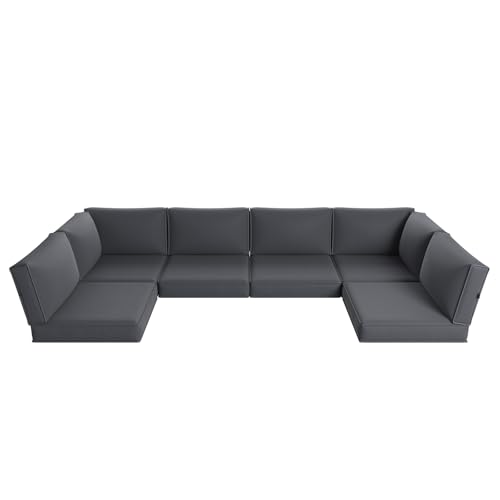
For sectional seating, see our overview of an outdoor sectional with waterproof cushions to understand how cushion sizing works on larger configurations. If your seating is a loveseat or sofa, the cushion proportions differ; our pages on outdoor loveseat and patio couch cover those dimensions in more detail.
Color and pattern are the final layer. Solid neutral covers are the most versatile and easiest to refresh with throw pillows. Patterns can anchor a theme but are harder to mix across a full set, so pick one focal pattern and keep the rest quiet.
Frequently Asked Questions
How do I measure for outdoor furniture cushions?
Measure the seat width, depth, and thickness directly from the furniture frame. For one-piece cushions, also measure the full back height. Compare your measurements to the listed cushion dimensions and leave a small tolerance for fabric thickness.
What fabric is best for outdoor cushions?
Solution-dyed acrylic is the most fade-resistant option for full-sun patios. Performance polyester blends and olefin are solid mid-range choices for most residential settings, while standard polyester suits covered porches and light use.
Can I leave outdoor cushions outside in the rain?
Brief rain is usually fine with weather-resistant covers and quick-drying foam, but prolonged exposure shortens cushion life. Bring cushions inside or store them in a waterproof deck box during heavy rain and off-season months.
How do I clean outdoor furniture cushions?
Brush off loose debris, then clean with mild soap and water using a soft brush. Rinse thoroughly and air-dry upright. Always check the care label, and avoid harsh bleach on colored fabrics.
How often should outdoor cushions be replaced?
Replacement timing depends on fill quality and exposure. Cushions that flatten quickly or no longer spring back, show persistent staining, or develop mold inside the core are due for replacement. Higher-density and open-cell foam generally lasts longer.
Ready to Compare Cushion Options?
Use our recommended product section below to compare cushion sets by fabric, fill type, and fit. Each listing includes the key specs so you can match a cushion to your specific furniture and climate.
View Recommended Cushions