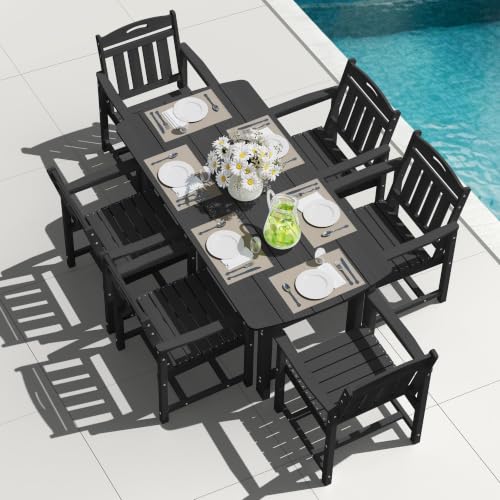
Outdoor Table with Umbrella Hole and Chairs: The Complete Buying Guide
Everything you need to know before choosing a patio dining set with a built-in umbrella hole — table shapes, chair types, materials, shade planning, and long-term care.
Start the GuideWhy this guide matters: An outdoor table with an umbrella hole and chairs is one of the most practical patio purchases you can make. It combines dining space with built-in shade, which means fewer separate pieces to store and a more cohesive look. But the details decide whether the set works for your space: hole diameter, umbrella pole size, table material, chair stacking, and how the base anchors everything. This guide walks through each decision so you can choose with confidence.
What an Outdoor Table with Umbrella Hole and Chairs Actually Includes
These sets combine three core components: a table, a set of chairs, and a pre-drilled umbrella hole in the tabletop. Many buyers assume the umbrella is included, but that varies by product. Some bundles ship with a canopy and base; others provide only the hole and expect you to source shade separately. Before ordering, confirm three things: whether the umbrella is included, the hole diameter, and the pole diameter the table is designed to accept.
The hole itself is a simple feature with an outsized effect on usability. It keeps the pole centered over the table, so shade falls evenly across the seating area rather than drifting to one side. It also frees up floor space that a freestanding cantilever umbrella would occupy. If you want maximum flexibility, a dedicated umbrella setup paired with a standard table works, but the integrated-hole design is cleaner for everyday dining.
Common Set Configurations
- Two-seat bistro sets: Compact round tables with a central hole, ideal for balconies and small decks. See our guide to an outdoor small round table and 2 chairs for sizing advice.
- Four-seat dining sets: The most popular configuration. A square or round table with four chairs fits most patios and pairs naturally with a standard umbrella.
- Six- and eight-seat sets: Rectangular tables that anchor a full outdoor dining room. These usually require a larger canopy and a heavier base.
- Mixed seating: Benches on one side and chairs on the other, or a table paired with swivel chairs for easier movement.
Choosing the Right Table Shape and Size
Table shape affects seating flow, umbrella coverage, and how much room the set needs. Round tables soften tight spaces and make conversation easier because everyone faces inward. Square tables maximize surface area in a compact footprint. Rectangular and oval tables suit larger groups but demand more clearance on the long sides.
Practical Sizing Rules
- Clearance: Leave roughly 36 inches between the table edge and walls or railings so chairs can slide out without scraping.
- Per-person width: Allow about 24 inches of table edge per diner for comfortable elbow room.
- Umbrella coverage: The canopy should extend past the seating edge on all sides. A canopy that only covers the tabletop leaves shoulders and arms in the sun.
- Hole placement: On rectangular tables, the hole is usually centered. On oval tables, confirm it is centered on the long axis rather than offset.
If your space is tight, a table and chairs set for a small deck with a folding or stacking design is worth considering. For larger gatherings, a six-person set gives everyone room without crowding the umbrella pole.
Umbrella Hole and Pole Compatibility: The Detail Buyers Miss
The umbrella hole is only useful if the pole fits. Holes typically range from about 1.5 inches to 2 inches in diameter, and poles vary accordingly. A 2-inch hole will accept a 1.5-inch pole with a collar or sleeve, but a 1.5-inch hole will not accept a 2-inch pole. Always match the two before purchase. Our note on an outdoor table with a 2-inch umbrella hole explains how that standard affects pole and base choices.
Equally important is the base. The hole holds the pole vertical; it does not stop the umbrella from tipping in wind. A weighted base — often sold separately — is essential, and the required weight scales with canopy size. Larger canopies need heavier bases. If your table has a center hole but no way to secure a base underneath, a freestanding base or a dedicated umbrella holder solves the problem.
Quick compatibility check: Measure the hole, measure the pole, and confirm the base fits the pole and the space beneath the table. If you are replacing just the tabletop, an outdoor table top replacement with umbrella hole can keep your existing chairs and base in service.
Chair Types That Pair Well with Umbrella Tables
The chairs determine comfort and storage more than the table does. Stacking chairs are the easiest to store and move. Swivel chairs make it easier to get in and out around a fixed umbrella pole. Rocking and glider chairs add relaxation but take more clearance. For a formal dining setup, look for chairs with arms that tuck under the table edge so the set looks tidy when not in use.
- Stacking chairs: Best for seasonal storage and small patios.
- Swivel dining chairs: Helpful around a center pole; see swivel dining chairs with cushions for comfort-focused options.
- Armchairs: More comfortable for long meals but require more table clearance.
- Benches: Maximize seating per linear foot and slide fully under the table.
- Bar-height stools: Only for counter-height tables; not compatible with standard umbrella holes.
Cushions add comfort but need care. Choose quick-dry foam and solution-dyed fabrics, and bring cushions inside during heavy rain or off-season storage. If you are outfitting a larger seating area around the dining table, complementary swivel chairs can create a lounge zone nearby.
Table and Chair Materials: What Lasts
Material choice is the biggest factor in longevity. The table below groups common options by market tier so you can match the set to your climate and expectations without relying on numeric comparisons.
| Material | Market Tier | Best For | Care Notes |
|---|---|---|---|
| Powder-coated aluminum | Mid-range to premium | All-around patios; humid and coastal climates | Rust-resistant; wipe clean; check welds and coating quality |
| Teak and acacia | Mid-tier to high-end tier | Natural look; covered porches and mixed climates | Periodic sealing; oil annually; expect patina outdoors |
| Resin / high-density polyethylene | Entry-level to mid-range | Low-maintenance households; rainy regions | Hose clean; UV-stable grades resist fading; lighter weight |
| Powder-coated steel | Essential tier to mid-tier | Heavy-duty use; windy sites | Durable but heavier; require rust-proof finish and touch-ups |
| Stone and concrete composite | Premium to luxury | Permanent setups; formal patios | Very heavy; excellent wind resistance; may need sealing |
| Glass-topped tables | Mid-range to premium | Easy-clean surfaces; modern looks | Tempered glass required; inspect edges; pair with stable bases |
For a deeper look at surface options, our overview of an outdoor stone table and a tempered glass table top replacement covers durability and care in more detail. The key takeaway: match the material to your climate first, then to your style.
Shade Planning: Getting the Umbrella Right
The umbrella is what makes the hole useful, so treat shade as part of the set rather than an afterthought. Three variables matter: canopy size, pole type, and base weight. A canopy that is too small leaves diners exposed; one that is too large overwhelms a compact table and catches more wind. For rectangular tables, an offset or cantilever design can shade the whole table without a center pole blocking sightlines — see our notes on outdoor shade options for comparisons.
- Canopy material: Solution-dyed acrylic and polyester resist fading; check for water-repellent treatment.
- Ventilation: A vented top lets hot air escape and reduces wind lift.
- Base weight: Heavier bases for larger canopies; fillable bases are easier to move when empty.
- Tilt: A tilt mechanism helps block low sun without moving the base.
If you prefer flexibility, a weighted umbrella base and a standalone umbrella let you shade a dining table that lacks a hole. But for a permanent dining setup, the integrated hole remains the simplest solution.
How to Choose by Market Tier
Rather than comparing numeric figures, think about where each tier makes sense. Entry-level sets prioritize portability and easy storage. Mid-range sets balance weather resistance with comfort features. Premium and luxury sets focus on material longevity, refined finishes, and heavier construction that holds up in exposed locations.
- Entry-level / starter tier: Lightweight resin or folding metal sets. Best for renters, balconies, and seasonal use. Expect to store them during off-season months.
- Mid-range / balanced tier: Powder-coated aluminum frames with durable fabrics. The practical sweet spot for most homeowners who leave furniture outside for the season.
- Premium / high-end tier: Teak, thick aluminum, and stone composites with refined joinery. Worthwhile for permanent patios and households that entertain often.
- Luxury / commercial-grade: Heavy stone, reinforced frames, and contract-grade fabrics. Chosen for wind exposure, heavy use, and long-term investment.
If you are building out a larger dining area, coordinate the table with complementary pieces such as an outdoor side table for serving space. A cohesive set reads better than mismatched pieces and simplifies storage.
Placement and Setup: Making the Set Work in Your Space
Before the set arrives, measure the patio, plan chair clearance, and decide how the umbrella will be anchored. On decks, confirm the table legs do not sit directly over board gaps that could cause wobble. On concrete patios, consider a rug to define the dining zone and protect the surface. Keep the umbrella closed during high wind and store the canopy off-season.
- Position the table so the umbrella casts shade over the seating, not just the tabletop.
- Leave room for a serving path behind chairs.
- Anchor the base before the first use; check stability monthly.
- Use a fitted cover when the set is not in use for long periods.
For compact layouts, a table and chairs set for small spaces with folding chairs keeps the footprint flexible. For a larger ensemble, pair the dining set with a lounge area using an outdoor sectional with waterproof cushions to create a full outdoor room.
Care and Maintenance for Long-Term Performance
A well-chosen set stays functional for years if it is maintained. Clean frames with mild soap and water, inspect fasteners each season, and treat wood surfaces according to the manufacturer’s recommendations. Store cushions indoors, close and secure the umbrella in wind, and cover the set during off-season months. Small habits — like wiping the table after rain and checking the base for rust — prevent bigger problems later.
If you notice wobble, check leg levelers and tighten bolts before assuming the frame is failing. If the hole collar loosens, inspect the underside of the tabletop; a loose collar can let the pole tilt and stress the table. Replace worn collars promptly rather than forcing the pole.
Frequently Asked Questions
What size umbrella fits an outdoor table with an umbrella hole?
The right canopy size depends on the table shape and hole diameter. Round tables generally pair with a canopy that overhangs the seating area evenly, while rectangular tables need an umbrella centered on the hole. Always confirm the hole diameter and pole diameter match before ordering, and check that the umbrella base can support the canopy in wind.
Do outdoor tables with umbrella holes need a separate base?
Yes, in most cases a separate umbrella base is required. The hole only holds the pole upright; it does not anchor it. A weighted base placed under or around the table provides stability, and for larger canopies a heavier base is essential to prevent tipping.
Which material is best for an outdoor table and chairs set?
It depends on climate and use. Powder-coated aluminum is lightweight and rust-resistant, making it a strong all-around choice. Teak and acacia offer natural warmth but need periodic sealing. Resin and high-density polyethylene handle moisture well with minimal upkeep. Steel is heavy-duty but requires a rust-proof finish to last.
How many chairs fit around a table with an umbrella hole?
Seating capacity depends on table dimensions and shape. A compact round table usually seats two to four, a mid-size rectangular table seats four to six, and larger rectangular or oval tables seat six to eight. Always leave enough space for chairs to pull out comfortably.
Can an outdoor table with an umbrella hole stay outside all year?
Many modern sets are weather-resistant, but year-round exposure still takes a toll. Use a fitted cover during off-season months, bring cushions inside, and store the umbrella closed and secured. In freezing climates, move lighter furniture indoors or to a sheltered spot to extend its lifespan.