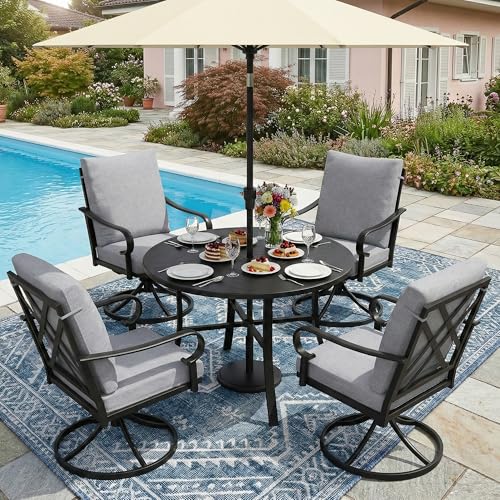
Outdoor Swivel Dining Chairs With Cushions
Everything you need to know before choosing swivel dining chairs for your patio, deck, or porch — frame materials, cushion fabrics, sizing, and the features that actually matter for long-term outdoor use.
START THE GUIDEWho this guide is for: You already know you want swivel dining chairs for your outdoor space. What you still need is clarity — on frame construction, cushion performance, dimensions, and how to match chairs to your existing table. This guide answers those questions so you can choose with confidence.
Why Choose Swivel Dining Chairs Outdoors?
Swivel dining chairs solve a problem that stationary patio chairs create: you sit down facing the table, but the conversation, the view, or the grill is somewhere else. A swivel base lets you rotate smoothly without pushing the chair back or scraping legs across the deck.
On a patio, that movement matters more than it does indoors. Outdoor dining is rarely a single fixed activity — guests move between eating, talking, watching the yard, and reaching for serving dishes. A swivel chair keeps people engaged with the table and the group at the same time.
The practical advantages
- Easier entry and exit. Rotating the seat outward gives you clearance to stand up, which is especially helpful when the chair is tucked close to a table edge or a railing.
- Better conversation flow. Guests can turn toward each other without repositioning the entire chair.
- Less floor friction. A swivel mechanism reduces the need to drag chairs, which protects deck boards, tile, and outdoor rugs.
- Multi-purpose seating. One chair can serve the dining table, a side conversation area, and a spot to watch the garden.
- Accessibility benefits. For guests with limited mobility, swiveling in place is often easier than sliding a heavy chair backward.
Worth knowing: Swivel chairs are most valuable when paired with a round or oval dining table. On a rectangular table, swivel movement is still useful, but the chair should be sized so the arms clear the table apron when rotated.
If you are still deciding between chair styles for your dining area, it helps to compare swivel dining chairs against fixed seating. Our guide to outdoor swivel chairs with cushions covers the broader lounge-oriented swivel category, while this page focuses specifically on dining-height chairs.
What to Look For Before Buying
Outdoor swivel dining chairs combine two systems that each need to hold up: the swivel mechanism and the cushion. Most disappointing purchases fail on one of those two points. Use the checklist below to evaluate any chair before you commit.
Swivel Mechanism
Look for a sealed bearing ring or a reinforced metal plate. A smooth 360-degree rotation with no wobble at the seat edge is the baseline test.
Frame Material
Powder-coated aluminum and cast aluminum are the most reliable outdoor frames. Steel is strong but demands a rust-proof finish.
Cushion Fabric
Solution-dyed acrylic or olefin resists fading and mildew. Zippered, removable covers make deep cleaning realistic.
Cushion Fill
Quick-dry foam or reticulated foam drains water and dries fast. Standard upholstery foam holds moisture and degrades.
Seat Height
Dining height chairs should place your thighs roughly parallel to the floor when seated at your table. Measure your table apron first.
Arm Clearance
Arms should clear the table edge and any apron. On tight tables, armless swivel chairs rotate more freely.
Weight and Stability
A swivel chair needs enough mass or a wide base footprint to stay planted when someone leans back.
Cushion Attachment
Ties, hook-and-loop straps, or a fitted seat channel keep cushions from sliding or blowing off in wind.
A simple in-store or delivery-day test
- Set the chair on a flat surface and rotate it fully. Listen for grinding or clicking.
- Push down on one edge of the seat while rotating. Excessive tilt means a weak swivel plate.
- Sit and lean back. The base should not lift or rock.
- Check the cushion for a removable cover and a drain-friendly fill.
- Confirm the seat height matches your table before the return window closes.
Frame Materials Compared
The frame determines how long the chair survives outdoors and how heavy it is to move. Swivel dining chairs are available in four main frame families, and each has a clear use case.
Powder-Coated Aluminum
Aluminum is the most common frame for outdoor swivel dining chairs because it is light, does not rust, and accepts a durable powder-coated finish. A properly applied powder coat resists chipping and UV fading. Aluminum frames are easy to reposition and are a strong fit for balconies and decks where weight matters. For a deeper look at this construction, see our guide to powder-coated aluminum outdoor furniture.
Cast Aluminum
Cast aluminum is heavier and often more ornate. The added mass improves stability, which pairs well with a swivel mechanism because the chair stays planted during rotation. Cast aluminum is a good match for traditional and transitional patio styles. Our overview of powder-coated cast aluminum patio furniture explains the finish differences in more detail.
Steel
Steel frames are strong and hold intricate shapes well, but they require a genuinely rust-proof finish. Any chip or scratch that exposes bare steel will begin to corrode outdoors. Steel is best reserved for covered porches or for chairs with a high-grade coating and a clear warranty.
Wicker, Rattan, and Resin Weave
Woven frames over an aluminum core are popular for swivel dining chairs because they look warm and textured while keeping the structural benefits of aluminum. All-weather resin weave avoids the brittleness of natural rattan. If you like this look, browse all-weather patio furniture for comparable woven constructions.
Teak and Hardwood
Wood swivel chairs exist but are less common at dining height because the swivel hardware must be carefully integrated. Teak is naturally weather-resistant, but wood frames need periodic oiling and should not be left in standing water. Wood is best for covered patios and consistent climates.
Cushion Fabrics and Fill
The cushion is where most outdoor dining chairs fail first. A chair frame can last a decade while the original cushion looks tired after two seasons. Understanding fabric and fill helps you avoid that outcome.
Fabric: what to prioritize
- Solution-dyed acrylic. The color is engineered into the fiber rather than applied on top, so it resists fading and holds up to cleaning. This is the benchmark for outdoor cushions.
- Olefin. Lightweight, fast-drying, and resistant to mildew. A solid mid-range choice for covered patios.
- Polyester blends. Common in entry-level cushions. Acceptable for screened porches but more prone to fading in direct sun.
- Performance weaves. Textured outdoor fabrics that mimic linen or canvas. Confirm they are rated for outdoor use rather than assuming from the look.
Fill: the part buyers overlook
Quick-dry foam and reticulated foam are the right choices for outdoor dining chairs. Both are engineered with open cells that let water pass through and air circulate. Standard furniture foam absorbs water, stays damp, and develops odor. Some cushions combine a foam core with a fiber wrap for softness — that is fine as long as the core is quick-dry.
Practical tip: Cushions that are removable and washable extend the usable life of the chair significantly. Look for zippered covers and a care label that permits machine washing on a gentle cycle. If you plan to keep cushions outdoors year-round, confirm the fabric is rated for continuous exposure.
Thickness and comfort
Dining chair cushions are usually thinner than lounge cushions because the seat needs to keep you at the right height relative to the table. A cushion that is too thick raises your seated position and can make the table feel low. Match cushion thickness to the chair's intended seat height rather than choosing the plushest option.
Replacement cushions
Swivel dining chairs often use standard seat cushion dimensions, which makes replacement straightforward. If you are refreshing existing chairs, compare outdoor seat cushions 24 x 24 and outdoor cushions for sizing and fabric options. For dining-specific replacements, see outdoor dining chairs set of 4 with cushions.
Sizing and Table Compatibility
Swivel dining chairs need more clearance than fixed chairs because the seat rotates. Plan for that movement before you order.
Key measurements to record
- Table height and apron depth. Standard dining tables sit around 28 to 30 inches high. Chair arms must clear the apron when the seat rotates.
- Seat height. Aim for roughly 10 to 12 inches between the top of the seat cushion and the underside of the table.
- Chair width including arms. Swivel chairs need enough space between neighbors that rotation does not cause arm contact.
- Base diameter. The swivel base footprint determines stability and how close chairs can sit to each other.
- Pull-out clearance. Allow room behind the chair for the seat to rotate outward without hitting a railing or wall.
Matching chairs to table shapes
Round tables are the most natural partner for swivel dining chairs because rotation aligns with the circular seating arrangement. If you are building around a round table, our guide to the round outdoor dining table set with swivel chairs covers coordinated combinations. Rectangular tables work well too, provided the chairs are armless or have low arms.
For smaller spaces, swivel chairs can be paired with compact tables to keep the layout flexible. See outdoor small table options and outdoor small patio layout ideas. If you are furnishing a full dining zone, the broader outdoor dining furniture sets category is a useful reference.
How many chairs fit?
As a working rule, allow about 24 inches of table edge per chair. A 48-inch round table comfortably seats four swivel chairs. A 60-inch round table seats six. For larger groups, compare patio table and 8 chairs configurations and confirm that swivel clearance still works at that density.
Quality Tiers Explained
Outdoor swivel dining chairs fall into recognizable tiers. Rather than comparing numbers, compare construction and materials against the tier descriptions below. This keeps the evaluation stable regardless of when you shop.
| Tier | Typical Construction | Best For |
|---|---|---|
| Entry-level | Steel or lightweight aluminum frame, basic powder coat, polyester blend cushion with standard foam | Covered porches, seasonal use, first patio setup |
| Mid-range | Powder-coated aluminum or woven resin over aluminum, sealed swivel ring, olefin or acrylic cushion with quick-dry foam | Year-round patios in moderate climates, daily family use |
| Premium | Cast aluminum or reinforced aluminum, precision swivel bearing, solution-dyed acrylic cushion with removable cover | Full-sun exposure, frequent entertaining, long-term ownership |
| Luxury / high-end tier | Heavy cast aluminum or premium hardwood, commercial-grade swivel hardware, high-performance fabric with reinforced seams | Design-focused patios, hospitality-grade durability, coastal exposure |
Mid-range chairs are usually the sweet spot for outdoor dining because they combine a sealed swivel mechanism with a cushion fabric that survives real sun exposure. Entry-level chairs can work well on a covered porch where direct weather is limited. Premium and high-end tiers make sense when the chairs will live outdoors year-round or when the patio is a primary living space.
How to judge value within a tier: compare the swivel hardware, the cushion fabric rating, and the warranty terms. A chair that is well-specified for its class will usually disclose all three. If the listing is vague about the swivel mechanism or cushion fabric, treat that as a caution flag.
Care and Seasonal Maintenance
Swivel dining chairs need a small amount of routine attention to stay smooth and comfortable. The two areas that matter most are the swivel mechanism and the cushions.
Routine care
- Wipe the frame with mild soap and water, then dry. Avoid abrasive cleaners on powder-coated surfaces.
- Clear the swivel ring of grit and debris. Sand and pollen work into the bearing and cause grinding over time.
- Brush or vacuum cushions before deep cleaning to remove loose dirt.
- Clean cushion covers according to the care label. Most solution-dyed acrylic covers tolerate a gentle machine wash, but air-dry them rather than using high heat.
- Store or cover cushions during extended wet or off-season periods.
Seasonal checklist
- Inspect the swivel mechanism for looseness and tighten hardware as needed.
- Check the frame finish for chips and touch up exposed metal promptly.
- Wash and fully dry cushions before storing.
- Store cushions indoors or in a ventilated container — not a sealed plastic bag, which traps moisture.
- Cover chairs or move them under shelter during prolonged bad weather.
For a broader maintenance routine that covers frames, cushions, and hardware, see our guide to outdoor weatherproofing. If the chairs sit on a deck, patio deck care guidance will help you protect the surface beneath them.
Common Buying Mistakes
Most regret around swivel dining chairs comes from a handful of avoidable decisions. Here is what to watch for.
1. Ignoring table clearance
Chairs with high arms can collide with the table apron when rotated. Measure the apron height before ordering, or choose armless swivel chairs for tighter tables.
2. Assuming any cushion is outdoor-ready
Standard foam and indoor upholstery fabric do not survive outdoors. Confirm the cushion uses quick-dry foam and a fabric rated for outdoor exposure.
3. Overlooking wind
Lightweight chairs with loose cushions can move in strong wind. Choose heavier frames for exposed patios and cushions with ties or straps.
4. Buying a mismatched set
Swivel chairs need to match the table's style, height, and material. A coordinated set avoids the visual and functional mismatch that comes from mixing unrelated pieces. Compare complete outdoor dining furniture sets if you want a matched look.
5. Skipping the swivel test
A stiff or wobbly swivel is difficult to fix later. Test rotation and stability before the return window closes.
6. Forgetting storage
Cushions that stay outdoors through winter degrade faster. Plan a storage location before you buy.
Ready to Choose Your Swivel Dining Chairs?
Use the product selection below to compare outdoor swivel dining chairs with cushions across frame styles, cushion fabrics, and tiers. Each listing links to current availability and full specifications.
VIEW RECOMMENDED CHAIRSRelated Patio Guides
Explore adjacent topics to complete your outdoor dining setup.
Frequently Asked Questions
Are swivel dining chairs stable enough for outdoor use?
Yes, when the swivel mechanism is properly engineered. Stability depends on the base footprint and frame mass rather than the swivel itself. Cast aluminum and heavy aluminum frames with a wide base are the most stable. Test for wobble by pressing on the seat edge while rotating.
Can swivel dining chairs be left outside in the rain?
The frame generally can, provided it has a rust-proof finish and the swivel hardware is sealed. The cushions should be brought in or covered during heavy rain unless they use quick-dry foam and a fast-draining cover. Standing water is the main enemy of both the swivel ring and the cushion fill.
Do swivel dining chairs work with a rectangular table?
They do, but check arm clearance against the table apron. Armless swivel chairs rotate more freely under rectangular tables. For rectangular configurations, compare patio dining set options and confirm chair dimensions before ordering.
What cushion fabric lasts longest outdoors?
Solution-dyed acrylic is the most reliable outdoor cushion fabric because the color is built into the fiber and resists fading. Olefin is a strong alternative, especially on covered patios. Polyester blends are acceptable for screened areas but fade faster in direct sun.
How many swivel dining chairs fit around a round table?
Allow roughly 24 inches of table edge per chair. A 48-inch round table seats four comfortably, and a 60-inch round table seats six. Swivel movement requires a little extra clearance behind each chair, so avoid overcrowding the table.
Can I replace the cushions on swivel dining chairs?
Usually yes. Many swivel dining chairs use standard seat cushion dimensions. Measure the seat width, depth, and thickness, then choose replacement cushions in a quick-dry fill and outdoor-rated fabric. Compare outdoor cushions and outdoor seat cushions 24 x 24 for sizing.
Do swivel chairs need a special floor surface?
No, but a smooth, level surface helps the swivel operate cleanly. On decks and tile, grit can work into the swivel ring over time, so periodic cleaning is worthwhile. An outdoor rug under the dining set can reduce debris and protect the surface beneath.
Are swivel chairs a good choice for small patios?
They can be, because a single chair serves multiple functions and rotation reduces the need to reposition furniture. Pair them with a compact table and keep the layout open. See outdoor small patio and outdoor small table for space-conscious combinations.