
Patio Lighting: The Complete Guide to Illuminating Your Outdoor Space
Transform your patio from a daytime retreat into an evening destination. This guide covers every lighting layer, fixture type, and planning consideration you need to create a safe, beautiful, and functional outdoor space after dark.
Start the GuideWhy patio lighting matters: A well-lit patio extends your usable outdoor hours well into the evening and adds depth, safety, and atmosphere to your entire backyard. Whether you are starting from scratch or upgrading an existing setup, understanding the three lighting layers — ambient, task, and accent — will help you make confident decisions before you buy. This guide walks you through every option so you can choose the right fixture for each zone of your patio.
Why Patio Lighting Transforms Your Space
Lighting is one of the most overlooked elements of outdoor design, yet it has the largest impact on how often you actually use your patio. A space that feels welcoming after sunset invites longer dinners, quieter evenings, and more comfortable gatherings. Good lighting also improves safety by illuminating steps, pathways, and uneven surfaces, and it adds a layer of security around your home's perimeter.
Beyond function, lighting shapes mood. The same patio can feel intimate with low warm glow, energetic with bright even illumination, or dramatic with focused accent points. The key is intentional layering rather than relying on a single overhead source. Once you understand how ambient, task, and accent lighting work together, every fixture decision becomes easier.
If you are planning a broader patio refresh alongside your lighting upgrade, our guide to patio design fundamentals covers layout, materials, and flow — all of which influence where lighting should be placed. For deck surfaces specifically, see our patio deck guide for surface-level considerations that affect fixture mounting.
The Three Layers of Patio Lighting
Professional outdoor lighting design relies on three distinct layers. Each layer serves a purpose, and combining them prevents the flat, harsh look that a single light source creates. Think of them as a system rather than individual purchases.
Ambient Lighting
The foundation of your patio's nighttime atmosphere. Ambient light provides overall visibility and a soft base glow. String lights, post lights, and ceiling fixtures typically fill this role. Aim for even, gentle coverage rather than bright spots.
Task Lighting
Focused light for specific activities: grilling, dining, reading, or navigating steps. Wall sconces, pendant lights over a table, and path lights near walkways serve this layer. Task lighting should be brighter than ambient but directed where it is needed.
Accent Lighting
The finishing layer that adds depth, drama, and visual interest. Uplights on trees or architectural features, lanterns, and low-voltage path markers create highlights and shadows that make the space feel designed rather than merely illuminated.
A balanced patio typically uses ambient lighting as the baseline, task lighting in functional zones, and accent lighting sparingly to draw the eye. If you are working with a compact area, our guide to the outdoor small patio covers how to layer light without overwhelming a tight footprint.
Types of Patio Lights Explained
The fixture category you choose determines installation method, maintenance needs, and the quality of light it produces. Below is a breakdown of the most common patio lighting types, organized by their role and typical market positioning.
String Lights and Festoon Lights
The most versatile and approachable patio lighting option. String lights create an instant ambient glow and work across nearly every patio style, from rustic to modern. Entry-level tier options typically use standard bulb sockets and basic wiring, while mid-range models add weather-sealed connections and shatter-resistant bulbs. Top-tier options often feature commercial-grade cabling and dimmable LED bulbs rated for permanent outdoor installation.
- Best for: ambient layer, pergola and umbrella framing, mood setting
- Installation: plug-in, solar, or hardwired depending on tier
- Look for: weather-resistant sockets and replaceable bulbs
Post and Path Lights
Freestanding post lights and low path lights illuminate walkways, patio edges, and transition zones. Balanced tier models offer solid build quality with powder-coated finishes that resist rust and fading. Premium and high-end tier post lights often include adjustable heads, integrated LED arrays, and photocell sensors for automatic dusk-to-dawn operation. These fixtures are ideal for safety and wayfinding.
- Best for: task and accent layers, pathways, patio perimeters
- Installation: typically stake-mounted or hardwired with low-voltage wiring
- Look for: IP65 rating and die-cast aluminum or stainless housings
Wall Sconces and Mounted Fixtures
Wall-mounted sconces attach to house walls, pergola posts, or privacy structures and provide focused task lighting near doorways, grills, and seating areas. Mid-tier sconces offer reliable weather sealing and standard bulb compatibility, while premium models feature integrated LEDs, motion sensors, and architectural finishes that match door hardware and railings.
- Best for: task layer, entry points, grilling zones, reading corners
- Installation: hardwired (requires an electrician for new runs)
- Look for: downward-directed light to reduce glare
Solar-Powered Fixtures
Solar lights eliminate wiring entirely and are the easiest category to install. Entry-level solar fixtures work well as accent and path lighting, while mid-range and premium solar models with larger panels and higher-capacity batteries deliver consistent dusk-to-dawn performance. They are not typically suited for primary task lighting but excel at ambient and decorative roles. If you are pairing solar lights with a shaded structure, our pergola guide covers how shade affects panel placement and charging efficiency.
- Best for: accent layer, path markers, low-maintenance installations
- Installation: stake or surface-mount, no wiring required
- Look for: monocrystalline panels and lithium battery storage
Pendant and Ceiling Fixtures
Pendant lights hung from pergolas, gazebos, or covered porch ceilings provide concentrated task light directly over dining tables and prep areas. Premium and high-end tier pendants offer dimmable LED engines, damp-location ratings, and designer finishes. These fixtures are a strong choice when your patio includes a covered structure or dining zone. If you are planning a covered space, our outdoor serving station and storage cabinet guide includes layout tips for combining storage and lighting over prep surfaces.
- Best for: task layer, dining areas, covered patios
- Installation: hardwired into a ceiling or beam mount
- Look for: damp or wet location rating and dimmable compatibility
Portable Lanterns and Tabletop Lamps
Battery-powered and rechargeable lanterns add flexible, moveable light for dining tables, lounge areas, and steps. Premium rechargeable models offer warm dimmable LEDs, USB-C charging, and weather-resistant housings. They are an excellent complement to fixed lighting and let you adjust the mood without rewiring. Pair them with a patio side table with glass top for a convenient surface near seating.
- Best for: accent layer, flexible mood lighting, dining tables
- Installation: none — portable and rechargeable
- Look for: warm color temperature and long runtime per charge
Solar vs. Wired vs. Plug-In: Choosing Your Power Source
Power source is the single biggest practical decision in patio lighting. Each option has clear trade-offs, and the right choice depends on your patio structure, climate, and how much light you need.
| Power Source | Best For | Installation Effort | Reliability |
|---|---|---|---|
| Solar | Accent lighting, path markers, low-maintenance setups | Minimal — no wiring | Good in sunny climates; reduced in prolonged overcast |
| Plug-In | String lights, portable lamps, rental-friendly patios | Low — requires an outdoor outlet | Consistent as long as power is available |
| Low-Voltage Wired | Path lights, post lights, garden accents | Moderate — shallow trenching required | High — transformer-based, weather-resistant |
| Hardwired (Line Voltage) | Sconces, pendants, ceiling fixtures | High — requires an electrician | Highest — permanent, reliable, code-compliant |
For many homeowners, a hybrid approach works best: hardwired fixtures for primary task lighting, low-voltage wiring for paths and garden accents, and solar or rechargeable units for flexible ambient fill. If you are upgrading furniture alongside lighting, consider how a patio conversation set or an outdoor sectional sofa will sit relative to your light sources — seating layout determines where shadows fall and where task light is most needed.
Color Temperature and Brightness: Getting the Mood Right
Color temperature is measured in Kelvin (K) and has a major effect on how your patio feels at night. Warm white light between 2200K and 3000K creates the cozy, amber-toned glow most people associate with relaxed outdoor evenings. Neutral white around 3500K to 4000K is better suited for task areas like grills and prep surfaces, while cooler temperatures above 4000K tend to feel clinical and can attract more insects.
Brightness is measured in lumens, not watts. As a general guide, ambient string lights and accent fixtures typically fall in the 50 to 200 lumen range per bulb, task lighting near dining and grilling areas sits around 300 to 500 lumens, and pathway lighting benefits from 100 to 200 lumens per fixture. Layering multiple lower-output sources usually produces a more pleasing result than a few high-output fixtures.
Dimmability is worth prioritizing. A dimmable system lets you shift from bright dinner lighting to a soft late-evening glow without changing fixtures. Mid-range and premium LED fixtures almost always support dimming, while entry-level options may not.
Weatherproof Ratings and Long-Term Durability
Outdoor fixtures must withstand rain, humidity, UV exposure, and temperature swings. The IP (Ingress Protection) rating is the most reliable shorthand for weather resistance. For covered patios, IP44 or higher is generally sufficient. For exposed areas, look for IP65 or above, which indicates protection against dust and water jets. Coastal environments demand even more attention: salt air accelerates corrosion, so stainless steel, die-cast aluminum with powder coating, and sealed polycarbonate housings are safer choices.
Beyond ratings, build quality matters. Heavy-duty housings, reinforced gaskets, and rust-proof finishes separate fixtures that last a few seasons from those that remain reliable for a decade. Our guide to outdoor weatherproofing covers broader protection strategies that pair well with a lighting upgrade, and if you are furnishing with metal pieces, the powder-coated aluminum outdoor furniture guide explains why that finish is also a strong indicator of outdoor durability.
Lighting by Patio Space and Layout
The right lighting plan depends on how your patio is arranged and what activities happen in each zone. Below are tailored starting points for common patio configurations.
Dining-Focused Patios
Center a pendant or string-light canopy over the dining table and add a dimmable sconce or two on nearby walls. Keep task light focused on the table surface rather than the seating area to avoid glare. If your dining setup includes an umbrella, a patio dining set with umbrella gives you a natural overhead anchor point for clip-on or hanging lights.
Lounge and Conversation Areas
Soften the mood with layered ambient light. A patio conversation set or a set of outdoor swivel chairs with cushions benefits from low pendant lights, tabletop lanterns, and string lights overhead. Avoid bright downlights directly over seating, which create harsh shadows on faces.
Compact and Balcony Patios
In tight spaces, vertical layering works better than spreading fixtures horizontally. Clip-on or string lights along a railing, a rechargeable lantern on a small table, and one focused wall sconce can fully cover a compact area. If you are choosing furniture for a smaller footprint, our outdoor small table guide includes sizing and placement tips that leave room for lighting fixtures.
Patios With Fire Features or Pools
Keep lighting low and indirect near fire pits and water features to maintain the natural glow. A round fire pit table with hidden propane tank pairs well with string lights overhead and path markers at the perimeter. Near pools, only use fixtures rated for wet locations and consult local electrical codes before installing anything permanently.
Buying Framework: Matching Tiers to Your Needs
Rather than comparing fixtures on absolute figures, compare them by tier positioning. This framework holds up over time and keeps decision-making consistent across categories.
| Tier | Best For | Typical Trade-Offs |
|---|---|---|
| Entry-Level Tier | First-time setups, seasonal use, accent lighting | Basic materials, fewer features, shorter lifespan |
| Mid-Range Tier | Year-round residential patios, balanced performance | Solid build with standard features; fewer premium options |
| Premium Tier | Permanent installations, design-focused spaces | Higher upfront investment; richer feature set and finishes |
| Top-Tier / Commercial-Grade | High-use patios, coastal climates, long-term reliability | Maximum durability and features; larger upfront outlay |
A practical approach is to allocate the most robust tier to fixtures that are hard to replace — hardwired sconces, pendants, and post lights — while choosing entry-level or mid-range for flexible or decorative pieces like string lights and lanterns. This keeps the overall system reliable without overspending on every component. If you are furnishing the surrounding space at the same time, our patio furniture set guide and all-weather patio furniture overview use the same tier logic, making it easier to build a cohesive outdoor plan.
Installation and Safety Considerations
Safety should guide every installation decision. Hardwired fixtures require a licensed electrician and must comply with local electrical codes, including GFCI protection for outdoor circuits. Low-voltage systems are safer to handle but still require a properly rated transformer and weatherproof connections. Plug-in string lights should be routed away from standing water and connected to outlets with in-use covers.
Physically, keep heat-producing fixtures clear of flammable materials, and avoid hanging lights from structures not rated for the load. Solar and rechargeable fixtures eliminate most of these risks but still need secure mounting so they do not become projectiles in high wind. When lighting a porch or entry area, the porch chairs guide and porch rocker overview both note how fixture placement affects both safety and comfort in these high-traffic zones.
Pre-Purchase Checklist
Use this checklist to organize your plan before you start shopping. It will help you avoid duplicate purchases and ensure every fixture has a clear role in your layered lighting system.
- Define the zones: map dining, lounge, path, and entry areas on a simple sketch before buying anything.
- Choose your power strategy: decide between solar, plug-in, low-voltage, and hardwired per zone, keeping installation effort in mind.
- Plan all three layers: ensure each zone has ambient, task, and accent coverage where appropriate.
- Check IP ratings: match weatherproofing to exposure level — IP44 for covered, IP65 or higher for exposed areas.
- Prioritize warm color temperature: 2200K to 3000K for most residential patios.
- Confirm dimmability: especially for ambient and task fixtures used during evening gatherings.
- Verify mounting surfaces: ensure pergolas, walls, and posts can support the fixture weight.
- Plan for maintenance: choose replaceable bulbs and accessible batteries where possible.
- Consider coastal conditions: select corrosion-resistant materials if you live near salt water.
- Align with furniture layout: place fixtures so they illuminate surfaces and paths, not into seated guests' eyes.
If your patio includes a shaded structure, coordinate lighting placement with your pergola or patio umbrella so that fixtures and shade elements do not compete for the same mounting points. When adding decor alongside lighting, our seasonal decor guide offers ideas for adjusting your lighting mood throughout the year.
Frequently Asked Questions
What are the main types of patio lighting?
The main types are string lights, post and path lights, wall sconces, solar fixtures, pendant and ceiling lights, and portable lanterns. Each serves a different layer — ambient, task, or accent — and the best setups combine several types rather than relying on one.
Are solar patio lights reliable enough for year-round use?
Modern solar fixtures have improved considerably. Mid-range and premium solar models with efficient panels and high-capacity batteries can run reliably through most of the year. Performance dips in prolonged overcast conditions, so solar works best as ambient and accent lighting rather than primary task lighting.
How do I layer lighting on a patio?
Start with ambient lighting for an even base glow, add task lighting where activities happen such as dining tables and grills, then finish with accent lighting on architectural features and paths. Layering prevents flat illumination and lets you adjust the mood by dimming individual layers.
What color temperature works best for outdoor patios?
Warm white in the 2200K to 3000K range is generally preferred because it feels cozy and inviting. Cooler temperatures above 4000K can feel clinical and may attract more insects, so they are better reserved for utility or security zones.
Do I need weatherproof-rated patio lights?
Yes. Choose IP44 or higher for covered patios and IP65 or above for exposed areas. In coastal climates, also prioritize corrosion-resistant housings and sealed connections to extend fixture lifespan.
Ready to Light Up Your Patio?
You now have the full picture: the three layers, the fixture types, the power options, and the tier framework to guide your decisions. The next step is to match fixtures to your specific patio layout and start building your layered plan.
Explore Recommended Patio Lighting OptionsRecommended Patio Lighting Products
⚠️ AFFILIATE DISCLOSURE: This website contains affiliate links. As an Amazon Associate, we earn from qualifying purchases. If you make a purchase through these links, we may receive a small commission at no additional cost to you. Read our full affiliate policy.

Outdoor Lights String Patio Outside - 100ft 30M LED Waterproof Light ST38 | Dimmable, Shatterproof, Hanging Lighting Edison Bulb Deck Backyard Gazebo Balcony Party Bistro Cafe Pergola Garden Yard Porch
Check price on Amazon
Brightever 100FT Outdoor String Lights 52 Bulbs, Waterproof Patio Lights | 2 Spare ST38 Edison Bulbs Dimmable, Connectable Plug-in LED Outdoor Lighting for Porch, Garden, Backyard, Balcony, 2700K
Check price on Amazon
addlon 200(50FT*4) Outdoor String Lights with Remote LED Edison Waterproof | Plastic ST38 Shatterproof Bulbs, Extra Long Lighting, Hanging for Patio Outside Backyard Pergola Bistro Porch Garden Party
Check price on Amazon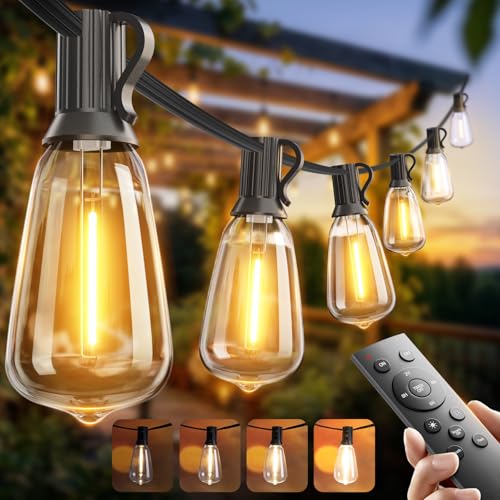
addlon 100FT Outdoor String Lights ST38 LED with Remote Waterproof Dimmable | Shatterproof Replaceable Bulbs, Connectable Hanging Strand for Porch Backyard Patio Garden Deck Outside, Timer,3 Modes
Check price on Amazon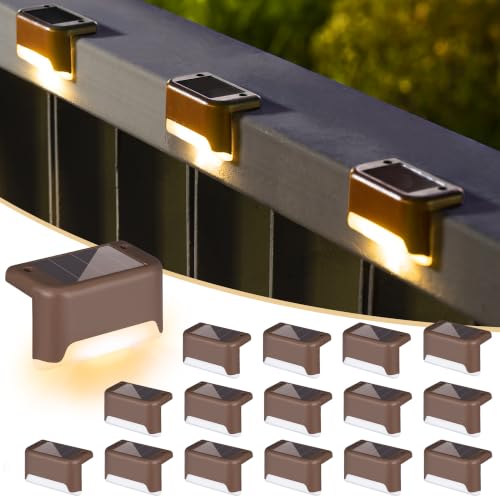
SOLPEX Solar Deck Lights Outdoor 16 Pack,Step Light Waterproof,Warm White | Led Solar lights for Outdoor Stairs,Step,Fence,Yard,Garden,Patio and Pathway
Check price on Amazon
Outdoor String Lights, 55(50+5)FT 25 Bulbs IP65 Waterproof Patio Lights | Shatterproof Dimmable Hanging Connectable G40 Globe LED Outdoor Lights for Christmas, Backyard, Bistro, Porch
Check price on Amazon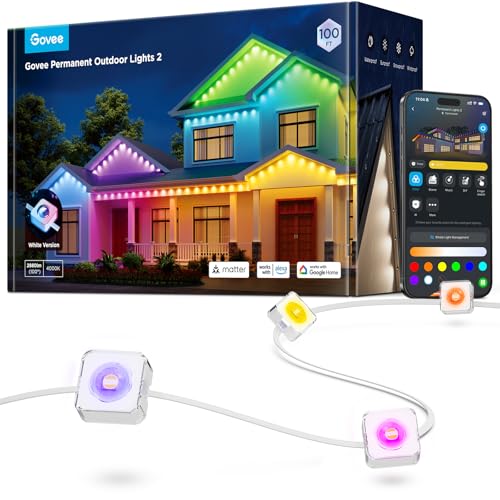
Govee Permanent Outdoor Lights 2, 100ft RGBIC Outdoor Lights with 100 Modes | 16 Million Colors, IP67 Waterproof for Outdoor, Patio, Deck, Backyard & Garden, Works with Alexa, Google Assistant, White
Check price on Amazon