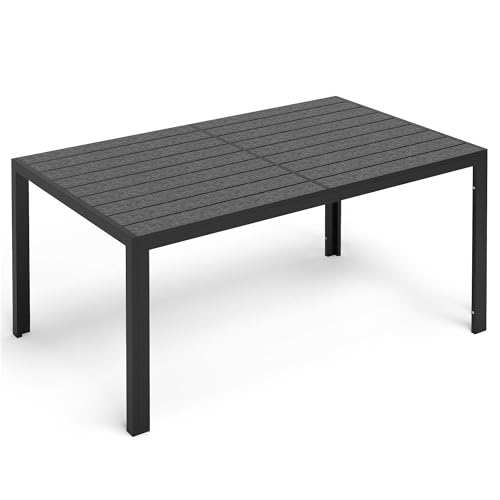
Patio Dining Table: The Complete Buying Guide
Everything you need to choose the right outdoor dining table — materials, shapes, seating capacity, durability, and layout planning explained in plain language.
Start With MaterialsWhy this guide matters: A patio dining table is one of the longest-lasting and most-used pieces in your outdoor space. Getting the right size, material, and shape on the first try saves you from re-shopping, awkward layouts, and premature wear. This guide walks you through every decision factor so you can buy with confidence.
Why Your Patio Dining Table Deserves Careful Thought
Outdoor dining is where backyard gatherings actually happen. Unlike a lounge set that gets used on weekends, a dining table anchors daily routines — morning coffee, family dinners, homework, board games, and holiday meals. That frequency of use means the table needs to hold up to sun, rain, food spills, and constant chair movement without showing wear after one season.
A well-chosen dining table also defines the functional zone of your patio. It becomes the reference point around which seating, shade, lighting, and circulation are arranged. When the table is proportioned correctly to the space, everything else falls into place. When it is not, the patio feels cramped or underused regardless of how nice the individual pieces are.
Finally, the dining table is usually the most visible furniture piece from inside the home. It shapes how your patio reads in photos, from the kitchen window, and at night when guests arrive. Choosing a table that matches your home's architecture and your patio's overall style is worth the planning effort — and this guide is designed to make that planning straightforward.
Patio Dining Table Materials Compared
Material is the single biggest driver of longevity, maintenance effort, and overall feel. Each material family has a distinct set of trade-offs. The table below uses universal quality-tier descriptors rather than numbers, and groups materials by their typical market positioning.
| Material | Tier Position | Best For | Maintenance Level | Key Watch-Outs |
|---|---|---|---|---|
| Powder-Coated Aluminum | Essential to mid-range tier | Everyday family dining, humid climates | Low | Check frame gauge; thin aluminum can flex under heavy use |
| High-Grade Steel | Mid-tier to premium | Windy, exposed patios; heavy-use settings | Low to moderate | Rust-proof finish essential; inspect welds and joints |
| Teak & Dense Hardwoods | Premium to luxury tier | Long-term investment, natural aesthetic | Moderate (annual sealing) | Needs oiling; verify sustainably sourced timber |
| HDPE / Poly Resin | Essential to mid-range tier | Coastal, rainy, zero-maintenance preference | Very low | Heavier pieces; texture quality varies by brand |
| Wicker & Rattan (synthetic) | Mid-range to premium | Coastal and transitional styling | Low to moderate | Weave tightness matters; check UV stabilization |
| Concrete & Stone Composite | Premium to luxury tier | Permanent installations, architectural patios | Very low | Very heavy; confirm delivery access and slab strength |
| Glass-Top (with metal frame) | Mid-range tier | Compact balconies, visual lightness | Low | Tempered glass only; avoid in high-wind or child-heavy settings |
How to Choose Between Metal and Wood
Powder-coated aluminum is the most common frame material for a reason: it resists rust, stays relatively light, and handles constant chair scraping. If your patio gets frequent rain or sits near the coast, aluminum with a proper powder coat is a strong default. High-grade steel adds weight and stability but demands a genuinely rust-proof finish to stay viable long term.
Dense hardwoods like teak sit at the other end of the spectrum. They develop a silver patina if left untreated, or hold a warm honey tone with annual sealing. Wood tables feel warmer to the touch and pair naturally with landscaping and traditional architecture. The trade-off is scheduled maintenance — skip the oiling and the surface will dry and check faster than it otherwise would.
Synthetic wicker and HDPE resin are the pragmatic middle grounds. They are weather-proof, resist fading when properly UV-stabilized, and need almost no upkeep. The main quality difference between brands shows up in weave tightness, frame reinforcement, and how convincingly the texture imitates natural fiber.
Table Shapes and What They Do to Your Space
Shape affects seating count, conversation flow, and how much room remains around the table. There is no universally best shape — only the shape that fits your patio's proportions and how you plan to use it.
Round Tables
Best for conversation and tight corners. Every seat is roughly equidistant from the center, so no one feels stuck at the end. A 48-inch round seats four comfortably; 60 inches seats six. Ideal for square patios and small balconies.
Square Tables
A space-efficient option that seats four with more elbow room per diner than a round table of the same footprint. Fits neatly into corners and works well under a single centered umbrella.
Rectangular Tables
The most seating-efficient shape for larger groups. A 72-inch table seats six; 84 to 96 inches seats eight. Requires a longer, more linear patio layout and careful umbrella placement.
Oval Tables
Combines the seating capacity of a rectangle with the smoother flow of a round table. Softer edges mean fewer bumped hips in tight walking zones. Works especially well in transitional and traditional patio styles.
If your patio is narrow or oddly shaped, the shape choice often narrows itself. A rectangular table in a tight square patio will crowd the chairs on the ends. A round table in a long, narrow space leaves wasted gaps. Measure the longest clear dimension and the shortest clear dimension of your dining zone before deciding — the ratio usually points clearly to one family of shapes.
How to Size a Patio Dining Table Correctly
Sizing mistakes are the most common reason people end up unhappy with an outdoor dining table. Two measurements matter more than any other: the width of the table itself, and the clearance around it.
Seating Capacity Rule of Thumb
Allow about 24 inches of table edge per diner. That gives each person enough elbow room to eat without colliding with a neighbor. Using that rule:
- A 48-inch round or square table seats four comfortably.
- A 60-inch round table seats six, though slightly tighter.
- A 72-inch rectangular table seats six with generous space.
- An 84 to 96-inch rectangular table seats eight.
Clearance Around the Table
Plan for at least 36 inches of open space between the table edge and any wall, railing, or obstacle. That measurement allows a chair to be pulled out and a person to walk behind it. If your patio doubles as a walkway, push the clearance toward 42 to 48 inches to keep traffic flowing while people are seated.
Do not forget umbrella and shade structures. A centered umbrella pole needs room underneath, and cantilever umbrellas need a weighted base placed where it will not block a chair. If you are weighing seating configurations, the patio dining sets guide covers bundled configurations that already account for table-and-chair proportions.
Pairing Your Table With the Right Chairs
Chairs are not an afterthought — they determine comfort, storage logistics, and how the table actually functions day to day. Three pairing decisions matter most.
Chair Type and Table Height
Standard dining height is about 28 to 30 inches at the table surface, paired with chairs around 17 to 19 inches at the seat. Counter-height tables run about 36 inches with seat heights near 24 inches, while bar-height tables reach 40 to 42 inches. Mixing heights creates discomfort, so confirm both numbers before buying separately. If you prefer a backless bench on one side for a more communal feel, look at bench-and-chair configurations that keep heights matched.
Stackability and Storage
If your patio is small or your climate demands off-season storage, stackable chairs are a major practical advantage. Four stackable chairs collapse into the footprint of one. Fixed-frame chairs look more substantial but demand permanent floor space. Decide early whether storage flexibility is a priority.
Armrests and Swivel Options
Armrests make long meals far more comfortable but add width — check that armrest chairs still fit under the table edge. Swivel chairs are a favorite for patios because they let diners turn toward conversation without scooting the chair back. If that flexibility appeals to you, swivel-chair dining sets are worth a close look. For straightforward replacements, the patio dining chairs collection covers individual pieces matched to common table heights.
Popular Patio Dining Table Configurations
Once you know your material and size, the next question is which bundled configuration makes sense. These combinations each solve a different problem:
Small Family Setup
A four-seat table with umbrella is the classic starting point. Compact enough for a modest patio and flexible enough for daily use. See the four-seat umbrella set for layout examples.
Six-Seat Entertaining
The sweet spot for regular hosting. A six-seat table with umbrella accommodates family plus guests without dominating the patio. The six-seat umbrella set guide covers spacing and shade placement.
Eight-Seat Gatherings
For large families or frequent entertaining. Requires a long patio and careful circulation planning. The eight-seat umbrella set guide explains the space requirements.
Fire Pit Dining
A table with an integrated fire pit extends the dining season into cooler months and doubles as an evening gathering point. Explore fire-pit-center dining sets.
If you plan to keep an umbrella on the table year-round, confirm the table includes a pre-drilled umbrella hole and that the hole accommodates your pole diameter. Many sets list this detail, but it is easy to miss. The table-and-chairs-with-umbrella option bundles this correctly. For tables without an included hole, an aftermarket umbrella base becomes a separate planning item.
Fire-pit dining tables are a distinct subcategory worth understanding before you shop. They combine a dining surface with a central heating element, which changes both the table's internal structure and the seating layout. If that hybrid appeals to you, the fire-pit table dining set guide explains the trade-offs in more detail.
Keeping Your Patio Dining Table in Good Shape
Maintenance requirements differ sharply by material, but a few universal habits extend the life of any outdoor dining table.
- Weekly wipe-down: Mild soap and water remove food residue, pollen, and bird droppings before they bond to the surface. Rinse and dry thoroughly.
- Seasonal deep clean: Use a soft brush on textured surfaces and a non-abrasive cleaner on metal frames. Avoid pressure washing directly on wood or glass.
- Wood sealing: Apply an outdoor-grade sealant or oil annually, ideally before the rainy season. Sand lightly first if the surface feels rough.
- Metal touch-ups: Inspect powder-coated frames for chips and touch up promptly to prevent rust from spreading.
- Winter protection: If your table stays outside year-round, use a fitted cover that allows airflow. Trapped moisture causes more damage than cold alone.
Cushions and seat pads need their own routine. Store them during rain and off-season, or choose quick-dry foam that tolerates occasional moisture. The patio cushion storage guide covers practical storage solutions for households without a dedicated shed or garage.
Matching the Table to Your Patio Style
The dining table should feel like part of the same design family as your lounge seating, planters, and lighting. Style consistency is less about strict matching and more about repeating a few core cues — materials, color temperature, and line quality.
Modern patios tend to favor clean aluminum frames with straight lines and slatted or glass tops. Rustic and farmhouse patios lean toward wood tops with heavier bases. Coastal patios often mix white-painted or weathered wood with synthetic wicker seating. Transitional spaces tolerate a blend, but pick one dominant material and let the others support it.
If your dining zone sits adjacent to a lounging area, the two should share at least one visual thread — the same metal finish, a repeated cushion color, or a matching table edge profile. The patio dining furniture sets collection groups coordinated pieces so the pairing decisions are already resolved.
A Practical Buying Checklist
Before you commit, run through this list. It catches the issues that cause most post-purchase regret:
- Measure twice: Confirm the dining zone's longest and shortest clear dimensions, plus clearance to walls and railings.
- Confirm seating capacity: Count the people who will realistically eat at the table most days, then add one or two spots for occasional guests.
- Match table and chair heights: Verify seat height against table height if buying separately.
- Check umbrella compatibility: Confirm hole diameter and pole fit if shade is part of the plan.
- Review the frame construction: Look for welded or reinforced joints, not just riveted or glued connections.
- Plan storage: Decide where chairs and cushions go during off-season or storms.
- Verify delivery access: Heavy tables and concrete tops may need a specific route into the backyard.
- Read warranty terms: Understand what the finish warranty actually covers — fading, rust, and structural failure are often handled separately.
If you are furnishing a whole patio rather than just the dining zone, the patio essentials checklist helps sequence purchases so nothing critical gets overlooked. And if the dining table will sit near a lounging or conversation area, the patio dining overview shows how the pieces relate to each other.
Frequently Asked Questions
What size patio dining table do I need?
Allow roughly 24 inches of table edge per person and keep at least 36 inches of clearance around the table for chair pull-out and walking. A household of four is well served by a 48 to 60-inch round or square table; six diners need about 72 inches of table length; eight diners need 84 to 96 inches.
Which material lasts longest outdoors?
Powder-coated aluminum, high-grade steel with a rust-proof finish, dense hardwoods like teak, and HDPE resin all last many seasons with appropriate care. Teak is the longest-lived when sealed annually; aluminum and HDPE are the lowest-maintenance; steel is the sturdiest in high-wind settings.
Can I leave my patio dining table outside in winter?
Most powder-coated metal and HDPE tables can stay outside year-round with a fitted cover. Wood tables benefit from covering and, in freezing climates, moving under a roof or into storage. Glass tops should be covered or removed if snow load is a concern.
Round or rectangular — which is better for a small patio?
Round tables generally fit small and square patios better because they eliminate wasted corner space and let every diner sit at a similar distance from the center. Rectangular tables make more sense when the patio is long and narrow or when you need to seat six or more.
Do I need an umbrella hole in the table?
Only if you plan to use a center-pole umbrella. If you prefer a cantilever umbrella or a freestanding shade structure, a solid tabletop is fine. Confirm the hole diameter matches your umbrella pole before ordering.
How do I protect a wood dining table from rain?
Apply an outdoor-grade oil or sealant at least once a year, keep the surface free of standing water, and use a breathable cover during extended wet periods. Avoid placing potted plants directly on the wood, since trapped moisture under pots causes dark stains.