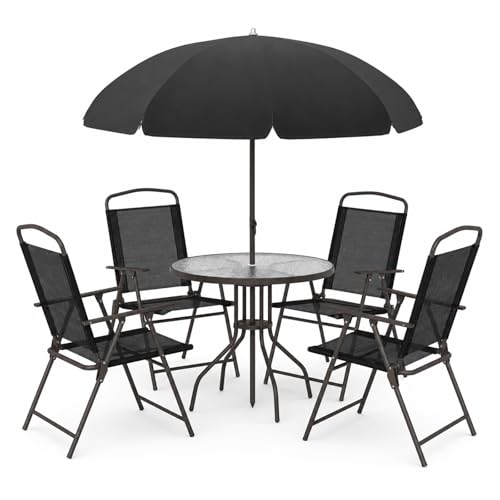
Patio Dining Set for 4 with Umbrella: Your Complete Buying Guide
Everything you need to know before choosing a four-person outdoor dining set with integrated shade — materials, sizing, umbrella mechanics, and long-term care.
Why a four-person set with umbrella? A patio dining set for four with umbrella hits the sweet spot between intimate family meals and small gatherings. It provides dedicated shade without the bulk of a larger set, making it ideal for compact decks, balconies, and standard backyard patios. This guide walks you through the critical decisions — from table shape and umbrella clearance to frame durability — so you can choose with confidence.
Why a 4-Person Dining Set with Umbrella Makes Sense
A four-seat configuration is the most versatile size for residential outdoor dining. It comfortably accommodates a family of four or two couples, yet it doesn't overwhelm a modest patio. When you add an umbrella, you gain immediate sun protection without erecting a permanent structure like a patio covering or pergola.
Key advantages of this configuration include:
- Space efficiency: A 4-seat set typically occupies a footprint of roughly 5–7 feet in diameter, leaving room for walkways and adjacent patio lounge furniture.
- Integrated shade: A center-pole or offset umbrella provides coverage exactly where diners sit, eliminating the need for separate shade sails.
- Scalable entertaining: When guests arrive, a four-person set can often squeeze in two more chairs, or you can pair it with a patio conversation set nearby.
- Defined dining zone: The table anchors the dining area, distinguishing it from lounging or cooking zones on a multi-use patio deck.
Table Shapes and Sizing: What Fits Four People
The shape of your dining table affects traffic flow, umbrella placement, and seating comfort. Here's how the three common shapes compare for a four-person set:
- Round tables: Typically 40–48 inches in diameter. They promote conversation and fit well in square or circular spaces. A round table with a center umbrella hole is the most classic configuration.
- Square tables: Usually 36–42 inches per side. These maximize seating density and work well against a wall or in a corner. Ensure the umbrella pole doesn't obstruct legroom.
- Rectangular tables: Often 60–72 inches long and 32–36 inches wide. They provide more elbow room and are ideal for narrow patios. Umbrella placement is usually centered, though some models offer offset poles.
Regardless of shape, verify the umbrella clearance: the table hole should be centered, and the umbrella canopy should extend at least 12 inches beyond the table edge on all sides to shade diners effectively. If you're considering a larger gathering later, explore patio dining sets for 6 with umbrella as a step-up option.
Frame and Tabletop Materials: Durability Matters
Outdoor furniture must withstand sun, rain, and temperature swings. The material you choose directly impacts longevity and maintenance. Here's a breakdown of common options:
- Powder-coated aluminum: Lightweight, rust-resistant, and easy to move. Mid-range and premium aluminum sets often feature reinforced joints and thicker gauge tubing. This is a solid choice for humid or coastal climates.
- Steel: Heavier and very stable, but requires a rust-proof finish. High-grade steel with a weather-resistant coating can last many seasons. Entry-level steel sets may need touch-ups over time.
- Wood (teak, acacia, eucalyptus): Natural aesthetic and substantial feel. Teak is the top-tier choice for weather resistance; acacia is a mid-range alternative that benefits from seasonal sealing. Wooden sets pair beautifully with a patio dining table aesthetic.
- Wicker and rattan: Synthetic resin wicker over an aluminum frame offers a woven look with modern durability. It's comfortable and less prone to splintering, though cushions are usually required for seating comfort.
- Tabletop options: Glass is easy to clean but can show water spots; slatted metal or wood allows rain to pass through; composite stone or ceramic offers a premium feel and scratch resistance.
For a deeper dive into material comparisons, see our patio dining furniture sets overview.
Umbrella Types: Center-Pole vs. Offset
The umbrella is often the most-used feature of a shaded dining set. Two main configurations dominate the market:
- Center-pole umbrella: Passes through a hole in the table and typically rests in a weighted base underneath. This is the most common and straightforward design. It provides even shade but can slightly limit center-table space. Look for a crank or push-up mechanism for ease of use.
- Offset (cantilever) umbrella: The pole stands to the side, and the canopy extends over the table. This frees the table center entirely and allows you to adjust shade angle. Offset umbrellas require a heavy base and more surrounding clearance. They are often found on premium and luxury tier sets.
Regardless of type, check the canopy fabric: solution-dyed polyester or acrylic resists fading. A vented canopy improves airflow and stability in breezy conditions. If you plan to leave the set out year-round, consider a patio furniture cover for the umbrella when not in use.
Seating Comfort and Cushion Considerations
Dining chairs should support relaxed meals, not just quick snacks. Key comfort factors include:
- Seat height and depth: Standard dining height is 17–19 inches from floor to seat. Deeper seats (18–20 inches) suit lounging; shallower seats promote upright dining posture.
- Cushions: Many four-person sets include seat cushions only, while others offer full back cushions. Quick-dry foam and removable, washable covers are practical for outdoor use. If you need replacements later, browse patio furniture replacement cushions.
- Armrests: Helpful for getting in and out, but they add width. Ensure armrests fit under the table edge if you like to push chairs in fully.
- Stackability: If storage space is tight, stackable chairs are a smart choice. Pair them with a patio cushion storage solution for off-season organization.
For additional seating flexibility, consider adding a patio dining chair or two that match the set's style.
Understanding Quality Tiers Without the Guesswork
Instead of comparing arbitrary figures, use these universal tier descriptors to frame your expectations. The tier reflects relative build quality, material grade, and expected lifespan — not a specific figure.
Entry-Level Tier
Basic aluminum or steel frames, thinner cushions, and simpler umbrella mechanisms. Suitable for light use and shorter seasons. Good value for its tier if you prioritize a complete set at a lower commitment level.
Mid-Range Tier
Reinforced frames, powder-coated finishes, thicker cushion foam, and smoother umbrella cranks. This is the balanced tier where durability and comfort meet. A solid choice for year-round or near-year-round use.
Premium Tier
High-grade aluminum or teak frames, solution-dyed acrylic canopies, welded joints, and precision umbrella hardware. Built for long-term investment and heavy seasonal use. Feature-rich for its class.
Luxury Tier
Commercial-grade construction, designer-grade fabrics, and often offset or wind-rated umbrella systems. These sets are intended for daily use and minimal maintenance over many years — a flagship tier choice.
At-a-Glance Comparison: Four-Person Set Configurations
| Tier | Typical Frame | Umbrella Style | Best For |
|---|---|---|---|
| Entry-Level Tier | Powder-coated steel or thin aluminum | Center-pole with push-up or basic crank | Light residential use, seasonal setups, covered patios |
| Mid-Range Tier | Reinforced aluminum or sealed acacia wood | Center-pole with smooth crank and tilt | Family dining, regular sun exposure, mixed climates |
| Premium Tier | High-grade aluminum or teak | Crank-and-tilt center pole or offset cantilever | Year-round use, coastal areas, design-focused spaces |
| Luxury Tier | Commercial-grade aluminum or solid teak | Wind-rated offset or dual-canopy system | Heavy use, entertaining-focused patios, long-term ownership |
Placement and Space Planning Tips
Before purchasing, measure your patio carefully. A four-person set needs roughly 3 feet of clearance on all sides for chairs to pull out comfortably. Account for umbrella swing and base footprint, especially with offset models.
- Position the set away from high-traffic walkways to avoid bumped elbows during meals.
- If your patio is adjacent to a patio pool, orient the umbrella to cast shade toward the water without blocking entry paths.
- Consider the sun's path: an adjustable umbrella lets you track shade throughout the day.
- On windy sites, a heavier mid-range or premium tier frame reduces tipping risk; always use the umbrella base recommended by the manufacturer.
For tighter spaces, a patio dining set with bench and umbrella hole can save lateral space, while a patio dining set for 4 with umbrella remains the standard balanced choice.
Care and Maintenance for Longevity
Even premium materials benefit from routine care. A few habits extend the life of your set significantly:
- Clean frames with mild soap and water; avoid abrasive cleaners on powder-coated finishes.
- Store or cover the umbrella canopy when not in use for extended periods. Close it during high winds.
- Bring cushions inside or into a patio cushion storage box during rain and off-season.
- Apply a wood sealer annually to wooden tables if they are exposed to direct weather.
- Check bolts and umbrella cranks each season; tighten as needed.
If you're considering leaving the furniture out through winter, review our guide on patio furniture that can be left outside in the winter to choose appropriately.
Frequently Asked Questions
What size patio do I need for a 4-person dining set with umbrella?
A round or square four-person set typically needs a clear area of about 8 x 8 feet to allow chairs to pull out and walkways to remain open. Rectangular sets may need slightly more length. Always add at least 3 feet of clearance around the table's edge.
Can I use an offset umbrella with a 4-person table?
Yes. Offset umbrellas are compatible with most four-person tables, but they require a heavy base and extra side clearance. Verify that the cantilever arm extends far enough to center the canopy over the table, and ensure the base won't obstruct chair movement.
How do I keep the umbrella stable in wind?
Use a properly weighted base (often sand- or water-filled), close the umbrella when not in use, and choose a vented canopy to reduce wind lift. Premium and luxury tier umbrellas often include wind-rated frames and reinforced ribs.
Should I choose wood or metal for a four-person set?
Metal (especially powder-coated aluminum) is lower maintenance and resistant to rot, making it ideal for humid climates. Wood offers a warmer aesthetic but requires periodic sealing. Teak is the most weather-resistant wood option; acacia is a solid mid-range alternative.
Can a four-person set accommodate extra guests?
Often yes — many rectangular and round sets can fit two additional chairs if needed. For regular larger gatherings, consider stepping up to a six-person set with umbrella or adding a separate patio conversation set nearby for overflow seating.
Ready to explore specific models and configurations? Browse our curated selection of four-person dining sets with umbrellas below — filtered for build quality and practical features.
Explore Recommended Sets