Patio Furniture Covers: The Complete Buyer's Guide
Everything you need to know about choosing covers that protect your outdoor investment from rain, UV rays, dust, and winter weather — without trapping moisture or voiding warranties.
Start the GuideWhy covers matter: A quality set of patio furniture covers is the single most effective way to extend the service life of your outdoor pieces. Covers block rain and snow, reduce UV fading on fabrics and finishes, keep debris and pollen out of cushions, and help prevent rust on metal frames. But not all covers are equal — the wrong material can trap moisture, cause mold, or fail within a single season. This guide walks through materials, fit, sizing, and care so you can choose with confidence.
What You'll Learn
1. Why You Need Patio Furniture Covers
Outdoor furniture is engineered to tolerate the elements, but "weather-resistant" is not the same as "weather-proof." Over time, sun, rain, and temperature swings degrade even high-grade materials. Covers solve several problems at once:
- Moisture protection: Rain and dew seep into cushions, seams, and joints. Over time this leads to mold, mildew, and frame corrosion.
- UV defense: Prolonged sun exposure fades fabric dyes and can make wicker and resin brittle. Covers with UV-treated fabric slow this process significantly.
- Debris and pollen: Leaves, bird droppings, and pollen are easier to shake off a cover than to scrub out of cushions.
- Winter protection: Snow and ice accumulation can crack resin, warp wood, and stress joints. A winter-rated cover distributes weight and keeps surfaces dry.
- Warranty compliance: Many furniture manufacturers require covered storage during extended off-season periods to maintain warranty coverage.
If you're outfitting a new space or refreshing an existing one, pairing covers with a well-chosen patio furniture set is the practical first step toward long-term durability. It's also worth reading our weatherproofing guide to understand how covers fit into a broader maintenance routine.
2. Cover Materials Compared
The fabric is the most important decision you'll make. Each material balances water resistance, breathability, weight, and UV protection differently. Here's how the main categories compare:
| Material | Tier | Water Resistance | Breathability | Best For |
|---|---|---|---|---|
| Polyester with PU coating | Entry-level to mid-range | Good | Moderate | Everyday rain protection in moderate climates |
| Solution-dyed polyester | Mid-range | Very good | Good | Sun-heavy regions where fade resistance matters |
| Heavy-duty woven fabric | Premium | Excellent | Very good | Four-season protection in harsh weather |
| Vinyl / PVC | Mid-tier | Excellent | Low | Short-term rain cover; not ideal for humid climates |
| Canvas (treated) | Premium to luxury | Good (when treated) | Excellent | Breathable protection where mold risk is high |
What to Look For in Fabric Construction
- Coated vs. laminated: Coatings (polyurethane, vinyl) are applied to the surface and provide water resistance. Laminated fabrics sandwich a waterproof layer, which is generally more durable but heavier.
- Solution-dyed fibers: Color is added during fiber production, so it resists fading far better than surface-dyed fabrics.
- Reinforced stitching: Double-stitched or taped seams prevent water from wicking through needle holes.
- UV stabilizers: Look for fabrics treated with UV inhibitors, especially if the cover will be exposed year-round.
Pro tip: Avoid fully non-breathable vinyl covers in humid or rainy climates. Condensation trapped under the cover can cause more damage than the rain itself. Breathable, water-resistant fabric is almost always the better long-term choice.
3. Key Buying Factors
Fit Is Everything
A cover that's too loose will flap in the wind, collect water in sagging pockets, and wear through at contact points. A cover that's too tight is difficult to install and can stress seams. Aim for a cover that follows the furniture's shape with a few inches of clearance. If your furniture is an unusual size, custom or semi-custom covers are worth considering.
Breathability and Ventilation
Even the most water-resistant fabric will trap some moisture if air cannot circulate. Vented covers — with mesh panels, grommets, or built-in air vents — allow moisture vapor to escape while blocking rain. This is especially important for cushion-heavy pieces and for furniture stored against a wall or in a shaded area.
Drawstrings, Straps, and Fasteners
Wind is the enemy of a loose cover. Look for:
- Drawstring hems that cinch around the base of the furniture.
- Elastic corners for a snug, stay-put fit.
- Webbing straps and buckles that anchor the cover under the furniture or to legs.
- Zippered access panels that let you check on furniture without removing the whole cover.
Handles and Ease of Use
Padded handles make it easy to lift and reposition the cover, especially on large sofas and dining sets. If you'll be removing and reinstalling covers frequently, this small feature makes a real difference.
Warranty and Manufacturer Reputation
Cover warranties vary widely — from one season to several years. A longer warranty usually signals confidence in the fabric and construction. Check whether the warranty covers UV degradation and seam failure, which are the most common points of failure.
4. Covers by Furniture Type
Different pieces need different cover designs. Here's a quick reference:
Dining Sets
Dining covers usually accommodate a table plus chairs as a grouped set, or cover the table alone. If you have an umbrella, choose a cover with a center hole and a secure collar. Consider our guide to patio dining sets for sizing context, and note that table-and-chair combos often need a cover rated for the combined footprint.
Lounge Seating and Sofas
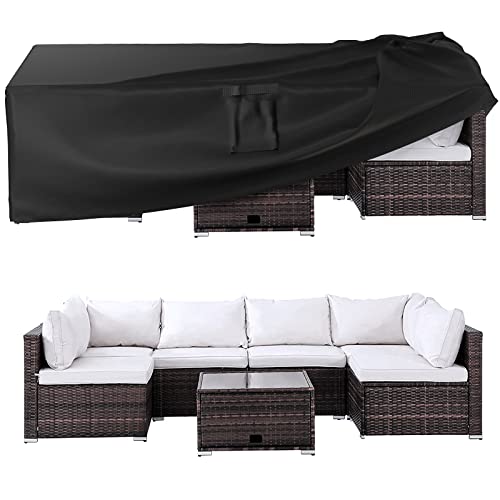
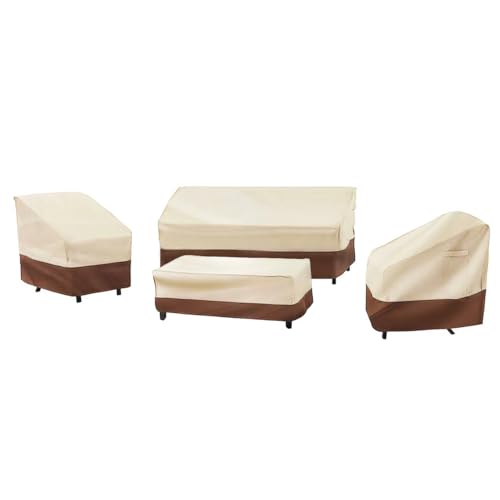
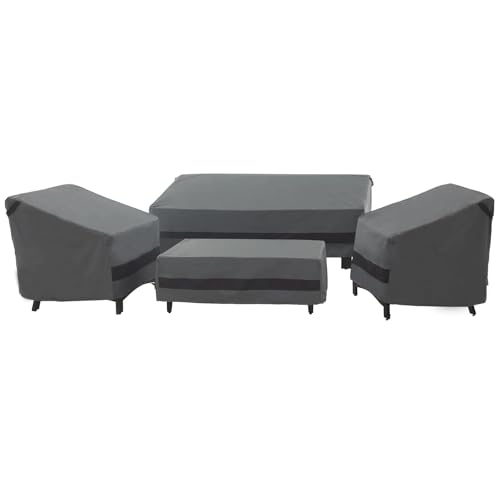
Sofas, loveseats, and sectionals need covers that follow the seat depth and arm profile. Sectional covers may be modular (one piece per section) or designed for the full assembled footprint. If you own a patio sectional, modular covers are easier to install and store.
Chairs and Loungers
Individual chair covers are the simplest category. Look for covers with elastic hems or drawstrings, and choose a design that accommodates the chair's back height. Our patio lounge chair guide covers the shapes you're most likely to encounter.
Fire Pits and Tables
Fire pit covers need to be heat-resistant and fitted to the bowl's diameter. If your fire pit doubles as a table, choose a cover that protects the surface without trapping heat. Our patio fire pit guide covers the main styles and their cover needs.
Cushions and Accessories
Cushions can be covered separately or stored in a cushion box. For a deeper look at keeping cushions dry and mold-free, see our guide to patio cushion storage.
5. How to Measure and Size Your Cover
Incorrect sizing is the most common reason covers fail. Follow these steps:
- Measure the widest point of the furniture in three dimensions: length (left to right), width (front to back), and height (floor to tallest point).
- Add clearance — typically 2–4 inches on each dimension — so the cover drapes without stretching.
- Account for protrusions: arms, backrests, umbrella poles, and fire pit lids all change the effective shape.
- Check the manufacturer's size chart. Sizing is not standardized across brands. A "large" from one maker may fit differently than a "large" from another.
- Consider grouped sets: if you're covering a table and chairs together, measure the combined footprint, not each piece separately.
Measurement tip: Use a soft tape measure and record dimensions in writing before you shop. If your furniture is an odd size, look for covers with adjustable drawstrings or consider a custom cover — a poor fit will cost more in replacement than a properly sized cover.
6. Care, Cleaning, and Storage
Well-maintained covers last significantly longer. A simple routine keeps fabric water-resistant and prevents mold:
- Brush off debris before it accumulates. Leaves and pollen hold moisture against the fabric.
- Clean with mild soap and water. Avoid harsh detergents, bleach, or abrasive scrubbers that strip coatings.
- Rinse and air-dry fully before reinstalling. Never fold a damp cover into storage.
- Reapply water-repellent treatment if the fabric begins to absorb water (many manufacturers offer spray-on treatments).
- Store covers dry in a breathable bag during periods when furniture is uncovered.
For a broader seasonal maintenance routine, see our outdoor care section, which covers cleaning, sealing, and storage across all furniture materials.
7. Common Mistakes to Avoid
- Buying a cover that's too loose: Wind flapping wears seams and collects water.
- Choosing non-breathable fabric in humid climates: Trapped condensation causes mold and musty odors.
- Ignoring UV ratings: A cover that blocks rain but degrades in sunlight won't last a season.
- Skipping the umbrella hole: Forcing a cover over an umbrella pole creates a gap where water enters.
- Covering wet furniture: Always let furniture dry before covering it, or moisture will be trapped underneath.
- Assuming one size fits all: Always measure and check the manufacturer's chart.
8. Frequently Asked Questions
What material is best for patio furniture covers?
Polyester with a polyurethane or vinyl coating offers the best balance of water resistance, breathability, and UV protection for most households. Heavy-duty woven fabrics are recommended for premium, four-season protection in harsh climates.
Do patio furniture covers need to be breathable?
Yes. Breathable covers allow moisture vapor to escape, preventing mold and mildew. Look for covers with vented panels or breathable fabric construction, especially in humid regions.
How do I measure my patio furniture for a cover?
Measure the widest point of your furniture in three dimensions — length, width, and height — then add a few inches of clearance. Always check the manufacturer's size chart, since sizing varies between brands.
Can I use one cover for multiple pieces of furniture?
Some covers are designed for grouped sets, but individual covers generally provide a better fit and more effective protection. For grouped storage, choose a cover rated for the combined footprint.
Ready to Protect Your Outdoor Investment?
Explore our recommended covers below, or read our broader patio essentials guide to make sure your outdoor space is fully outfitted for every season.
View Recommended Covers