Patio Fire Pit: The Complete Guide to Warmth, Ambiance & Backyard Gathering
Everything you need to choose, place, and enjoy a fire pit that extends your outdoor season and elevates your patio experience.
EXPLORE THE GUIDEWhy a fire pit transforms your patio: A fire pit is more than a heat source — it is the anchor of outdoor social life. It extends your patio season into cooler evenings, creates a natural gathering point, and adds a layer of ambiance that lighting alone cannot replicate. Whether you prefer the authentic crackle of a wood-burning model or the instant convenience of a gas unit, the right fire pit becomes the centerpiece around which memories are made.
This guide walks you through the major fire pit categories, sizing and placement rules, safety essentials, and the features that separate entry-level units from premium and luxury designs — so you can choose with confidence.
Fire Pit Types: Choose Your Heat Source
The first decision is the fuel type. Each category serves a different lifestyle and patio configuration. Below is a breakdown of the major options, along with how they typically position themselves in the market.
Wood-Burning Fire Pits
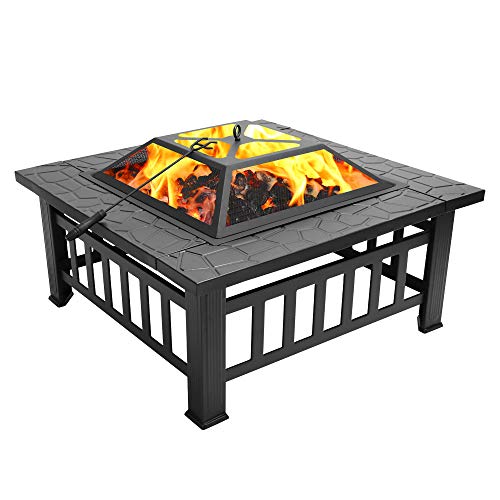
Authentic crackle, natural aroma, and the classic campfire feel. Best for open patios with ample clearance from structures and overhangs. Requires seasoned firewood and routine ash cleanup.
Entry-level to mid-rangePropane Fire Pits
Instant ignition, consistent flame, and no ash. Ideal for patios where convenience matters most. Requires a propane tank, which can be hidden inside a fire pit table or housed nearby.
Mid-range to premiumNatural Gas Fire Pits
Permanent connection to your home's gas line for endless burn time and no tank swaps. Best installed by a licensed professional. A high-end tier choice for dedicated outdoor rooms.
Premium to luxuryFire Pit Tables
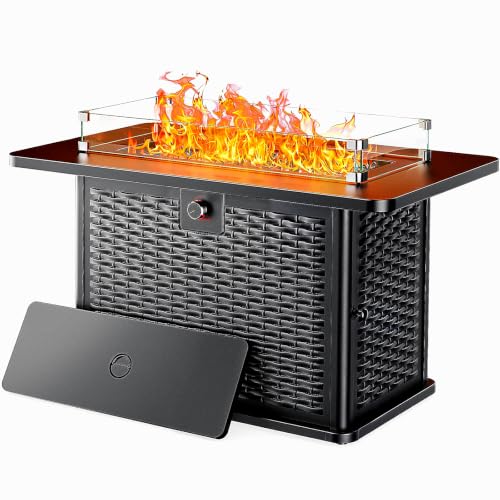
A hybrid design that doubles as a coffee or dining surface. Popular in conversation sets and lounge layouts. Often propane-powered with a hidden tank compartment.
Mid-range to top-tierGel & Bio-Ethanol Fire Pits
Smokeless, ventless, and portable. Suited to balconies and covered patios where wood smoke is not permitted. Smaller flame and heat output than gas or wood models.
Starter tier to mid-tierFire Pit Dining Sets
Integrated dining tables with a central fire element. A statement piece for entertaining. Pair with a patio dining set with fire pit table for a cohesive outdoor room.
High-end tierSizing and Placement: Getting the Footprint Right
Fire pit sizing is driven by the seating arrangement it serves. A unit that is too small disappears in a large lounge layout, while an oversized pit overwhelms a compact balcony. Use the table below as a starting reference, then confirm against manufacturer clearances and local codes.
| Patio Size | Recommended Fire Pit Diameter | Best For | Typical Tier |
|---|---|---|---|
| Balcony / compact patio | 20–28 inches | 2–3 people, gel or small propane units | Starter tier |
| Small patio | 28–36 inches | 4-person conversation sets | Entry-level to mid-range |
| Medium patio | 36–44 inches | 6-person lounge or dining layouts | Mid-range to premium |
| Large patio / outdoor room | 44–56 inches | 8+ seating, fire pit tables, statement pieces | Premium to luxury |
Clearance rules to follow: Keep at least 3 feet of open space around the pit on all sides, and 6 to 10 feet from walls, fences, and overhead structures. Never place a wood-burning pit under a pergola or awning. Gas and gel units have more flexible placement but still require the manufacturer's stated clearances. If your layout includes a patio furniture with fire pit arrangement, plan the fire pit as the focal point first, then arrange seating around it.
Placement Tip for Conversation Sets
Center the fire pit within your seating group so every seat has a clear line of sight to the flame. A distance of 18–24 inches between the pit edge and the front of each chair keeps legs warm without crowding. For swivel-chair layouts, see our guide to patio conversation sets with swivel chairs.
Materials and Construction: What Separates the Tiers
Durability in a fire pit is largely a function of material and finish. Entry-level units often use painted steel or lighter gauge metal, which perform well in sheltered patios but may show wear sooner in coastal or humid climates. Mid-range models typically step up to stainless steel burners, reinforced frames, and powder-coated finishes. Premium and luxury fire pits use high-grade stainless steel, cast aluminum, or stone-composite surrounds with commercial-grade burner assemblies designed for long-term outdoor exposure.
- Burner material: Stainless steel resists corrosion and holds up to repeated heat cycles better than painted steel.
- Frame gauge: Heavier gauge metal reduces warping and rattling over time.
- Finish: Powder-coated or rust-proof finishes extend the life of the exterior.
- Ignition system: Electronic ignition is more reliable than manual push-button in mid-range and premium units.
- Lava rock or fire glass: Included media improves heat distribution and visual appeal.
- Cover compatibility: A fitted cover is the simplest way to protect your investment year-round.
Safety Essentials Before You Light Up
Fire pit safety is non-negotiable, especially on covered patios and decks. Keep a fire extinguisher or bucket of sand nearby, never leave a lit fire unattended, and check local burn ordinances before use. For wood-burning models, use only seasoned firewood — never treated lumber or trash. For gas models, inspect hoses and connections before each season and store propane tanks upright in a ventilated area.
If your patio includes a roof structure, review our patio roofs guide for clearance considerations before placing any heat source underneath. Children and pets should always be supervised around an active fire, and a screen or spark guard is recommended for wood-burning units.
Seasonal Care and Storage
Proper care keeps your fire pit performing season after season. Clean ash from wood-burning units after each use once fully cooled. For gas models, wipe down the exterior, check the burner ports for debris, and cover the unit when not in use. During winter, a fitted patio furniture cover protects the finish and prevents moisture from settling into the burner assembly. If you plan to leave furniture outside year-round, our guide to patio furniture that can be left outside in the winter covers material-specific advice.
Integrating a Fire Pit with Your Patio Furniture
A fire pit rarely stands alone — it anchors a seating arrangement. Common pairings include a fire pit centered in a conversation set, a fire pit table flanked by lounge chairs, or a fire pit dining table surrounded by swivel or bench seating. If you are building a full outdoor room, start with the fire pit footprint, then select seating that fits the surrounding arc. Our patio fire table guide explores the table-style format in more detail, while patio gas fire pits covers fuel-specific considerations.
For larger layouts, a patio furniture conversation set with fire pit bundles seating and the fire element in one coordinated package — a practical starting point for first-time buyers. If you prefer to build piece by piece, pair a standalone pit with a patio couch and two lounge chairs for a balanced, symmetrical arrangement.
Frequently Asked Questions
What is the difference between a wood-burning and a gas patio fire pit?
Wood-burning fire pits deliver authentic crackle and aroma but require seasoned firewood, ash cleanup, and more careful placement away from overhangs. Gas fire pits, whether propane or natural gas, offer instant ignition, consistent flames, and simpler maintenance, making them a preferred choice for patios with furniture nearby.
How much clearance do I need around a patio fire pit?
A general rule is to keep at least 3 feet of open space around the fire pit on all sides, and 6 to 10 feet of clearance from walls, fences, and overhead structures. Always follow the manufacturer's clearance instructions and local fire codes, which vary by region.
Can a patio fire pit be left outside in winter?
Many mid-range and premium fire pits are built with weather-resistant materials and can remain outdoors, but a fitted cover is recommended to protect the burner, ignition system, and finish. Entry-level units may benefit from being stored in a shed or garage during harsh months.
Do I need a permit to install a fire pit?
Permit requirements vary widely by municipality and by fuel type. Wood-burning and natural gas installations typically require more oversight than portable propane or gel units. Check with your local fire department or building authority before installing a permanent fire feature.
What is the best fire pit for a small patio?
For compact patios and balconies, a 20–28 inch gel or small propane unit offers warmth and ambiance without crowding the space. Fire pit tables are also a strong choice because they double as a surface when not in use. Pair with a patio conversation set for small spaces to maximize the layout.
The bottom line: Choose your fuel type first, then size the pit to your seating arrangement, then invest in the highest construction tier your patio exposure justifies. A well-chosen fire pit becomes the most-used element of your outdoor space — the place where evenings stretch longer and conversations linger. Explore the recommended products below to compare models within each tier, and enjoy the warmth all season long.