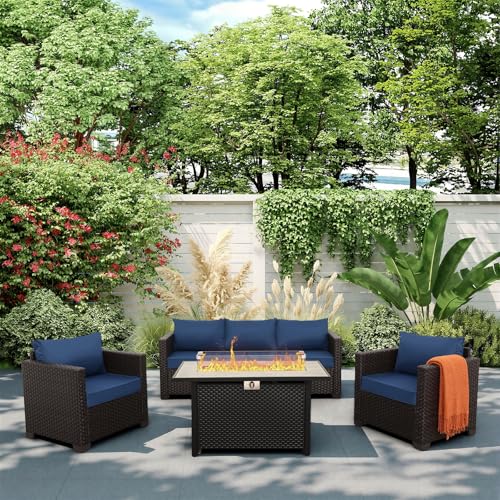
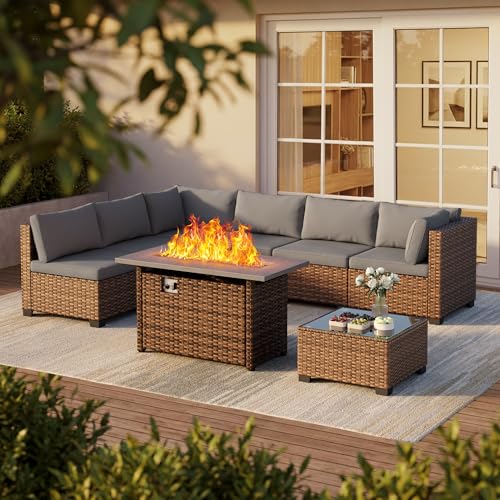
What "Patio Furniture with Fire Pit" Actually Means
The phrase covers two distinct product families, and confusing them is the most common mistake buyers make. The first is an integrated set: a matched grouping where a fire pit table is designed as the centerpiece, and the seating is coordinated around it. The second is a modular approach: you select standard seating such as a sofa or a group of lounge chairs and add a freestanding fire pit table beside or between them.
Integrated sets are simpler to shop for because the proportions are already resolved. The fire pit table height matches the seat height, the tabletop material is tested against heat, and the arrangement fits a predictable footprint. Modular builds give you more flexibility, but you take on the job of checking that the fire pit surface sits safely below the armrests and that there is enough walkway around the heat source.
If you are still narrowing down the base seating, browsing the broader patio furniture category first helps you understand what a full outdoor room looks like before committing to a fire-focused layout. Buyers who already know they want a fire feature in the center often start with a conversation set with a fire pit, since those bundles are designed specifically around that focal point.
Fire Pit Types and How They Pair with Seating
Not every fire pit belongs in the middle of a seating group. The heat output, flame visibility, and fuel source all influence how close furniture can sit and what frame materials survive nearby.
Propane and natural gas fire pit tables
These are the most compatible with integrated furniture. A gas fire pit table burns cleanly, produces no embers, and lets you dial the flame down to a low decorative setting. That makes them the default choice for a patio fire table placed at the center of a sofa or sectional. Natural gas models need a plumbed line, so they suit permanent patios; propane models are portable and can be repositioned when you rearrange the layout.
Wood-burning fire pits
Wood produces authentic crackle and higher radiant heat, but it throws embers and smoke. If you go this route, keep upholstered and wicker seating at a greater distance, and never place a fabric sofa directly downwind of the flame. A standalone patio fire pit is usually the better pairing here than an integrated table set.
Fire pit dining tables
A dining-height unit with a central burner lets you eat and gather around the flame. These work best when the chairs are metal or wicker rather than deep-cushioned, because diners sit closer to the heat than lounge seating would. If dining is the priority, look at a patio dining set with fire pit table rather than trying to retrofit a burner into a standard dining table.
Fire pit tables integrated into sectionals
Some sectional systems include a fixed center table with a built-in burner. This is a highly cohesive look, and the seating wraps the heat source naturally. The trade-off is flexibility: you cannot separate the fire element from the seating, and covers must fit the entire footprint. A dedicated sectional with fire pit is the right starting point if this layout appeals to you.
Key Buying Factors Before You Commit
These are the decision points that buyers most often overlook. Getting them right up front avoids returns and layout regrets.
Overall footprint and walkway clearance
Measure the patio, not the furniture. A conversation set with a fire pit table in the middle needs roughly 8 x 8 feet of open space, and larger sectionals usually need 12 x 12 feet or more. Leave a clear path around the seating so guests can move without stepping into the heat zone. If your space is tight, prioritize conversation sets designed for small spaces over full-size sectionals.
Seat height versus fire table height
For a cohesive look, the fire table surface should sit close to the seat height of the surrounding furniture — a lounge-height table among deep lounge chairs, or a dining-height table among dining chairs. Mixing heights makes the fire feature feel bolted on rather than designed in.
Fuel access and storage
A propane tank needs a place to live. Some fire tables hide the tank under the tabletop; others leave it exposed or require a side cabinet. If hidden storage matters to you, look at furniture with built-in storage, such as a patio set with integrated storage, so cushions and fuel accessories stay out of the weather.
Shade versus flame
An umbrella over a fire feature is a legitimate combination as long as the canopy is well above the flame and the burner is the vented gas type. Sets that combine both are worth considering if your patio gets strong afternoon sun and cool evenings. Compare options in the fire pit and umbrella furniture range before assuming you must choose one or the other.
Popular Furniture Configurations Explained
The arrangement you choose shapes both conversation flow and how close people sit to the heat. These are the four configurations that dominate the market.
| Configuration | Best For | Tier Guidance | Typical Footprint |
|---|---|---|---|
| Conversation set with center fire table | Small to mid patios, 4–6 people | mid-range | 8 x 8 ft |
| Sectional with integrated fire pit | Larger patios, family lounging | premium | 12 x 12 ft |
| Fire pit dining set | Al fresco dining, entertaining | mid-tier to high-end tier | 10 x 10 ft |
| Two chairs plus fire table | Balconies, intimate corners | entry-level | 6 x 6 ft |
A conversation set is the most versatile entry point. Swivel chairs make it easier for guests to turn toward the flame without repositioning furniture, so consider a patio set with fire pit and swivel chairs if you entertain often. For a more classic pairing, a conversation set with swivel chairs works equally well beside a freestanding burner.
Larger households usually gravitate toward a sectional. A sectional conversation set wraps seating around the heat source and gives everyone a view of the flame. If you want the fire feature to double as a dining surface, a dining set with a central fire pit keeps the layout tidy while serving two functions.
On tight footprints, the two-chair format is underrated. A patio set with umbrella and fire pit covers both daytime shade and evening warmth in a small area, and a two-chair-and-table arrangement keeps the walkway open on balconies.
Frame and Fabric Materials Compared
Fire pit furniture lives with two stressors that ordinary patio furniture does not: radiant heat and airborne ash. Material choice should reflect both.
Powder-coated aluminum
The strongest all-around choice for fire pit seating. Aluminum does not rust, the powder coating resists heat staining, and the frames stay light enough to rearrange. Mid-range and premium sets in this material typically hold their finish for many seasons.
High-grade steel
Heavier and more rigid than aluminum, with a solid feel that suits premium sectionals. Rust-proof finishes are essential here; untreated steel near a fire feature is a long-term liability because heat accelerates corrosion at joints.
Wicker and rattan
Attractive and widely available, but the synthetic weave must be rated for outdoor heat exposure. Wicker is best paired with a gas fire pit table where the flame is contained and low. Keep natural rattan away from open wood fires.
Fabric and cushion selection
Solution-dyed acrylic and olefin fabrics resist fading and tolerate occasional heat exposure far better than cotton blends. Removable, washable covers are practical if ash settles on the seating. If cushion care is a concern, a set with removable cushion covers simplifies seasonal cleaning, and dedicated cushion storage keeps fabric out of the weather when the fire pit is not in use.
Material shortcut for fire pit buyers
For a centerpiece fire table with upholstered seating, prioritize powder-coated aluminum frames and solution-dyed acrylic fabric. For a standalone wood-burning pit with simpler seating, high-grade steel and wicker are both viable. Avoid untreated steel and natural fiber weaves near open flames.
Safety, Clearance, and Placement Rules
Fire features are safe when the layout respects a few non-negotiable rules. These apply regardless of the tier you shop in.
- Keep fabric and wicker at a safe distance. Gas fire tables should sit at least two feet from upholstered seating edges; wood-burning pits need more, especially downwind.
- Never place a fire pit under a low structure. Umbrellas and pergolas are acceptable only when the canopy is well above the flame and the burner is vented. Check local guidance before combining a fire feature with a covered patio covering.
- Anchor the set on a stable, level surface. A fire table that shifts on uneven pavers is a spill and burn risk. Level the patio deck before assembly.
- Respect the manufacturer's clearance spec. It is stated on the fire table and in the set's assembly manual; it overrides general advice.
- Use a fitted cover when the fire pit is off. Covers protect both the burner and the seating from ash and weather, and they extend the life of the whole set.
If the fire feature is central to your plans, plan the layout around it from the start rather than adding it later. That is the main reason buyers choose a coordinated set with a fire pit over building the arrangement piecemeal.
Care and Storage for Year-Round Use
Fire pit furniture that is left outside through winter needs a different care routine than summer-only seating.
Cover the fire table whenever it is not in use, and empty or disconnect the fuel source before long storage periods. Clean the burner and tabletop regularly; ash residue traps moisture and dulls the finish. For the seating, brush down frames monthly and wash cushion covers at the intervals the fabric maker specifies.
If you plan to leave the set outside in cold weather, prioritize weather-resistant frames and check the product's storage guidance. Sets designed to withstand full exposure are covered in the winter-safe patio furniture guide. Protective patio furniture covers are the single most effective investment for extending the life of a fire pit set, and they matter even more if the patio is exposed to rain and wind.
Frequently Asked Questions
What is the best material for patio furniture with a fire pit?
Powder-coated aluminum and high-grade steel offer the best durability because they resist rust and heat. Wicker and rattan frames work well when paired with a contained gas fire pit table that keeps the flame away from the seating.
Can I use a wood-burning fire pit with a patio conversation set?
Yes, but keep a generous clearance between the flame and any fabric or wicker. Wood-burning units produce embers and smoke, so they suit open layouts. Gas and propane fire pit tables are safer for tighter conversation sets and sectional configurations.
How much space do I need for a patio set with a fire pit?
A small conversation set with a fire pit table typically needs about 8 x 8 feet of open space. Larger sectionals usually require 12 x 12 feet or more so guests can walk around the seating without stepping into the heat zone.
Do fire pit patio sets come with covers?
Many mid-range and premium sets include a fitted cover for the fire pit table, but not all include covers for the seating. Check the product listing carefully, and consider separate furniture covers if year-round outdoor exposure is a concern.
Is a gas or wood-burning fire pit better for furniture?
Gas is the more compatible choice for integrated furniture because it burns cleanly with no embers and lets you lower the flame. Wood-burning pits are better suited to standalone placement with non-upholstered seating at a safe distance.
Ready to Choose Your Fire Pit Furniture Set?
Now that you understand the configurations, materials, and safety clearances, you can evaluate any set with confidence. Browse our curated recommendations below to compare fire pit tables, conversation sets, and sectionals that match each tier and layout.
VIEW RECOMMENDED SETS