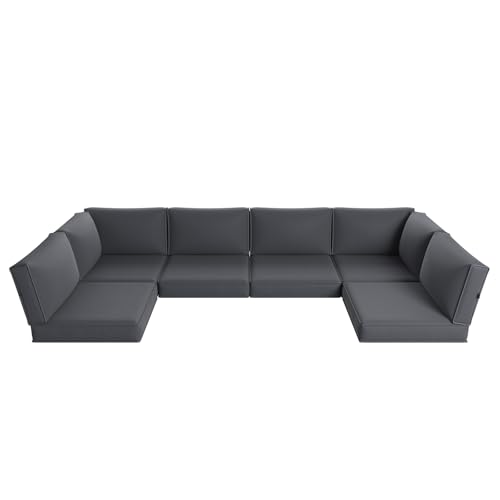
Patio Furniture Replacement Cushions Sale: The Complete Buyer's Guide
Your patio frames are still solid, but the cushions have faded, flattened, or lost their weather resistance. This guide explains how to evaluate replacement cushions on sale, match the right fabric and foam to your climate, and refresh your outdoor seating with confidence.
Explore Cushion OptionsWhy this guide matters: Replacement cushions are one of the highest-return upgrades in outdoor living. When you buy correctly, you restore comfort, extend the life of your existing frames, and avoid the waste of discarding otherwise serviceable furniture. When you buy poorly, you end up with flattened foam, faded covers, and a second replacement within a season. This page is built to help you avoid that outcome.
Why Replacement Cushions Are Worth the Effort
Outdoor furniture is designed to take abuse — sun, rain, humidity, and repeated use. Cushions absorb the brunt of that exposure. Over time, foam compresses, fabrics lose their UV coatings, and colors fade. The frame itself, whether powder-coated steel, aluminum, or solid wood, often has many more years of service left. Replacing the cushions is the practical path: it costs a fraction of a new set, keeps usable furniture out of the waste stream, and lets you update the look of your outdoor space without a full redesign.
Sale events for replacement cushions are common at seasonal transitions. Mid-range and premium tiers frequently appear in clearance as retailers cycle colorways and fabric collections. That is exactly why this guide focuses on how to judge quality — so you can separate genuine overstock opportunities from lower-grade stock that may not hold up.
Measure Before You Shop: The Sizing Step Most People Skip
Returns for replacement cushions are overwhelmingly caused by sizing errors. Seat cushions are rarely standard across brands, and even within one brand, designs change between production years. Before you look at a single listing, measure your frames directly.
Measurement Checklist
- Seat width: Measure from the inner edge of one arm to the inner edge of the other, seam to seam.
- Seat depth: Measure front to back, from the front edge of the seat to the backrest, allowing for the back cushion thickness.
- Seat thickness: Note the thickness of the existing cushion or the available space between the seat deck and the arm height.
- Back height and width: Measure the back cushion area if your set uses separate back cushions.
- Corner and curve allowance: Curved or rounded seats need slightly different dimensions; note the radius or curve.
- Tie-down points: Note whether the frame has loops or straps for securing cushions — important on windy decks.
Write your measurements down and keep them visible while you browse. A cushion that is one or two inches off in depth can slide forward or leave a visible gap. When in doubt, prioritize correct seat depth over exact width, because slightly wider cushions can compress into place, while a deep cushion cannot be shortened. If you are also considering new seating entirely rather than replacement, it helps to review the fundamentals of patio seating before committing to a cushion format.
Fabric Selection: The Single Biggest Quality Factor
Fabric determines how long a cushion looks good and how well it handles moisture and sun. The outdoor textile market uses a few common families, and each has a distinct role within the market tiers.
Solution-Dyed Acrylic
Solution-dyed acrylic is the benchmark for colorfastness. The pigment is added to the fiber before it is extruded, so the color is part of the fiber itself rather than a surface dye. This makes it highly resistant to UV fading and chlorine exposure. Premium and luxury tiers rely on acrylic for long-term outdoor use, particularly in sunny climates and poolside settings. It also resists mildew growth better than many alternatives.
Olefin (Polypropylene)
Olefin is a mid-range workhorse. It is inherently water-resistant, quick-drying, and resistant to rot and mildew. It handles UV exposure reasonably well but is more prone to fading over many seasons than acrylic. Olefin is a strong choice for covered patios and temperate climates, and it is typically the fabric found in well-specified mid-range cushions.
Polyester Blends
Polyester is the most common entry-level outdoor fabric. It can be treated with water-repellent and UV-resistant finishes, and today's better polyester blends perform well for a few seasons. The key distinction is between treated and untreated polyester: untreated polyester fades quickly in direct sun. If you are shopping entry-level tiers, look for explicit mention of UV treatment or a solution-dyed polyester process.
Performance and Marine-Grade Fabrics
Top-tier and commercial-grade cushions sometimes use specialized performance fabrics engineered for high-traffic hospitality or marine environments. These are overkill for most residential patios, but they are worth noting if you live in a coastal area with salt air or have a heavily used outdoor living space.
| Fabric Type | Typical Tier | Best For | Watch Out For |
|---|---|---|---|
| Solution-dyed acrylic | Premium to luxury | Full sun, poolside, long-term use | Higher upfront tier positioning |
| Olefin | Mid-range | Covered patios, humid climates | Slower color retention than acrylic |
| Treated polyester | Entry-level to mid-range | Seasonal use, shaded areas | Untreated versions fade fast |
| Performance / marine-grade | Top-tier to commercial-grade | Coastal, heavy use, hospitality | Often exceeds residential needs |
Beyond the fiber itself, look at the weave and finish. Tight weaves resist pilling and snagging. A water-repellent finish helps rain bead and roll off, but it is not a substitute for proper drainage and drying. Breathable fabric construction matters too — cushions that trap moisture internally develop mildew even if the outer shell is water-resistant.
Foam and Fill: Comfort That Survives the Season
Fabric gets the attention, but foam determines whether a cushion still feels supportive next summer. Outdoor cushion foam is typically polyurethane foam, often with a denser grade for seats and a softer grade for backs. The key metrics are density and compression.
Density
Higher-density foam resists compression set — the permanent flattening that happens when foam is compressed repeatedly. Entry-level cushions often use lower-density foam that feels comfortable initially but flattens within a season or two. Mid-range cushions usually step up to a denser foam that holds its shape longer. Premium and high-end tier cushions often combine a dense core with a softer comfort layer, which is the best of both worlds: support underneath, softness on top.
Open-Cell vs. Closed-Cell
Open-cell foam allows air and water to pass through, which is why outdoor cushions use it — it dries faster. Closed-cell foam resists water absorption better but can trap moisture at seams. Many quality outdoor cushions use open-cell foam wrapped in a moisture barrier or a breathable liner. Reticulated foam, which has an open network structure, is common in higher-tier outdoor seating because water drains through it quickly.
Quick-Dry and Drainage Features
If your patio is uncovered, look for cushions with drainage channels, breathable cores, or quick-dry foam. These features are a strong signal of thoughtful design and are usually found in mid-range and premium tiers. Back cushions are often softer and less dense than seat cushions — that is intentional, not a defect.
If you are replacing cushions on a set that has a conversation-style layout, consider how the cushion format interacts with the seating arrangement. Our guide to patio conversation sets covers how seat depths and back heights vary across layouts and why that affects cushion fit.
How to Evaluate a Replacement Cushion Sale
Not every promotion reflects equal quality. The most useful mental model is to separate the reason for the promotion from the quality of the product. A sale driven by seasonal color rotation or overstock on a premium fabric is a genuinely good opportunity. A sale driven by liquidation of thin, untreated polyester is less so.
Questions to Ask Before You Commit
- What is the fabric composition? Look for the actual fiber name, not just a brand name. Acrylic, olefin, and treated polyester are the relevant terms.
- What is the foam density or construction? Higher density and layered construction are stronger signals than marketing language.
- Is there a warranty? Fabric warranties and seam warranties are common on mid-range and premium cushions. A warranty that covers fading for several years is a meaningful quality indicator.
- Are replacement covers available? Some brands sell covers separately, which extends the cushion's life if the foam holds up.
- Is the cushion designed for your climate? Humid climates benefit from quick-dry foam and mildew-resistant fabric. Dry, sunny climates benefit from solution-dyed acrylic.
It also helps to know the difference between a genuine clearance on current stock and a promotion on a discontinued line with limited sizes. If you need a specific dimension, confirm availability before assuming a promotion will cover your frame. And if you are also considering upgrading the whole seating area rather than just the cushions, reviewing the patio furniture buying fundamentals can help you decide whether replacement or replacement-plus is the better path.
One more practical point: sale cushions often ship compressed or vacuum-packed. Give them time to fully expand and recover before judging firmness. Foam that feels stiff on arrival frequently softens within a few days of use.
Care and Storage: Making the Replacement Last
The best cushion in the highest tier will still fail prematurely if it is stored badly. Moisture is the primary enemy, followed by prolonged direct sun and compression during off-season storage.
Routine Care
- Brush off debris and shake out cushions weekly during the season.
- Clean with mild soap and water; avoid harsh bleach-based cleaners on colored fabric unless the manufacturer explicitly allows it.
- Stand cushions on edge after rain so water drains and air circulates around both faces.
- Bring cushions inside during heavy storms if your patio is uncovered.
Off-Season Storage
Store cushions dry, in a breathable container, in a location that avoids extreme temperature swings. Sealed plastic bags trap humidity and encourage mildew. If you have limited indoor storage, dedicated storage solutions are worth considering — our guide to patio cushion storage covers the practical options. For broader protection strategies, the patio furniture covers guide explains how covers interact with cushion longevity, and the weatherproofing guide covers the seasonal maintenance routine that keeps both frames and cushions in good condition.
If your cushions are specifically on sale and you are building a refresh plan, it helps to coordinate with your overall seating strategy. The patio cushions on sale overview is a useful companion page when you are comparing cushion styles across seat types.
Frequently Asked Questions
How do I measure my patio furniture for replacement cushions?
Measure the seat width from inner arm to inner arm, the seat depth from front edge to backrest, and the seat height or thickness available. For back cushions, measure height and width separately. Account for curves and note any tie-down points. Round up slightly to allow for fabric tolerance rather than assuming an exact fit.
What fabric is best for outdoor replacement cushions?
Solution-dyed acrylic offers the strongest color retention and UV resistance and is typical of premium and luxury tiers. Olefin is a solid mid-range choice with good water resistance. Treated polyester performs reasonably in entry-level and mid-range cushions, but untreated polyester fades quickly in direct sun.
Can I use indoor cushions outdoors?
No. Indoor foam and fabric absorb moisture, grow mildew, and fade rapidly in sunlight. Outdoor cushions use open-cell or reticulated foam and weather-rated fabric specifically to handle exposure. Using indoor cushions outdoors shortens their life dramatically.
How often should replacement cushions be replaced?
With proper care, quality outdoor cushions last three to five seasons or more. Entry-level tiers may flatten sooner. Storage, drainage, and cleaning habits have a larger effect on lifespan than any single product feature.
Are sale cushions lower quality?
Not necessarily. Many replacement cushion promotions reflect seasonal color rotation or overstock on mid-range and premium fabrics. Evaluate the fiber composition, foam construction, and warranty rather than assuming quality from the promotion itself. A clearance on solution-dyed acrylic is a stronger buy than a promotion on untreated polyester.
Putting It All Together
Replacement cushions are a practical, high-return way to extend the life of patio furniture you already own. The decision hinges on three things: correct measurements, an appropriate fabric for your climate, and foam construction that holds up over multiple seasons. When you are evaluating a sale, look past the promotion and check the fiber, the foam, and the warranty. That approach turns a seasonal promotion into a durable upgrade rather than a short-term patch.
If your refresh extends beyond cushions — for example, if you are also rethinking the seating layout or adding shade — the broader patio living section covers the surrounding decisions, and the patio essentials checklist helps you confirm you have covered the core components of a well-functioning outdoor space.