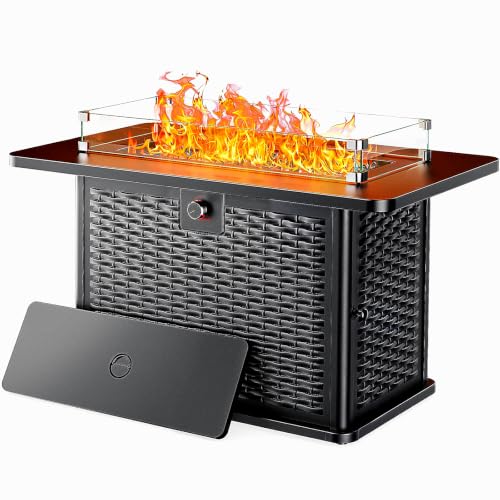
Rectangular Propane Fire Pit with Tank Inside: The Complete Buyer's Guide
Reading level: general buyer · Updated for current outdoor living trends · No prior fire pit experience required.
How a Tank-Inside Fire Pit Works
The core idea is simple: a standard 20 lb propane cylinder sits inside a hollow chamber in the fire pit base. A short regulator hose connects the cylinder to the burner, and the controls are mounted on the exterior of the unit. Because the tank is enclosed, the fire pit looks like a solid piece of furniture rather than a gas appliance sitting next to a visible fuel source.
Most models use a door, a slide-out drawer, or a lift-off panel to access the tank. Some also include a small vent to manage heat around the cylinder. A well-designed enclosure keeps the tank shaded and protected from rain, which helps the regulator and hose last longer.
Because the flame is fed by gas rather than wood, you get instant ignition, adjustable flame height, and no ash or ember cleanup. That convenience is the main reason tank-inside designs have become the default choice for covered patios, condos, and any space where smoke would be a nuisance.
Why Choose a Rectangular Shape
Rectangular fire pits are built for linear seating. They align naturally with the long edge of a sofa, a sectional, or a row of lounge chairs. Where a round bowl forces guests into a circle, a rectangle lets two people sit side by side on a couch and still be near the flames. This makes rectangular units the better fit for most modern patio layouts.
The shape also gives you a usable table surface on either end of the burner. Many buyers use that ledge for drinks, a small tray of snacks, or a lantern. If you are building out a full seating arrangement, it pairs well with low-profile pieces such as a rattan lounge chair or a pair of swivel chairs that can be angled toward the flame.
On compact patios, a narrower rectangular unit can slide against a railing or wall and free up floor space. That versatility is why rectangular fire pits often appear in small-space guides alongside small patio layout ideas.
Key Features That Matter
Not every tank-inside fire pit is built to the same standard. These are the features worth comparing before you commit.
Burner Output and Flame Control
Output is usually described in British thermal units, and it determines how much heat reaches the seating area. A lower-output burner is fine for a decorative flame on a mild evening, while higher output gives you real warmth on cooler nights. Look for a control knob with a smooth range rather than a simple on/off switch, because finer control lets you dial the flame down when guests are close.
Tank Access and Enclosure Design
Check how the tank compartment opens. A hinged door with a magnetic catch is easy to use; a lift-off lid means you need a free hand and a place to set the panel down. Also confirm that the compartment has ventilation and that the hose routing does not kink when the tank is seated. A poorly routed hose is one of the most common causes of weak flame and premature wear.
Ignition System
Push-button electronic ignition is the standard on mid-range and premium units. It is more reliable in damp weather than a manual match light. Entry-level models sometimes use a simpler piezo igniter, which works but may need a firmer press over time.
Included Accessories
Many rectangular fire pits ship with lava rocks, glass beads, or a fitted cover. Glass beads give a more contemporary look and spread the flame visually; lava rocks feel more natural. A fitted cover is genuinely useful if the unit stays outdoors year-round. Check whether the cover is included or sold separately, since that affects the overall package.
Materials and Finish Tiers
The enclosure material drives both durability and the visual weight of the piece. Here is how the common options compare.
| Material | Tier | Best For |
|---|---|---|
| Powder-coated steel | Entry-level to mid-range | Covered patios and buyers who want a solid, familiar finish |
| Cast aluminum | Mid-range | Coastal or humid climates where rust resistance matters |
| Stainless steel | Premium | High-use patios and buyers who want a modern, industrial look |
| Concrete composite | High-end tier | Design-led spaces where the fire pit is a permanent architectural feature |
| Faux stone or resin | Entry-level | Lightweight setups that may be moved between seasons |
Whatever the material, look for a weather-resistant coating and a rust-proof finish on the burner and fasteners. Those two details matter more than the shell itself, because the burner is the part that fails first in wet climates. If you are furnishing the surrounding area with woven pieces, the care guidance in rattan outdoor furniture is a useful companion read for keeping the whole set looking consistent.
Safety and Placement Rules
A propane fire pit is a gas appliance, so a few non-negotiable rules apply regardless of which model you pick.
- Keep the unit on a level, non-combustible surface such as concrete, stone, or a rated patio deck.
- Maintain the clearance stated in the manual from walls, railings, and overhead structures. Covered patios need extra attention because heat can build under a roof.
- Never store a spare propane cylinder inside the fire pit enclosure or directly beside it while the unit is in use.
- Check the hose and regulator for cracks at the start of each season, and do a soapy-water leak test at the connections.
- Do not use the fire pit indoors, in a garage, or under an enclosed tent, even with ventilation.
If your patio is partially covered, position the fire pit so the flame is not directly beneath a low ceiling or fabric awning. A wind break helps too, since a steady breeze can push the flame toward one side of the burner and reduce efficiency.
Tier-by-Tier Comparison
Using a consistent quality classification makes it easier to compare models without focusing on any single number. Here is how the three main tiers differ in practice.
| Tier | Typical Construction | Best For |
|---|---|---|
| Essential tier | Powder-coated steel shell, basic piezo ignition, lava rocks included | First-time buyers and occasional weekend use |
| Balanced tier | Cast aluminum or heavier steel, electronic ignition, glass beads or rocks, fitted cover | Regular evening use and households that entertain often |
| Top-tier | Stainless steel or concrete composite, premium burner, integrated lid, refined tank access | Permanent patio centerpieces and design-focused spaces |
In general, moving up a tier buys you smoother flame control, better weather resistance, and a more seamless tank compartment. The difference is most noticeable in ignition reliability and in how easy it is to swap the cylinder. If you plan to use the fire pit several times a week, the balanced tier is usually the sweet spot; it is feature-rich for its class without the design premium of top-tier materials.
If your layout leans toward a full dining or lounging setup, it is worth coordinating the fire pit with the rest of the seating. A rattan patio set or a rattan sofa placed perpendicular to the long edge of the fire pit creates a natural conversation zone. For a smaller footprint, a compact rattan furniture pairing works well around a narrower rectangular unit.
Frequently Asked Questions
Can I leave a propane tank inside the fire pit when it is not in use?
Yes, most manufacturers design the enclosure for that. Turn the valve off after each use, and check the compartment for moisture during rainy seasons. If the unit will sit unused for months, removing the cylinder and storing it upright in a ventilated area is the safer habit.
How long does a tank last?
It depends on burner output and flame height. A decorative low flame will last considerably longer than a high flame used for warmth. Keeping a spare cylinder on hand is the simplest way to avoid interruptions during gatherings.
Is a rectangular fire pit better than a round one?
It depends on your seating. Rectangular units suit linear arrangements like a sofa or sectional, while round units suit circular clusters of chairs. For most modern patios with a couch as the anchor piece, the rectangular shape uses space more efficiently.
Do I need a cover?
A fitted cover protects the burner, controls, and tank compartment from rain and debris. It is especially useful if the fire pit stays outdoors through winter. If a cover is not included, plan to add one that is sized for your model rather than a generic tarp.
Can it be used on a wooden deck?
Many models are rated for deck use, but you must follow the manual's clearance and surface requirements. A heat-resistant mat or a stone pad under the unit adds a layer of protection and is a common practice for deck installations.
Ready to Compare Models?
Browse the recommended rectangular propane fire pits with hidden tank compartments below. Compare features, ignition systems, and enclosure designs side by side.
Explore Options