
Small Outdoor Table and Chairs with Umbrella: The Complete Buyer's Guide
Everything you need to know about compact patio dining sets with shade — from frame materials and umbrella mechanics to footprint planning and long-term care.
Why this guide matters: A small outdoor table and chairs with umbrella solves two problems at once — it gives you a functional dining or coffee spot without swallowing your patio, and it provides built-in shade so you can actually enjoy that spot on bright days. But not all compact sets are built the same. This guide walks you through the decisions that separate a set that lasts a decade from one that wobbles by summer's end.
Why Choose a Small Outdoor Table and Chairs with Umbrella
A compact table-and-chair set with an integrated or umbrella-ready table is one of the most practical outdoor furniture purchases you can make. Unlike a full dining set, it fits balconies, postage-stamp patios, apartment terraces, and tight porch corners without forcing you to rearrange everything else you own.
The umbrella is the feature that separates these sets from plain bistro tables. Without shade, a sunny patio becomes unusable for several hours a day. With the right umbrella and table combination, you can sit down for breakfast, work outside in the afternoon, or host a small evening gathering without squinting or retreating indoors.
Who these sets are designed for
- Balcony and apartment dwellers who need functional seating in a narrow footprint.
- Couples and small households that want a two- to four-person dining spot outdoors.
- Homeowners with compact patios or porches who want a flexible, movable dining area.
- Anyone who values shade but does not want the visual weight of a permanent pergola or awning.
Editorial note: If you are still comparing broader layout options, our guide to small patio design covers circulation, zoning, and furniture placement that complement a compact dining set.
Types of Compact Umbrella Table Sets
The category is broader than it first appears. Most small outdoor table and chairs with umbrella fall into one of the following configurations, each with trade-offs in seating, stability, and storage.
Round bistro sets with center umbrella
The classic configuration: a round table with a pre-drilled center hole, two to four chairs, and a center-pole umbrella. Round tables maximize usable surface area relative to their footprint and feel more social than square or rectangular tables. These are the most common entry-level and mid-range option, and the format most likely to fit a small balcony or patio corner.
Square and rectangular compact sets
Square tables push chairs closer to walls and corners, which can be useful on narrow patios. Rectangular compact sets seat four in a tighter footprint than a round table of similar surface area. If you need a rectangular surface, look for models with a centered umbrella hole rather than an offset one — it keeps the canopy balanced.
Bar-height and counter-height sets
Elevated sets give a smaller footprint a more open, less cluttered feel, and they pair well with balconies where a low table would block sightlines. The trade-off is chair access and umbrella stability: taller sets need heavier bases and chairs with footrests for comfort. If height is a priority, our guide to small outdoor bar-height table and chairs covers the specific considerations.
Folding and nesting sets
Folding chairs and drop-leaf tables collapse for winter storage or to clear floor space. These are the most space-flexible option, though folding joints are the first point of wear. Look for reinforced hinge plates and a locking mechanism on the table, not just the chairs.
Offset-pole umbrella sets
A cantilever umbrella moves the pole out of the table's center, freeing the full surface and eliminating the pole obstruction at the middle of the table. These sets usually pair a standard compact table with a separate offset umbrella. They are a strong choice if you plan to use the table for food service or laptop work, but they require a weighted base and more clearance space behind the table.
Frame and Tabletop Materials Explained
Material choice determines how long the set survives sun, rain, and temperature swings — and how much maintenance it demands. Here is how the major options compare.
Powder-coated aluminum
The most common frame material for small outdoor sets, and for good reason. Aluminum is light enough to move easily, will not rust, and a powder-coated finish resists chipping and UV fading. High-grade aluminum frames with reinforced joints hold up well over many seasons. This is the material to prioritize if your set will stay outside year-round in a wet climate.
Steel and wrought iron
Steel frames are heavier and more stable in wind, which matters for umbrella tables that catch a lot of sail area. The downside is rust risk: any chip in the finish exposes the metal. Powder-coated or galvanized steel with a rust-proof finish is the durable choice; untreated steel requires regular touch-ups. Wrought-iron sets are visually classic but heavy to move and best suited to a permanent spot on a covered patio.
Teak and acacia hardwood
Wood frames and tabletops bring warmth that metal cannot match. Teak is naturally oil-rich and weather-resistant; acacia is a more accessible hardwood that performs well with proper sealing. Both need periodic re-oiling to prevent drying and cracking, and both are heavier than aluminum. If you want the wood look without the upkeep, look for wood-look aluminum or high-density polyethylene (HDPE) composites.
Resin, HDPE, and plastic
The lightest and most weatherproof option. High-density polyethylene is UV-stabilized, will not rot or rust, and cleans with a hose. Entry-level resin sets are the most common in this category; top-tier HDPE sets mimic wood grain convincingly and are built with thicker profiles that resist flexing. The main limitation is heat retention and a slightly less refined feel than metal or wood.
Tabletop surfaces
- Tempered glass: easy to clean and visually light; needs care to avoid chipping at edges.
- Slatted metal or wood: drains rain well and resists pooling; slats can trap debris.
- Solid composite or HDPE: the most low-maintenance surface; less likely to crack in freeze-thaw cycles.
- Ceramic or stone-look tops: premium look and scratch resistance; heavier and best left in one place.
Umbrella Mechanics, Canopy, and Base Options
The umbrella is the component most likely to disappoint if you overlook the details. Here is what to evaluate before you commit.
Pole diameter and table hole size
Standard umbrella poles run roughly 1.5 inches in diameter, and most umbrella-ready tables are drilled to match. If you are pairing a table with a separate umbrella, confirm the hole diameter and pole size before buying — a loose fit causes wobble, and a tight fit can crack a glass top. If you already own an umbrella, a table with a slightly oversized hole and a stabilizing ring is the more flexible choice.
Crank and tilt mechanisms
A crank lift is easier to operate than a push-up mechanism, especially for taller canopies. A push-button tilt lets you angle the canopy as the sun moves. Mid-range and premium sets typically include both; entry-level sets often offer a push-up pole with no tilt. If you plan to use the table through the afternoon, prioritize a tilt mechanism.
Canopy fabric
Solution-dyed acrylic and polyester are the two main options. Solution-dyed acrylic holds color and resists fading better over years of sun exposure; polyester is more common in entry-level canopies and may fade faster. Look for a stated UV rating and water resistance. A vented canopy (with a top vent) lets hot air escape and reduces wind lift, which is a meaningful stability upgrade on an exposed patio.
Base weight and stability
The base is where most umbrella failures begin. A center-pole umbrella through a table needs either a weighted base plate or a table with a built-in weight. Wind catching a canopy creates real leverage, so a heavier base is the single best stability upgrade. For freestanding or offset umbrellas, a filled base is typically required — many bases are sold empty and filled with sand or water after purchase. Check whether the base is included or sold separately before you finalize a set.
Practical tip: If your set will sit on an upper-floor balcony, check building rules on umbrella use before buying. Some buildings restrict or prohibit open canopies on balconies due to wind risk.
Sizing and Footprint Planning
The most common mistake with compact sets is buying for the table's dimensions and forgetting the chairs, umbrella base, and circulation space. Measure the full functional footprint, not just the tabletop.
Seating capacity and table size
- Two-person sets: a round table roughly 24 to 30 inches across, with two chairs. The most space-efficient option for balconies.
- Four-person sets: a round table around 36 to 42 inches across, or a compact square or rectangular table. Four chairs need meaningful clearance on all sides.
- Bar-height sets: similar footprint to standard sets, but chairs need extra pull-out room to climb in and out.
Circulation clearance
Plan for enough space to pull chairs out and walk past the set. A useful rule of thumb is roughly two feet of clear space behind each chair when seated, and a bit more behind chairs that need to slide out fully. On a narrow balcony, a two-chair set pushed against the railing with the umbrella positioned away from the wall preserves the most usable walking space.
Umbrella clearance
An open canopy extends well beyond the table's edge. Measure the canopy's open diameter, not just the table's, and check that it will not collide with a railing, wall, or neighboring balcony. On covered porches, confirm the canopy's open height fits under the ceiling before buying a taller pole.
Related planning: If your space is tight, our breakdown of small balcony furniture sets covers measurement-first approaches and layout options for narrow outdoor areas.
Comfort, Ergonomics, and Chair Design
A table set is only as good as the chairs you sit in. Compact chairs vary widely in comfort, and the differences are not always obvious from a product photo.
Seat height and table height pairing
Standard dining sets pair chairs with seats around 17 to 18 inches high with tables around 28 to 30 inches high. Bar-height sets pair seats around 28 to 30 inches with tables around 40 to 42 inches. Mixing heights across the two categories creates awkward knee clearance, so buy the table and chairs as a matched set unless you have confirmed the dimensions align.
Cushions and sling seats
Removable, quick-dry cushions add comfort but need storage in rain. Sling seats — fabric stretched across a frame — dry fast and require no cushion maintenance, but offer less padding. If you prefer cushions, confirm they are UV-resistant and drainable; standard indoor foam will hold water and degrade quickly. For sets that need extra padding, our range of patio chairs with cushions covers comfort-focused options.
Armrests and chair weight
Armrests make a real difference for longer sits, especially on bar-height chairs where you want support while climbing in. Chair weight matters if you will move the set regularly to mow, clean, or store — aluminum and HDPE chairs are the easiest to reposition; steel and wrought iron are the most stable in wind but heavy.
Stacking and folding
If you have limited storage, stacking chairs or a folding table make winter storage far easier. Confirm that the chairs stack with the table intact or that both collapse flat.
Tier Comparison at a Glance
This table summarizes how sets in each market tier typically differ. It uses universal quality descriptors rather than numerical figures, so it stays useful regardless of when you read it.
| Tier | Typical Frame & Canopy | Best For | Key Trade-Off |
|---|---|---|---|
| Entry-level | Thinner aluminum or steel frame; polyester canopy; push-up umbrella; base often sold separately | Seasonal use, covered patios, first outdoor set | Lighter build and fewer stability features; may need reinforcement over time |
| Mid-range | Powder-coated aluminum with reinforced joints; solution-dyed canopy; crank and tilt umbrella; weighted base included | Year-round outdoor use in most climates; regular entertaining | Heavier than entry-level; storage requires more space |
| Premium | High-grade aluminum or teak; vented solution-dyed canopy; smooth crank and tilt; heavy-duty weighted base | Permanent patio placement; windy or exposed sites; long-term investment | Higher weight and assembly complexity; less portable |
| Luxury / commercial-grade | Reinforced welded frame; stone-look or composite top; commercial-grade canopy fabric; marine-grade hardware | Hospitality use, high-wind exposure, design-forward spaces | Requires professional assembly and dedicated placement |
In practice, the mid-range tier is where most buyers land. It balances stability, weather resistance, and portability without the assembly demands of luxury sets. The premium tier is the right call if your set will sit in an exposed, windy spot or stay outside year-round.
Care, Storage, and Weatherproofing
A small set with an umbrella sees more weather than most furniture because the canopy stays up. A simple seasonal routine keeps both the frame and the fabric in good shape.
Routine cleaning
- Wipe powder-coated frames with mild soap and water; avoid abrasive pads that scratch the finish.
- Clean glass tabletops with a non-ammonia cleaner to avoid clouding.
- Brush canopy fabric with a soft brush and mild soap; rinse thoroughly and let it dry fully before closing.
- Clear debris from slatted tabletops so water drains and does not pool.
Seasonal protection
- Close the umbrella during high winds and storms — an open canopy in wind is the most common cause of bent poles and tipped bases.
- Re-oil teak and acacia once or twice a year to prevent drying and cracking.
- Touch up any chips in steel finishes promptly; exposed steel rusts quickly.
- Store cushions and removable fabric components indoors during wet or freezing periods.
Winter storage
If the set stays outside through winter, use a fitted cover that breathes rather than a fully sealed tarp, which traps condensation. For folding or stacking sets, collapse and store the table and chairs in a shed or garage where possible. Before storing, confirm the umbrella is fully dry to prevent mildew in the canopy.
Maintenance deep dive: For a full seasonal routine covering covers, sealants, and rust prevention, see our weatherproofing guide.
Final Buying Checklist
Before you commit to a small outdoor table and chairs with umbrella, run through this list. It captures the decisions that most often lead to returns or regret.
- Measure the full footprint — table, chairs pulled out, umbrella base, and walking clearance — not just the tabletop.
- Confirm the umbrella hole diameter matches your pole, or that the included umbrella fits the table.
- Check whether the base is included. Many sets sell the base separately, and a lightweight base undermines an otherwise good set.
- Prioritize a rust-proof finish if the set stays outdoors year-round; powder-coated aluminum is the safest default.
- Verify the canopy fabric is solution-dyed and UV-rated if the set sits in direct sun.
- Look for a tilt mechanism if you plan to use the table through the afternoon.
- Confirm chair comfort — seat height, armrests, and whether cushions are drainable or removable.
- Check stacking or folding if storage space is limited.
- Review assembly requirements — premium sets often need more tools and time, and some require two people.
- Read the warranty for frame and fabric separately; canopy coverage is often shorter than frame coverage.
Ready to compare specific compact dining sets that match your space and climate?
Explore Two-Person Compact SetsFrequently Asked Questions
What size small outdoor table seats four with an umbrella?
A round table around 36 to 42 inches across, or a compact square or rectangular table of similar surface area, typically seats four while still accommodating a center umbrella. The limiting factor is usually chair clearance, not the tabletop, so measure the full footprint including pulled-out chairs.
Is a center-pole or offset umbrella better for a small table?
Center-pole umbrellas are simpler, more stable, and integrate directly with the table's drilled hole. Offset (cantilever) umbrellas free the full tabletop surface and suit food service or laptop work, but they require a weighted base and more clearance behind the table. For tight spaces, center-pole is usually the more practical default.
Can I leave the umbrella open in wind?
No. An open canopy acts like a sail and is the leading cause of bent poles and tipped bases. Close the umbrella during storms and high winds. If your patio is consistently windy, choose a vented canopy and a heavier weighted base, or consider a set with a reinforced frame.
What is the most weather-resistant material for a compact patio set?
Powder-coated aluminum frames with HDPE or composite tabletops are the most weather-resistant combination. Aluminum does not rust, and HDPE will not rot or crack in freeze-thaw cycles. Teak is also highly weather-resistant but needs periodic oiling, and steel requires prompt touch-ups if the finish chips.
Do umbrella table sets come with the base included?
Not always. Many entry-level sets sell the base separately, and some mid-range sets include a lightweight plate that is insufficient for exposed sites. Check the listing carefully and budget for a weighted base if one is not included — base stability is the most important factor in umbrella safety.
How much clearance do I need around a small outdoor dining set?
Plan for roughly two feet of clear space behind each chair when seated, plus a little more for chairs that slide out fully. On a narrow balcony, a two-chair set pushed toward the railing with the umbrella positioned away from the wall preserves the most walking room.
Recommended Small Outdoor Table and Chairs with Umbrella
⚠️ AFFILIATE DISCLOSURE: This website contains affiliate links. As an Amazon Associate, we earn from qualifying purchases. If you make a purchase through these links, we may receive a small commission at no additional cost to you. Read our full affiliate policy.

Vongrasig 6 Piece Folding Patio Dining Set,Small Metal Outdoor Garden Patio Table and Chair Set w/Umbrella for Lawn,Deck,Backyard,Black
Check price on Amazon
Shintenchi 6 Piece Patio Dining Set with Umbrella, Outdoor Furniture Set with 4 Folding Chairs and Tempered Glass Top Dining Table for Lawn Backyard Garden Porch, Black
Check price on Amazon
Vongrasig 6 Pieces Folding Patio Dining Set, All Weather Small Metal Outdoor Table and Chairs Set, Patio Furniture Set w/Umbrella, Glass Table & 4 Folding Chairs for Garden, Lawn, Backyard, Brown
Check price on Amazon
Incbruce 6-Piece Patio Furniture Set with Brown Umbrella, Patio Table and Chairs Set of 4 Textilene Chairs and Square Table with Umbrella Hole for Garden, Deck and Backyard (Brown)
Check price on Amazon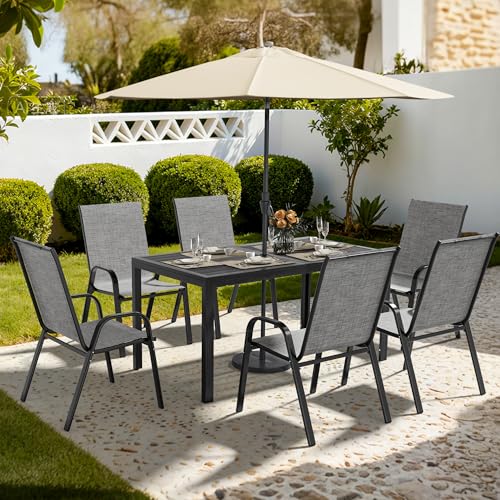
Pamapic 7 Pcs Outdoor Dining Sets, All-Weather Patio Dining Set for 6, Grey | Steel Slat Table with 6 Textilene Stackable Chairs, Patio Table and Chairs Set with Umbrella Hole for Patio (No Umbrella)
Check price on Amazon
Vongrasig 6 Pieces Folding Patio Dining Set, All Weather Small Metal Outdoor Table and Chair Set, Garden Patio Furniture Set w/Umbrella, Glass Table & 4 Folding Chairs for Lawn, Backyard, Blue
Check price on Amazon
Outsunny 4 Piece Outdoor Bar Set with Umbrella, Patio Dining Set Brown | 2 Folding Chairs, Wave Textured Tempered Glass Table, Backyard Garden Deck Poolside
Check price on Amazon
Shintenchi 6 Piece Patio Dining Set with Umbrella, Outdoor Furniture Set with 4 Folding Chairs and Tempered Glass Top Dining Table for Lawn Backyard Garden Porch, Brown and Beige
Check price on AmazonDisclaimer
The information provided on PatioFocus is for educational and informational purposes only. We are not professional landscapers or contractors, and our content should not replace professional advice. Always consult with a qualified expert regarding structural, safety, or weather-related concerns. Some content may use AI assistance. Always check product warranties and safety standards before purchasing. If you do not agree, please do not use this website. Read the full disclaimer.