Small Outdoor Bar Height Table and Chairs: The Complete Buying Guide
Make the most of every square foot. Learn how to choose a compact bar height set that fits your balcony, patio, or courtyard — and turns a tight outdoor corner into a favorite gathering spot.
Start the GuideWhy bar height? In compact outdoor areas, a small outdoor high top table and chairs set changes the geometry of the space. Instead of spreading out, seating grows upward — which means you can seat two or four people in a footprint that a standard dining table could never match. This guide walks you through sizing, materials, layout, and the practical details that matter before you bring a set home.
Why a Bar Height Set Works in Small Spaces
Compact outdoor areas present a specific challenge: you need seating, a surface for drinks and plates, and enough walking room to move without squeezing past furniture. Bar height furniture addresses all three at once.
- Vertical seating, smaller footprint. Because bar stools tuck under an elevated table, the effective floor area occupied by a two-person set can be noticeably smaller than a conventional dining arrangement with the same seat count.
- Better views from balconies. On a raised balcony or terrace, the table surface aligns closer to the railing height. Instead of looking through a railing bar while seated, you look over it — a small design detail that transforms how the space feels.
- Visual openness. The space beneath a bar height table remains visible, so a small patio reads as less crowded even when a table and chairs are present.
- Natural gathering point. High-top setups have an inherent social quality. They work equally well as a morning coffee station, an evening drinks spot, or a casual outdoor dining surface.
If your space is extremely tight — think a narrow strip balcony — it is also worth reading our guide on small balcony furniture sets to compare bar height options against folding and modular alternatives.
Sizing: Getting the Proportions Right
Bar height furniture operates on a different scale than standard patio dining pieces. Getting the proportions right is the single most important decision, because mismatched table and chair heights are uncomfortable to use and difficult to correct later.
Standard Bar Height Dimensions
- Table height: Approximately 40–42 inches for a true bar height surface. Counter height, a common alternative, sits around 34–36 inches.
- Seat height: Bar stools and chairs designed for bar height tables typically measure 28–30 inches from floor to seat. Counter height seating usually measures 24–26 inches.
- Clearance: Allow roughly 10–12 inches between the seat and the underside of the tabletop for comfortable legroom.
Footprint Planning
A compact two-person bar height set generally needs a tabletop footprint of 24–30 inches in diameter or per side, plus about 24 inches of clearance on each side for chairs to pull out and for people to move behind them. In practice, reserve a usable area of roughly 5 x 5 feet for a comfortable two-person setup, and closer to 6 x 6 feet if you want a four-seat configuration with breathing room.
Measuring your space before shopping prevents the most common compact-patio mistake: buying a set that technically fits but leaves no room to walk around it. Our measurement guide covers the process step by step, including how to account for door swings, railing overhangs, and traffic paths.
What to Evaluate Before You Buy
Frame Material
Powder-coated aluminum is lightweight and rust-resistant, which suits balconies and coastal air. High-grade steel adds rigidity for windy rooftops. Teak and acacia offer warmth but need periodic sealing.
Tabletop Surface
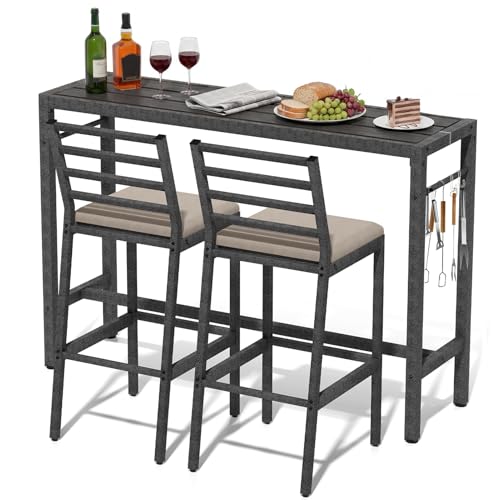
Slatted metal tops drain rainwater and dry quickly. Solid surfaces such as ceramic or composite are easier to wipe clean. Glass looks elegant but shows water spots and needs more care in exposed areas.
Chair Stability
Bar height chairs have a higher center of gravity. Look for wide-set legs, footrests that are firmly welded or bolted, and a weight rating that comfortably exceeds the intended user. Swivel models should have a solid, wobble-free base.
Space-Saving Features
Stackable chairs, folding tabletops, and nesting designs add flexibility. A set that stows compactly is a major advantage in a balcony or courtyard that doubles as a walkway.
Weather Resistance
Confirm that hardware is stainless or galvanized, that welds are sealed, and that any cushions use quick-dry foam with solution-dyed fabric. In sheltered spaces, entry-level materials can perform well; in exposed areas, invest in weatherproofing.
Assembly & Portability
Compact sets are often shipped flat-packed. Check whether tools are included and how many people assembly requires. If you plan to move the set between a patio and a storage area, lighter frames make a real difference day to day.
Comparing Tiers: What Changes as You Move Up
Bar height sets fall into recognizable tiers based on materials, construction, and finish quality. The table below summarizes what generally improves between tiers — without getting into specific figures, since market conditions shift over time.
| Tier | Typical Materials | Build Characteristics | Best For |
|---|---|---|---|
| Entry-level | Resin, basic powder-coated steel, lightweight aluminum | Simpler welds, thinner tubing, fewer finishes | Sheltered balconies, seasonal use, first outdoor setup |
| Mid-range | Powder-coated aluminum, acacia, composite tops | Reinforced joints, smoother finish, better weight distribution | Year-round covered patios, everyday use, coastal balconies |
| Premium | Marine-grade aluminum, teak, ceramic or sintered stone tops | Precision engineering, refined hardware, long-term weatherproofing | Exposed rooftops, luxury terraces, long-term investment |
The practical takeaway: a mid-range set usually delivers the best balance for most homeowners, because the jump from entry-level to mid-range tends to bring meaningful improvements in stability and finish, while the jump from mid-range to premium is more about longevity and design refinement than day-to-day usability.
Layout Ideas for Compact Outdoor Spaces
Where you place a bar height set matters as much as which set you choose. A few proven arrangements for tight spaces:
- The balcony rail view. Position a round or square two-seat bar set parallel to the railing, angled slightly inward so seated guests face each other and the view simultaneously. This is the classic small outdoor table and chairs for balcony arrangement and it works because it keeps the walking lane clear.
- The corner anchor. In a square patio, a bar set in one corner frees the center for movement and makes the space feel intentional rather than cluttered. Pair it with a compact small patio side table with umbrella hole for drinks and small plates.
- The transition zone. Between an indoor living area and the yard, a bar height set acts as a natural pause point. It defines the boundary without blocking sightlines, since you can see under and through the furniture.
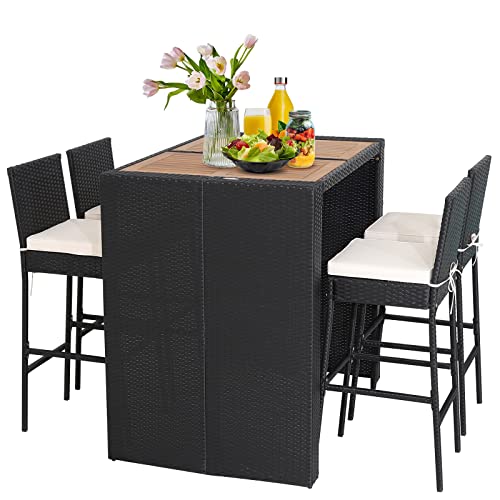
- The four-seat compact configuration. If you need four seats, a rectangular bar table paired with slim chairs makes the most of a narrow strip. Browse small outdoor table and chairs for 4 options for reference dimensions.
Materials and Durability: A Closer Look
Material choice determines how a set ages and how much attention it needs. Here is how the main options compare in compact outdoor settings.
Aluminum
Powder-coated aluminum is the default recommendation for balconies and small patios. It is light enough for one person to reposition, resistant to rust, and available in a wide range of finishes. The main caveat: in strong wind, very light frames can shift, so look for chairs with feet designed for grip or add felt pads on hard surfaces.
Steel
High-grade steel is heavier and more rigid than aluminum, which makes it a solid choice for windy rooftops and exposed decks. Quality varies considerably: powder-coated steel with sealed welds and stainless hardware holds up well, while lower-grade steel without a thorough coating can develop rust at joints over time. Inspect the frame at seams and around footrests before buying.
Wood
Teak and acacia bring warmth and a natural texture that pairs beautifully with greenery. Teak is naturally oil-rich and weathers gracefully; acacia is denser than many alternatives and takes finishes well. Either benefits from a seasonal sealant in wet climates. Wooden bar height sets tend to be heavier, which can be an advantage for stability but a consideration if you need to move the set frequently.
Resin and Composite
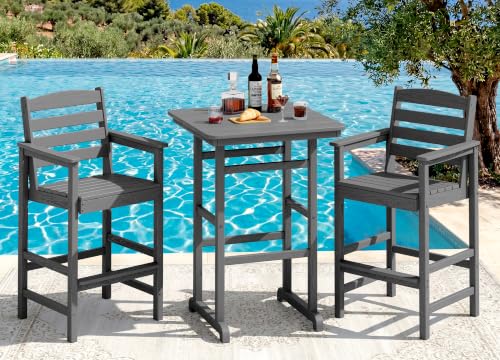
High-density polyethylene and resin sets are dependable entry-level options for sheltered spaces. They do not rust, they are easy to wipe down, and they are light. The trade-off is a slightly less refined look and a shorter lifespan in direct sun, where some resins fade over several seasons. For a covered balcony, they are a practical, low-maintenance choice.
Whatever the material, a protective cover during off-season months is the single most effective way to extend lifespan. Our patio furniture covers guide explains how to choose a cover that breathes properly rather than trapping moisture.
Comfort Details That Often Get Overlooked
Bar height chairs differ from standard dining chairs in ways that affect comfort. These are the details worth checking:
- Footrest position. At bar height, your feet will not touch the ground when seated. A well-placed footrest is not a luxury — it is structural to comfort. Look for a footrest positioned roughly 8–10 inches below the seat for most adults.
- Seat depth and back support. Compact chairs sometimes sacrifice back support to save space. A gentle recline and a seat depth of 16–18 inches make a meaningful difference for longer sittings.
- Cushion material. If the set includes cushions, confirm they use quick-dry foam and a UV-resistant cover fabric. Standard indoor cushions will hold water and degrade quickly outdoors. For replacement or additional cushions, see our set of 2 patio chairs with cushions reference guide.
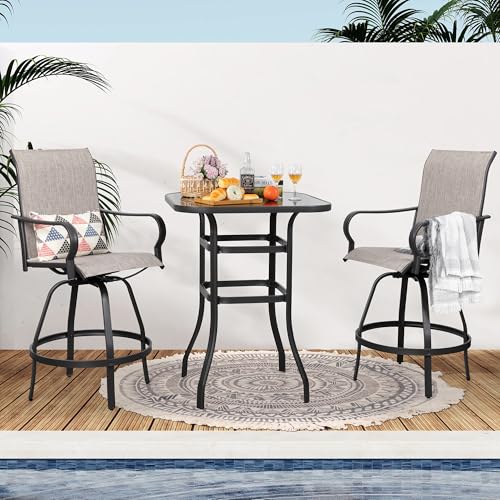
- Chair weight and swivel. Swivel bar stools add flexibility in tight spaces because you can turn to face different directions without moving the chair. If you choose swivel, check the base for a smooth, wobble-free rotation.
Pre-Purchase Checklist
- Measured the tabletop footprint and confirmed the set fits with 24 inches of clearance per side
- Verified table and chair heights match (bar height table with bar height seating)
- Checked the footrest height and seat support for comfort
- Confirmed frame material suits your climate and exposure level
- Reviewed weight ratings for chairs, especially for taller users
- Checked whether chairs stack, fold, or nest for storage flexibility
- Confirmed hardware is stainless or galvanized for rust resistance
- Read assembly requirements and tool inclusions
- Planned a protective cover or storage location for off-season months
- Compared at least two tiers to judge which construction level fits your use
Alternatives to Consider
A bar height set is not the only answer for a compact outdoor area. Depending on how you plan to use the space, these related options may suit you better:
- Bistro sets. A small outdoor bistro table and 2 chairs offers a lower seating profile with a similarly compact footprint. Better if you prefer standard dining height for meals.
- Balcony-specific sets. Purpose-built small balcony set configurations often include space-saving details like foldable chairs and narrow tabletops.
- Bar carts as companions. If you go with a bar height table, an outdoor storage box nearby can hold cushions and serving items, freeing the tabletop for guests.
- Sectional seating. If your priority is lounging rather than dining, a small patio furniture sectional may use the space more effectively than a table-and-chair pairing.
Keeping Your Bar Height Set in Shape
A compact set in a sheltered area needs modest maintenance, but a few routines make a real difference:
- Weekly wipe-down. Rinse the tabletop and frames with mild soap and water. Avoid abrasive pads on powder-coated surfaces.
- Joint inspection. Every few months, check bolts and welds at the footrests and leg attachments. Bar height furniture experiences more leverage at these points.
- Seasonal wood care. If you chose a wooden set, apply a sealant before the wet season and again after winter.
- Cushion storage. Bring cushions inside during heavy rain or prolonged off-season periods. Quick-dry foam helps, but consistent storage prevents mildew.
- Touch-up paint. Small chips in powder coating are worth touching up promptly to prevent rust from developing underneath.
For a full seasonal routine, our weatherproofing guide covers the annual maintenance schedule for outdoor furniture in detail.
Frequently Asked Questions
What is the standard height of an outdoor bar height table?
Outdoor bar height tables typically stand around 40 to 42 inches tall, with matching bar stools or chairs that have a seat height of roughly 28 to 30 inches. This creates enough clearance for comfortable legroom while keeping the table surface at a natural arm-resting level when seated.
How much floor space does a small outdoor bar height set need?
A compact bar height set with two chairs generally needs a footprint of about 30 to 36 inches in diameter for the table, plus roughly 24 inches of clearance on each side so chairs can pull out comfortably. For a balcony or tight patio, plan for a total usable area of at least 5 to 6 feet in one direction.
Are bar height tables better than standard dining tables for small patios?
Bar height tables offer two practical advantages in small spaces: their vertical orientation uses less floor area per seat, and their elevated surface aligns nicely with balcony railings so you can enjoy the view while seated. They also tend to feel more open because the space underneath the table remains visually uncluttered.
Which materials work best for a small outdoor bar height table and chairs?
Powder-coated aluminum and high-grade steel are excellent for compact balconies because they resist rust and stay relatively light for repositioning. Teak and acacia are strong choices when you want a warmer natural look, provided the pieces carry a weather-resistant finish. Resin and high-density polyethylene are dependable entry-level options for covered or sheltered outdoor areas.
Can a small outdoor bar height set stay outside year-round?
It depends on the material and climate. Powder-coated metal frames and marine-grade hardware generally handle year-round exposure well, while wood benefits from seasonal sealing. In regions with harsh winters or heavy salt air, a protective cover and periodic inspection will extend the life of any bar height set, regardless of tier.
How many people can a small outdoor high top table seat?
Most compact bar height tables are designed for two to four people. Round and square models typically seat two comfortably and can accommodate four with smaller chairs, while rectangular models in the mid-range size can seat four without feeling crowded. Always confirm the recommended seating count in the product specifications.
Ready to Furnish Your Compact Outdoor Space?
You now have the sizing rules, material guidance, and layout ideas to choose a bar height set with confidence. Explore current options and find the configuration that matches your space.
View Recommended SetsEditor’s note: Compact outdoor furniture is a balancing act between size, stability, and durability. Prioritize frame quality and chair stability over surface styling — the parts you touch every day will determine how much you enjoy the set over time.