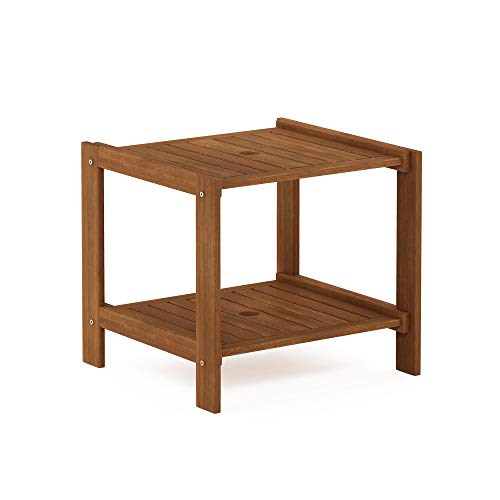
Small Patio Side Table with Umbrella Hole: The Complete Buying Guide
Combine shade and surface space in one compact footprint. Learn how to choose a stable, weather-resistant side table that holds your umbrella without wasting a single inch of your patio, balcony, or porch.
Explore Buying FactorsWhy this table matters: On a compact patio, every piece of furniture has to earn its place. A small patio side table with an umbrella hole does double duty — it gives you a landing spot for drinks, books, and sunscreen while anchoring the shade that makes the space usable in the middle of the day. This guide walks you through the practical details that separate a stable, long-lasting choice from one that wobbles, rusts, or tips in the first strong breeze.
What a Small Patio Side Table with Umbrella Hole Actually Does
A side table with an umbrella hole is a compact outdoor table — typically round, square, or slightly rectangular — with a reinforced opening cut through the center of the top. That opening accepts the pole of a patio umbrella, so the table both supports the shade and provides a surface directly underneath it. On a small patio, this consolidation is the whole point: instead of allocating separate floor space for an umbrella stand and an end table, you use one footprint for both functions.
These tables are usually sized between 16 and 24 inches across and stand 18 to 22 inches tall, which puts them at the right height beside a lounge chair, loveseat, or bistro seating. Many models are designed to pair with compact umbrellas, and some are sold as part of a matched set. If you are still mapping out your overall layout, the broader guide to small patio design is a useful companion to this page. For situations where the table is meant to sit beside a lounger rather than a dining chair, the comparison of compact outdoor side tables covers the non-umbrella options in more depth.
Why Choose a Side Table with an Umbrella Hole for a Small Space
The appeal is straightforward: shade and surface area share one base. That matters most in three situations. First, on balconies and narrow patios where a freestanding umbrella base would block walking space. Second, beside a single lounge chair or a pair of chairs where a full dining table would be oversized. Third, in rental properties where you want shade without drilling or bolting anything into the deck.
There is also a practical ergonomic benefit. When the umbrella is anchored by the table you are sitting next to, the shade lands exactly where you need it — over your lap, your drink, and your reading material — rather than several feet away. For balconies specifically, this table is often the single most space-efficient shade solution available, and it pairs naturally with the layouts discussed in the small balcony furniture sets guide.
Key Buying Factors to Evaluate Before You Decide
The details below are where most purchase regrets originate. Work through them in order, because the first two — hole compatibility and stability — eliminate more unsuitable models than any other criteria.
Material Comparison: Matching the Table to Your Conditions
The table below groups the common construction types by market tier and typical use case. Use the tier labels as a relative ranking within the category, and match the material to how exposed your patio is to wind, salt, and rain.
| Material | Tier | Best For | Stability with Umbrella | Weather Notes |
|---|---|---|---|---|
| Resin / HDPE | Essential tier | Covered porches, light use, easy repositioning | Needs external weighted base | Moisture-proof; may fade in intense sun |
| Powder-coated steel | Balanced tier | Most patios and balconies; everyday shade | Good with compact umbrellas | Rust-proof finish essential; inspect chips |
| Cast aluminum | Premium tier | Coastal areas, humid climates, long-term use | Excellent; heavier casting resists leverage | Naturally corrosion-resistant; low maintenance |
| Concrete / composite stone | Premium tier | Fixed patio layouts, windy exposed sites | Best-in-class; often needs no external base | Very heavy; protect from freeze-thaw cracking |
| Teak / sealed hardwood | Luxury tier | Design-focused patios, warm natural aesthetics | Good when the base is wide and solid | Requires annual sealing; check collar joinery |
Sizing and Placement: Making It Fit Without Crowding
On a small patio, placement is half the decision. The table should sit within arm's reach of the seat it serves, with enough clearance around the umbrella pole that the canopy does not clip a wall, railing, or roofline. As a rule of thumb, allow at least 12 to 18 inches between the edge of the table and the nearest chair so you can move without knocking your knees.
Think about sun direction as well. The shade from an umbrella shifts through the day, so position the table where the most-used seat will be covered during the hours you actually sit outside. On a balcony, keep the umbrella on the side away from the walking path, and confirm that the canopy clears the railing when open. If your space is tight enough that even a side table feels like a squeeze, the round and bistro options collected in the small round garden table guide can help you judge just how little surface area you can get away with.
A Quick Stability and Safety Checklist
Before you commit to a model, run through these checks. They take a few minutes and prevent most of the common outdoor umbrella accidents.
- Measure your umbrella pole diameter and confirm it fits the hole, with a reducer ring if needed.
- Check whether the table needs an external weighted base; plan to buy one if it does.
- Confirm the collar around the umbrella hole is reinforced, not a bare cut in a thin top.
- Verify the finish is described as rust-proof or corrosion-resistant.
- Match table height to your chairs before ordering.
- Keep the umbrella closed during high wind, and store it in winter.
- Check balcony or HOA rules on umbrella use and canopy height.
- Make sure the top drains rather than pooling water around the collar.
When a Side Table Is Not the Right Fit
A side table with an umbrella hole is ideal for a single seat or a pair of chairs, but it is not the right answer for every small patio. If you need shade over a dining surface for two to four people, a compact dining table with its own umbrella opening is more practical — the small outdoor dining table with umbrella hole covers that category. If the table is meant to sit between two loungers without an umbrella, a plain compact outdoor side table is simpler and lighter.
For a more complete outdoor living setup around a single lounger, the small outdoor table and chairs for two layout pairs well with a side table, while the small patio table and chairs guide is useful if you are choosing between a side table and a full bistro set. And if your table will sit on a balcony with a separate compact umbrella, the small outdoor umbrella page helps you size the canopy to the space.
Ready to Compare Real Options?
Browse the recommended patio products below to see specific models of small side tables with umbrella holes, along with the matching umbrellas and bases that keep them stable.
View Recommended ProductsFrequently Asked Questions
What is the standard umbrella hole size on a patio side table?
How do I keep a small side table stable with an umbrella?
Can a small patio side table with umbrella hole fit on a balcony?
Which material is best for a small patio side table with umbrella hole?
Do I need a separate umbrella base if the table has a hole?
Still refining your layout? Browse the small patio furniture collection for matching pieces, compare small patio table and chairs sets if you need more than one seat, or revisit the small patio planning guide to confirm the dimensions of your space before ordering.