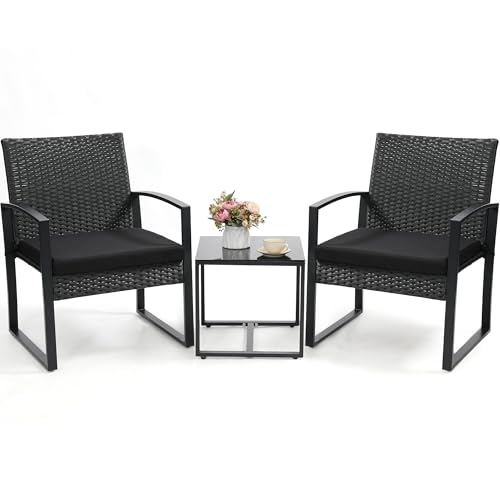
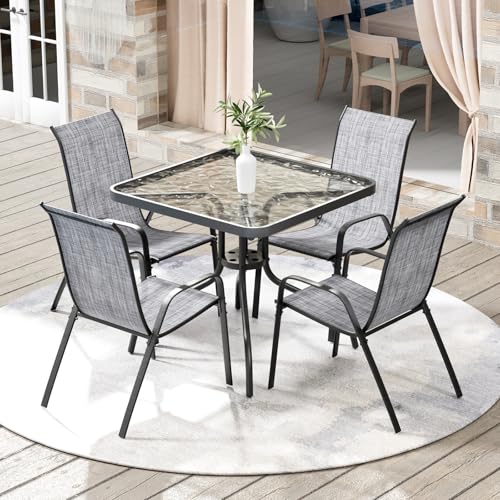
Small Patio Table and Chairs: The Complete Compact Seating Guide
Everything you need to choose a compact patio table and chairs set that fits tight spaces, holds up outdoors, and makes the most of every square foot — from balconies to petite patios.
Explore the Buying GuideWhy this guide matters: A small patio table and chairs set is one of the hardest outdoor purchases to get right. Too big, and the space feels crowded. Too light, and it blows over in the first storm. Below, we walk through the measurements, materials, layouts, and durability factors that separate a set you will enjoy for years from one that ends up in storage.
- Measure first: leave 24–30 inches behind each chair for pull-out clearance.
- Match chair count to space: two chairs for balconies, four chairs for patios of 40 square feet or more.
- Prioritize material over design: powder-coated aluminum and sealed teak outperform decorative resin in exposed locations.
- Folding vs. fixed: folding sets suit renters and balconies; fixed sets deliver better long-term stability.
Why a Small Patio Table and Chairs Set Deserves Careful Selection
Compact outdoor dining sets are the workhorses of small outdoor spaces. They serve morning coffee, evening meals, laptop work sessions, and casual entertaining — often all in the same day. That versatility means the set has to survive constant use while taking up very little room. The challenge is that small sets vary enormously in build quality. Two sets that look identical online can differ by years of useful life once they sit through a few seasons of rain, sun, and wind.
If you are still mapping out your overall outdoor plan, start with our broader overview of small patio furniture, which covers how seating, storage, and shade fit together in tight footprints. Once you have a layout in mind, this guide will help you narrow the table-and-chairs decision down to a specific type, size, and build tier.
The good news is that the compact segment has matured. Manufacturers now offer genuinely durable two- and four-seat sets in materials that would have been reserved for full-size dining sets a decade ago. That means the right choice for a small space is no longer a compromise — it is simply a different specification.
How to Size a Patio Table and Chairs for a Small Space
The single most common mistake is buying a table that fits the footprint but leaves no room to actually sit. Chairs need roughly 24 inches of clearance behind them so a person can pull out, stand up, and walk past. If that clearance is missing, the set becomes a display piece rather than a usable table.
Use the table below as a starting reference. Measure your space, subtract the clearance behind the chairs, and choose the table size that leaves at least a few inches of margin on every side.
| Table Shape & Size | Recommended Space | Seating Capacity | Best For |
|---|---|---|---|
| Round, 24–28 in diameter | Balcony of 25–35 sq ft | 2 people | Apartment balconies, reading corners |
| Square, 28–32 in | Patio of 35–50 sq ft | 2–4 people (tight) | Compact patios, porches |
| Round, 36–42 in | Patio of 50–70 sq ft | 4 people | Small family dining, casual entertaining |
| Rectangular, 40–48 in long | Patio of 55–75 sq ft | 4 people | Narrow patios, side-by-side seating |
| Bistro, 20–24 in | Balcony of 15–25 sq ft | 2 people | Micro-balconies, coffee for two |
For genuinely tight balconies, a dedicated small balcony set or a small bistro table set is usually the safest starting point — these are engineered from the ground up for narrow footprints rather than simply scaled-down patio dining sets. If you are working with a narrow but longer balcony, a small outdoor bar-height table and chairs can free up floor space by lifting the seating above the table footprint.
Also account for the umbrella: if shade is part of the plan, confirm the table has a center hole rated for your umbrella pole diameter. Sets such as this small outdoor table with umbrella and chairs bundle the shade solution with the seating, which simplifies the decision. If you already own an umbrella, a small round outdoor table with umbrella hole keeps the door open.
Material Matters: What Holds Up in Compact Outdoor Spaces
Small sets sit in the same weather as large ones, but they often sit in harsher microclimates. Balconies trap heat, funnel wind, and receive runoff from the roofline. That makes material choice more important than for a sheltered, ground-level patio.
Powder-Coated Aluminum
The default choice for serious compact sets. Aluminum is light enough for one person to rearrange and does not rust when the coating is intact. Look for a uniform powder coat with no visible thin spots at joints and welds. Mid-range and premium sets typically use thicker wall aluminum and reinforced chair frames — a meaningful durability difference over several seasons. To compare this material against other common options in more depth, our guide to metal vs. aluminum furniture breaks down the trade-offs.
Teak and Acacia
Hardwoods bring warmth and a natural look that resin cannot imitate. Teak is the higher-tier choice, naturally resistant to rot and insects, and it weathers to a silver-gray finish if left untreated. Acacia is the mid-range alternative — it needs sealing every season to prevent cracking, but it delivers a solid build for a compact dining set. Both are heavy enough to stay put in wind, which is a real advantage on open patios.
Resin and High-Density Polyethylene
The entry-level and mid-tier workhorse. Modern resin sets are UV-stabilized and lightweight, which makes them ideal for balconies where furniture may be moved or stored seasonally. The limitation is long-term rigidity: resin frames can flex under heavier users and may fade over many years of direct sun. They are still a solid choice for the category when the priority is portability and simple maintenance.
Steel and Wrought Iron
Heavy-duty and visually substantial, steel sets suit ground-level patios where wind is a concern. The catch is rust: any chip in the coating becomes a corrosion point. Inspect the finish at every joint before committing, and expect to touch up the coating seasonally. This is the material tier where the difference between a well-finished frame and a poorly finished one shows up fastest.
Build Tiers: How to Read Quality Without Focusing on Labels
Because small patio sets span every level of the market, the fastest way to orient yourself is to think in tiers. The classification below describes where a set sits in the market relative to its peers — not what it happens to be listed for on any given day.
Starter Tier
Resin or thin-gauge steel frames, simpler welding, lighter chairs. Good value for its tier when the set is used seasonally or under a covered balcony. Expect to replace cushions sooner and to check fasteners each season. A reasonable starting point for renters and first-time buyers.
Balanced Tier
Powder-coated aluminum or sealed acacia, reinforced chair frames, and better cushion foam. This is the sweet spot for most small patios: the build is durable enough for year-round outdoor exposure, and the set is well-specified for its class without paying for fringe features.
High-End Tier
Thick-wall aluminum or solid teak, precision joinery, and high-density cushions that keep their shape. Flagship-tier sets in this class are built as long-term investments — the kind of set you keep through multiple moves. Competitive within its class on finish quality and hardware.
A practical rule: mid-range models usually offer smoother folding mechanisms and more consistent welds than entry-level sets, while the step up to premium is mostly about frame thickness, cushion density, and finish detail. That progression holds across brands, which makes the tiers a reliable way to compare sets from different makers.
Configuration Choices: Bistro, Standard, and Space-Saving Layouts
Once size and material are settled, the layout question remains. Three configurations dominate the compact category, and each suits a different kind of space.
- Two-Chair Bistro Set The most space-efficient option. A 24-inch round or square table with two armless or lightly armed chairs fits balconies that would reject anything larger. Ideal for couples and solo use, less suited to hosting.
- Four-Chair Square or Round Set The standard family configuration. A 36-inch table seats four, but the chairs need clearance on all sides — workable on a 50 sq ft patio, cramped below 40 sq ft. Push the chairs in when not in use.
- High-Top or Bar-Height Set Raises seating to 40–42 inches. The footprint can be smaller because chairs tuck under the table. Best for narrow balconies and patios where you want to preserve walk-through space.
- Bench-and-Table Set Replaces one or both chair positions with a bench. Maximizes seating per square foot and suits walls and railings where chairs would waste space. Less flexible for individual comfort.
For a dedicated small dining area, a small outdoor table and chairs for 2 keeps the arrangement honest and usable. If occasional guests are part of the plan, a small outdoor table and chairs for 4 buys hosting capacity at the cost of some floor space. Pair either with matching seating accessories — our guide to patio chairs with cushions covers how cushion thickness affects seat height and comfort.
Layout Tips That Make a Small Patio Feel Larger
1. Anchor the Set, Don't Center It
Place the table slightly off-center against the railing or wall. This creates an obvious walking path along one side and makes the space feel wider. Centered tables create two narrow, unusable channels instead of one generous one.
Round tables work well for this because they have no corners to catch shins in tight traffic areas. If your space is narrow rather than square, consider a small round patio table with 2 chairs, which keeps the circular footprint without adding width.
2. Stack Vertically Where Possible
In compact spaces, the vertical dimension is underused. Choose a table with a lower shelf or add a small side table for plants and a lantern. A small outdoor side table next to the dining set gives you a landing spot for drinks without expanding the main footprint.
If shade is a priority, an umbrella is more space-efficient than an awning or pergola for a small patio. Our overview of small outdoor umbrellas covers pole diameters and base weights that match compact tables.
3. Choose Chairs That Tuck
Armless chairs push further under the table than armed chairs, freeing up floor space when the set is not in use. If you want armed chairs for comfort, check the arm height against the table apron — a chair that cannot tuck under the table wastes several inches of your tightest dimension.
Folding chairs take this further: they collapse flat and store against a wall or inside a storage cabinet. For balconies with limited storage, a small outdoor storage box can hold folded chairs and cushions between uses.
4. Leave Room for Movement
The usable dining zone is not the table size — it is the table size plus the chair pull-out zone on every side people will sit. On a balcony, the railing side often provides no pull-out room, so treat that side as a fixed boundary and budget the remaining space accordingly.
Durability and Care: Keeping a Compact Set in Shape
A small set takes a lot of use per square foot, so maintenance matters more than for furniture that sits quietly in a corner. The good news is that compact sets are quick to maintain — there is simply less surface area to protect.
For metal frames, wipe down with mild soap and water monthly, and touch up any coating chips before they spread. For wood, reseal teak and acacia annually, and bring the set under cover during the wettest months if possible. For resin, a garden hose and a soft brush handle most cleaning. Cushions should be brought inside or stored in a water-resistant container during storms — our guide to cushion storage solutions covers options that fit compact patios.
If your set includes a table with an umbrella hole, check the hole grommet each season; a cracked grommet lets water pool into the table surface and accelerates wear at the center seam. For a deeper seasonal routine, see our weatherproofing guide.
Frequently Asked Questions
What size patio table fits a small balcony or patio?
A round or square table between 24 and 32 inches in diameter typically fits a small balcony, while a 32 to 36 inch table works well for a compact patio. Always leave at least 24 inches of clearance behind each chair for comfortable movement — the clearance matters as much as the table size itself.
How many chairs fit around a small patio table?
Most small patio tables comfortably seat two, while a 36 inch round or square table can seat four in a tight arrangement. A two-chair bistro set is the safest choice for balconies under 40 square feet; four-chair sets need a patio of roughly 50 square feet or more to remain usable.
What materials work best for small patio tables and chairs?
Powder-coated aluminum and steel offer the best weather resistance for compact sets, while teak and acacia provide natural warmth with proper sealing. Resin and high-density polyethylene are lightweight and ideal for balconies where furniture may need to be moved or stored seasonally. The right answer depends on wind exposure and whether the set lives under cover.
Should I choose a folding or fixed small patio set?
Folding sets suit balconies and renters because they store flat and move easily. Fixed sets deliver a sturdier build and better long-term comfort, making them the better fit for dedicated small patios where the furniture will stay in place. If you need to reclaim floor space in winter, folding wins; if you want a set that feels planted, fixed wins.
Can a small patio table and chairs set be used year-round outdoors?
A mid-range or premium set in powder-coated aluminum or sealed teak can stay outdoors year-round in most climates. Entry-level resin and thin steel frames benefit from seasonal storage or a cover. In regions with heavy snow or salt air, bringing cushions and lightweight chairs inside during the off-season meaningfully extends their service life.
Final Recommendations by Space Type
If you are choosing quickly, match your space to one of these profiles:
Micro-balcony (under 30 sq ft): a two-chair bistro set in powder-coated aluminum or resin, ideally folding. Prioritize chairs that tuck fully under the table.
Small patio (35–55 sq ft): a 36-inch round or square set in mid-range aluminum or sealed acacia. This is the configuration that balances seating, stability, and walk-through clearance best.
Narrow patio or side yard: a rectangular table with benches, or a bar-height set to preserve the walking lane. Bench seating maximizes capacity where chairs would crowd the path.
Sheltered porch or covered deck: almost any material works, so choose for comfort and visual fit with the house. This is the one scenario where a fixed steel set is a strong, durable pick.
Whatever profile fits, buy for the space you actually have — not the space you plan to have someday. A compact set that is correctly sized and correctly built will outperform a larger set that never quite works. For more space-specific layouts, the balcony table and chair set guide and the small patio table and chair set guide go deeper into each scenario.
Ready to Outfit Your Compact Outdoor Space?
Use the checklist above to lock in your measurements, material, and configuration — then browse curated options that match those specifications.
View Recommended SetsStill refining the surrounding layout? These related guides may help: small patio table with chairs and umbrella, outdoor table and chairs for balcony, small outdoor table and 2 chair set, and table and chair set for porch. If you are also considering fixed seating, the small outdoor bench guide covers bench-and-table combinations in detail.