
Teak Outdoor Side Table: The Complete Buyer's Guide
Everything you need to know before choosing a teak side table for your patio, deck, or garden — from wood grades and joinery to care routines and placement tips.
Start the GuideWhy a teak outdoor side table deserves your attention: A side table is one of the hardest-working pieces in any outdoor setup. It holds your drink, book, sunglasses, or planter — yet it is often the last thing buyers consider. Teak changes that. Its natural oils, dense grain, and proven weather resistance make it one of the few woods that genuinely thrives outdoors for decades. This guide walks you through the details that matter so you can choose with confidence.
Why Choose Teak for an Outdoor Side Table?
Teak (Tectona grandis) has been the benchmark for outdoor wood furniture for generations. The reason is simple: teak contains natural oils and rubber that repel water, resist rot, and deter insects. Unlike many woods that require sealing every season, teak holds up to sun, rain, and temperature swings with minimal intervention.
For a side table specifically, teak offers practical advantages that matter daily:
- Stability: Teak's tight grain resists warping and cracking, so the tabletop stays flat and the legs stay true.
- Density: The wood is heavy enough to stay put on windy days but not so heavy that it is hard to move when rearranging your space.
- Natural finish: Teak ages gracefully. Left untreated, it develops a silver-gray patina; oiled regularly, it keeps its warm golden-brown tone.
- Low maintenance: A quick clean with mild soap and water is usually all that is needed.
If you are still weighing materials, our broader guide to teak outdoor furniture covers how teak compares with aluminum, wicker, and resin across an entire patio set.
Understanding Teak Grades and Quality Tiers
Not all teak is equal. The grade of the wood — and how it is cut — directly affects durability, appearance, and how well the table ages. Here is how the market generally classifies teak side tables:
| Tier | Wood Characteristics | Best For | Expected Longevity |
|---|---|---|---|
| Entry-Level | Mixed grain, some knots, thinner cuts, basic joinery | Covered patios, seasonal use, first-time buyers | Several years with care |
| Mid-Range | Mostly straight grain, fewer knots, solid mortise-and-tenon joinery | Year-round outdoor use in moderate climates | 10+ years |
| Premium | Grade-A heartwood, tight grain, precision joinery, smooth finish | Full sun and exposed decks, long-term outdoor setups | 20+ years |
| Luxury | Old-growth or plantation-select heartwood, hand-finished, heirloom construction | Design-focused patios, investment pieces, commercial-grade settings | Decades with minimal care |
Two terms come up constantly when shopping for teak: heartwood and sapwood. Heartwood is the dense inner wood that contains the natural oils responsible for weather resistance. Sapwood is the lighter outer layer and is far less durable. Premium and luxury tiers use heartwood almost exclusively; entry-level pieces may include visible sapwood, which is one reason they sit lower in the market.
Construction Details That Separate Good Tables from Great Ones
The wood grade is only half the story. How the table is built determines whether it stays sturdy through seasons of use. Pay attention to these elements:
Joinery
Mortise-and-tenon joints are the gold standard for teak furniture. They create a mechanical lock that holds up far better than screws or nails alone. Look for reinforced corner blocks and doweled joints in premium pieces. Entry-level tables often rely on visible screws, which can loosen over time.
Hardware
Any metal used — hinges, bolts, brackets — should be stainless steel or galvanized. Brass and cheap zinc coatings can corrode in coastal or humid environments. Check the product specs for stainless steel hardware, especially if your patio is near the ocean.
Tabletop Construction
Slatted tops drain water quickly and are the most common design for outdoor side tables. Solid tops look more formal but need a slight crown or drainage gap to prevent pooling. Either way, check that the slats or panels are tightly fitted with consistent gaps — uneven spacing is a sign of rushed manufacturing.
Finish and Sanding
A well-finished teak table feels smooth to the touch, with no raised grain or splinters. Premium pieces are sanded to a fine grit and may be pre-oiled. Entry-level tables sometimes ship with a rougher surface that benefits from a light sanding and oiling after delivery.
Sizing and Placement: Getting the Fit Right
A side table should feel like a natural extension of your seating, not an obstacle. Use these guidelines when planning placement:
- Height: The tabletop should sit roughly level with, or slightly below, the armrest of the chair or sofa it serves — typically 20 to 24 inches for most lounge seating.
- Top surface: 16 to 20 inches in diameter or width gives you enough room for a drink, a small plate, and a book without dominating the space.
- Clearance: Leave at least 2 to 3 inches between the table and the chair so you can move without knocking things over.
- Footprint: A tripod or four-legged base with a slightly narrower footprint than the top prevents tipping while keeping the table easy to reposition.
Pairing a teak side table with a larger seating piece? Our guide to the teak outdoor coffee table covers how to create a layered table arrangement that works for both lounging and entertaining. If your setup includes reclining seats, the teak outdoor daybed guide explains how side tables fit into a relaxation-focused layout.
Caring for Your Teak Side Table
Teak is forgiving, but a little attention goes a long way. The care routine depends on whether you want to preserve the golden-brown color or embrace the natural silver patina.
If You Want to Keep the Golden Tone
- Clean the table with a soft brush and a solution of mild soap and warm water.
- Rinse thoroughly and let it dry completely.
- Apply a thin, even coat of teak oil once or twice a year, following the product instructions.
- Wipe away excess oil after 15 to 30 minutes to avoid a sticky surface.
If You Prefer the Silver Patina
- Clean periodically with mild soap and water to remove dirt and prevent mildew.
- Skip the oil — the wood will naturally weather to a soft silver-gray.
- If you want to refresh the surface, a light sanding will restore the original color.
In harsh winters or coastal environments, a breathable outdoor cover adds protection without trapping moisture. Avoid plastic covers that seal in humidity, which can encourage mold. For a broader seasonal routine, see our weatherproofing guide and the teak wood furniture care overview.
Matching a Teak Side Table to Your Patio Style
Teak's warm, natural tone is versatile. It works with modern, coastal, rustic, and transitional designs, which is one reason it remains a favorite across styles. Here are a few pairing ideas:
- Modern patio: Choose a clean-lined, square teak side table with a slatted top and pair it with low-profile lounge chairs.
- Coastal look: A round teak side table with a slatted top complements white or navy cushions and natural fiber accents.
- Rustic farmhouse: A chunkier teak side table with visible grain and a solid top fits well with distressed finishes and warm textiles.
- Small balcony: A compact, foldable or nesting teak side table maximizes flexibility in tight spaces.
If you are building out a full seating area, the teak outdoor furniture set guide shows how side tables fit into coordinated collections. For dining-focused layouts, the teak outdoor dining set overview explains how side tables support serving and storage around the table.
What to Look For When Buying
Use this checklist to evaluate any teak side table you are considering:
- Wood grade: Look for Grade-A heartwood or clear statements about heartwood content.
- Joinery: Mortise-and-tenon joints, reinforced corners, and minimal visible screws.
- Hardware: Stainless steel or galvanized fittings, especially for coastal areas.
- Finish: Smooth sanding, consistent slat spacing, and an even pre-oiled or natural surface.
- Stability: A base that sits flat without wobble and a top that does not flex under light pressure.
- Weight: Heavy enough to stay put in wind, light enough to move when needed.
- Care instructions: Clear guidance from the manufacturer on oiling and cleaning.
For a wider view of how teak side tables compare with other teak pieces, the teak outdoor table guide and the teak patio table overview provide useful context on sizing and placement across a full patio layout.
Ready to Explore Teak Side Table Options?
Browse curated picks and compare features to find the right fit for your outdoor space.
View Recommended PicksFrequently Asked Questions
How long does a teak outdoor side table last?
A well-constructed teak outdoor side table can last for decades with proper care. Teak's natural oils and dense grain make it highly resistant to rot, insects, and weather. Regular cleaning and occasional oiling will extend its lifespan even further, making it a long-term investment for your patio.
Should I oil my teak side table?
Oiling is optional. If you prefer teak's original golden-brown color, apply teak oil annually. If you like the natural silver-gray patina that develops over time, you can skip oiling entirely. In both cases, regular cleaning with mild soap and water is recommended to prevent dirt buildup and mildew.
Can I leave my teak side table outside all year?
Yes, teak is designed for outdoor use and can be left outside year-round in most climates. However, in regions with harsh winters or heavy snow, covering the table or storing it in a sheltered area will help preserve its appearance and structural integrity. A breathable outdoor cover is a simple way to protect it during extreme weather.
What size side table works best next to a lounge chair?
A table with a top surface of about 16 to 20 inches in diameter or width is ideal next to a lounge chair or patio sofa. The height should be roughly level with the armrest of your chair, typically 20 to 24 inches, so you can reach drinks and essentials comfortably without twisting or leaning.
Related Teak & Outdoor Guides
Recommended Teak Outdoor Side Tables
⚠️ AFFILIATE DISCLOSURE: This website contains affiliate links. As an Amazon Associate, we earn from qualifying purchases. If you make a purchase through these links, we may receive a small commission at no additional cost to you. Read our full affiliate policy.

Acacia Wood Adirondack Side Table, 2-Tier Outdoor End Table - Honey Oak | Waterproof Small Table, Storage Shelf, Chairside End Table for Balcony, Poolside, Garden, Backyard, Patio, Porch, Courtyard
Check price on Amazon
Tinamo 2-Tier Teak Storage Adirondack Side Table, 330LBS (Patent Pending) | Solid Teak Wood, 330 LBS Capacity, Slatted Design, 2-Tier Storage, Non-Slip, All-Weather Durability, Easy Assembly, Versatile
Check price on Amazon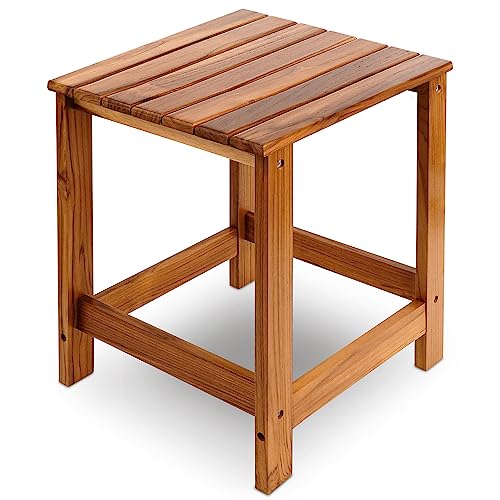
Utoplike Teak Outdoor Side Table for Patio, Adirondack Sides Tables | Pool Coffee Accent Table, Wood End Tables for Garden, Backyard, Bed, Living Room, Couch
Check price on Amazon
Cambridge Casual Arie Wood Patio Side Table, Plantation Teak, 18 Inch/Natural Teak
Check price on Amazon
RRI Goods Teak Wood Side Table with Storage, Indoor and Outdoor Wooden Furniture for Deck, Porch, Balcony, Living Room, Bedroom and Backyard (18" D x 18" W x 16" H)
Check price on Amazon
Kibaso Outdoor Side Table, 2-Tier HDPE Small Patio Table, Teak | Weather Resistant, Easy Maintenance, Easy Assembly, Suitable for Pool,Garden,Patio,Backyard
Check price on Amazon
Jurax Solid Wood Outdoor Side Table, 2-Tier End Table - Golden Teak | Weather-Resistant and Sturdy Design for Patio, Porch, Poolside, Balcony, Backyard or Living Room
Check price on Amazon