Umbrella Base with Wheels: The Complete Buying Guide
Move your shade effortlessly and lock it down safely. Here is everything you need to know about wheeled umbrella bases before you choose one for your patio.
Explore Recommended OptionsWhy this guide matters: A wheeled base solves one of the most frustrating patio problems — repositioning a heavy umbrella without dragging or lifting it. But wheels introduce trade-offs in stability, surface compatibility, and weight distribution. This guide explains those trade-offs clearly so you can buy with confidence.
What Is an Umbrella Base with Wheels?
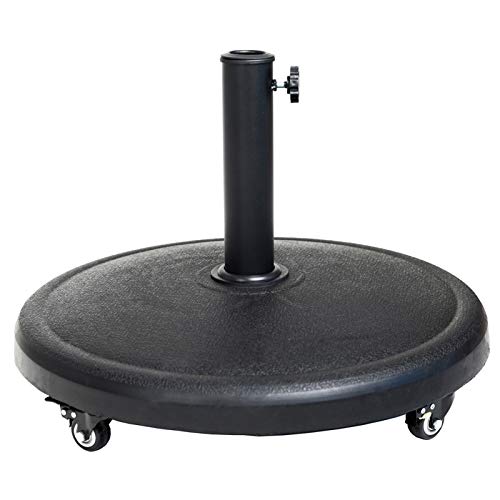
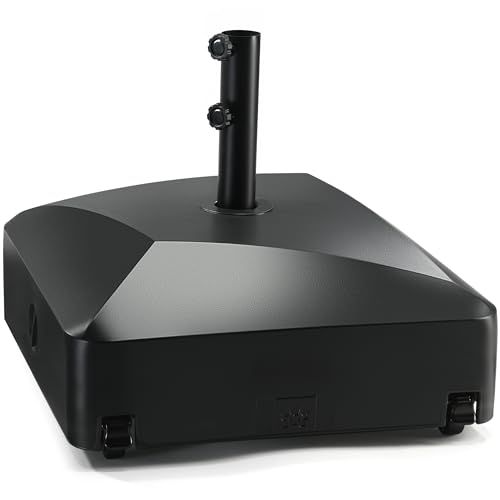
An umbrella base with wheels is a weighted foundation for a freestanding or cantilever patio umbrella, fitted with casters or rollers so the entire assembly can be moved without lifting. The concept is simple: the umbrella stays planted when you want shade, and rolls aside when you need open patio space, mow the lawn, or rearrange furniture.
Wheeled bases sit in a niche between two extremes. Fixed bases are the most stable option but are difficult to relocate once filled or assembled. Lightweight movable stands are easy to shift but can be unstable in wind. A quality wheeled base aims for the middle ground — substantial mass for safety, with a rolling mechanism that makes repositioning a one-person job.
If you are still comparing foundational options, our broader patio umbrella bases guide covers fixed plates, water-filled bases, and in-ground sockets. This page focuses specifically on the wheeled variant.
Who Should Choose a Wheeled Base?
A wheeled base is an excellent fit for several common patio scenarios:
- Frequent reconfiguration: You move the umbrella between a dining area and a lounge zone, or shift it to follow the sun throughout the day.
- Shared or rented spaces: Balconies, apartments, and rental patios where furniture must be cleared periodically.
- Seasonal storage: Rolling the umbrella into a garage, shed, or covered area during storms or off-season is far easier than carrying a heavy plate.
- Households with limited strength: If lifting a 60–100 lb base is not realistic, wheels remove the physical barrier entirely.
- Large decks: A wide deck with multiple seating zones benefits from a base that can follow the gathering.
A wheeled base is not the best choice for every situation. If your patio is fully exposed to strong prevailing winds, or if the umbrella will stay in one spot permanently, a fixed heavyweight base is usually the safer investment.
Key Features to Evaluate
1. Weight and Fill Type
Wheeled bases generally fall into three construction categories:
- Solid cast bases: Cast iron, steel, or resin bodies with permanent mass. Heavy-duty, stable, and maintenance-light, but harder to move even with wheels.
- Water or sand-fill bases: Hollow HDPE or resin shells filled on site. Lighter to transport and flexible in weight, but fill levels must be managed and checked periodically.
- Plate-and-frame designs: A steel frame with weight plates added incrementally. Good for fine-tuning mass, often found in mid-range and commercial-grade setups.
As a general rule, freestanding umbrellas need more base weight than cantilever umbrellas distribute differently — cantilever units rely on a much heavier base positioned offset from the canopy. Always follow the umbrella's own minimum weight requirement rather than guessing.
2. Wheel Type and Placement
The wheels themselves determine how the base behaves on your surface:
| Wheel Type | Best For | Considerations |
|---|---|---|
| Hard casters (nylon/polyurethane) | Concrete, pavers, composite decking | Low rolling resistance; check for non-marking grades |
| Rubber or pneumatic wheels | Uneven ground, gravel, turf | Softer ride; rubber may leave marks on smooth decking |
| Retractable casters | Any surface where stability is critical | Wheels lift away so the base rests on fixed feet — best of both worlds |
| Locking casters | Windy sites, sloped patios | Prevents unintended rolling; confirm the lock holds under load |
Retractable caster systems are the gold standard for safety-conscious buyers. When deployed, the base sits flush on rubber or plastic feet; when you need to move it, a lever or foot pedal lowers the wheels. This design delivers the mobility of a wheeled base without sacrificing the planted stability of a fixed one.
3. Umbrella Compatibility
Confirm two things before purchasing: the pole diameter your umbrella uses, and the mounting style.
- Freestanding market umbrellas typically use poles around 1.5 inches, with adapters for smaller diameters. Most wheeled bases include or accept reducer rings.
- Cantilever umbrellas use a crossbar or rotating collar mount, not a simple pole socket. Wheeled cantilever bases are their own category and are not interchangeable with freestanding bases.
If you have not yet settled on the umbrella itself, browse our outdoor umbrella with solar lights and stand page to see how base-and-canopy bundles are typically configured.
4. Footprint and Clearance
Measure the base footprint against your table and seating layout. A wide base under a dining table can obstruct chair legs and foot space. Low-profile designs that tuck under the table are preferable for dining sets, while taller cantilever bases need open clearance to the side.
If your umbrella will sit under or beside a table, our guides on a round patio dining table with umbrella hole and a round patio coffee table with umbrella hole explain how hole placement interacts with base sizing.
5. Materials and Weather Resistance
Wheeled bases live outdoors permanently, so material quality matters. Look for:
- Powder-coated steel or cast iron with rust-resistant finishes for solid bases.
- UV-stabilized HDPE resin for fill-type bases — it resists fading, cracking, and splitting.
- Stainless hardware on wheel axles and locking mechanisms to prevent seizing.
- Drain plugs on water-fill models so you can empty the base before moving or storing it.
Rust is the most common long-term failure point. Our rust removal guide covers treatment and prevention if you notice corrosion on wheels or brackets.
How to Set Up and Use a Wheeled Base Safely
- Assemble the base on a flat, level surface according to the manufacturer's instructions, and fill it fully before first use.
- Position the base where you want the umbrella, then engage the locking casters or lower the base onto its fixed feet.
- Insert the umbrella pole, tighten the collar or set screw, and check for wobble by gently rocking the pole.
- Before moving the umbrella, lower or collapse the canopy to reduce wind load and top-heaviness.
- Roll the base slowly, keeping the umbrella upright and the canopy furled.
- Re-engage locks after every move, and re-check fill levels monthly on water or sand models.
For a deeper look at pairing bases with different umbrella styles, see our umbrella bases and umbrella bases comparison pages, plus the standing umbrella base section for fixed installations.
Common Mistakes to Avoid
- Under-filling a water base: A partially filled base is far less stable than its rating suggests. Fill it completely.
- Leaving casters unlocked: On a sloped patio, an unlocked wheeled base can migrate — and take the umbrella with it.
- Skipping the umbrella's weight requirement: The base must meet the minimum specified for your canopy size and local wind exposure.
- Using a freestanding base with a cantilever umbrella: These mounting systems are not compatible.
- Rolling a base with the canopy open: Wind load on an open canopy can tip the assembly during movement.
Frequently Asked Questions
How heavy should an umbrella base with wheels be?
Weight depends on your umbrella type and local wind exposure. For residential freestanding umbrellas, a base in the 50–100 lb range is typical, while cantilever and commercial-grade setups often call for substantially more. Always follow the umbrella manufacturer's recommended minimum weight rating.
Can wheels make an umbrella base less stable?
Wheels can reduce stability if they remain in contact with the ground. Look for bases with retractable or lockable wheels, or wheel designs that lift the base onto fixed feet once positioned. This keeps the weighted footprint firmly planted.
Do wheeled umbrella bases work on all surfaces?
Not all. Hard casters roll well on concrete, pavers, and decking, while softer or pneumatic wheels suit uneven ground and turf. Check the wheel material against your patio surface to avoid scratching or sinking.
What pole diameter do umbrella bases with wheels accept?
Most bases accept poles in the 1.5 to 2 inch range, often with adapter rings for smaller diameters. Cantilever bases use a completely different mounting system, so confirm compatibility with your umbrella model before buying.
Can I leave a wheeled umbrella base outside year-round?
Most quality bases are designed for outdoor use, but water-fill models should be drained before freezing temperatures to prevent cracking. Powder-coated metal bases benefit from seasonal inspection and touch-up of any chips. For long-term care, see our weatherproofing guide.
Final Checklist Before You Buy
- Confirm your umbrella's pole diameter and mounting style.
- Match the base's rated weight to the umbrella's minimum requirement.
- Choose wheel type based on your patio surface.
- Prefer retractable or locking casters for wind-exposed sites.
- Check the footprint against your table and chair clearances.
- Verify weather-resistant materials and accessible drain plugs.
With those checks complete, you are ready to compare specific products. The recommendations below are drawn from wheeled base options that meet these criteria.