Round Patio Dining Table With Umbrella Hole: The Complete Buying Guide
Everything you need to know about choosing, sizing, and maintaining a round outdoor dining table with a built-in umbrella hole — so your backyard meals stay shaded and comfortable all season.
START READINGA round patio dining table with an umbrella hole is one of the most practical pieces of outdoor furniture you can own. The circular shape encourages conversation, eliminates sharp corners in tight spaces, and the center umbrella hole lets you add shade exactly where you need it — right over the middle of the table. For anyone researching this purchase, the challenge is rarely finding tables; it is understanding which size, material, and umbrella configuration will actually work on your patio.
This guide walks through the decisions that matter most: seating capacity, table diameter, umbrella hole diameter, frame material, tabletop surface, base stability, and long-term care. By the end, you will have a clear checklist for evaluating any round umbrella table you encounter and the confidence to choose one that fits your space and lifestyle.
What This Guide Covers
Why Choose a Round Patio Dining Table With Umbrella Hole
Round dining tables solve several outdoor problems at once. The absence of corners makes them safer for families with young children and easier to navigate on compact patios. Everyone seated at a round table can see and hear each other, which makes them ideal for casual meals, card games, and conversation-heavy gatherings. The umbrella hole adds a dedicated shade solution without requiring a separate freestanding umbrella that eats up floor space.
Compared to rectangular tables, a round table with a centered umbrella creates a symmetrical shade footprint. The umbrella sits over the center of the table, casting even shadow around the seating ring. This is especially useful on small balconies where you cannot place a freestanding umbrella base off to the side.
Another practical advantage is flexibility. A round table works as a dining surface, a workspace, a craft table for kids, and a buffet station during parties. When paired with a quality umbrella and a weighted base, it becomes a true all-day outdoor hub. If you are still deciding between shapes, our broader round patio furniture guide explains how circular layouts compare to rectangular ones across seating groups.
Quick takeaway: A round table with an umbrella hole is best for patios that need efficient seating, even shade, and a compact footprint. Rectangular tables win when you need long buffet surfaces or formal seating for eight or more.
Sizes and Seating Capacity
The single most common mistake buyers make is choosing a table that is too large or too small for their guest count and patio. Round tables are measured by diameter, and each diameter supports a predictable number of diners. The table below summarizes the standard range.
| Table Diameter | Comfortable Seating | Best For | Typical Tier |
|---|---|---|---|
| 30–36 inches | 2 to 3 people | Balconies, bistro nooks, couples | Entry-level |
| 40–42 inches | 4 people | Small patios, everyday family meals | Mid-range |
| 48 inches | 4 to 5 people | Standard family patios, casual entertaining | Mid-range |
| 54–60 inches | 6 people | Larger decks, regular dinner guests | Premium |
| 60+ inches | 6 to 8 people | Entertaining patios, commercial-grade setups | Luxury |
As a rule of thumb, allow about 24 inches of table edge per person for comfortable dining. A 42-inch table has roughly 132 inches of circumference, which comfortably fits four place settings with room to spare. A 48-inch table adds enough space for a serving platter in the center, even with the umbrella pole in place.
Also measure your patio clearance. You need roughly 30 to 36 inches of open space behind each chair so guests can push back and stand up. On tight patios, a 36-inch or 40-inch table often works better than a 48-inch model even if you occasionally host four people. If you need a very compact setup, a 30-inch round patio table and chairs set is a practical starting point for two-person spaces.
If you regularly host six or more, consider whether a 54-inch round table or a dedicated eight-seat layout fits better. Our guide to the round outdoor table and chairs for 8 covers layout spacing in more detail.
Umbrella Hole and Pole Compatibility
The umbrella hole is the defining feature of this table type, and it deserves careful attention. Most patio dining tables use a standard hole diameter between 1.5 and 2 inches, designed to accept common umbrella pole sizes. Before buying, confirm three measurements: the table hole diameter, the umbrella pole diameter, and the base opening diameter. All three must align or the umbrella will wobble or fail to seat properly.
Hole Diameter Checks
- Table hole: Usually 1.5 to 2 inches. Some tables include a removable reducing ring for smaller poles.
- Umbrella pole: Common sizes are 1.5 inches and 1.875 inches. Match the pole to the hole with a snug fit.
- Base opening: The base collar must accept your pole diameter and hold it upright.
Umbrella Types That Work Well
Market umbrellas are the classic pairing for round dining tables. They use a center pole, a crank or pulley lift, and a vented canopy to reduce wind lift. A tilting market umbrella is useful if you want to angle shade during low sun. For evening ambiance, a solar-lit umbrella with stand combines shade and lighting in one purchase.
Some buyers prefer a solar outdoor umbrella for off-grid shade, especially on patios without nearby outlets. Others need a very wide canopy and choose an umbrella designed for poolside use, which typically has a heavier frame and larger canopy span. Just check that the pole diameter still fits your table hole.
Pole Placement and Table Height
Standard dining-height tables are around 28 to 30 inches tall, and standard umbrella poles are long enough to clear the table and canopy comfortably. Counter-height and bar-height tables need a taller pole or an umbrella extension pole for bar-height tables. If your table is counter height, verify that the umbrella crank mechanism still sits within reach.
Compatibility tip: Measure the hole with calipers if possible. A quarter-inch mismatch is enough to cause wobble. If the table hole is oversized, look for a table with a reducing ring or add a stabilizer collar.
Frame and Tabletop Materials
Material choice determines how the table ages, how much maintenance it needs, and how it handles your local climate. The table below compares the main frame options.
| Frame Material | Weather Resistance | Maintenance | Best Suited For |
|---|---|---|---|
| Powder-coated aluminum | High — rust-resistant | Low — wipe clean | Humid climates, coastal patios, lightweight setups |
| Stainless steel | Very high — rust-proof finish | Low to moderate | Coastal areas, heavy-use patios, modern looks |
| Wrought iron | Moderate — needs coating care | Moderate — touch-up painting | Traditional and rustic designs, sheltered patios |
| Teak and acacia hardwood | High when sealed | Moderate — annual sealing | Natural warmth, covered patios, timeless style |
| Resin wicker over metal frame | High — synthetic weave resists fading | Low — rinse and dry | Casual patios, family spaces, textured look |
Tabletop Materials
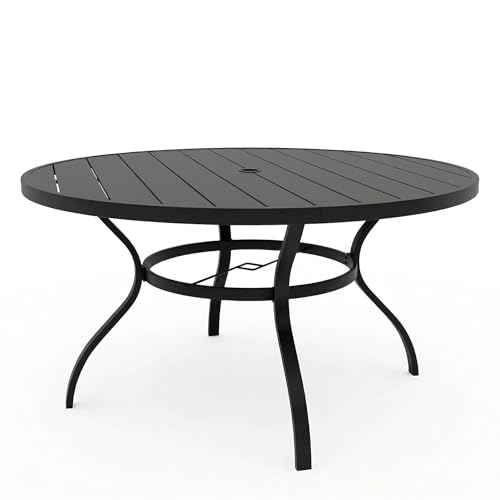
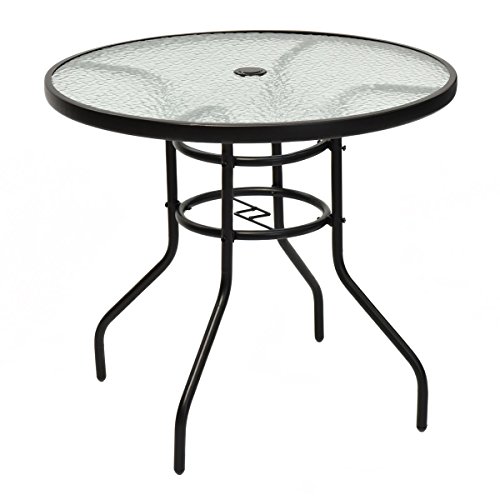
Glass tops are easy to wipe and reflect light, which helps small patios feel larger. Tempered glass is the safe choice, and if it ever chips, a replacement glass table top is available for many standard sizes. Slat and solid wood tops feel warmer and hide scratches well, but they need periodic sealing. Resin and composite tops are the most forgiving for families and pets. If you already own a frame and only need a new surface, a replacement outdoor table top with umbrella hole can extend the life of your existing set.
For coastal or high-humidity locations, aluminum and stainless steel are the safest long-term choices. Our guide to stainless steel outdoor table and chairs explains why this material resists salt air so well. If you prefer the look of metal but want a traditional silhouette, a wrought iron outdoor dining table and chairs set delivers classic style with proper coating care.
Wood lovers have strong options too. A teak furniture table ages gracefully and can be left outdoors year-round in many climates. For a softer, farmhouse feel, a rustic dining table with bench and chairs pairs well with umbrella shade on covered patios.
Stability, Bases, and Wind Safety
An umbrella turns a table into a sail. The larger the canopy, the more leverage wind exerts on the pole and the table. Stability starts with a proper base. A weighted umbrella base should be rated for the canopy size you plan to use. For larger canopies, an umbrella base with wheels makes repositioning easier without sacrificing weight.
A standing umbrella base is an alternative when the table hole is not the primary support, but for round dining tables the pole-through-hole design is usually preferred because it centers the shade over the seating area. Some buyers add a patio umbrella base with a locking collar to reduce pole sway.
Wind Safety Practices
- Close the umbrella when winds pick up or when the patio is unattended.
- Use a base rated for at least the canopy diameter you own.
- Place the table on a level, solid surface — uneven pavers cause wobble.
- Check the table's umbrella stabilizer collar or reducing ring for a snug pole fit.
- In exposed locations, consider a vented canopy to reduce lift.
Table weight matters too. Heavier frames resist tipping better, but they are harder to move for cleaning or seasonal storage. Aluminum frames are lighter and easier to reposition; cast iron and stone-topped tables are heavier and more stable in wind. Match the weight to how often you rearrange your patio.
Style and Space Planning
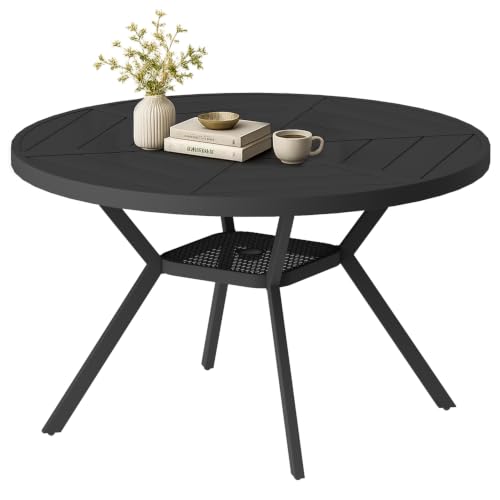
Round umbrella tables come in several visual styles, and the right choice depends on your home architecture and patio materials. Modern patios pair well with slim aluminum frames and glass or slat tops. Traditional homes suit wrought iron scrollwork and warm wood tones. Coastal homes often use white frames and resin wicker. Farmhouse patios lean toward rustic wood and bench seating.
Color also affects perceived space. A round white patio table with umbrella hole brightens shaded patios and reflects heat. Dark frames ground larger decks and hide scuffs. If you are building a full set, our guide to round patio furniture shows how to coordinate seating, side tables, and shade around a circular layout.
Pairing Chairs and Seating
Round tables work with almost any dining chair, but scale matters. A 42-inch table looks best with four compact chairs, while a 54-inch table can handle larger armchairs. Stackable chairs are a smart choice for small patios because they store compactly. Our guide to stackable outdoor chairs covers space-saving options. For a cohesive look, a round patio table and chairs set for eight removes the guesswork of matching scale and style.
If you want a softer seating mix, consider a bench on one side. A white outdoor bench or a stone garden bench can flank a round table in a garden setting. Just keep the umbrella pole clearance in mind when positioning benches.
Care and Maintenance
Routine care keeps a round umbrella table looking good and extends its service life. The exact routine depends on material, but a few habits apply to all tables.
General Care Routine
- Wipe spills promptly, especially acidic foods and drinks.
- Rinse the tabletop and frame monthly with mild soap and water.
- Dry thoroughly after rinsing to prevent water spots and rust.
- Check the umbrella hole collar for debris that could scratch the pole.
- Store or cover the table during off-season months in harsh climates.
Material-Specific Care
Metal frames benefit from periodic inspection for chips in the coating. Touch up bare spots promptly to prevent rust. If rust does appear, our guide to rust removal explains how to treat it without damaging the finish. Wood tables need annual sealing or oiling, especially in rainy climates. Resin wicker can be rinsed and left to dry in the sun; avoid pressure washing, which can fray the weave.
Glass tops should be cleaned with a non-abrasive glass cleaner and a soft cloth. Avoid placing hot cookware directly on glass. If you need to replace a damaged top, a replacement glass top is often easier than replacing the whole table.
For broader outdoor furniture care, our guide to waterproof outdoor materials explains how to protect frames, cushions, and tabletops through every season.
Buying Checklist
Use this checklist to evaluate any round patio dining table with umbrella hole before you commit.
- Seating count: Confirm the diameter supports your typical guest count plus one or two extras.
- Patio clearance: Allow 30 to 36 inches behind each chair for comfortable movement.
- Umbrella hole diameter: Match the hole, pole, and base collar diameters.
- Frame material: Choose aluminum or stainless steel for humid climates; teak or wrought iron for covered patios.
- Tabletop surface: Glass for easy cleaning and light, wood for warmth, resin for family durability.
- Stability: Check for an umbrella stabilizer collar and pair with a weighted base rated for your canopy.
- Weight and portability: Lighter frames are easier to move; heavier tables resist wind better.
- Style match: Coordinate with existing chairs, rugs, and patio architecture.
- Care routine: Confirm you are comfortable with the sealing or cleaning schedule the material requires.
- Replacement parts: Check availability of replacement tops and glass if the model uses proprietary components.
If you are starting from scratch, a matching set can simplify the process. A metal outdoor table and chairs with umbrella is a practical all-in-one option, and a white plastic outdoor table with umbrella hole is a lightweight choice for casual patios. For a classic metal look, a wrought iron patio table and four chairs set delivers traditional style with built-in shade.
Frequently Asked Questions
A 36-inch round table comfortably seats two to four people, a 42-inch table seats four, a 48-inch table seats four to five, and a 54-inch or larger table seats six or more. Choose based on your typical guest count and the available patio footprint. Always measure chair clearance behind the table before finalizing the size.
Most patio dining tables use a standard 1.5-inch to 2-inch umbrella hole. Always confirm the hole diameter matches your umbrella pole, and pair the table with a weighted umbrella base for stability. Some tables include a reducing ring to accommodate smaller poles.
Aluminum and stainless steel resist rust and suit humid climates, teak and acacia offer natural warmth with proper sealing, and resin wicker delivers lightweight durability. Match the material to your climate and maintenance preference. Coastal areas benefit most from aluminum or stainless steel.
Use a weighted umbrella base rated for your umbrella size, keep the umbrella closed during high winds, and position the table on a level surface. Some tables include a built-in umbrella stabilizer collar for extra support. Vented canopies also reduce wind lift.
Almost any center-pole market umbrella will work if the pole diameter matches the table hole and the base collar. Avoid offset umbrellas unless you plan to use them independently of the table hole, since their pole does not pass through the table. Check the pole length as well for counter-height tables.
Ready to compare round patio dining tables with umbrella holes? Explore curated options and check availability through our recommended product section below.
VIEW RECOMMENDED TABLES