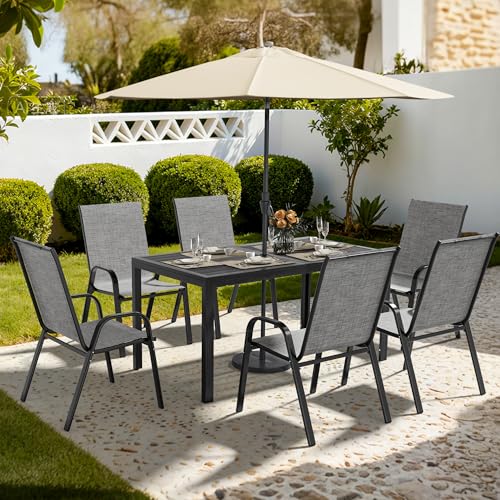
6 Seater Outdoor Dining Table and Chairs: The Complete Buying Guide
A six-person outdoor dining set is the social heart of any backyard. It is the table where summer dinners stretch into late evenings, where weekend brunches turn into afternoon conversations, and where family traditions get built one meal at a time. But choosing the right 6 seater outdoor dining table and chairs is not simply a matter of picking a shape you like. Table dimensions, chair comfort, frame material, weather resistance, and how the whole set fits your patio all need to work together.
This guide walks you through every decision point. You will learn how much space a six-seater truly needs, which materials hold up best in which climates, what separates an entry-level set from a premium one, and how to match a table and chairs to the way you actually entertain. By the end, you will have a clear shortlist and the confidence to commit to the right set for your outdoor space.
What This Guide Covers
Why Six Seats Is the Sweet Spot for Most Households
Four-seat sets are intimate but restrictive. Eight-seat sets are impressive but demanding of space and budget. Six seats hits a practical middle ground that suits the majority of families and entertainers. It accommodates a household of four with room for guests, works for a dinner party of three couples, and still feels proportionate on a mid-sized patio or deck.
Six is also the point where table shape starts to matter. A six-seat configuration is where you genuinely choose between a long rectangular table, which supports a natural head-of-table dynamic, or a round table, which puts every diner into the same conversation. That flexibility is precisely why a well-chosen six-seater tends to stay in service for years rather than getting outgrown.
Who this set size works best for
- Families of three to five who want breathing room and space for occasional guests.
- Couples who entertain regularly and prefer one table that handles both everyday meals and dinner parties.
- Multi-generational households where grandparents, parents, and children often eat together outdoors.
- Anyone upgrading from a four-seat set who wants more capacity without jumping to a formal eight-seat footprint.
Space Planning: How Much Room a Six-Seater Really Needs
The single most common mistake buyers make is underestimating the clearance required around the table. The tabletop dimensions are only part of the equation. You also need room for chairs to pull out, for people to walk behind seated diners, and for serving access.
As a working rule, allow 24 inches of table edge per person for comfortable elbow room, and 36 inches of clearance from the table edge to the nearest wall, railing, or obstacle so chairs can slide back without trapping anyone. That means a rectangular six-seater occupying roughly 72 by 38 inches needs a patio zone of roughly 12 by 9 feet to feel relaxed rather than tight.
Quick sizing reference: Rectangular six-seat tables typically measure 60–72 inches long and 36–40 inches wide. Round six-seat tables need a 54–60 inch diameter. Oval tables land between the two, usually 60–72 inches long and 40–44 inches wide, and often feel more elegant in narrow spaces.
Measuring your space before you shop
- Mark the intended table footprint on your patio with painter's tape.
- Add 36 inches on every side that requires chair pull-out or walkway access.
- Check door swing paths, grill access, and traffic routes to the yard.
- Confirm the set will not block steps, drains, or the path to a fire pit area.
- Note any sloped surfaces, which affect stability and may require leveling feet.
If your space is genuinely tight, a round table often solves the problem because it eliminates corners and lets diners slide in from multiple angles. Our guide to a 6 seat round dining table and chairs covers circular layouts in more depth, including how to place them on narrow decks.
Rectangular, Round, or Oval: Choosing the Right Table Shape
Shape determines flow, conversation dynamics, and how formal the set feels. There is no universally correct answer, but there is a right answer for your patio geometry and hosting style.
Rectangular tables
Rectangular is the most common six-seat configuration and the most space-efficient for long, narrow patios. Two chairs per long side and one at each end is the standard arrangement. Rectangular tables make serving platters easy to pass and suit both casual weeknight meals and more structured dinner parties. The main drawback is that end seats can feel slightly detached from the center conversation.
Round tables
Round tables put all six diners at an equal distance from the center, which produces the most natural group conversation. They work beautifully on square patios and in compact footprints because there are no corners to navigate around. A round six-seater needs a slightly larger diameter than you might expect, since chairs splay outward, so verify clearance carefully.
Oval tables
Oval tables blend the elongated seating of a rectangle with the softer, more convivial feel of a round table. They are particularly good in narrow spaces and on decks where a rectangular table would feel boxy. Oval designs tend to sit in the mid-range to premium tiers because the curved frames and tops are more complex to manufacture.
| Shape | Best For | Space Consideration |
|---|---|---|
| Rectangular | Long patios, formal hosting, platter-style serving | Most efficient for narrow widths; needs length |
| Round | Square patios, conversation-focused dinners, compact decks | Chairs splay outward; verify diameter clearance |
| Oval | Narrow decks, softer aesthetic, mixed seating styles | Balances length and width; check curved-edge clearance |
Material Comparison: What Holds Up Outdoors
Material is the single biggest driver of durability, maintenance effort, and long-term satisfaction. A six-seater set is a substantial piece of furniture, so it is worth choosing a material that matches your climate rather than fighting it.
Aluminum
Aluminum is the best all-round material for most buyers. It is naturally rust-proof, lightweight enough for one person to reposition, and takes powder-coated finishes well. High-grade aluminum frames with a quality powder coat can last many seasons with minimal care. It is the dominant choice in the mid-range tier and increasingly common even in premium sets.
Steel and wrought iron
Steel and wrought iron offer excellent weight and stability, which matters on windy patios or roof decks. The trade-off is that any chip in the finish can become a rust point. Heavy-duty powder coating and periodic touch-ups keep steel sets in service for a long time. These materials sit comfortably in the mid-range to high-end tier depending on construction quality.
Teak and hardwood
Teak is the benchmark for premium outdoor furniture. Its natural oils make it weather-resistant, and it develops an attractive silver patina if left untreated. Other hardwoods such as eucalyptus and acacia offer similar character at a slightly different position in the market. Wood sets are the heaviest and require occasional oiling, but they feel warmer and more substantial than metal.
Resin wicker and HDPE
Resin wicker over an aluminum frame is a staple in the entry-level and mid-range tiers. It resists moisture, does not splinter, and delivers a woven look without natural fiber maintenance. HDPE lumber is another excellent entry-level option, impervious to rot and insects, and often used in bench-style six-seat configurations.
Glass and stone tops
Tabletop material affects both look and practicality. Tempered glass is easy to wipe down and visually lightens the set. Cast aluminum and stone-look composite tops resist scratches and wind uplift better. Solid wood tops offer the warmest aesthetic but need periodic sealing.
| Material | Market Tier | Strengths | Maintenance |
|---|---|---|---|
| Powder-coated aluminum | Mid-range to premium | Rust-proof, lightweight, stable | Low; wipe and touch up chips |
| Steel / wrought iron | Mid-range to high-end tier | Heavy-duty, wind-stable, classic look | Moderate; watch for rust points |
| Teak / hardwood | Premium to luxury | Warm, durable, ages gracefully | Moderate; oil once per season |
| Resin wicker over aluminum | Entry-level to mid-range | Moisture-resistant, woven look | Low; hose down and dry |
| HDPE lumber | Entry-level to mid-tier | Rot-proof, insect-proof, simple | Very low; soap and water |
Chair Comfort and Ergonomics: Where Sets Are Won or Lost
Buyers tend to focus on the table, but chairs are what you actually sit in for hours. A six-seater set lives or dies by chair comfort. Look for these details before committing.
- Seat height and depth: Standard dining seat height is around 17–19 inches, with a seat depth of 17–20 inches. Deeper seats suit taller diners; shallower seats suit smaller frames.
- Armrests: Armrests add comfort but take up width. On a six-seater, armless side chairs at the ends can free up space for chair pull-out.
- Back support: A gently contoured back with a slight recline is far more comfortable than a flat back over a long meal.
- Swivel and rocking mechanisms: Swivel chairs are a genuine upgrade for entertaining because guests can turn to talk without pushing back. See our guide to a 5 piece outdoor dining set with swivel chairs for how swivel seating changes the dining dynamic.
- Cushions: Cushioned seats add comfort but need storage. Quick-dry foam and solution-dyed fabrics hold up best. Our 6 inch thick outdoor chaise lounge cushions guide explains the cushion materials that survive outdoor exposure.
- Stackability: Stackable chairs are a practical choice if you need to clear the patio for events or winter storage.
If your set includes a bench on one side, bench seating maximizes capacity but offers less back support. Bench-style six-seat sets are common in picnic and farmhouse styles. For a bench-oriented layout, our guide to a 6 seat dining table set with bench covers the trade-offs in detail.
Umbrella and Shade: Planning for Sun Exposure
An outdoor dining table that sits in full afternoon sun becomes unusable at lunch. Planning shade up front avoids the awkward retrofit of a freestanding umbrella base next to a set that should have had a hole.
Center umbrella hole
A center hole lets you drop a market umbrella straight through the table, which keeps the base out of foot traffic and gives balanced shade. This is the most common configuration for six-seat dining sets. Verify the hole diameter matches standard umbrella poles and that the table includes a stabilizing ring or collar.
Cantilever umbrellas
If your table has a solid top or you prefer uncluttered tabletop space, a cantilever umbrella offsets the pole and shade to the side. It requires more base footprint but frees the table completely.
Pergolas and awnings
Structural shade is the most elegant solution if your patio allows it. A pergola or retractable awning provides overhead cover that benefits the entire dining zone, not just the table. If you are planning a larger upgrade, our 7 piece outdoor dining set with umbrella guide shows how shade integrates into larger configurations.
Pro tip: If your table will sit in direct sun for more than two hours a day, prioritize a model with a pre-drilled umbrella hole. Retrofitting a hole is difficult on glass and composite tops and can compromise structural integrity.
Entry-Level, Mid-Range, and Premium: What Each Tier Delivers
Six-seater sets span a wide range of construction quality. Rather than chasing a specific number, think in terms of market tiers and what each one realistically delivers in longevity, finish quality, and comfort.
Entry-level tier
Entry-level sets typically use thinner aluminum or steel tubing, resin wicker over basic frames, and simpler chair construction. They are a solid choice for renters, seasonal patios, or buyers furnishing a first outdoor space. Expect a few seasons of reliable service with basic care, and be prepared to replace cushions sooner than on higher tiers.
Mid-range tier
This is where most buyers land, and rightly so. Mid-range sets offer heavier-gauge aluminum or steel frames, better powder coating, more refined chair shapes, and higher-quality fabrics. They represent a long-term investment that holds up through regular use and seasonal weather. Many mid-range six-seaters include swivel chairs, umbrella holes, and quick-dry cushions as standard.
Premium and luxury tiers
Premium sets use high-grade materials such as thick-wall aluminum, solid teak, or cast aluminum with detailed finishes. Chair frames are often welded rather than bolted, cushions use solution-dyed acrylics, and hardware is stainless. These sets are built to be repaired and maintained rather than replaced. They are the right choice if you plan to keep the set for a decade or more and want it to age gracefully.
Professional-grade and commercial-grade
Commercial-grade sets are engineered for restaurants and hospitality use, with reinforced joints, heavier frames, and stackable or nestable components. They are overkill for most homes but worth considering if your patio sees near-daily use or you run a short-term rental.
| Tier | Typical Construction | Best For |
|---|---|---|
| Entry-level | Thinner aluminum, basic resin wicker, simple cushions | Renters, seasonal patios, first outdoor setup |
| Mid-range | Heavier frames, quality powder coat, quick-dry cushions | Everyday family use, regular entertaining |
| Premium | Thick-wall aluminum or solid teak, welded joints, solution-dyed fabric | Long-term ownership, design-focused patios |
| Commercial-grade | Reinforced joints, stackable, hospitality-tested | High-traffic homes, rentals, hospitality |
Complete Six-Seater Sets vs Mixing Table and Chairs
Buying a matched set is the simplest path. The proportions, finish, and style are already coordinated, and you avoid the risk of chairs that do not tuck under the table properly. For most buyers, a complete set is the right call.
Mixing individual pieces gives you more design control. You might pair a teak table with metal chairs, or a round aluminum table with wicker dining chairs. The trade-off is more research and the risk of mismatched seat heights or finishes. If you go this route, measure seat height against table apron height carefully, and confirm that chair widths allow six seats to fit without crowding.
If you are considering a larger configuration, it helps to see how six seats fit into broader layouts. Our 6 person outdoor dining table and chairs guide compares six-seat options across shapes and materials, and the 6 person outdoor dining set with umbrella page explores shade-integrated sets.
Care and Maintenance for Long-Term Performance
A six-seater set is a meaningful piece of furniture, and a modest maintenance routine extends its life considerably. The specific routine depends on material, but a few principles apply broadly.
Seasonal care calendar
- Spring: Deep clean frames, inspect joints and hardware, touch up any finish chips, and re-oil wood if needed.
- Summer: Wipe down weekly, rinse cushions as instructed, and check umbrella hardware.
- Fall: Clean and dry thoroughly before storage, remove cushions, and inspect for loose bolts.
- Winter: Cover or store the set, elevate legs off wet surfaces, and check for trapped moisture under covers.
Material-specific tips
- Aluminum: Mild soap and water; touch up powder-coat chips promptly to prevent corrosion.
- Steel and iron: Dry immediately after cleaning; apply a rust-inhibiting touch-up to any bare spots.
- Teak and hardwood: Clean with a soft brush and re-oil annually if you want to maintain the golden tone.
- Resin wicker: Rinse with a hose, clean crevices with a soft brush, and dry fully in the sun.
- Glass tops: Use a non-abrasive cleaner and avoid placing hot items directly on the surface.
Cushion storage matters as much as frame care. Quick-dry cushions should be brought in during heavy rain and stored in a dry, ventilated space between uses. For more detail, our cushion storage solutions guide covers ventilation and mold prevention.
Common Mistakes to Avoid When Buying a Six-Seater Set
- Ignoring chair pull-out clearance. A table that fits but leaves no room to slide chairs back will feel cramped every single meal.
- Choosing a table shape before measuring the patio. Let the space dictate the shape, not the other way around.
- Underestimating wind exposure. On roof decks and open patios, heavier frames and weighted bases matter.
- Skipping the umbrella plan. Retrofitting shade is far harder than choosing a table with a hole from the start.
- Buying on look alone. A striking set with uncomfortable chairs will be avoided by guests.
- Forgetting storage. Cushions, umbrellas, and covers all need a home when not in use.
Frequently Asked Questions
What size outdoor dining table seats 6 people comfortably?
A rectangular table measuring roughly 60 to 72 inches long and 36 to 40 inches wide comfortably seats six adults. Round tables need a diameter of about 54 to 60 inches. Leave at least 24 inches of table edge per person and 36 inches of clearance around the table for chair pull-out.
Which material is best for a 6 seater outdoor dining set?
Aluminum is the best all-round choice for most climates because it is rust-proof, lightweight, and easy to reposition. Teak and hardwood offer the most luxurious look and natural weather resistance. Powder-coated steel is heavy-duty and stable in windy areas, while HDPE and resin wicker are excellent entry-level options with minimal maintenance.
Do I need an umbrella hole in my 6 seater outdoor dining table?
An umbrella hole is highly recommended if your patio receives direct sun during mealtimes. A center hole with a stabilizing base lets you add shade without a freestanding cantilever umbrella. If your space is already shaded by a pergola or awning, a solid tabletop is a fine choice and often more structurally rigid.
Should I buy a complete set or mix table and chairs?
A complete set is simpler and ensures proportional fit, consistent finish, and chairs that tuck under the table correctly. Mixing pieces gives more design control but requires careful measurement of seat height, apron clearance, and chair widths to seat six without crowding.
How do I maintain a 6 seater outdoor dining table and chairs?
Clean metal frames with mild soap and water, and touch up any chips in the powder coating promptly to prevent corrosion. Wipe hardwood with a damp cloth and re-oil once per season. Rinse wicker and resin with a garden hose and allow to dry fully. Store cushions indoors when not in use and use fitted covers during the off-season.
Can a six-seater set work on a small patio or balcony?
It can, but shape matters. A round or oval table often works better than a long rectangle on compact or narrow patios because it eliminates corners and allows chairs to slide in from multiple angles. Measure clearance carefully and consider armless side chairs to reduce the footprint.
Final Thoughts: Committing to the Right Six-Seater Set
The best 6 seater outdoor dining table and chairs set is the one that fits your patio geometry, matches your climate, and suits the way you actually host. Start with measurements, choose a shape that supports your space, then select a material that will not become a maintenance burden. Prioritize chair comfort, plan for shade from the outset, and treat the set as a long-term piece of furniture rather than a seasonal purchase.
If you are still narrowing down options, our related guides on 6 person outdoor dining set with umbrella hole and 6 piece outdoor dining set with bench cover alternative configurations and seating styles. For larger gatherings, the 8 person outdoor dining table and chairs guide explains how eight-seat sets change the space and comfort equation.
Whichever direction you choose, invest in a set that fits your space accurately and reflects the kind of outdoor living you want. A well-chosen six-seater will earn its place as the most-used table in your home.