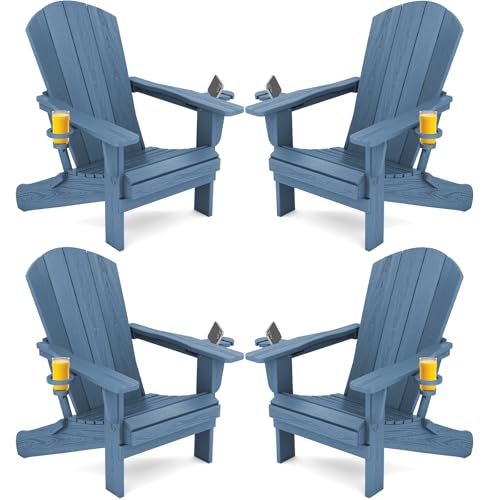
All Weather Adirondack Chairs Set of 4: The Complete Buying Guide
Everything you need to know before choosing a weather-resistant Adirondack set for your patio, deck, or backyard retreat.
Why an All Weather Adirondack Set of 4 Makes Sense
The classic Adirondack silhouette is beloved for its deep seat, wide armrests, and reclined back — a design originally meant for lakeside relaxation. What has changed is the material. Traditional wood chairs require regular sealing, painting, and careful storage. All weather versions solve those problems by using engineered materials that resist moisture, UV exposure, and temperature swings.
Buying a matched set of four offers practical advantages beyond the design. You get consistent color and proportions across your seating area, simplified assembly, and a coordinated look that photographs well and feels intentional. A set also removes the guesswork of mixing individual chairs that may vary slightly in height, depth, or finish.
For homeowners who want a seating area that stays ready for guests throughout the season, this category is a strong fit. Whether you are furnishing a poolside deck, a fire pit circle, or a covered porch, a four-chair set provides enough seating for a small gathering without overwhelming the space.
Material Options: What "All Weather" Really Means
The term "all weather" is used broadly, and not every material performs the same way. Understanding the differences will help you match the set to your climate and usage patterns.
High-Density Polyethylene (HDPE)
HDPE is the most common material in premium all weather Adirondack sets. It is dense, heavy, and manufactured in solid colors so the surface does not chip or peel. HDPE resists moisture, salt spray, and UV fading well. It also has a slight flexibility that makes the seat more forgiving over long sitting sessions. Many HDPE sets are made from recycled plastic, which adds an environmental benefit without sacrificing durability.
Recycled Plastic and Poly Lumber
Poly lumber is essentially recycled plastic formed into lumber-like boards. It looks similar to painted wood but never needs repainting. Sets made from recycled milk jugs or other post-consumer plastics fall into this category. The trade-off is weight — these chairs are heavy and not easy to move frequently — but they are among the most durable options for year-round outdoor exposure.
Weather-Treated Composite Wood
Composite wood blends wood fibers with resin binders. It offers a more natural grain appearance than pure plastic, and many buyers prefer the warmer look. Quality varies widely: mid-range composites resist moisture well, while entry-level versions may show surface wear sooner. If you choose composite, look for a sealed or capped finish that protects against moisture infiltration.
Powder-Coated Aluminum
Some modern Adirondack sets use powder-coated aluminum frames. These are lighter and easier to rearrange, and the coating resists rust. Aluminum sets are a good fit for balconies and rooftops where weight matters. However, they can feel less substantial than poly or composite chairs, and the seat may flex more under heavy use.
Market Tiers: How Sets Differ Across the Category
All weather Adirondack sets are not uniform. The table below summarizes how sets generally differ across quality tiers, using neutral tier descriptors instead of figures. This helps you understand what each level of the market typically delivers.
| Tier | Typical Materials | Construction Notes | Best For |
|---|---|---|---|
| Entry-level | Thinner poly, basic composite | Simpler joinery, fewer stainless components | Seasonal use, covered porches |
| Mid-range | Solid HDPE, capped composite | Reinforced joints, UV-stabilized finish | Year-round patios, family use |
| Premium | Heavy HDPE, marine-grade hardware | Thicker boards, tighter tolerances, contoured seats | Full sun exposure, coastal homes |
| High-end / professional-grade | Dense poly lumber, recycled premium blends | Commercial-grade fasteners, refined ergonomics | Hospitality use, harsh climates |
Higher tiers generally deliver smoother edges, more consistent color, and better long-term stability. Mid-range models often hit a sensible balance for most households, while premium and professional-grade sets are worthwhile investments for exposed locations or heavy daily use.
Comfort and Ergonomics: What to Check Before You Buy
Adirondack chairs are famous for their relaxed posture, but not every set is equally comfortable. Here are the details that matter most:
- Seat depth and angle: Deeper seats with a gentle recline feel more relaxing but can be harder to exit for some users. If you need easier access, consider chairs with a slightly higher seat height — see our guide to Adirondack chairs that are easy to get out of.
- Armrest width: Wide, flat armrests are a hallmark of the style. They should be wide enough to rest a drink or a book comfortably.
- Backrest height: Higher backrests support the shoulders and head better for long reading sessions. Lower backs offer a more classic look.
- Flex and weight: HDPE chairs have a slight give that many people find comfortable. Aluminum chairs are stiffer. Sit in a sample if possible, or read owner feedback carefully.
- Cup holders: Many modern sets include built-in cup holders. If that matters to you, browse Adirondack chairs with cup holders for options that combine function and style.
Layout and Space Planning for a Set of Four
A set of four chairs is versatile, but placement matters. The three most common arrangements are:
- Conversation circle: Four chairs around a low table or fire pit. This is the most social layout and works well on square or round patios.
- Linear row: Chairs side by side facing a view, pool, or garden. Ideal for narrow decks and scenic overlooks.
- Paired arrangement: Two chairs on each side of a small table. This works well on compact balconies and porches.
As a general rule, allow about 30 to 36 inches of width per chair and 24 to 30 inches of depth. For a conversation layout, a 10 by 10 foot area gives comfortable room to move. If you are working with a smaller footprint, our guide to small patio design offers layout strategies that apply directly to Adirondack seating.
Also consider sun exposure. Adirondack chairs are often used for lounging in the sun, so think about whether you want full sun, partial shade, or a spot near a shade structure. If your patio lacks natural shade, a patio umbrella with solar lights can extend usable hours into the evening.
Maintenance and Long-Term Care
One of the main reasons buyers choose all weather sets is low maintenance. That said, a few simple habits keep the chairs looking their best:
- Routine cleaning: Mild soap, warm water, and a soft brush handle most dirt. Rinse and air dry.
- Avoid harsh chemicals: Abrasive cleaners and pressure washers at close range can dull the surface finish.
- Check fasteners: Tighten screws and bolts at the start of each season. Stainless hardware resists corrosion but can still loosen with use.
- Winter care: In snowy regions, covering the set or storing it in a shed reduces wear. Our weatherproofing guide covers broader outdoor furniture protection strategies.
- Stain removal: For stubborn marks on poly lumber, a soft eraser or a diluted vinegar solution usually works without damaging the surface.
Sustainability: Recycled Materials Worth Considering
Many all weather Adirondack sets are made from recycled plastics, which keeps post-consumer waste out of landfills and reduces demand for virgin materials. Sets made from recycled materials perform just as well as those made from new plastic, and some buyers prefer them for environmental reasons. If sustainability is a priority, look for sets specifically marketed as recycled or made from post-consumer HDPE.
Useful Add-Ons for Your Set
A few accessories can improve the experience of owning a set of four:
- Seat cushions: A thin outdoor cushion adds comfort for long sitting sessions and introduces color.
- Side table: A small table between pairs of chairs holds drinks, books, and a lantern.
- Ottoman or footrest: Some Adirondack styles pair with matching footrests. See Adirondack chairs with retractable ottoman for integrated options.
- Outdoor rug: An outdoor rug defines the seating zone and makes the area feel more finished. Browse outdoor rugs for weather-resistant choices.
Frequently Asked Questions
What makes all weather Adirondack chairs different from standard wooden ones?
All weather Adirondack chairs are typically made from high-density polyethylene (HDPE), recycled plastic, or weather-treated composites. Unlike untreated wood, these materials resist moisture, UV fading, rot, and insect damage, so they can remain outdoors year-round with minimal maintenance.
Can a set of 4 Adirondack chairs stay outside during winter?
Yes, most all weather sets are designed for year-round outdoor exposure. However, in regions with heavy snow or extreme temperatures, covering the chairs or storing them in a shed during the harshest months will extend their lifespan and keep the finish looking new.
How much space do 4 Adirondack chairs need on a patio?
Each chair typically needs about 30 to 36 inches of width and 24 to 30 inches of depth for comfortable seating and easy movement. For a set of 4 arranged in a conversation layout, plan for a patio area of at least 10 by 10 feet, or slightly more if you add a side table or fire pit.
Are all weather Adirondack chairs comfortable for long sitting sessions?
Comfort depends on the seat angle, backrest height, and armrest design. Many modern all weather sets include contoured seats, wider armrests, and slight flex in the material that improves comfort. Adding a seat cushion or lumbar pillow can further enhance long sitting sessions.
How do I clean and maintain a set of 4 all weather Adirondack chairs?
Most sets can be cleaned with mild soap, warm water, and a soft-bristle brush. Rinse thoroughly and let them air dry. Avoid abrasive cleaners or pressure washing at close range, which can dull the surface. Periodic inspection of screws and joints keeps the set sturdy for years.