All Weather Adirondack Chairs with Cup Holders
Your complete guide to choosing durable, comfortable outdoor seating that holds your drink and stands up to the elements season after season.
Why this guide matters: If you have been searching for Adirondack chairs that survive rain, sun, and snow while keeping your beverage within arm's reach, you are in the right place. This guide breaks down materials, comfort engineering, cup holder designs, and practical buying considerations so you can make a confident decision before you add a set to your cart.
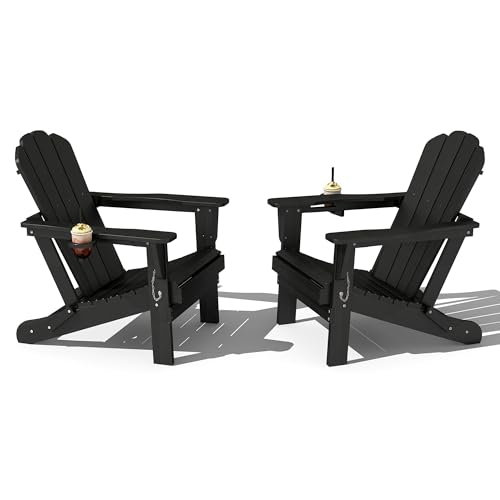
Adirondack chairs are iconic for their deep seating, wide armrests, and relaxed recline. But traditional wooden versions require ongoing maintenance and rarely include built-in conveniences. Modern all weather Adirondack chairs with cup holders solve both problems: they use materials engineered to resist moisture, UV damage, and temperature swings, and they integrate practical drink holders into the armrests.
The result is a chair you can leave outside without worry and settle into with a cold drink, a book, or good company. Below, we cover what to look for, how the major material categories compare, and which features separate an entry-level chair from a premium one.
What "All Weather" Really Means
The term all weather is used loosely across the outdoor furniture market, so it is worth defining. A genuinely all-weather Adirondack chair should handle the following without warping, cracking, fading, or rusting:
- Rain and humidity — the material should not absorb water or swell.
- UV exposure — colors should be stabilized against sun fading.
- Temperature swings — the chair should not become brittle in cold or soft in heat.
- Salt air and coastal conditions — especially relevant for poolside and seaside patios.
- Mold and mildew — non-porous surfaces resist organic growth.
Materials that typically meet these criteria include HDPE poly lumber (high-density polyethylene), powder-coated aluminum, treated hardwoods such as teak or acacia, and high-grade resin. If you want to go deeper on material science, our guide to all weather material for outdoor furniture explains the tradeoffs in detail.
Material Comparison: Which All Weather Build Is Right for You?
The material determines durability, maintenance needs, weight, and how the chair feels to sit in. Use the table below to compare the main categories. Tiers reflect relative market positioning, not any specific figure.
| Material | Market Tier | Best For | Key Characteristics |
|---|---|---|---|
| HDPE Poly Lumber | Balanced Tier | Year-round outdoor use, coastal and poolside patios | Non-porous, fade-resistant, no painting or sealing required, heavy enough to resist wind |
| Powder-Coated Aluminum | Premium Tier | Lightweight portability, modern decks, balconies | Rust-proof finish, easy to move, sleek profile, often stackable, cooler to sit in during peak sun |
| Treated Hardwood (Teak / Acacia) | Premium Tier | Natural aesthetic, traditional patios, covered porches | Warm grain appearance, naturally rot-resistant, may require periodic oiling to preserve finish |
| High-Grade Resin | Essential Tier | Occasional use, seasonal patios, starter outdoor setups | Lightweight, molded shapes, generally good water resistance, may be more susceptible to UV fading over many seasons |
| Composite / Recycled Plastic | Luxury Tier | Long-term investment, eco-conscious buyers, high-traffic patios | Extremely durable, dense, minimal maintenance, often made from recycled materials, heavier to reposition |
Each category has a place. If you want a chair you can move easily and store on a balcony, aluminum is a strong contender. If you want the classic Adirondack silhouette with zero sealing and the ability to leave it out all year, poly lumber is the most popular all-weather choice. If you prefer a natural material and are willing to do light upkeep, treated hardwood delivers unmatched warmth and character.
Cup Holder Design: Small Detail, Big Difference
The cup holder is often the deciding feature for buyers who plan to use their chairs for morning coffee, evening drinks, or long afternoons with a book. Not all holders are created equal. Here is what to look for:
Integrated vs. Add-On Holders
Integrated cup holders are molded or carved directly into the armrest. They look cleaner, cannot be knocked loose, and are generally more stable. Add-on holders clamp onto the armrest and can be removed or repositioned, but they may wobble or interfere with the chair's lines. For a permanent outdoor setup, integrated is usually the better choice.
Depth and Diameter
Standard cup holders accommodate most cans, bottles, and tumblers. If you regularly use a large insulated cup or a wide-bottom glass, check the inner diameter and depth of the holder. Deeper wells reduce the chance of tipping, especially on windy days. Some models include dual holders, one on each armrest, which is ideal for couples or for keeping a phone and a drink separate.
Drainage and Cleaning
Outdoor cup holders should have a drainage hole or a design that prevents standing water from accumulating. Molded poly and aluminum holders are easy to wipe clean. Wooden holders may need occasional oiling to prevent water staining. A small detail, but one that matters after a rainy week.
Pro Tip: Test the Reach
A cup holder is only useful if you can reach it comfortably while reclined. Adirondack chairs have a deep seat angle, so armrest height and holder placement matter more than they do on a standard chair. Look for models where the holder sits toward the front of the armrest rather than back near the elbow.
Comfort and Ergonomics: Beyond the Cup Holder
All weather construction solves the durability question, but comfort is what keeps you in the chair. Pay attention to these design elements:
- Seat depth and recline angle — traditional Adirondack chairs recline deeply; some modern models offer a more upright option for easier conversation and dining.
- Armrest width — wide, flat armrests are part of the Adirondack appeal and double as a surface for a snack plate or book.
- Back height and contour — a contoured back supports the spine better than a flat slat design. Some chairs include an adjustable backrest; see our guide to Adirondack chair with adjustable backrest for that variation.
- Weight and footprint — a heavier chair is harder to move but less likely to blow over. Check the product details for both weight and whether the legs are wide enough for stability on grass or gravel.
- Assembly and hardware — stainless steel or coated hardware resists rust; cheap fasteners are often the first failure point on an outdoor chair.
If you are comparing specific configurations, our overview of Adirondack chairs with cup holders covers additional feature variations, and the plastic Adirondack chairs with cup holders page focuses on the lightweight, low-maintenance end of the market. For buyers who want to match chairs to an existing patio set, the plastic Adirondack chairs with cup holder guide offers style-matching suggestions.
A Practical Buying Checklist
Before you commit to a model, run through this checklist. It is designed to catch the details that are easy to overlook in a product listing.
- Confirm the material grade. "Weather-resistant" is not the same as "all weather." Look for explicit mentions of UV stabilization, rust-proof hardware, and non-porous construction.
- Check the cup holder dimensions. Compare the holder diameter to the cups you use most often.
- Review the weight capacity. A sturdy frame matters for larger users and for long-term durability.
- Read assembly requirements. Some chairs ship fully assembled; others need 20–45 minutes with basic tools.
- Verify the warranty. A multi-year warranty on the frame is a strong signal of build confidence, especially for poly and aluminum.
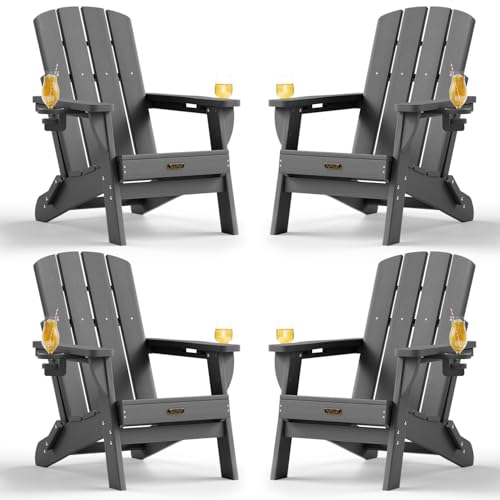
- Consider the set size. If you are buying for a family, a set of 4 all weather Adirondack chairs is often more consistent in color and finish than assembling individual pieces.
- Plan for storage or covering. Even all-weather chairs benefit from a cover during extreme off-season weather, which extends the life of the finish and hardware.
Maintenance: What to Expect Season to Season
One of the biggest advantages of all weather Adirondack chairs is reduced maintenance. The exact routine depends on the material:
- Poly lumber and recycled plastic: Rinse with a hose and wipe with mild soapy water once or twice a season. No painting, staining, or sealing is required.
- Powder-coated aluminum: Wipe down with a damp cloth. Inspect joints and fasteners annually for tightness. Avoid abrasive cleaners that can dull the coating.
- Treated hardwood: Clean with a soft brush and mild soap. Re-oil every season or two if you want to preserve the original color; otherwise, the wood will weather to a natural silver-grey.
- High-grade resin: Wipe clean as needed. Check for fading after several seasons of direct sun and consider a protective cover during peak UV months.
Across all materials, tightening hardware once a year and clearing debris from cup holders and seat joints will keep the chair solid and comfortable for many seasons.
Frequently Asked Questions
All weather refers to materials engineered to resist moisture, UV radiation, temperature swings, and fading. Common examples include HDPE poly lumber, treated hardwoods, powder-coated aluminum, and high-grade resin. These materials are designed to remain stable outdoors across seasons.
Most integrated cup holders are molded into the armrest and can hold standard tumblers, cans, and bottles. Mid-range and premium models often feature deeper, reinforced cup wells or dual holders that accommodate larger insulated cups. Check the holder depth and armrest thickness when comparing options.
Many models ship partially assembled or flat-packed with basic hardware. Assembly is typically straightforward and requires only a screwdriver or Allen wrench. Premium and commercial-grade chairs may arrive fully assembled. Check the product listing for assembly details.
Yes, all weather Adirondack chairs are designed to remain outdoors year-round. However, in extreme climates, covering them during off-season or heavy snow can extend their lifespan. UV-stabilized poly and powder-coated aluminum generally handle sun and rain best with minimal maintenance.
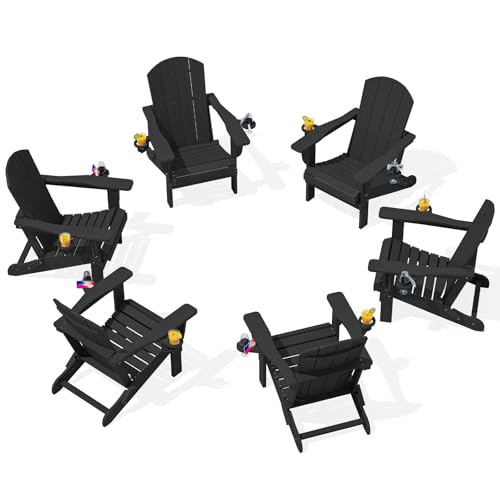
A set of two is common for couples, while a set of four works well for families and small gatherings. If you have a large deck or pool area, consider a six- or eight-chair arrangement with a small side table. Keep in mind that consistent color and finish are easier to achieve when buying a matched set.
Ready to Compare All Weather Adirondack Chairs with Cup Holders?
Browse curated options that match the criteria in this guide — durable materials, integrated cup holders, and comfort-focused design. Explore current availability and feature details before you decide.
Explore Options