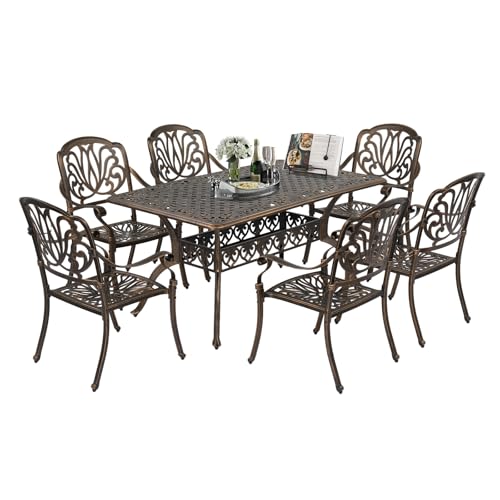
Aluminum Outdoor Dining Table and Chairs: A Complete Buying Guide
Everything you need to know before choosing a rust-resistant, lightweight, low-maintenance aluminum dining set for your patio, deck, or backyard.
START THE GUIDEWhy aluminum stands out: If you are researching an outdoor dining set, aluminum is one of the most practical frame materials available today. It is naturally rust-resistant, considerably lighter than steel or cast iron, and easy to move when you rearrange your patio. This guide walks you through frame construction, tabletop options, seating capacity, finish quality, and long-term care — so you can choose an aluminum dining set that fits your space and your lifestyle with confidence.
Why Choose an Aluminum Outdoor Dining Table and Chairs Set?
Aluminum has become the default frame material for modern patio dining furniture, and for good reason. Unlike iron or steel, aluminum does not rust when exposed to rain and humidity. A properly powder-coated aluminum frame can last many seasons with minimal attention, making it a sensible long-term investment for homeowners who want an outdoor dining area that stays looking sharp year after year.
Key advantages of aluminum frames
- Rust-resistant by nature: Aluminum forms a protective oxide layer and does not corrode the way ferrous metals do. This matters most in coastal and humid climates.
- Lightweight yet strong: A full aluminum dining set can typically be moved by one or two people, which makes seasonal rearranging and cleaning far easier than with heavy alternatives.
- Low maintenance: A quick wipe with mild soap and water is usually enough. There is no annual repainting or rust treatment required.
- Modern aesthetic: Clean lines and slim profiles suit contemporary, minimalist, and transitional outdoor spaces alike.
- Weather-ready finishes: Powder coating adds a durable, chip-resistant layer that also protects against UV fading.
If you are still comparing frame materials broadly, our guide to metal patio furniture breaks down how aluminum, steel, and wrought iron differ in weight, durability, and upkeep. Aluminum sits at the sweet spot for most residential patios: light enough to move, tough enough to leave outside, and easy to live with.
Quick tip: Aluminum frames paired with a rust-proof finish are especially valuable if your patio is uncovered or if you live near the coast, where salt air accelerates corrosion in lesser materials.
Frame Construction and Build Quality
Not all aluminum dining sets are built to the same standard. The differences show up in tube thickness, joint construction, and how the frame is finished. Understanding these details helps you judge whether a set is entry-level, mid-range, or premium before you commit.
What to look for in the frame
- Tube gauge and wall thickness: Thicker aluminum walls resist flexing and wobble. Mid-range and premium sets typically use reinforced tubular frames with noticeably sturdier legs and aprons.
- Welded versus bolted joints: Fully welded joints are stronger and more stable over time. Bolted or push-fit assembly is common in entry-level sets and is acceptable for light use, but welded construction is preferable for daily dining.
- Powder-coated finish: Powder coating is far more durable than paint. A quality coating resists chipping, scratching, and fading, and it is the single biggest factor in how well an aluminum set ages.
- Feet and glides: Adjustable leveling glides protect your deck or patio surface and keep the table stable on slightly uneven ground.
- Weight capacity and bracing: Look for cross-bracing under the table and reinforced chair frames. These details separate heavy-duty builds from lighter-duty ones.
For a broader look at how these construction details affect longevity, see our material guide on metal furniture care and comparison.
Tabletop Materials Compared
The tabletop determines much of the set's character — and its maintenance needs. Aluminum dining tables are commonly offered with several top options, each with distinct strengths.
| Tabletop Type | Best For | Maintenance Level | Notes |
|---|---|---|---|
| Aluminum slat top | Everyday dining, rainy climates | Low | Water drains through slats; lightweight and rust-proof |
| Glass top | Modern, airy patios | Low to moderate | Easy to wipe clean; choose tempered glass for safety |
| Mesh top | Casual family dining | Low | Quick-drying and durable; classic patio look |
| Faux wood or composite | Warm, natural aesthetic | Low | Wood look without splinters or annual sealing |
| Solid surface or stone-look | Premium entertaining | Moderate | Heavier top; check frame load rating before pairing |
If you like the look of stone but want a lighter setup, compare options in our guide to concrete dining tables and note how frame pairing affects stability. For aluminum sets specifically, a slat or mesh top is the most practical all-weather choice, while tempered glass delivers the cleanest modern look.
Choosing the Right Size and Seating Capacity
Size is where most buyers second-guess themselves. The goal is a table that seats your usual household comfortably without overwhelming the patio. As a rule of thumb, allow at least 24 inches of table edge per diner and roughly 32 to 36 inches of clearance around the table for chairs to pull out.
Common aluminum dining set configurations
- Bistro sets (2 seats): Ideal for balconies and small patios. A compact 3-piece outdoor bistro set fits tight spaces beautifully.
- Four-seat sets: The most popular size for families. A round dining table set for four encourages conversation and works well in square footprints.
- Six-seat sets: Great for entertaining. Rectangular tables are the classic choice — see our guide to the outdoor dining set for 6 with umbrella for shade considerations.
- Eight-seat sets: Best for large families and hosts. A large outdoor dining table with bench and chairs maximizes seating in a long footprint.
- High-top and bar-height sets: For a more pub-like feel, explore high-top outdoor dining sets and bar-height table and chair sets.
If your patio is compact, the principles in our outdoor furniture for small spaces guide will help you avoid the most common layout mistakes. If you need flexibility for guests, an extendable outdoor dining table and chairs set is a smart compromise.
Measure twice: Mark your intended table footprint on the patio with painter's tape before ordering. Include the chair pull-out zone — this single step prevents the most common post-purchase regret.
Chair Styles and Comfort Features
The chairs make or break the dining experience. Aluminum dining chairs come in several seat constructions, and the right choice depends on how long you typically sit and how much maintenance you want.
Seat and back options
- Sling seats: A taut fabric suspended across the frame. Sling chairs are breathable, quick-drying, and comfortable for long meals. They are a favorite in warm climates.
- Mesh seats: Similar to sling but with a woven texture. Durable and easy to clean; a classic patio look.
- Cushioned seats: Aluminum frames with removable cushions offer the softest seating. Choose quick-dry foam and solution-dyed fabrics for outdoor use, and store cushions when not in use. Our outdoor cushion guide explains what to look for.
- Stackable chairs: A practical space-saver for smaller patios; check whether the chairs in a set are stackable if storage matters to you.
- Swivel and rocking options: If you want a more lounge-like feel, look at outdoor furniture sets with swivel chairs for ideas on mixing dining and relaxation.
Pay attention to armrest height, seat depth, and back angle. A chair that looks sleek may feel cramped after an hour. If you can, sit in a display model before buying — or read owner reviews specifically about long-dinner comfort.
For coordinating seating around the same patio, browse durable outdoor chairs and wicker dining chairs to see how aluminum sets can be mixed with other materials for a layered look.
Finishes, Colors, and UV Resistance
Finish quality is one of the clearest signals of where a set sits in the market. Entry-level aluminum sets often use thinner powder coats that can fade or chip within a few seasons. Mid-range and premium sets use multi-step coating processes designed to hold color and resist scratching.
Choosing a finish
- Powder-coated aluminum: The standard for quality outdoor furniture. Look for terms like "UV-resistant powder coat" or "electrostatic powder coating."
- Color choice: Light neutrals (ivory, sand, light gray) reflect heat and stay cooler in direct sun. Dark finishes (charcoal, bronze, black) look dramatic but absorb more heat.
- Texture: A slight texture hides fingerprints and minor scratches better than a high-gloss finish.
- Colorfastness: Solution-dyed fabrics and UV-stabilized coatings resist fading. This is especially important in sunny, exposed patios.
To coordinate your dining set with the rest of your outdoor space, see our patio styles section and the color scheme guides for palettes that work with aluminum's clean lines.
Maintenance and Seasonal Care
One of aluminum's biggest advantages is how little it asks of you. Still, a few simple habits will keep your dining set looking new for many seasons.
Routine care
- Wipe the frame and tabletop with a soft cloth and mild soapy water; rinse and dry.
- Avoid abrasive pads and harsh chemical cleaners that can dull the powder coat.
- Clean spills promptly, especially on glass tops, to prevent staining and etching.
- Rinse coastal sets more frequently to remove salt deposits.
Seasonal protection
- Use a fitted waterproof outdoor furniture cover during extended periods of disuse or harsh weather.
- Store cushions indoors when not in use to extend their life.
- In freezing climates, bring cushions and removable parts inside; the aluminum frame itself can generally stay outdoors.
- Check fasteners and glides at the start of each season and tighten as needed.
For a deeper seasonal routine, see our weatherproofing guide and the broader outdoor care section.
Buying Checklist and Tier Guide
Use this checklist to evaluate any aluminum dining set you are considering. It is organized by the features that matter most for long-term satisfaction.
Before you buy
- Measure your space — table footprint plus chair clearance.
- Confirm seating needs — everyday diners versus occasional guests.
- Check the frame — tube thickness, welded joints, and powder coating.
- Choose a tabletop — slat, mesh, glass, or composite based on climate and style.
- Evaluate chairs — sling, mesh, or cushioned; stackable if storage matters.
- Plan for shade — consider an outdoor patio dining table with umbrella or a freestanding umbrella.
- Check the warranty — frame warranties are a useful proxy for build confidence.
Quality tier guide
The tiers below describe relative market positioning and build quality — not any specific numeric figure. They are intended to help you calibrate expectations as you compare sets.
| Tier | Typical Build | Best For | Notes |
|---|---|---|---|
| Entry-level | Thinner tube walls, bolted joints, basic powder coat | Occasional use, covered patios, starter setups | Solid choice for the tier; inspect joints carefully |
| Mid-range | Reinforced tubular frame, welded joints, quality powder coat | Daily family dining, year-round use | Well-specified for the category; the practical sweet spot |
| Premium | Heavy-duty frame, multi-step finish, premium sling or cushion fabrics | Frequent entertaining, exposed patios, coastal homes | Long-term investment with noticeably better refinement |
| Luxury / commercial-grade | Architectural-grade aluminum, designer finishes, hospitality-level durability | High-use households, vacation rentals, design-led spaces | Top-tier materials and craftsmanship; feature-rich for its class |
Editorial note: A mid-range aluminum set is usually the most sensible choice for typical homeowners. It offers welded construction, a dependable powder coat, and comfortable chairs without the diminishing returns of the top tier.
If you want to explore related configurations before deciding, browse our pages on patio conversation sets, round patio table and chairs with umbrella, and outdoor furniture table and chairs with umbrella.
Frequently Asked Questions
Yes. Quality aluminum frames are engineered to support daily use. Powder-coated aluminum is resistant to rust and corrosion, making it a dependable choice for patios and decks in most climates. For heavy-duty reassurance, look for welded joints and reinforced tubular frames.
Aluminum dining sets are available in configurations ranging from compact bistro sets for two to large rectangular tables that seat six to eight. Choose a table size that leaves at least 24 inches of elbow room per person, and keep roughly 32 to 36 inches of clearance around the table for chairs to pull out.
Aluminum can warm up in direct sunlight, but powder-coated finishes and lighter colors reduce heat absorption. Mesh or sling seats stay cooler than solid metal surfaces, making them a practical choice for sunny areas. A patio umbrella also helps a great deal.
Wipe the frame with mild soap and water, rinse, and dry with a soft cloth. Avoid abrasive cleaners that can dull the powder coating. During extended off-season storage, use a fitted cover to protect the finish, and bring cushions indoors when not in use.
Absolutely. Aluminum is lightweight, which makes it easier to move and safer for upper-floor balconies where weight matters. A compact bistro set or a four-seat round table is usually the best fit. See our outdoor furniture for small spaces guide for layout tips.
Glass offers the cleanest modern look and is easy to wipe clean, but it shows smudges. Slat tops drain rainwater efficiently and are excellent for uncovered patios. Mesh tops are durable and classic. All three work well with aluminum frames — pick based on your climate and design preference.
Ready to Choose Your Aluminum Dining Set?
Use the checklist above, measure your space carefully, and decide which tier of build quality matches how you actually live outdoors. A well-chosen aluminum set will reward you with easy, rust-free dining for years.
EXPLORE MORE BUYING GUIDES