Bar Height Patio Dining Set With Umbrella Hole: The Complete Buyer's Guide
Elevated dining, built-in shade, and a layout that works on decks, balconies, and compact patios. Here is everything to evaluate before you choose your bar height set.
Why this guide matters: A bar height patio dining set with an umbrella hole sits at the intersection of three buying decisions — seating height, shade strategy, and frame material. Get one wrong and the set feels awkward every time you use it. This guide walks you through each decision in plain language so you can shortlist with confidence.
What Is a Bar Height Patio Dining Set With an Umbrella Hole?
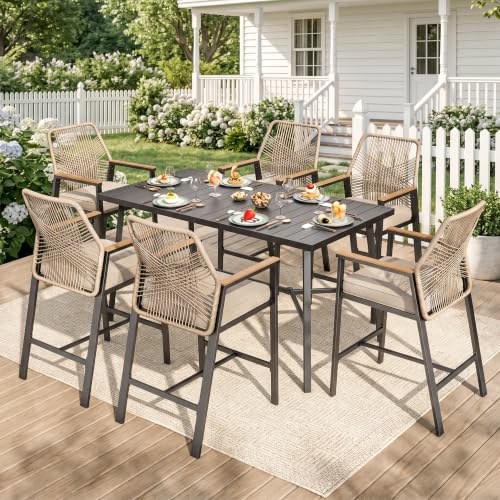
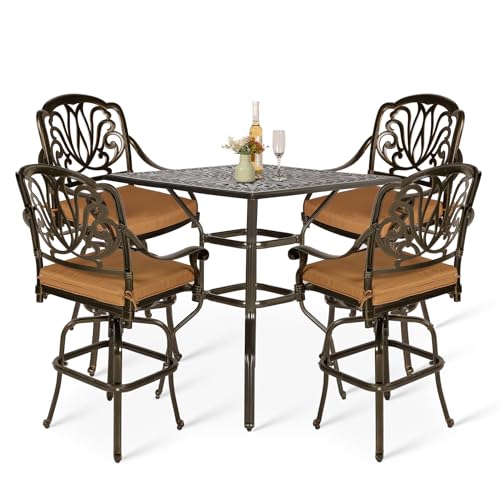
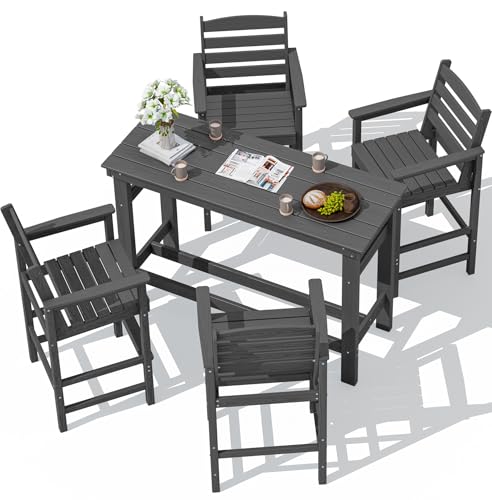
A bar height patio dining set is a coordinated outdoor table-and-chair grouping where the table surface sits at roughly counter-to-bar elevation, paired with matching tall chairs or stools. The umbrella hole is a pre-drilled opening through the center of the tabletop (and often through the table's frame) that accepts a patio umbrella pole. Together, these two features create a dining setup that keeps guests standing-height comfortable while providing integrated shade without a separate freestanding umbrella base.
This configuration is especially popular on elevated decks, small patios, and balconies where floor space is limited but vertical space is available. Because the umbrella passes through the table rather than standing beside it, the set conserves footprint and keeps the shade centered over the dining surface. If you are still comparing height classes, the broader bar height outdoor table overview is a useful starting point.
Why Choose Bar Height Instead of Standard Dining Height?
Standard dining height works well for long, relaxed meals. Bar height changes the ergonomics and the feel of the space. Here is what that shift delivers in practice:
- Better sightlines. Guests sit higher, so conversations flow more naturally across a deck or patio, especially when some people are standing or grilling nearby.
- Easier transitions. Bar height aligns with outdoor kitchen counters and grill stations, making serving and clearing more fluid.
- Compact footprint. Tall sets often use smaller tabletop dimensions than full dining sets, which suits tight layouts.
- Integrated shade. The umbrella hole keeps shade centered and eliminates a separate umbrella stand that would otherwise eat floor space.
- Casual entertaining energy. Bar height reads as informal and social — ideal for drinks, appetizers, and conversational gatherings.
The trade-off is that bar height is less comfortable for very young children and for long, multi-course meals. Many households solve this by pairing a bar height set for everyday use with a lower dining option for formal occasions.
How the Umbrella Hole Works — and What to Check
The umbrella hole sounds simple, but the details determine whether your umbrella actually stays stable. Before committing to a set, verify these four things:
- Hole diameter. Most patio umbrella poles are standardized, but hole diameters vary slightly between manufacturers. Confirm the set's hole size matches your umbrella pole, or plan to use a reducer ring.
- Table thickness and reinforcement. A hole through a thin tabletop can wobble under wind load. Look for sets with a reinforced collar or a metal ring around the opening.
- Base requirements. Even with a through-table hole, most umbrellas need a weighted base underneath. Check whether the table frame allows a base to sit cleanly beneath it.
- Umbrella clearance. Measure the umbrella canopy against your seating positions so the ribs do not collide with guests' heads or the backs of chairs.
If shade flexibility is your priority, a dedicated bar height patio table with umbrella hole guide explores table-only options in more depth.
Sizing the Set: How Many Seats Do You Actually Need?
Bar height sets typically come in three, four, five, six, or eight-seat configurations. The right choice depends on how often you host and how much clearance your patio allows. As a working rule, allow generous elbow room per seat and keep at least a comfortable walking gap behind occupied chairs.
| Configuration | Best For | Space Consideration |
|---|---|---|
| 3-piece set (table + 2 chairs) | Balconies, couples, small decks | Minimal footprint; easiest to place against a wall |
| 4-seat set | Everyday family dining, compact patios | Comfortable for daily use without crowding |
| 6-seat set | Regular entertaining, medium patios | Requires a clear walking zone on at least two sides |
| 8-seat set | Large gatherings, extended decks | Best reserved for spacious patios with open circulation |
For larger households, a dedicated bar height outdoor dining set for 6 layout guide covers spacing in detail. If you need to seat a bigger crowd, the bar height outdoor dining table for 8 reference is worth reviewing.
Seating Styles: Swivel, Stationary, and Stool Configurations
Chairs are where bar height sets diverge most. The three common styles each serve a different use pattern:
Swivel Chairs
Swivel chairs rotate a full turn or a partial arc, which makes it easy to move between the table and the conversation around it. They are the most social option and pair well with larger sets. A bar height outdoor dining set with swivel chairs is a strong choice if guests frequently shift between eating, talking, and watching the yard.
Stationary Chairs
Fixed chairs are simpler, often more stable, and generally lighter to move. They suit households that primarily use the set for focused dining rather than mixed socializing.
Bar Stools
Some sets pair the table with backless or low-back stools. Stools maximize seating density and tuck fully under the table, but they offer less support for longer meals. If stools appeal to you, the standalone bar stools guide covers height matching and back support in more detail.
Frame and Tabletop Materials Compared
Outdoor furniture lives with sun, rain, and temperature swings. Material choice determines how a set ages and how much upkeep it needs. The table below uses a tier-based comparison rather than any numeric figures.
| Material | Tier Positioning | Durability Notes | Best For |
|---|---|---|---|
| Powder-coated aluminum | Mid-range to premium | Rust-resistant, lightweight, low maintenance | Humid climates and coastal areas |
| High-grade steel | Mid-tier | Heavy-duty and stable; requires rust protection checks | Windy decks and heavy-use households |
| Teak and hardwoods | Premium to luxury | Naturally weather-resistant; benefits from periodic sealing | Long-term investment and classic styling |
| Wicker and rattan (synthetic) | Entry-level to mid-range | Weather-resistant coating; watch for UV fading over time | Soft-looking aesthetics and comfortable backs |
| HDPE and resin | Essential tier | Light, easy to clean, UV-stabilized variants hold color well | Casual setups and easy repositioning |
Tabletop material matters just as much. Slatted metal drains quickly, glass looks sleek but shows water spots, and composite or tile tops resist scratching while adding weight for stability. A heavier tabletop is a real advantage on windy decks because it lowers the risk of tipping when an umbrella catches a gust.
The Practical Buying Checklist
Use this checklist to evaluate any bar height patio dining set with an umbrella hole before you commit:
- Measure the footprint first. Tape out the set's dimensions on your patio, including the chair pull-out zone and walking clearance.
- Confirm the seat height matches the table. Bar height tables and chairs must be sold as a matched pair; mixing heights creates an uncomfortable dining posture.
- Verify umbrella hole diameter and reinforcement. Match it to your umbrella pole and check for a metal collar.
- Check the weight rating and stability. Wider chair legs and a heavier tabletop reduce wobble.
- Inspect the finish warranty. Powder-coated and rust-proof finishes should be explicitly covered.
- Plan for storage. Folding chairs and stackable stools simplify off-season storage.
- Look for leveling feet. Adjustable glides compensate for slightly uneven patio surfaces.
If your patio is exposed to strong sun, pairing the set with a properly sized umbrella is essential — the bar height outdoor table and chairs with umbrella hole guide covers shade matching in detail.
Placement Ideas for Bar Height Sets
Bar height sets are unusually flexible because they work in both open patios and tight corners. Three placements tend to perform best:
- Against a railing or wall. Pushing the table to one edge frees up circulation space and lets the umbrella overhang the patio rather than the walkway.
- Near the grill or outdoor kitchen. Bar height aligns with counter surfaces, turning the set into a natural serving and prep zone.
- At the edge of a deck. Elevated placement takes advantage of the view and keeps the umbrella canopy clear of the house.
For mixed-use patios that combine dining with lounging, the bar height patio set collection overview shows how bar height dining pairs with complementary seating.
Care and Longevity Tips
A well-chosen set can last many seasons with modest care. Focus on three routines:
- Seasonal cleaning. Wash frames with mild soap and water, rinse thoroughly, and dry before covering.
- Umbrella management. Close the umbrella during high winds and store it during off-season to protect both canopy and table.
- Cover strategy. Use breathable covers rather than airtight ones so trapped moisture does not corrode metal frames.
Wood sets benefit from periodic sealing, while metal sets should be checked for scratches that could expose bare steel. Touching up small chips early prevents larger rust issues later.
Quick decision shortcut
If shade is your main concern, prioritize a reinforced umbrella hole and a heavier tabletop. If entertaining is the priority, choose swivel chairs and a six-seat configuration. If maintenance is the priority, choose powder-coated aluminum with a slatted metal top. Most buyers will find a comfortable balance across those three priorities.
Frequently Asked Questions
Can I use any patio umbrella with a bar height dining set?
Most standard patio umbrellas fit, but you should confirm the pole diameter matches the table's umbrella hole. Some tables require a reducer ring for smaller poles. Also check that the umbrella canopy clears the chairs when guests are seated.
Do I still need an umbrella base if the table has an umbrella hole?
In most cases, yes. The hole stabilizes the pole laterally, but a weighted base beneath the table is what prevents tipping in wind. Some heavy tables can accept a pole without a base, but a base is the safer choice for exposed patios.
Is bar height comfortable for children and older guests?
Bar height chairs can be difficult for young children and for guests with limited mobility. Many households choose chairs with footrests and lower backs to improve comfort, and keep a lower dining option available for formal or multi-generational meals.
How much clearance do I need behind the chairs?
Leave enough room for a person to pull a chair out and walk behind it comfortably. On tight patios, pushing the table against a railing on one side and keeping clearance on the other two sides is a practical compromise.
Can a bar height dining set stay outside year-round?
Powder-coated aluminum and high-grade steel sets handle year-round exposure well when cared for properly. Wood sets need periodic sealing, and wicker sets benefit from covers during harsh seasons. Always close the umbrella during storms regardless of frame material.
What is the difference between bar height and counter height?
Counter height sets sit slightly lower than bar height sets. The difference affects chair selection and how the set aligns with outdoor kitchen counters. If your patio has a counter or grill station, matching that surface height is the most practical approach.
Final Thoughts
A bar height patio dining set with an umbrella hole is one of the most space-efficient ways to combine dining and shade on a deck or compact patio. The key is to treat seating height, umbrella compatibility, and material durability as a single decision rather than three separate ones. Measure your space first, match the umbrella hole to your pole, and choose a material tier that matches your climate and maintenance habits. Do that, and the set will earn its place as the social center of your outdoor space.