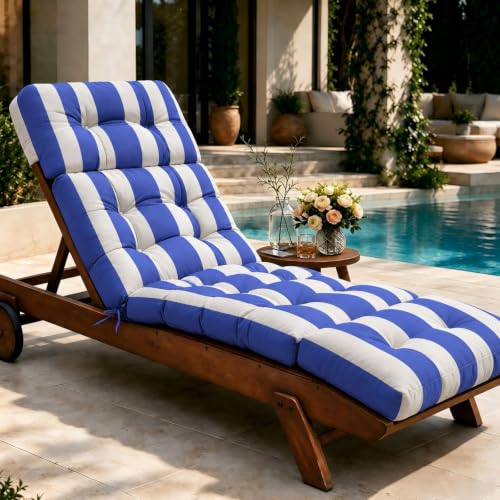
Blue and White Striped Lounge Chair Cushions: The Complete Guide
From fabric performance to fit and styling, here is everything you need to choose striped outdoor cushions that look crisp, feel comfortable, and last through the seasons.
Why this guide matters: Blue and white striped lounge chair cushions are one of the most requested looks in outdoor design, but the color is the easy part. Fabric grade, foam density, tie-down security, and correct fit decide whether your cushions stay sharp and supportive or fade and slip after a season. This guide breaks down each of those decisions so you can buy with confidence.
Why Blue and White Stripes Work Outdoors
The pairing is a classic for a reason: navy, cobalt, or sky blue against crisp white reads clean and bright under strong sunlight, while the stripes visually elongate a chair and add structure without competing with surrounding planters or decking. This makes striped cushions especially popular in bohemian patio layouts, where mixed patterns and natural textures benefit from a strong anchor color, and in coastal-inspired spaces where nautical tones feel at home.
From a practical standpoint, blue and white stripes also hide minor wear better than solid white. A thin weave or subtle pattern across the surface softens the appearance of dust and small stains, which matters on furniture that stays outside through the season.
Fabric Performance: What to Look For
The stripe pattern itself has almost no effect on durability; the fiber and finishing do. When comparing cushions, look for the fabric's construction class rather than the design.
Solution-Dyed Acrylic (Top-Tier)
Color is added to the fiber before it is spun, so the stripe stays saturated through prolonged sun exposure. These fabrics typically carry strong fade, water, and mildew resistance and are the standard for uncovered patios, poolsides, and full-sun locations. This is the tier to choose when the cushions will live outdoors year-round.
High-Grade Polyester With Water-Repellent Finish (Mid-Range)
Polyester is durable and resists stretching, and a water-repellent coating helps rain bead off the surface. Performance sits just below solution-dyed acrylic in fade resistance, making it a balanced choice for covered patios, screened porches, and regions with moderate sun.
Entry-Level Polyester Blends (Starter Tier)
These work well for seasonal use, shaded balconies, or chairs that are brought indoors during extreme weather. Expect the stripes to soften in color faster under constant direct sun, and plan to store the cushions when not in use.
| Fabric Tier | Best For | Key Strength |
|---|---|---|
| Solution-dyed acrylic | Full sun, coastal, poolside | Long-term fade and mildew resistance |
| High-grade polyester | Covered patios, screened porches | Durable weave with water-repellent finish |
| Polyester blend | Seasonal or shaded use | Lighter build, easy to store |
Foam and Comfort: Getting the Support Right
Cushion thickness alone is not a quality signal. What matters is foam density and whether the core is wrapped for comfort.
- Entry-level: a single layer of lower-density foam that compresses over time and works best for occasional use.
- Mid-range: higher-density foam with a soft fiber wrap, giving a supportive base with a cushioned surface.
- Premium: high-resilience or quick-dry foam that resists moisture retention and holds its shape through repeated wet-dry cycles.
For lounge chairs, a firmer seat with a slightly softer backrest tends to feel more comfortable for reading and sunbathing. Quick-dry foam is worth prioritizing in humid climates because standard foam can stay damp internally long after the cover feels dry.
Fit and Measurement: The Most Common Mistake
Cushions that are slightly too large bunch at the edges and stress the seams; cushions that are too small slide forward and leave the frame exposed. Measure before ordering:
Seat Width
Measure across the widest usable part of the seat, inside the frame edges.
Seat Depth
Measure from the front edge to the backrest, allowing for any slight recline.
Backrest Height
Measure from the seat surface to the top of the back frame for the back cushion.
Tie Points
Note where the frame has attachment points so the cushions secure properly in wind.
Also consider the thickness of your existing cushion as a reference. If you are upgrading from a thin pad, a thicker cushion can change the seating angle, so check that the new depth still leaves your legs comfortably positioned. For related seating options, the striped outdoor seat cushion selection covers bench and dining configurations in matching patterns.
Attachment, Cleaning, and Storage
Keep Cushions in Place
Look for reinforced ties or straps, and prefer double-stitched seams at attachment points. On exposed decks, a strap-and-buckle system generally performs better than simple fabric ties in gusty conditions.
Routine Cleaning
- Brush off leaves and debris before they stain the fabric.
- Clean with mild soap and lukewarm water using a soft brush; rinse thoroughly.
- Air-dry upright so water drains away from the foam core.
- Avoid harsh bleach on colored stripes, which can dull the blue dye.
Off-Season Storage
Clean and fully dry cushions before storing them in a breathable container. Sealing damp cushions traps moisture and encourages mildew. In regions with hard winters, storing the cushions indoors extends their useful life considerably.
Styling Blue and White Stripes
Stripes are a strong pattern, so the surrounding palette should give them room. Pair the cushions with solid neutrals such as natural wood tones, stone greys, and woven wicker. On darker frames, the contrast reads especially crisp, while wicker furniture with blue cushions adds a warmer, more relaxed feel.
If you want the stripes to lead, keep other textiles quiet: a plain outdoor rug in a neutral weave, and accessories in the same blue family rather than a second competing pattern. For a coordinated seating group, matching striped outdoor chair cushions across several chairs creates a unified look without feeling repetitive.
Ready to refresh your seating? Explore the full striped collection and compare fabric tiers, thicknesses, and tie systems side by side.
Explore Striped Cushion OptionsQuick Buying Checklist
Sun Exposure
Full sun calls for solution-dyed acrylic; shade tolerates polyester blends.
Foam Core
High-resilience or quick-dry foam keeps shape and handles humidity.
Correct Dimensions
Measure seat width, depth, and back height against the chair frame.
Secure Attachment
Reinforced ties or buckles prevent slipping on windy days.
Seam Quality
Double-stitched seams at stress points extend cushion life.
Care Routine
Plan for mild soap cleaning and off-season storage.
Frequently Asked Questions
Are blue and white striped lounge chair cushions suitable for coastal patios?
Yes. The nautical pairing suits coastal and beach-inspired spaces, and solution-dyed acrylic with UV and mildew resistance handles humid, sunny conditions well.
What fabric is best for striped outdoor lounge chair cushions?
Solution-dyed acrylic is the top-tier choice for fade and mildew resistance. High-grade polyester with a water-repellent finish is a solid mid-range option, and polyester blends suit covered or seasonal use.
How do I measure my lounge chair for new cushions?
Measure seat width, seat depth, and backrest height inside the frame. Note tie points and compare thickness against your existing cushion so the seating angle stays comfortable.
How should I clean blue and white striped cushions?
Brush off debris, clean with mild soap and lukewarm water using a soft brush, rinse thoroughly, and air-dry upright. Avoid harsh bleach on the blue stripes and store cushions off-season.
Do stripes make cushions look busier on a small balcony?
They can, if paired with other patterns. Keep the rest of the space in solids and neutrals, and use stripes as the single accent to keep small areas feeling calm.