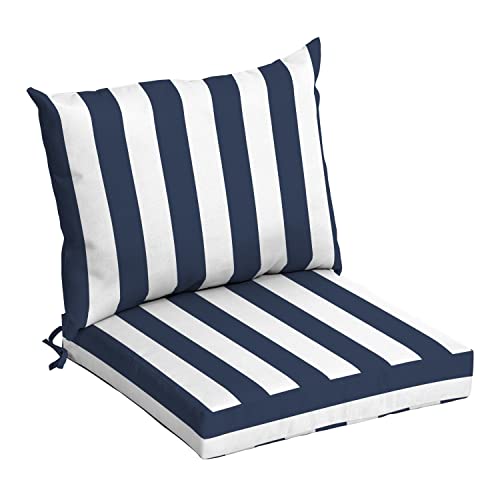
Blue and White Striped Outdoor Chair Cushions: The Complete Buying Guide
Nautical charm, crisp contrast, and weather-ready performance in one seat pad. Learn how to choose striped outdoor cushions that fit your chairs, survive the seasons, and tie your patio design together.
Explore Fabric & FitWhy this guide matters: Blue and white striped cushions are one of the most requested outdoor updates, yet they are also one of the easiest purchases to get wrong. A cushion that looks perfect online can slide on an angled seat, fade in one summer, or trap water after the first storm. This guide walks you through fabric grades, fill types, tie systems, measurement steps, and long-term care so your decision holds up season after season.
Why Blue and White Stripes Work Outdoors
Stripes are a classic for a reason. A blue and white palette reads clean and coastal without committing to a full theme, and the horizontal or vertical lines add visual structure that solid cushions often lack. On a patio, that pattern also hides minor surface wear and dried water marks better than pale solids.
The look pairs naturally with several established styles. If your space leans breezy and relaxed, striped seat pads slot right into a bohemian patio layered with textured rugs and planters. If you prefer a crisp, tailored feel, stripes work with a coastal nautical scheme built around white frames and natural fibers. For a brighter, more energetic direction, a striped cushion is one of the simplest ways to introduce bold and bright accents without repainting a wall.
Fabric: The Single Most Important Decision
The fabric determines how long the blue stays blue. Stripe patterns fade unevenly, and a cheap dye process often shows the lighter stripe going dull first. Focus on these four fabric families:
Solution-Dyed Acrylic
The gold standard for outdoor striped cushions. Color is added to the fiber before it is spun, so the blue resists UV fading and chlorine. Breathable, soft, and available in premium and luxury tiers.
High-Grade Polyester
A strong mid-range choice. Look for a water-repellent finish and a stated fade resistance rating. Lighter weights feel thinner and may pill sooner, so check the fabric weight in the product spec.
Olefin (Polypropylene)
Naturally moisture-resistant and mildew-tolerant, making it a practical entry-level to mid-range pick for humid climates. Slightly stiffer hand, but excellent for wet patios.
Cotton Blends
Comfortable and breathable, but not ideal for uncovered outdoor use. They absorb water, hold stains, and fade faster. Best reserved for a covered porch or sunroom where rain never reaches the chair.
Whatever fabric you choose, verify two things: a stated UV fade resistance rating and a water-repellent finish. A stripe cushion without either will look tired after a single season in direct sun. If you want to compare performance in a broader context, our overview of outdoor cushion options explains how these finishes are typically labeled.
Fill Types: Comfort Versus Structure
The fill determines whether a cushion feels like a soft seat pad or a firm, supportive chair insert. Match the fill to how the chair will be used.
| Fill Type | Tier | Best For | Trade-off |
|---|---|---|---|
| Polyester Fiber Fill | Entry-level | Light seating, occasional use, dining chairs | Settles and flattens over time; needs occasional fluffing |
| High-Density Foam | Mid-range | Everyday lounging, firm support, deep seats | Firmer feel; heavier to move for cleaning |
| Foam Core with Fiber Wrap | Premium | Lounge chairs and long sitting sessions | Higher initial outlay; best performance in its class |
| Memory Foam Insert | Premium | Contoured comfort, sensitive seating | Can retain heat; verify drainage and cover breathability |
| Quick-Dry Open-Cell Foam | Luxury | Uncovered patios, rainy climates, poolside chairs | Costliest construction; a long-term investment |
A general rule: entry-level fiber fill suits occasional dining chairs, while foam-based constructions are the more durable choice for chairs you sink into for hours. If the chair lives outdoors year-round, prioritize open-cell or quick-dry foam so water escapes instead of pooling inside the cushion.
Fit and Measurement: Getting It Right the First Time
A striped cushion only looks intentional when the stripe lines up with the chair frame. Before ordering, take four measurements with a tape measure and write them down.
- Seat width and depth. Measure the flat seat area from edge to edge and from front to back rail. Add no more than 0.5 inch of allowance; a loose cushion slides.
- Back height. Measure from the seat to the top of the backrest where the cushion should end. For two-piece cushion sets, measure the back pad separately.
- Tie anchor points. Note the distance between rear legs or frame rails. Ties must reach a solid frame element, not just a decorative spindle.
- Chair profile. Curved or barrel-back chairs need a cushion with a contoured or split back; flat slabs will buckle. Compare shapes before choosing a pattern.
If your chairs are metal or slim-frame styles, the cushion proportions matter as much as the pattern. Our notes on black patio chairs and cast aluminum patio chairs show how frame geometry influences cushion fit on popular chair types.
Pro tip: When in doubt between two sizes, choose the smaller depth for a chair with a sloped seat. Excess fabric bunches at the front and creates a puddle trap during rain.
Ties, Grips, and Anti-Slip Features
Wind is the quiet enemy of any striped cushion. Two systems keep cushions in place:
- Corner or mid-back ties. The most reliable option for open-frame chairs. Look for double-stitched bar-tack reinforcement at the tie junction; this is where most cushions fail first.
- Non-slip backing. A silicone or textured underside grips solid seats well and makes removal for cleaning faster. Less effective on slatted or angled seats.
If your patio is exposed and breezy, ties are the safer choice. If the chairs sit under a covered pergola and are rarely moved, a non-slip backing is often enough.
Styling Blue and White Stripes Without Overcommitting
Stripes are visually strong, so the surrounding pieces should support rather than compete. A few reliable approaches:
- Anchor with neutral frames. Black, white, and natural wood frames let the stripes lead. Pairing with black outdoor furniture creates a crisp, high-contrast look.
- Layer with solid textiles. Use a solid outdoor rug and a single accent throw so the eye rests between striped surfaces.
- Repeat the palette sparingly. One striped cushion per chair is usually enough. Matching all seat pads plus a striped umbrella can tip into busy.
- Mix stripe scales. A wide awning stripe on the chair cushion pairs well with a narrow ticking stripe on a small pillow, provided the blues match.
If you are refreshing the whole seating area, browsing our outdoor living guides can help you coordinate the cushion update with shade, lighting, and dining pieces.
Care and Seasonal Maintenance
Striped cushions age visibly when the lighter stripe yellows or the blue dulls. A simple routine keeps both crisp:
- Brush off debris weekly. Pollen and leaf tannins stain light stripes quickly.
- Spot clean with mild soap. Lukewarm water and a soft brush; rinse fully so no residue attracts dirt.
- Never bleach the blue. Oxygen-based cleaners are safer than chlorine for colored stripes.
- Air-dry upright. Stand cushions on edge so water drains and both faces dry evenly.
- Store or cover off-season. Use a breathable cover; plastic sheeting traps moisture and encourages mildew.
For a broader maintenance routine that covers frames as well as textiles, our weatherproofing guide walks through seasonal checks and protective products.
Frequently Asked Questions
What fabric is best for blue and white striped outdoor chair cushions?
Solution-dyed acrylic and high-grade polyester are the most reliable choices. Both resist fading and moisture when paired with a water-repellent finish. Olefin is a solid mid-range option, while cotton blends should be avoided on uncovered patios.
How do I measure for outdoor chair cushions?
Measure seat width, seat depth, and the back height where the cushion will rest. Note the distance between rear legs or frame rails so the ties align with a solid anchor point. Add no more than half an inch of allowance.
Do striped cushions need to be stored indoors?
Even weather-resistant cushions last longer when stored or covered during heavy rain and off-season months. Bring them inside or use a breathable cover to prevent trapped moisture, mildew, and sun damage.
How do I clean striped cushions without fading the fabric?
Use mild soap and lukewarm water, scrub gently with a soft brush, and rinse thoroughly. Avoid bleach on the blue stripes. Air-dry standing upright so water drains and both sides dry evenly.
Should I choose cushions with ties or without?
Ties are recommended for windy patios and open-frame chairs where the cushion can slide. Tie-less cushions with a non-slip backing work well on solid-seat chairs and are faster to remove for cleaning.
Related Reading
If you are building out the full seating area, these guides cover complementary pieces and pattern choices:
- Blue and white striped lounge chair cushions for chaise-style seating
- Blue and white striped outdoor seat cushions for a broader size overview
- Black seat cushions for outdoor furniture for a higher-contrast alternative
- Blue and white garden stool to echo the palette as a side accent
- Outdoor rugs to ground the striped seating arrangement
Ready to Refresh Your Seating?
Browse the recommended products below to compare blue and white striped cushions across fabric grades, fill types, and tie configurations.
View Recommended Cushions