Cement Benches: Complete Outdoor Seating Buying Guide
Everything you need to know about cement and concrete garden benches — styles, placement, weather resilience, and how to choose the right one for your outdoor space.
Why cement benches deserve a closer look: If you have ever watched a lightweight bench shift in a strong gust or wobble on uneven ground, you already understand the appeal of a solid, weighted seat. Cement benches bring permanence and quiet confidence to a yard or patio. This guide walks you through the practical details — so you can decide with clarity rather than guesswork.
A cement bench is one of the few outdoor purchases that can stay in place for decades with minimal fuss. Unlike timber that needs re-sealing or metal that can dent over time, a well-cast concrete bench holds its form season after season. It anchors a garden path, provides a resting spot near a flower bed, or turns a bare patio corner into a destination. For homeowners in the research stage, the real question is rarely “are these good?” — it is “which type suits my space, and what should I check before committing?”
This guide covers the main styles you will encounter, the materials and finishes that affect longevity, where each design works best, and the maintenance reality of owning one. We also compare them fairly against other outdoor seating so you can see exactly where they fit in the wider market. If you are still mapping out your overall seating plan, our overview of outdoor chairs and benches is a useful companion piece.
The Main Types of Cement Benches
The category is broader than the plain park bench most people picture. Cast concrete can be shaped into ornate traditional forms, clean modern slabs, or hybrid designs that pair a stone base with timber slats. Each serves a different purpose and appeals to a different taste.
Solid Slab Benches
A single molded body with integrated legs — simple, heavy, and nearly impossible to tip. The most straightforward option for patios and utilitarian seating.
Ornate Cast Benches
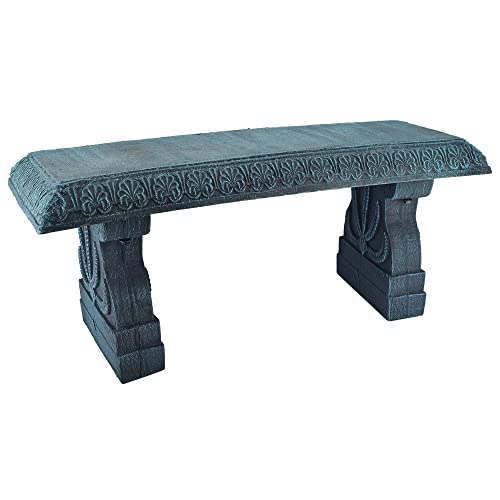
Decorative legs, curved armrests, and textured seat surfaces. These lean traditional or garden-classic and work beautifully along paths and flower borders.
Concrete & Wood Hybrids
A cast stone frame paired with timber slats. They soften the visual weight of concrete and stay comfortable in both cool and warm weather.
Architectural Modern Benches
Clean geometric forms, often with polished or acid-etched finishes. Designed as statement pieces for contemporary patios and courtyards.
Reinforced Public-Space Benches
Steel-reinforced cores built for high-traffic areas. Overbuilt for a private garden, but excellent where absolute durability matters.
Curved & Sculptural Designs
Custom-shaped seating that follows a wall, planter edge, or fire pit ring. These are usually specified rather than bought off the shelf.
The larger, heavier traditional forms are the direct cousin of the cement garden bench category, where ornamentation and permanence take priority over portability. If your space is more formal, start there; if it is casual and modern, the slab and hybrid styles above will feel more at home.
Material, Finish & Build Quality
Not all concrete is equal. The mix, the casting method, and the surface treatment determine whether a bench stays crisp for decades or develops cracks within a few seasons. When you compare options, look past the overall shape and focus on these fundamentals.
| Tier | Build & Material | Best For |
|---|---|---|
| Entry-level | Standard cast concrete, minimal reinforcement | Light residential use, sheltered patios |
| Mid-range | Reinforced concrete with sealed or stained finish | Garden paths, general backyard seating |
| Premium | High-density mix, acid-etched or polished surface | Design-led patios and courtyards |
| Commercial-grade | Steel-reinforced core, heavy-duty casting | Public spaces, windy or high-traffic sites |
Reinforcement is the single biggest durability factor. Benches with an internal steel or fiber core resist cracking far better than unreinforced cast pieces. Surface sealing is the second: a properly sealed bench resists moisture penetration and staining, which matters most in climates with freeze–thaw cycles. A textured or brushed finish also improves grip on the seat surface, which is easy to overlook until the first rainy morning.
Beyond the concrete itself, consider how the bench sits on the ground. Integrated feet, a recessed base, or a slight plinth all reduce moisture pooling and make the piece easier to level. If you want to understand how these benches interact with the surrounding hardscape, our notes on cement patio design pair naturally with this topic.
Cement Benches: Honest Pros and Cons
A buying decision is only as good as the trade-offs you understand. Here is the balanced picture.
Strengths
- Exceptional stability — will not blow over or shift in storms
- Long service life with very little upkeep
- Weather-resistant against rain, sun, and frost when sealed
- Natural stone-like look that suits gardens and formal patios
- Does not attract pests or rot like timber
- Provides a cool, solid seat in warm climates
Trade-offs
- Very heavy — relocation is a two-person job or more
- Can feel cold in cooler months without a cushion or pad
- Unsealed surfaces may stain or develop hairline cracks
- Requires a firm, level base to avoid stress points
- Limited adjustability once placed
The weight is the defining characteristic in both directions: it is why a cement bench stays put and why you should choose the position carefully before delivery. A soft cushion or a timber-slat hybrid solves the cold-seat concern, and periodic resealing handles most of the surface issues.
Where Cement Benches Work Best
Because these benches are effectively permanent once installed, placement deserves real thought. The following positions consistently make the most of their strengths.
- Garden paths and borders. A bench set slightly back from a walkway provides a natural pause point without blocking traffic. The solid base sits flush with gravel or stone edging.
- Beside raised planters. Positioning a bench against a planter wall creates a built-in look, and the greenery softens the concrete's visual weight.
- Under a pergola or arbor. The shade reduces heat buildup on the seat and gives the bench a defined, intentional home.
- At the edge of a fire pit area. For a permanent ring of seating, a heavy bench is ideal — nothing shifts when guests lean back or step away.
- Entryway and courtyard accents. A single architectural bench near a front door or gate doubles as a resting spot and a design statement.
If your patio is compact, a streamlined slab bench tucks neatly against a wall. If you are weighting a larger seating arrangement, our guide to choosing chairs for outside helps balance bench seating with loose chairs so the layout feels layered rather than static.
Maintenance: What Ownership Really Involves
The good news is that maintenance is light. The realistic version is that it is not zero. Here is a sensible routine that keeps a concrete bench looking its best.
Seasonal care checklist
- Rinse with a garden hose and a soft brush every few weeks during active use.
- Use a pH-neutral cleaner for organic stains; avoid harsh acids that etch the surface.
- Reapply a penetrating sealer every one to two years, or annually in freeze–thaw climates.
- Check the base after winter for frost heave and re-level if needed.
- Lift and inspect the feet once a year to prevent moisture trapping and moss buildup.
- Address hairline cracks early with a matching patch compound before they widen.
These steps take an afternoon at most. In return, a well-kept bench can remain part of the garden for decades — making it a long-term investment rather than a disposable purchase. If you want to combine it with softer seating elsewhere, a small ceramic garden stool works as a flexible side seat that does not compete with the bench's visual weight.
Cement vs. Other Bench Materials
It helps to see where concrete sits relative to the alternatives before you decide.
Versus timber: wood is warmer to the touch and easier to move, but it needs regular sealing or staining and is vulnerable to rot. Concrete wins on longevity and zero-fuss upkeep. Versus metal: metal is lighter and available in finer profiles, but it can dent and, on untreated models, rust. Concrete resists both. Versus composite: composite is a strong modern compromise — lighter and maintenance-friendly — but it can fade over time and rarely matches the solidity of a true concrete bench.
If you are furnishing a mixed outdoor space, it is also worth reviewing the broader comparison of composite outdoor furniture to see how hybrid materials stack up for the rest of your seating.
Before You Buy: Practical Checks
A short pre-purchase routine prevents most regrets with heavy outdoor pieces.
Pre-purchase checklist
- Measure the intended footprint and the path to it — the bench must fit through gates and doorways.
- Confirm the surface is level and firm enough to support a heavy load without settling.
- Check the seat height and depth against your own comfort; sit if possible before ordering.
- Verify whether the finish is pre-sealed, and ask how often resealing is recommended.
- Plan how the bench will be delivered and positioned — assume two or more people.
- For windy, exposed sites, choose a heavier or anchored design rather than a lightweight one.
If your layout includes a matching surface, the article on cement patio options will help you match the bench's tone and texture to the surrounding hardscape for a cohesive finish.
Frequently Asked Questions
Are cement benches suitable for year-round outdoor use?
Do cement benches crack easily?
How heavy is a typical cement bench?
Can I place a cement bench on a deck?
How do I keep a cement bench comfortable?
How often should I reseal a concrete bench?
Ready to Choose Your Cement Bench?
You now have the full picture: the main types, what separates a durable bench from a fragile one, where it works best, and the light maintenance routine that keeps it looking sharp. Browse our selected outdoor seating options below to find the right match for your space.
Explore Recommended Benches