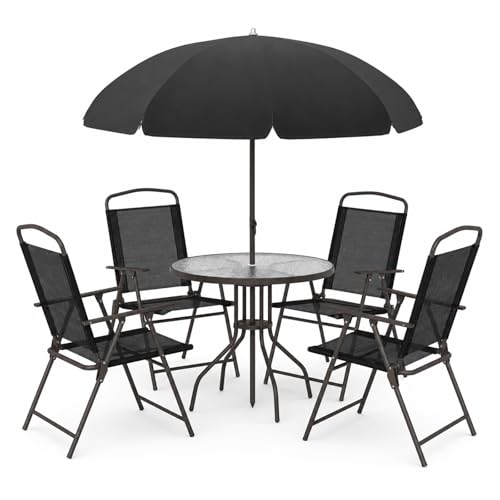
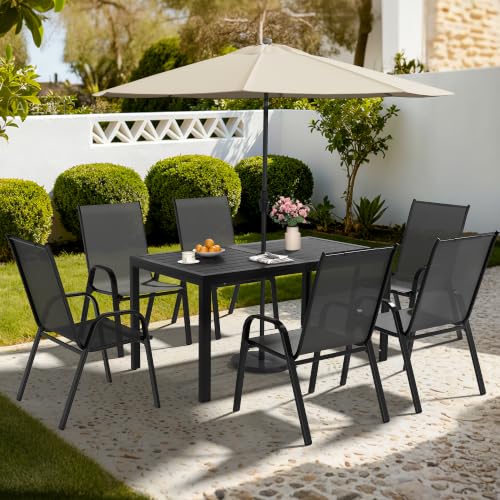
Outdoor Table and Chairs with Umbrella: A Practical Buying Guide
Everything you need to know before choosing an entry-level outdoor dining set with a built-in umbrella — from sizing and materials to stability and long-term care.
Who this guide is for: You already know you want a table-and-chairs set with an umbrella, but you are comparing options and want to make a confident decision. This guide covers the details that matter most — dimensions, frame construction, umbrella mechanics, and everyday usability — so you can choose a set that fits your space and holds up season after season.
Why a Table-and-Chairs Set with Umbrella Makes Sense
An outdoor dining set with a built-in umbrella solves two needs at once: a place to sit and eat, and dependable shade during sunny afternoons. Instead of pairing a separate table with a freestanding umbrella, an integrated set is designed so the umbrella passes through a pre-cut hole and is secured by the table itself. That single design decision simplifies your patio layout and keeps the umbrella centered over the seating area.
For homeowners furnishing a balcony, a small deck, or a first patio, these sets are often the most efficient starting point. They are compact, self-contained, and easy to arrange. If you are still mapping out your overall outdoor plan, our entry-level patio furniture overview explains how a dining set fits into a larger layout.
They are also a natural fit for casual entertaining. A four-person set handles family meals, weekend coffee, and small gatherings without demanding a large footprint. If you prefer a higher seating position for cocktails or casual bites, a high-top table and chairs set is worth considering as an alternative format.
Sizing: Match the Set to Your Space
Measure first, then shop. The most common mistake buyers make is choosing a set that technically fits but leaves no room to move. As a rule of thumb, allow roughly 24 inches of clearance on each side of the table so chairs can slide out comfortably and people can walk past.
Common configurations
- Two-person bistro sets: Best for balconies, small decks, and tight corners. Usually round or square with a slim umbrella.
- Four-person sets: The most versatile size for a standard patio. Round tables feel more conversational; square tables use corners efficiently.
- Six-person sets: Suited to larger decks or family use. Check that the umbrella canopy is wide enough to shade the full table.
If your space is genuinely tight, a dedicated compact patio table paired with stackable chairs can be more flexible than a fixed set. For narrow balconies, review our notes on balcony-appropriate chairs before committing to a table size.
Umbrella height and clearance
Umbrella poles typically run through a center hole, so the table height and pole length must match. Confirm that the umbrella's lower pole clears the table surface and that the canopy sits high enough for people to see each other across the table. A canopy that hangs too low becomes an obstacle rather than a comfort.
Materials: What to Expect at Each Tier
Rather than focusing on numbers, it helps to understand how outdoor dining sets are positioned in the market. The table below groups the main construction types by tier so you can compare like with like.
| Tier | Typical Construction | Best For |
|---|---|---|
| Entry-level | Powder-coated steel or aluminum frames, resin table tops, basic polyester umbrella fabric | First patio setups, seasonal use, balconies |
| Mid-range | Reinforced aluminum frames, thicker table tops, solution-dyed umbrella fabric, better locking mechanisms | Year-round use in mild climates, frequent entertaining |
| Premium | Heavy-duty frames, rust-proof finishes, high-grade canopy fabric with UV treatment, weighted bases | Sun-exposed patios, windy locations, long-term use |
| Commercial-grade | Welded steel or cast aluminum, industrial canopy hardware, reinforced joints | Cafés, rental properties, high-traffic settings |
At the entry level, look for a powder-coated finish and sealed joints. These two details do more for longevity than almost anything else in this category. If you want to understand how frame materials compare in more depth, our guide to composite and alternative outdoor materials covers the trade-offs clearly.
Practical tip: Aluminum frames are lighter and resist rust well; steel frames are heavier and feel more planted but require a sound coating to prevent corrosion. For windy spots, the extra weight of steel can be an advantage.
Features That Actually Matter
Umbrella locking mechanism
A crank-and-tilt system with a positive lock is easier to operate and holds the canopy steady. Avoid push-up umbrellas if you expect frequent height adjustments.
Table hole and collar
A reinforced collar around the umbrella hole prevents wobble and protects the table top from wear. Check that the hole size matches standard umbrella pole diameters.
Chair stackability
Stackable chairs simplify storage during off-season months and make cleaning the patio easier. This matters more than most buyers expect.
Weighted or fillable base
An umbrella is a sail. A fillable base or a heavy cross base keeps the set upright in breezy conditions and is especially important on elevated decks.
Weather-resistant canopy fabric
Solution-dyed fabrics hold color longer than surface-dyed alternatives. Fade resistance is the key indicator of canopy quality over time.
Floor protection
Plastic or rubber glides under the legs protect wood decks and prevent scratching on concrete and tile surfaces.
Stability and Wind: The Details Most Buyers Miss
An umbrella table set is only as good as its base. The combination of a large canopy and a lightweight table creates leverage in the wind, so stability deserves serious attention. Three things make the biggest difference:
- A weighted base. Fillable bases add mass exactly where it is needed. On exposed decks, this is not optional.
- A secure table connection. The umbrella should lock into the table rather than rest loosely in the hole.
- Good habits. Close the umbrella when not in use and during gusty weather. Most umbrella damage happens when a set is left open unattended.
If your patio is particularly exposed, it is worth reading our comparison of wind-resistant umbrella designs, which explains vented canopies and reinforced ribs in plain terms.
Comfort and Everyday Use
Dining sets are used more often than most people anticipate — morning coffee, laptop work, kids' snacks, evening meals. Comfort details matter accordingly. Look for chairs with a contoured seat, a comfortable seat height relative to the table, and armrests if you plan to linger. If you intend to add cushions, confirm that the seat dimensions match common cushion sizes; our guide to cushion sets for outdoor chairs covers sizing and materials.
For households that mix dining and lounging, it is worth knowing that a dining set is not the only option. A chairs and benches combination can work well for casual seating, while a simple chair pairing keeps things flexible if you plan to add a separate lounging area later.
Care and Longevity
An entry-level set can last many seasons with basic care. The routine is simple:
- Wipe the table and frames with mild soap and water; avoid abrasive cleaners on coated surfaces.
- Store cushions indoors when not in use to prevent mildew and fading.
- Close or remove the umbrella during storms and store it during the off-season.
- Use a fitted cover if the set stays outside through winter.
- Touch up any scratches on coated metal promptly to prevent corrosion from spreading.
For a broader seasonal maintenance routine, our weatherproofing guide walks through protection strategies for frames, fabric, and hardware.
How This Set Fits Into a Larger Patio Plan
A dining set is usually the anchor of an outdoor space, but it works best when paired with complementary pieces. A small side table, a shade sail, or a compact seating corner can round out the layout without crowding it. If you are furnishing a first patio from scratch, start with the dining set and build outward — our entry-level outdoor furniture guide outlines a sensible order of purchase.
If you are comparing this format against other table options, the general table-and-chairs guide explains when an umbrella-integrated set is the better choice and when a separate umbrella is more flexible.
Ready to Compare Sets?
Browse curated options that match the criteria in this guide — stable bases, weather-resistant frames, and practical umbrella mechanisms.
View Recommended SetsFrequently Asked Questions
What size outdoor table and chairs with umbrella is best for a small patio?
A compact round or square table seating two to four people works well for small patios. Measure your available space carefully and allow at least 24 inches of clearance around the table for chairs to pull out comfortably.
How do I keep an umbrella table set stable in wind?
Choose a table with a sturdy base and a locking umbrella mechanism. Use a weighted or water-filled base, and close the umbrella when winds pick up or when the set is not in use.
Which materials are best for an entry-level outdoor dining set?
Powder-coated steel and aluminum frames with weather-resistant finishes offer a solid balance of durability and weight. Resin and high-density polyethylene are also practical for their resistance to moisture and fading.
Can I leave my outdoor table and chairs with umbrella outside all year?
Many entry-level sets are weather-resistant but not fully weatherproof. Use a fitted cover during harsh seasons, store cushions indoors, and close or remove the umbrella during storms to extend the life of your set.