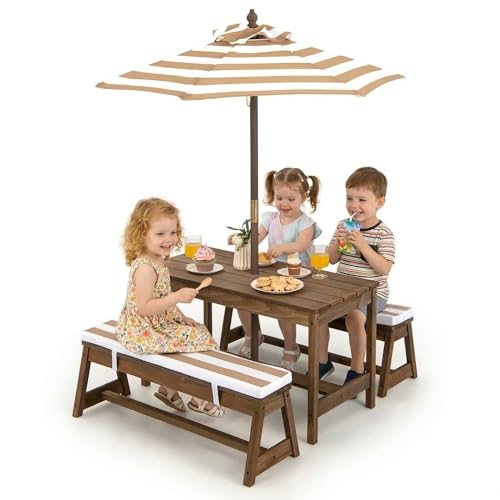
Children's Outdoor Table and Chairs: The Complete Buying Guide
Everything parents need to know before choosing a kids' patio set — materials, safety, sizing, durability, and design — so you can pick a children's outdoor table and chairs that will last for years of backyard play.
START WITH MATERIALSWhy a Dedicated Children's Outdoor Table and Chairs Matters
Adults' patio furniture is rarely built for small bodies. Standard dining chairs leave young children with dangling feet, unstable balance, and a tempting urge to climb. A properly scaled children's outdoor table and chairs set solves all of that at once: it gives kids a surface at the right height, chairs they can push back from safely, and a defined "their own" zone in the garden that encourages independent play, crafts, snacks, and outdoor meals.
Beyond ergonomics, a dedicated kids' set protects your main patio investment. Crayons, playdough, juice spills, and enthusiastic art projects all happen on the child-sized table instead of your dining set. Parents who already own grown-up outdoor furniture often pair a kids' set with a full children's garden furniture collection so the whole family has a coordinated outdoor space.
The category has also matured. Today you can find everything from a simple children's picnic table for the lawn to a full children's outdoor table and chairs set in premium materials that mirror adult designs. That range makes it easier than ever to match your existing patio style while keeping proportions child-friendly.
Materials Compared: What Should a Kids' Outdoor Set Be Made Of?
Material choice is the single biggest factor in how a set holds up to sun, rain, and energetic toddlers. We use one consistent tier system throughout this guide — entry-level, mid-range, premium, and luxury — to describe market positioning rather than any figure. Here is how the main materials stack up.
Resin and High-Density Polyethylene (HDPE)
Resin is the workhorse of the category. HDPE is UV-stabilized, resists moisture completely, will not splinter, and cleans with a garden hose. Entry-level resin sets are lightweight and stackable; mid-range HDPE sets use thicker walls and molded reinforcement for stiffness. The material is effectively weatherproof, though very light entry-level pieces can blow over in strong wind, so look for weighted legs or hollow-fill channels on mid-range and premium models.
Powder-Coated Steel
Steel frames give a set a solid, planted feel and a more grown-up silhouette. The critical detail is the finish: a rust-proof powder coat with sealed joints is what separates a durable set from one that starts flaking after a season. Mid-range steel sets usually add plastic or rubber foot caps to protect the coating. Steel is heavier than resin, which helps stability, but it should be dried and stored during harsh winters to preserve the coating.
Wood (Cedar, Pine, and Treated Timber)
Wooden sets have a warm, natural look that suits cottage and farmhouse gardens. Cedar is naturally rot-resistant and a strong premium option; treated pine is the classic mid-range choice for picnic-style tables. The key requirement is a weather-resistant coating and re-sealing every season or two. Wood can splinter if it dries out, so check for sanded, rounded edges and use a quality sealant. A well-maintained children's wooden picnic table can last for many years and even be repainted as tastes change.
Composite and Recycled Plastic Lumber
Composite blends wood fibers with plastic, giving the look of timber without the splinter risk. Premium composite sets are heavy-duty, dimensionally stable, and hold color well. They are heavier and typically positioned as a long-term investment, which is why they sit at the premium and luxury end of the market.
Aluminum
Aluminum is lightweight, will not rust, and suits coastal gardens. It is usually found in mid-range and premium sets with sling or mesh seats. Because it is light, check that chairs have non-slip feet and that the table has a stable base or umbrella-compatible weighted center.
| Material | Typical Tier | Weather Resistance | Best For |
|---|---|---|---|
| Resin / HDPE | Entry-level to mid-range | Excellent — fully waterproof, UV-stabilized | All-round family gardens, easy cleaning |
| Powder-coated steel | Mid-range to premium | Very good with rust-proof finish | Stable, grown-up styling, patios |
| Cedar / treated pine | Mid-range to premium | Good with seasonal sealing | Natural look, cottage and farmhouse gardens |
| Composite | Premium to luxury | Excellent — dimensionally stable, no splinters | Long-term investment, busy family use |
| Aluminum | Mid-range to premium | Excellent — rust-proof | Coastal gardens, lightweight portability |
Sizing and Age Fit: Getting the Proportions Right
A children's outdoor table and chairs set only works if it fits the child. The general rule is that when seated, a child's feet should rest flat on the ground and their knees should bend at roughly a right angle with thighs roughly parallel to the floor. If feet dangle, the chair is too tall; if knees press against the tabletop, it is too short.
As a practical reference, toddler-height sets are designed for roughly ages two to four, standard kids' sets suit roughly ages four to eight, and junior or "big kid" sets bridge the gap toward adult furniture. Growth spurts vary widely, so measure your child rather than relying on age labels alone.
Measuring Before You Choose
- Measure the child's lower-leg length from the floor to the back of the knee while seated — this is the ideal seat height.
- Measure from the floor to the underside of the elbow while seated — the tabletop should sit slightly below this line.
- Check the table's footprint against your patio or lawn space, leaving at least 60 cm of clearance around the set for chairs to pull out.
- If the set will host multiple children, choose the size that fits the oldest regular user; younger siblings can use a booster cushion.
Number of Seats
Two-seat sets are ideal for siblings or one child plus a parent. Four-seat sets suit playdates and family snacks. A round children's folding picnic table with attached benches is a smart space-saver because the seating is fixed and nothing needs to be pulled out. For balcony or compact patio families, a simple children's garden chairs pair plus a small table can be more flexible than one large unit.
Safety Features to Check Before You Buy
Children's outdoor furniture is used hard, so safety details matter as much as looks. Run through this list before committing to any set:
- Rounded edges and corners. Look for sanded or molded radii on tabletops, chair backs, and armrests. Avoid sharp metal tabs or exposed bolts.
- Stable, wide base. Chairs should have a footprint that resists tipping when a child leans back. Sled-style or splayed legs are generally more stable than narrow four-post designs.
- No pinch points. Folding sets must have locking hinges that cannot collapse on small fingers. Test the mechanism before first use and check it periodically.
- Non-slip feet. Rubber or plastic caps protect both the child and your patio surface, and prevent chairs sliding on wet decking.
- Weatherproof fasteners. Stainless or coated hardware resists rust, which prevents weakened joints over time.
- Age-appropriate weight rating. Respect the manufacturer's stated capacity — overloading is the most common cause of structural failure.
- Umbrella stability. If the table accepts a parasol, confirm it has a weighted base or a cross-brace that prevents tipping in wind. A children's wooden picnic table with umbrella is a popular choice for sun protection, but only if the base is properly weighted.
Styles and Configurations
Once material and size are settled, the fun part is styling. The right configuration depends on how your family uses the garden.
Classic Table-and-Chair Sets
The most versatile option: a separate table with two to four chairs that can be rearranged for crafts, snacks, or tea parties. If your children like to move furniture around, prefer a lighter children's plastic outdoor table and chairs set that is easy to reposition and hose down.
Picnic Tables with Attached Benches
Attached seating means nothing to pull out and nothing to tip over, which makes picnic-style sets ideal for lawns and play areas. They also double as a sturdy platform for outdoor art and sandbox-adjacent activities. A children's picnic table is a classic first "big kid" piece of furniture.
Lounge and Swing Additions
If your garden is a relaxation zone, consider adding a children's outdoor swing or a children's lounger alongside the table. A children's swing chair pairs well with a small side table for a shaded reading corner.
Space-Saving and Portable Options
Small patios and balconies benefit from folding or stackable designs. A children's folding picnic table can be stored flat when not in use, and a set of children's outdoor chairs that nest together keeps the footprint tiny.
Matching Your Existing Patio
If your adult furniture follows a specific style, echo it in miniature. A coastal patio theme pairs well with white resin or aluminum kids' sets, while a natural garden look suits cedar and composite. Coordinating color and material across adult and child furniture makes the space feel intentional rather than cluttered.
Care and Longevity: Making the Set Last
A children's outdoor table and chairs set faces sun, rain, spills, and constant use. A little routine care dramatically extends its life:
- Weekly wipe-down. Use mild soap and water on resin, steel, and composite surfaces. Avoid abrasive pads that dull finishes.
- Seasonal deep clean. Scrub joints and crevices where dirt collects, then dry thoroughly before storage.
- Wood maintenance. Re-seal cedar and pine every season or two, and sand any rough spots immediately to prevent splinters.
- Steel inspection. Touch up any chips in the powder coat with a matching touch-up paint to stop rust before it starts.
- Winter storage. If possible, move lightweight resin and aluminum sets indoors or under cover during harsh winters. Heavy-duty composite and cedar sets can stay outside but benefit from a breathable cover.
- Hardware check. Tighten bolts and test folding locks at the start of every season.
Good maintenance also protects resale or hand-me-down value — a well-kept set can be passed to younger siblings or friends rather than replaced, which makes a quality set an efficient long-term investment.
Final Buying Checklist
Before you commit, confirm every point on this list:
- The seat height lets your child sit with feet flat and knees at a comfortable angle.
- The tabletop sits just below seated elbow height.
- The footprint fits your patio or lawn with 60 cm clearance for chairs.
- Material is appropriate for your climate — resin or composite for wet climates, cedar or aluminum for coastal gardens, steel for high-stability needs.
- All edges and corners are rounded or sanded.
- Feet are non-slip and finish is rust-proof or weather-resistant.
- Folding mechanisms (if any) lock securely with no pinch points.
- The set carries a clear age and weight rating.
- Umbrella bases, if included, are weighted and stable.
- Assembly instructions are clear and hardware is rust-resistant.
Ready to Choose Your Child's Outdoor Set?
Use the checklist above, then explore our recommended children's outdoor table and chairs options below to compare features and find the right fit for your family.
VIEW RECOMMENDED SETSFrequently Asked Questions
What material is best for a children's outdoor table and chairs?
Weather-resistant resin and high-density polyethylene are excellent all-round choices because they resist moisture, UV fading, and cracking. Powder-coated steel offers heavy-duty strength and stability, while cedar and treated wood provide a natural look with proper seasonal sealing. Composite is the premium choice for splinter-free durability.
How do I choose the right size table and chairs for my child?
Match table height to your child's seated measurements: feet should rest flat on the floor and knees should bend at roughly a right angle. Toddler-height sets generally suit ages two to four, standard kids' sets suit ages four to eight, and junior sets bridge toward adult sizes. Measure your child rather than relying on age labels.
Are children's outdoor table and chair sets safe in bad weather?
Resin, HDPE, composite, and aluminum sets handle rain and sun very well. Steel needs a high-grade powder coat and should be dried before winter storage. Wooden sets require re-sealing every season or two. Always check that hardware is rust-resistant and that the set has non-slip feet.
Can a kids' patio set stay outside all year?
Many resin, composite, and cedar sets can stay outside year-round with a breathable cover. Lightweight resin and aluminum sets are best moved under cover during storms or harsh winters. Steel and wood benefit most from seasonal protection to preserve their finish.
How many chairs should I get?
Two chairs suit siblings or parent-and-child use. Four chairs are better for playdates and family snacks. If space is limited, a folding picnic table with attached benches gives four seats without needing to pull out separate chairs.