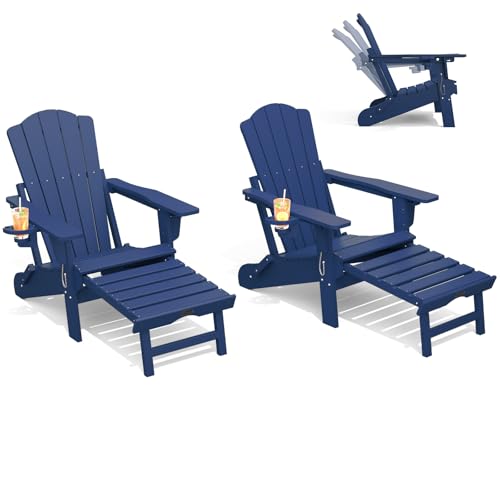
Composite Adirondack Chairs With Footrest: Comfort Meets All-Weather Durability
Everything you need to know before choosing a composite Adirondack chair with an integrated footrest — from material science and ergonomics to sizing, maintenance, and matching a chair to your patio lifestyle.
Explore the Buying FactorsWhy this guide exists: If you have already decided that an Adirondack silhouette fits your outdoor space, the next decision is subtler than it looks. Composite Adirondack chairs with footrests combine two design choices — the material and the recline-and-rest configuration — that affect comfort, longevity, and how the chair lives on your patio season after season. This guide walks through those decisions in the order that matters for a confident purchase.
What Makes a Composite Adirondack Chair Different
The classic Adirondack chair has been a backyard staple for generations, prized for its deep seat, wide armrests, and gently reclined back. A composite Adirondack chair keeps that familiar profile but swaps traditional timber for a manufactured material — typically a blend of high-density polyethylene and wood fiber, molded or extruded into boards and slats. The result is a chair that looks like painted or stained wood but behaves much more like a modern engineered product.
Compared with solid wood, composite construction resists moisture absorption, splintering, and the cycle of swelling and shrinking that shortens the life of untreated timber outdoors. Compared with basic resin or plastic chairs, composite boards are denser and heavier, which gives the chair a more substantial feel and reduces the "lightweight patio chair" wobble that many buyers notice immediately. If you are comparing this material family against alternatives, our overview of composite outdoor furniture explains where the material fits in the broader market and which pieces benefit most from it.
The footrest is the second defining feature. On a standard Adirondack chair, the deep seat and reclined back mean your legs extend forward — comfortable for lounging but not always ideal for long reading sessions or for guests who prefer their feet supported. An integrated footrest solves that by extending the chair's footprint forward, either as a built-in extension of the front rail or as an attached pull-out section. The effect is a chair that behaves more like a lounger without abandoning the Adirondack look.
The Composite Material: What You Are Actually Buying
Composite outdoor furniture is not a single recipe. Understanding the main variations helps you read product descriptions with more confidence and set realistic expectations for how the chair will age.
Wood-Plastic Composite (WPC)
WPC blends wood flour or fiber with a polymer binder, usually polyethylene. It offers a warm, wood-like appearance and a slightly textured surface that feels natural underfoot and underhand. High-quality WPC boards are dense, color-through, and formulated with UV stabilizers to slow fading. Lower-grade WPC can be more porous and may show surface blooming over time if not maintained. For buyers who want the visual warmth of wood without the annual sealing routine, WPC is usually the right starting point.
High-Density Polyethylene (HDPE)
HDPE is the workhorse polymer behind many premium composite chairs. It is naturally water-resistant, does not absorb moisture, and holds color well when pigmented throughout. HDPE chairs tend to have a cleaner, more uniform surface than WPC and are often marketed as "all-weather" or "marine-grade." The trade-off is that pure HDPE can feel more plasticky than a wood-composite blend, which matters if you care about matching the chair to natural timber elements elsewhere on your patio.
Recycled and Eco-Certified Composites
Many composite chairs now incorporate recycled plastic content, and some carry certifications for recycled material percentage or low-emission manufacturing. These are meaningful signals for buyers who want a more sustainable outdoor purchase. If sustainability is a priority alongside durability, browse our sustainable materials guide for a broader look at how recycled and responsibly sourced outdoor products compare.
What to look for in the spec sheet: color-through pigmentation (not painted-on color), UV-stabilized formulation, stainless-steel or coated hardware, and a stated warranty period on the frame and finish. These four details tell you more about real-world durability than any marketing adjective.
Why the Footrest Matters More Than You Think
The footrest is often treated as a minor add-on, but on an Adirondack chair it changes the entire seating experience. Because the Adirondack back is reclined and the seat is deep, your legs naturally extend forward and your heels often drop below the front edge of the seat. Without support, that position can put pressure behind the knees and leave your feet dangling — fine for a short sit, less pleasant for an afternoon of reading or conversation.
Built-In Versus Attached Footrests
There are two common approaches. A built-in footrest is molded or assembled as part of the chair's frame, extending the front rail forward into a solid platform. These tend to be the most stable and the most visually integrated — the chair reads as a single piece. An attached or pull-out footrest is a separate section that slides or hinges out from under the seat. These offer flexibility (you can stow the footrest when space is tight) but introduce more moving parts and hinges that deserve a closer look at build quality.
Ergonomics of the Recline-and-Rest Position
A well-designed footrest should raise your feet to roughly the height of your hips when seated, or slightly below, so your knees stay gently bent rather than locked straight. If the footrest platform is too low, your legs hang and the support is largely cosmetic. If it is too high, the chair starts to feel like a recliner and can be awkward to get in and out of. When reading product descriptions, look for footrest height or a stated "extended lounging" configuration rather than assuming every footrest is the same.
The Buying Factors That Actually Matter
Product listings for composite Adirondack chairs can run to dozens of bullet points. The following factors are the ones that reliably separate a chair you will keep for a decade from one you will replace in two seasons.
Board Thickness
Thicker composite boards resist flexing and sagging under repeated use. Heavier chairs with substantial boards generally feel more stable, especially on uneven patio surfaces.
Hardware Quality
Stainless-steel or coated fasteners are the difference between a chair that stays tight for years and one that loosens and rusts at the joints after a few wet seasons.
Footrest Mechanism
Built-in platforms are the most durable; pull-out footrests should have smooth tracks, reinforced stops, and minimal play when fully extended.
Weight Capacity
Composite chairs vary widely in rated capacity. Check the manufacturer's stated limit against the people who will actually use the chair, not just the average.
Assembly Complexity
Most composite chairs ship flat-packed. Count the parts, check whether tools are included, and read assembly reviews — a chair that wobbles after assembly is usually an assembly or hardware issue.
Finish and Color
Color-through boards hide scratches far better than surface-painted ones. Neutral earth tones tend to age more gracefully than saturated colors that can fade unevenly.
Market Tiers: Matching the Chair to Your Priorities
Composite Adirondack chairs with footrests sit across a range of market positions. Rather than describing them by numeric figures, it helps to think in tiers — each tier reflects a different balance of material density, hardware quality, finish durability, and design detail.
| Tier | Best For | Typical Characteristics |
|---|---|---|
| Entry-Level | Seasonal use, occasional seating, first patio setup | Lighter boards, simpler hardware, basic color options, straightforward footrest design |
| Mid-Range | Year-round patios, daily use, family households | Denser composite boards, stainless hardware, better UV stabilization, integrated or reinforced footrest |
| Premium | Design-led patios, long-term outdoor living, matching furniture sets | Color-through material, refined detailing, marine-grade hardware, precision-molded footrest with minimal play |
| Luxury | Architectural outdoor spaces, hospitality-grade expectations | Commercial-grade composite, custom finishes, exceptional joinery, extended warranty coverage |
Within any tier, the footrest configuration is worth scrutinizing separately. A mid-range chair with a well-engineered built-in footrest will often deliver a better lounging experience than a premium chair with a loose pull-out mechanism. If you are also considering chairs without footrests for a separate seating zone, our guide to composite Adirondack chairs covers the standard configuration in more depth.
Comfort, Sizing, and Ergonomics
Adirondack chairs are not one-size-fits-all, and composite construction does not change that. Seat height, seat depth, armrest height, and back angle all interact to determine whether the chair suits a given person.
Seat Height and Getting In and Out
Traditional Adirondack chairs sit low, which contributes to their relaxed posture but can be a challenge for guests with limited mobility. Composite chairs are sometimes built slightly higher than their timber counterparts because the material allows for thinner, stronger structural rails. If easy entry and exit matters for your household, look for models that explicitly advertise a higher seat position or a front rail designed as a step.
Seat Depth and the Footrest Relationship
A deep seat plus a footrest creates the most lounge-like experience, but it also means the chair occupies more patio depth. Measure the footprint of the chair with the footrest deployed, not just the closed or standard configuration. On a compact balcony, that extra depth can be the difference between a comfortable chair and one you have to shuffle around every time you want to walk past. If depth is constrained, our guide to comfy outdoor chairs for small spaces explores seating that fits tighter footprints.
Armrests and Cup Holders
Wide, flat armrests are part of the Adirondack charm and are useful for resting a book or a drink. Some composite models add molded cup holders or a small recessed tray. These details are convenient, but they can also collect rainwater — check whether the recesses have drainage or whether you will need to tip the chair after a storm. For buyers who prioritize drink-friendly seating, our look at composite Adirondack chairs with cup holders covers that configuration in detail.
Durability, Weather Resistance, and Maintenance
The main practical reason to choose composite over wood is reduced maintenance. That does not mean zero maintenance. Understanding what composite needs — and what it does not need — helps you protect the investment.
What Composite Handles Well
- Rain and humidity: Composite does not absorb water the way untreated wood does, so it resists rot, mold, and warping far better in wet climates.
- UV exposure: Quality composites are UV-stabilized to slow fading. Color-through boards fade more evenly than surface-painted ones.
- Insects: Composite is not a food source for termites or wood-boring insects, which is a meaningful advantage in many regions.
- Splinters and cracking: The material does not splinter, and it resists the checking and cracking that solid timber develops over time.
What Composite Still Needs
- Regular cleaning: A mild soap-and-water wash removes pollen, dust, and bird droppings. Avoid abrasive pads that can dull the finish.
- Hardware checks: Even stainless fasteners benefit from an annual check for tightness, especially on pull-out footrest mechanisms.
- Winter considerations: Composite is heavy and stable, but if you live in a region with heavy snow load, storing chairs or covering them reduces long-term stress on joints.
Maintenance reality check: Composite chairs do not need annual sealing or staining, which is their biggest practical advantage over timber. They do benefit from a seasonal clean and a quick hardware inspection. Treat the chair like a piece of outdoor equipment rather than a disposable item, and it will hold up well for many seasons.
If you are building out a full composite seating area, pairing these chairs with a matching table is a common next step — our guide to a composite outdoor high-top table and chairs set explains how to coordinate heights and finishes. For buyers weighing composite against classic timber options, the comparison between composite Adirondack chairs and their cedar counterparts is a useful reference point.
Placement Ideas for Footrest Adirondack Chairs
A chair with a footrest is, by design, a chair you settle into rather than perch on. That changes where it makes sense to place it.
Fire Pit Lounging
The extended footprint and reclined posture make these chairs natural companions for a fire pit, where the goal is long, slow evenings rather than quick meals. Position them at a comfortable distance from the pit so the footrest does not crowd the heat source, and leave enough walkway between chairs for guests to move safely in low light. Our guide to chairs for a fire pit covers spacing and heat considerations in more detail.
Poolside and Deck Edges
Composite chairs handle splash and humidity well, which makes them a sensible choice near water. A footrest chair placed at the edge of a deck creates a natural lounging spot for drying off or watching the pool. Just confirm the chair's footprint leaves room for the footrest without hanging over an edge.
Reading Corners and Quiet Zones
The recline-and-rest position is ideal for a shaded reading corner. A chair with a footrest and a small side table is a complete setup for an afternoon with a book. If you are designing a dedicated relaxation area, our ideas for an outdoor reading nook can help you build around the chair rather than treating it as a standalone purchase.
Common Mistakes to Avoid
- Ignoring the deployed footprint: Measuring the chair only in its closed or standard position leads to cramped patios once the footrest is extended.
- Assuming all composites are equal: Board density, pigmentation method, and hardware quality vary widely. Read the specification, not just the photos.
- Overlooking assembly reviews: A chair that arrives with unclear instructions or mismatched parts is a frustrating purchase regardless of material quality.
- Skipping the hardware check: Pull-out footrests rely on tracks and stops. Inspect these on arrival and tighten fasteners periodically.
- Buying a single chair for a shared space: Adirondack chairs are social seating. If the patio is used by more than one person, plan the number of chairs before committing to a model.
Frequently Asked Questions
Are composite Adirondack chairs heavy enough to stay put in wind?
Composite chairs are generally heavier than resin or basic plastic chairs, which helps stability on windy days. However, an Adirondack profile catches wind, so in exposed locations it is still wise to secure chairs or store them during storms. A chair with a built-in footrest has a longer footprint, which can improve stability but also increases the surface that wind can catch.
Do composite chairs fade in direct sun?
Quality composites are UV-stabilized, and color-through boards fade more evenly than surface-painted ones. Some gradual lightening over many seasons is normal for any outdoor material. Choosing a neutral or earth-tone finish makes any change less noticeable and easier to live with over time.
Is a built-in footrest better than a pull-out footrest?
Built-in footrests are typically more stable and have fewer parts that can wear out. Pull-out footrests offer flexibility for tighter spaces. If the chair will be used daily and left in place, a built-in design is usually the more durable choice; if the patio doubles as a walkway, a pull-out or stowable design may be more practical.
Can composite Adirondack chairs be left outside all year?
Yes, composite is designed for outdoor exposure and resists moisture, rot, and insects far better than untreated wood. In regions with heavy snow or prolonged freezing, covering or storing the chair during the off-season reduces long-term stress on joints and hardware, even though the material itself tolerates the cold.
How many chairs should I plan for a typical patio?
Adirondack chairs are wide and, with a footrest, deep. A comfortable conversational grouping usually works best with two to four chairs arranged around a focal point such as a fire pit or a low table. Measure the deployed footprint of one chair, then map out spacing before deciding on quantity.
Final Checklist Before You Choose
Before committing to a composite Adirondack chair with a footrest, run through these checks:
- Measure the deployed footprint — chair depth with the footrest extended, not just in its standard position.
- Confirm the material specification — color-through composite, UV stabilization, and the type of composite (WPC or HDPE).
- Check hardware and footrest mechanism — stainless or coated fasteners, reinforced stops on pull-out designs.
- Review assembly requirements — number of parts, tools included, and whether assembly reviews are positive.
- Match the tier to your use case — seasonal versus year-round, occasional versus daily seating.
- Plan the surrounding setup — a side table, matching chairs, and enough walkway for safe movement.
When those details line up, a composite Adirondack chair with a footrest becomes one of the most comfortable and low-maintenance seats on the patio — a piece you can leave out through the seasons and settle into without a second thought.