Composite Outdoor High Top Table and Chairs: The Complete Buyer's Guide
Thinking about a bar-height composite set for your patio, deck, or balcony? This guide walks you through materials, sizing, durability, styling, and the practical details that help you choose the right set with confidence.
Why this guide matters: A composite outdoor high top table and chairs set blends the natural look of wood with the weather resistance of modern polymers. It is a popular choice for homeowners who want a relaxed, pub-style gathering spot without the upkeep of solid timber. Below, we break down what composite really means, how to match table and chair heights, which tiers suit which buyers, and how to care for the set so it stays presentable for years.
What Is a Composite High Top Patio Set?
A composite outdoor high top table and chairs set is built from composite material — a manufactured blend of wood fibers, plastic polymers, and color pigments. The result is a board or panel that mimics the grain and texture of timber while resisting moisture, rot, insects, and many of the seasonal problems that affect natural wood. Because the material is molded rather than sawn, manufacturers can shape it into slats, panels, and curved profiles that hold their form in changing weather.
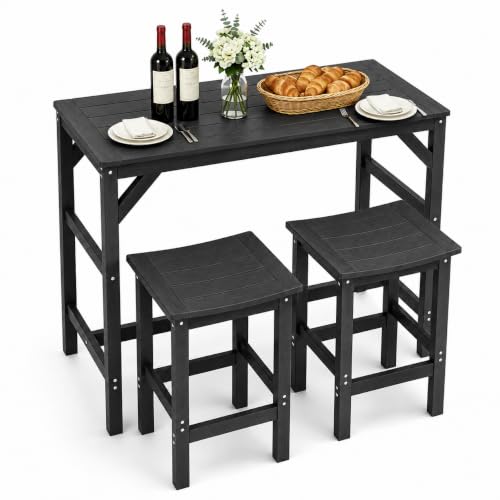
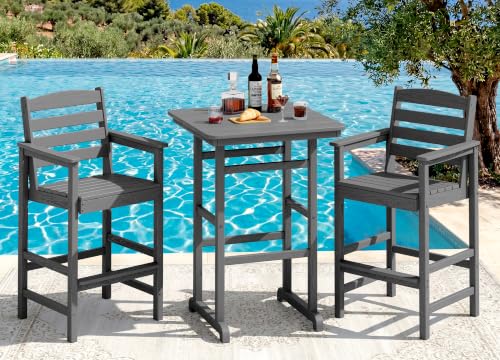
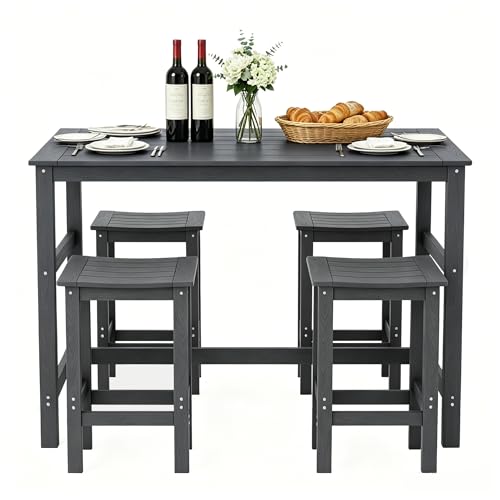
The "high top" part refers to the table's height. Instead of the standard dining height, a high top table stands taller so that seated guests are closer to eye level with standing friends — a layout borrowed from pub and bistro design. This makes the set especially useful for casual entertaining, morning coffee, evening drinks, and small-space patios where a conventional dining table would feel bulky.
If you are still weighing composite against other materials, our overview of composite outdoor furniture explains how the material compares with wood, metal, and resin across durability and maintenance.
How Composite Material Is Made
Understanding construction helps you judge quality when you shop. Most patio-grade composite falls into one of three broad recipes:
- Wood-plastic composite (WPC): Wood flour or fibers are blended with polyethylene or polypropylene. This is the most common recipe for patio furniture because it balances a natural feel with strong moisture resistance.
- Capped composite: A core board is wrapped in a protective polymer shell. The cap improves stain resistance, color stability, and scratch resistance compared with uncapped boards.
- Polymer-heavy composite: Higher plastic content with less wood fiber. These boards tend to be more uniform in color and very resistant to moisture, though they may feel less like natural timber.
Entry-level sets often use uncapped WPC with simpler joinery, while mid-range and premium sets more frequently use capped boards, reinforced frames, and stainless or coated hardware. For a broader look at how these construction choices play out in seating, see our guide to composite Adirondack chairs, which covers the same material in a different furniture form.
Why Homeowners Choose Composite High Top Sets
There are several practical reasons this category has grown in popularity:
- Low maintenance: No annual sealing, staining, or oiling is required. A routine wash with mild soap and water is usually enough.
- Weather resistance: Composite handles rain, humidity, and temperature swings better than untreated wood, and it will not rot or attract termites.
- Consistent appearance: Because the material is manufactured, color and grain are uniform across boards — no knots, splits, or warping to work around.
- Comfortable height: The bar-height layout encourages conversation and works well for drinks, snacks, and light meals rather than formal dining.
- Space efficiency: A compact high top set can fit on a balcony, small deck, or narrow patio where a full dining table would not.
Composite is not the only option, of course. If you want to compare bar-height sets across materials, our page on outdoor high top table and chairs covers the broader category, while the chairs for outside guide helps you match seating to the table you choose.
Sizing: Matching Table Height, Chair Height, and Space
The most common mistake buyers make is mixing bar-height tables with standard-height chairs, or the reverse. Use this as a starting checklist:
- Standard dining height: Table around 28 to 30 inches, seat height around 17 to 19 inches.
- Counter height: Table around 34 to 36 inches, seat height around 24 to 26 inches.
- Bar height: Table around 40 to 42 inches, seat height around 28 to 30 inches.
The gap between the seat and the underside of the table should leave enough room for your legs to rest comfortably — roughly 10 to 12 inches of clearance. Always check the manufacturer's stated seat height for the chairs included in a set, because "high top" is sometimes used loosely and can refer to counter height rather than true bar height.
Measuring your patio or balcony
Leave at least 24 to 30 inches of clearance around the table so chairs can be pulled out and guests can walk past. For a four-seat high top set, a footprint of roughly 60 by 60 inches including chair pull-out is a reasonable working target, but the exact figure depends on the chair depth. Round or square tables suit tight spaces, while rectangular tables are better for narrow decks where you want to seat guests along one side.
Practical tip: check the umbrella hole
If you plan to add shade, confirm whether the table has a pre-drilled umbrella hole and a base-compatible frame. A high top table with an umbrella is an excellent way to keep the set usable through midday sun, but the base and canopy need to be sized for bar-height use.
Quality Tiers: What Separates Entry-Level from Premium
Composite sets vary widely in construction. Rather than quoting figures, here is how the tiers typically differ in the details that matter:
| Tier | Construction & Materials | Best For |
|---|---|---|
| Entry-level | Uncapped WPC boards, simpler joinery, lighter frames, basic hardware | Seasonal use, covered patios, buyers testing the bar-height layout for the first time |
| Mid-range | Capped composite on key surfaces, reinforced frames, better fasteners, more consistent color | Year-round patios with some direct sun and rain, families wanting a dependable set |
| Premium | Fully capped boards, heavy-duty frames, stainless or coated hardware, refined finishes and joinery | Exposed decks and coastal conditions, buyers who want a long-term investment |
| High-end tier | Commercial-grade construction, thicker profiles, precision hardware, extensive color and profile options | Hospitality-style setups, large entertaining areas, maximum longevity expectations |
A mid-range set usually offers the most balanced package for typical residential use: it is well-specified for the category without moving into the higher tiers. If your patio is fully covered, an entry-level set can be a sensible starting point. If the set will sit in full sun and rain, the premium and high-end tier options are the better long-term investment.
Care and Maintenance for Composite Sets
One of the biggest advantages of composite is that maintenance is straightforward. Follow these habits and the set will stay presentable:
- Routine cleaning: Wipe down surfaces with mild soap and water using a soft brush or cloth. Avoid abrasive pads that can dull capped finishes.
- Stain response: Address spills quickly, especially oils, wine, and sauces. For stubborn marks on capped composite, a soft-bristle brush with a gentle household cleaner is usually enough.
- Seasonal check: Inspect fasteners and frame joints at the start of each season. Tighten loose bolts and replace any hardware showing corrosion.
- Winter care: In cold climates, clean the set before storage and cover it with a breathable furniture cover. Remove standing water from table surfaces to prevent freeze-related stress on joints.
- Umbrella and cushion care: Store fabric items dry and bring cushions inside during heavy rain to extend their life. For deeper care guidance, see our weatherproofing guide.
If you are also planning seating elsewhere on the patio, the comfortable patio chairs guide covers how cushioning and profile affect long-term comfort, and chairs for fire pit layouts can help you coordinate a second seating zone.
Styling a Composite High Top Set
Composite finishes are versatile, but a few design decisions make the set feel intentional rather than improvised:
- Color pairing: Neutral composite tones — grays, tans, and deep browns — work with almost any patio material. If you want a bolder look, keep the set neutral and use cushions, rugs, and planters to introduce color.
- Grounding the space: An outdoor rug helps define the seating zone and keeps the table visually anchored. Our outdoor rugs category covers material choices for wet and sunny areas.
- Lighting: String lights or a post-mounted fixture above a high top table make the set usable well into the evening. See outdoor lighting for layout ideas.
- Greenery: A planter or two nearby softens the hard lines of a bar-height set. Outdoor planters in a material that complements the composite finish help tie the scheme together.
Common Mistakes to Avoid
- Mixing heights: A bar-height table needs bar-height chairs; standard chairs will leave guests with their knees against the table edge.
- Skipping measurements: Confirm both the table footprint and the pull-out clearance before ordering, especially for balconies and narrow decks.
- Ignoring sun exposure: Entry-level composite is fine under cover but may show more color shift in full sun. Match the tier to the exposure.
- Forgetting the umbrella base: A bar-height table with an umbrella needs a base rated for the wind load in your area — do not improvise.
- Overlooking assembly: Some sets ship partially assembled; check what tools and time you will need before the delivery date.
Frequently Asked Questions
What is a composite outdoor high top table and chairs set?
It is a bar-height patio dining set made from composite material, a blend of wood fibers and polymers, paired with matching high chairs. The table stands taller than a standard dining table, making it ideal for casual drinks, small meals, and conversation.
Is composite furniture better than wood for a patio?
Composite resists moisture, rot, and insects better than natural wood, so it needs less maintenance. Wood offers a natural look that some homeowners prefer, but composite is generally more forgiving in wet or humid climates and does not require annual sealing.
What height should a high top patio table be?
Bar-height tables typically stand around 40 to 42 inches, while counter-height tables sit around 36 inches. Match the table height with chairs designed for that height so knees fit comfortably and the seat-to-table gap is correct.
How many chairs fit around a composite high top table?
A square or round high top table commonly seats four, while rectangular versions can seat four to six. Always confirm the manufacturer's recommended seating count and measure your patio space before ordering.
Does composite furniture fade in the sun?
Quality composite is treated with UV inhibitors and color pigments to resist fading. Entry-level tiers may show more color shift over time, while premium and high-end tier composites are formulated for stronger UV stability.
Final Thoughts
A composite outdoor high top table and chairs set is a smart fit for homeowners who want a relaxed, pub-style gathering spot without the seasonal upkeep of natural wood. Focus on three decisions — the height you actually need, the tier that matches your sun and rain exposure, and the footprint that fits your patio — and the rest of the choice becomes much simpler. Browse the recommended sets below to compare features and find the configuration that suits your space.