What Is a Curved Outdoor Bench with Back?
A curved outdoor bench with back is a seating piece built with a gently arced frame and a supportive backrest, designed to follow the contour of a fire pit, patio edge, or curved landscape feature. Unlike a straight bench pushed into a round seating zone, a curved bench hugs the natural radius of the conversation circle. That geometry matters more than most buyers realize: it puts every guest at a comfortable angle to the fire and to each other, rather than forcing people to twist or sit shoulder-to-shoulder on a flat seat.
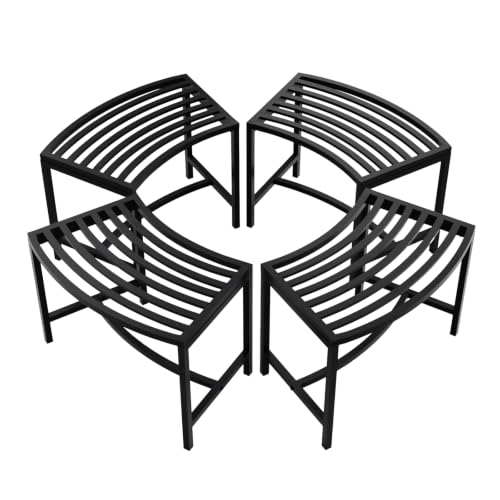
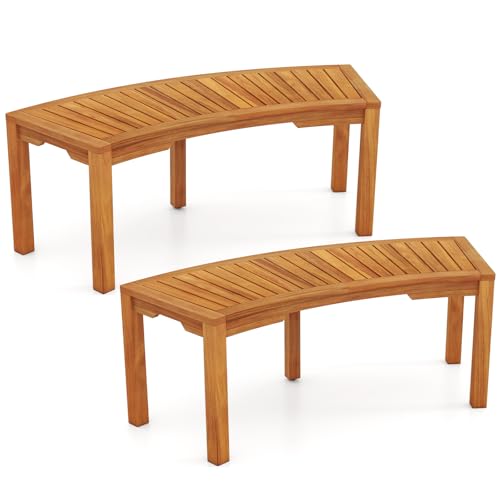
These benches typically fall into three broad formats. The first is a freestanding arc bench, which can be placed anywhere on a patio and repositioned seasonally. The second is a built-in or modular curved bench, often paired with a low retaining wall or a masonry fire pit surround, giving a permanent architectural look. The third is a sectional-style curved bench, where individual segments join to form a larger arc — useful when you want flexibility to split the bench into separate seating pieces later.
For readers exploring related seating styles, our guide to a fire pit bench covers straight and modular alternatives, while the modern outdoor bench overview is useful if your patio leans toward clean, architectural lines. If you are still deciding between a bench-only setup and a broader seating arrangement, the curved patio furniture guide shows how benches, loveseats, and sectionals can work together.
Why Choose a Curved Bench for Your Fire Pit Area?
The case for a curved bench is both practical and social. Around a fire pit, seating works best when it forms a loose circle. A curved bench with a back turns an awkward ring of mismatched chairs into a single cohesive seating element, which instantly makes the space feel designed rather than assembled.
- Better conversation dynamics: The arc orients seated guests toward the center of the circle, so everyone can see the fire and each other without turning.
- More seats per linear foot: A continuous bench eliminates the gaps between individual chairs, seating more people in the same footprint.
- Visual anchor: A single curved bench reads as a deliberate architectural choice, especially against a plain patio surface.
- Back support for longer evenings: A backrest makes the difference between a quick sit and a two-hour gathering; this is especially important for older guests.
- Cleaner sightlines: A low-profile curved bench keeps the fire pit visible from the house and doesn't block the view the way tall dining chairs can.
If your goal is a more lounge-like fire pit zone rather than a bench-led layout, the curved loveseat guide is a natural next read — it explains how a two-seat curved piece can complement or replace a bench in tighter spaces.
Buying Guide: What to Look For
1. Seating Geometry and Arc Size
The arc of the bench should follow the curve of your fire pit seating zone, not fight it. Measure the diameter of your fire pit (or the width of your fire feature), then add the clearance you want on all sides. A common approach is to leave 24 to 30 inches between the fire pit rim and the front edge of the bench. From there, choose a bench arc that covers roughly 90 to 180 degrees of the circle, depending on how many guests you typically host.
A bench that covers about 120 degrees is a versatile middle ground: it seats three to four adults comfortably and still leaves room for a couple of accent chairs. If you want a full conversation circle, consider two curved benches facing each other, or one curved bench plus a curved loveseat on the opposite side.
2. Back Height and Seat Depth
Back height is a comfort decision, not just a style one. Low-back benches (around 12 to 16 inches of back above the seat) look sleek and keep sightlines open. Mid-back benches (18 to 24 inches) offer noticeably better support for longer evenings. High-back benches (26 inches and above) feel closer to a lounge chair and are the best choice if older guests or people with back concerns will use the bench regularly.
Seat depth matters too. A depth of 17 to 20 inches suits most adults; deeper seats feel more relaxed but can be uncomfortable for shorter guests unless paired with a back cushion. If you plan to add cushions, account for roughly 2 inches of extra depth that the cushion will consume.
3. Materials and Heat Tolerance
Fire pit seating has to tolerate radiant heat, occasional sparks, and weather. The material you choose shapes both durability and how the bench feels in use.
| Material | Market Tier | Best For | Notes |
|---|---|---|---|
| Cast concrete / cast stone | Premium to luxury | Permanent built-in look, heavy-duty heat tolerance | Very stable in wind; heavy to reposition; pair with seat cushions for comfort |
| Powder-coated steel or aluminum | Mid-range | Movable freestanding benches, modern lines | Rust-proof finish is essential; aluminum is lighter, steel is sturdier |
| Resin wicker over metal frame | Entry-level to mid-range | Comfort-focused seating with a softer look | Weather-resistant and forgiving; check frame gauge and weave density |
| Teak or dense hardwood | Premium | Warm natural aesthetic, coastal or rustic patios | Needs periodic sealing; keep a safe distance from open flames |
| High-density polyethylene (HDPE) | Mid-tier | Low-maintenance all-weather seating | UV-stable and easy to clean; lighter visual weight than concrete |
Whichever material you choose, confirm that the bench is rated for outdoor use and that any finish is described as weather-resistant. For a deeper look at how material choice affects long-term care, see our notes on modern outdoor furniture without cushions — many of the same durability principles apply.
4. Frame Construction and Stability
A curved bench distributes weight differently than a straight one. Look for a frame with cross-bracing or a welded internal skeleton, especially on resin wicker and metal models. Check the base: a wide, continuous base plate or sled-style feet spread the load and resist tipping on uneven patio surfaces. On concrete benches, confirm that the piece is cast as a single unit or securely joined — seams are the first place outdoor seating fails.
5. Comfort Features: Cushions and Back Support
Even the best-built bench benefits from cushions. Choose quick-dry foam with removable, washable covers, and look for ties or grip strips so the cushions stay put. Back cushions are especially valuable on curved benches because the arc can make the backrest feel farther away at the edges — a slightly thicker back cushion evens out the support across the whole seat.
If you already own outdoor furniture and want to retrofit comfort, our guide to deep seating replacement cushions explains how to measure and select cushions that fit unusual bench shapes.
6. Weight, Portability, and Storage
Concrete and cast stone benches are effectively permanent — plan their location before delivery. Metal and resin benches are far easier to move for cleaning, seasonal storage, or rearranging the patio. If you live in a climate with harsh winters, a lighter bench that can be covered or moved under shelter will last longer and require less maintenance.
How to Plan Your Fire Pit Seating Layout
Before you buy, sketch the layout. Measure your patio, mark the fire pit center, and draw a circle that represents the bench front edge. Then check three things:
- Clearance: Leave at least 24 inches between the fire pit rim and the bench front, and more if the fire pit is large or open-flame. Guests need room to step in and out without leaning over the fire.
- Walkway: Keep a clear path of at least 36 inches behind the bench so people can move around the seating area without squeezing past.
- Balance: A single curved bench on one side of the fire pit can look lopsided. Balance it with two accent chairs, a curved loveseat, or a second, smaller curved bench on the opposite side.
For patios that combine dining and lounging, the outdoor conversation set with dining table guide shows how a fire pit bench can coexist with a dining zone without crowding the space. And if your fire pit is part of a larger hardscape project, the lanai patio overview is a useful reference for covered outdoor rooms.
Design Ideas for a Curved Fire Pit Bench
A curved bench is a strong design element, so let it lead. A few directions that work well:
- Modern minimal: A powder-coated aluminum bench in a dark charcoal finish, paired with a low concrete fire pit and a gravel or large-format paver surround. Keep cushions in a single neutral tone.
- Rustic warmth: A teak or HDPE bench with a slatted back, set on a flagstone patio with a stone fire pit. Add a woven outdoor rug and warm-toned throw pillows.
- Coastal casual: A white or sand-toned resin wicker bench with a gently curved back, paired with a fire table and light blue cushions. This pairs especially well with the ideas in our curved patio furniture guide.
- Built-in architectural: A cast concrete bench integrated with a low retaining wall behind the fire pit. This is a luxury-tier approach that turns the fire pit into a permanent garden room.
If you want to see how a curved bench fits into a broader conversation layout, the garden furniture conversation sets guide is a helpful cross-reference. For a fire feature that pairs naturally with a curved bench, the fire patio table overview is worth a look.
Care and Maintenance Tips
Curved benches collect debris in the arc, and the backrest hides dust from view. A simple routine keeps the piece looking new:
- Wipe down metal and resin frames monthly with mild soap and water; avoid abrasive cleaners that dull powder-coated finishes.
- Reapply sealant to wood benches annually, and inspect for hairline cracks before winter.
- Store cushions when not in use — even weather-resistant foam lasts longer when it can dry fully.
- Cover concrete benches in freezing climates to prevent surface spalling.
- Keep the bench at a safe distance from open flames; check the manufacturer's heat clearance recommendation.
For broader seasonal maintenance guidance, the weatherproofing guide covers covers, sealants, and storage routines that apply to all outdoor seating.
Frequently Asked Questions
What size curved outdoor bench with back fits around a fire pit?
Match the bench arc to your fire pit diameter plus a comfortable walkway. Leave at least 24 to 30 inches between the fire pit edge and the bench front, and choose a bench arc that follows the curve of your seating zone rather than forcing a straight bench into a round space.
Which material is best for a curved fire pit bench?
Concrete and cast stone are the most heat-tolerant and heavy-duty options. Powder-coated steel and aluminum offer a lighter, more movable build. Resin wicker over a metal frame is a balanced mid-tier choice for comfort and weather resistance. Teak and other dense hardwoods are premium choices when properly sealed.
Do curved benches with backs need cushions?
Not strictly, but back cushions greatly improve comfort during long evenings around the fire. Choose outdoor-rated, quick-dry foam with removable, washable covers, and store cushions when not in use to extend their lifespan.
How far should a bench sit from a fire pit?
Keep the front edge of the bench at least 24 to 30 inches from the fire pit rim. For larger fire pits or open flames, increase the gap so guests can move safely and the heat stays comfortable rather than overwhelming.