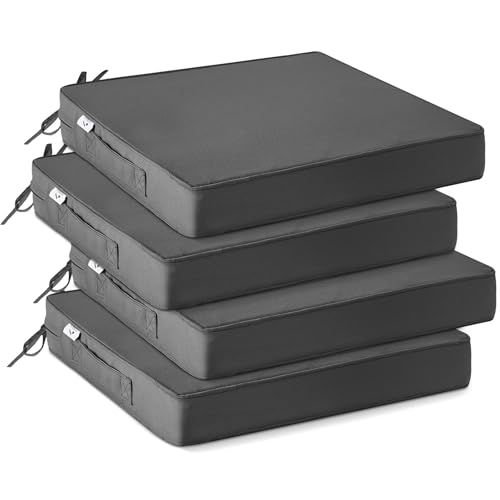
Cushions for Vintage Wrought Iron Outdoor Furniture
Give a classic wrought iron frame new life. Learn how to measure unusual seats, choose weather-ready fills, secure cushions against sliding, and order a fit that looks original rather than improvised.
Vintage wrought iron furniture has a character that modern molded plastic and aluminum frames rarely match. The scrollwork, the weight of the metal, and the hand-finished joints give a patio a sense of history. But that same craftsmanship creates a practical challenge: many wrought iron pieces were built before standardized cushion sizing existed, and their seats are often curved, tapered, or narrower than today's off-the-shelf cushions expect.
Finding cushions for vintage wrought iron outdoor furniture is less about picking a color and more about solving a fit problem. A cushion that bridges a curved seat instead of following it will sag, collect water, and wear out quickly. A cushion that is too thin will let the metal bars press through. This guide walks through the measurement process, the fill and fabric decisions that matter outdoors, and the small hardware details that keep a cushion exactly where you placed it.
Quick orientation: If your frame has a flat, rectangular seat and vertical back bars, a standard-size cushion may work with a tie-on strap. If the seat is curved, tapered, or has an angled backrest, plan on a custom or semi-custom cushion, or accept a slightly looser fit with a non-slip underside.
Why Wrought Iron Furniture Needs Specific Cushions
Wrought iron frames differ from wood and resin in three ways that directly affect cushion choice.
First, the frame is usually open. Many vintage wrought iron chairs have seats made of thin bars or a lattice rather than a solid panel. A cushion over an open seat needs enough density and a stiff enough base layer that it does not sink between the bars. This is why fiber-only cushions often feel uneven on wrought iron, while a foam core with a wrapped fiber layer distributes weight more predictably.
Second, the metal is smooth and often painted. Smooth painted metal offers little friction, so a cushion without ties or a grip underside will slide forward every time someone sits down. This is the single most common complaint from owners of older wrought iron sets, and it is easily solved with the right hardware.
Third, vintage dimensions are inconsistent. Two chairs from the same manufacturer and the same decade can differ by a centimeter or more after years of use, repainting, or minor frame adjustment. Measuring each seat individually, rather than assuming a set is uniform, prevents the frustrating situation where one cushion fits and its neighbor does not.
If your wrought iron set includes a bench or a glider rather than individual chairs, the same principles apply but the span is longer. A bench cushion needs a firmer core to avoid a hammock-like sag in the middle, and it usually benefits from two or three tie points rather than one.
How to Measure a Vintage Wrought Iron Frame
Accurate measurement is the foundation of a good fit. Use a flexible tape measure and record each dimension to the nearest half-centimeter or quarter-inch. Measure every seat separately, even within a matching set.
- Seat width. Measure the clear opening between the inner faces of the arm supports or side rails. If the frame tapers toward the back, record both the front width and the back width.
- Seat depth. Measure from the front edge of the seat platform to the point where the backrest begins. If the backrest is angled, measure along the horizontal plane rather than following the slope.
- Seat thickness allowance. Note the height of any front lip, rail, or decorative scroll that would interfere with a thick cushion. A cushion that is too thick can push the sitter forward or prevent the cushion from sitting flat.
- Backrest height and angle. Measure the usable back height from the seat platform to the top of the backrest, and note whether the back is vertical, reclined, or curved. A reclined back needs a cushion with a shaped or hinged back panel.
- Corner shape. Check whether the seat corners are square, rounded, or clipped. Trace the corner radius with a pencil on paper if it is pronounced; this template becomes useful when ordering a custom cushion.
- Obstructions. Note any crossbars, bolts, or decorative elements that sit above the seat plane. These may require a cushion with a cutout or a slightly reduced depth.
For a back cushion, measure the width between the back uprights and the height from the seat surface to the top bar. If the back has a decorative center medallion or scroll, decide whether the cushion should cover it or frame it. Covering a distinctive wrought iron detail often looks better than cutting around it, but the choice depends on the piece.
Measurement tip: Photograph each seat with the tape measure in place. When you order a custom cushion, these photos resolve most sizing questions quickly and reduce the risk of a remake.
Seat and Back Shapes Common on Wrought Iron Furniture
Vintage wrought iron seating tends to fall into a handful of shapes. Identifying yours early narrows the cushion options considerably.
| Frame Shape | Typical Cushion Approach | Best For |
|---|---|---|
| Flat rectangular seat with vertical back | Standard-size seat and back cushions with tie straps | Simple refresh of a classic bistro or dining chair |
| Tapered seat (wider at front) | Custom trapezoid cushion or a slightly undersized rectangular cushion with grip underside | Curved-front dining chairs and occasional chairs |
| Rounded or barrel back | Shaped back cushion with darts or a one-piece seat-and-back wrap | Rockers, gliders, and 1950s-style lounge chairs |
| Open lattice seat | Firm foam core with wrapped fiber layer; avoid thin fiber-only fills | Decorative scrollwork chairs and benches |
| Long bench or settee | One long cushion with multiple ties, or two segmented cushions | Garden benches and porch settees |
| Angled or reclined back | Hinged seat-and-back cushion or separate back cushion with a wedge profile | Chaise-style loungers and reclining wrought iron chairs |
For chairs with a curved back, a single wrap-around cushion is often the cleanest solution because it eliminates the gap where a separate back cushion would meet the seat. For flatter frames, separate seat and back cushions are easier to clean and replace individually.
If you are also refreshing the surrounding seating area, the general guidance in our outdoor cushion guide covers thickness and firmness choices that apply across frame materials, and the notes on deep seating cushions are useful if your wrought iron piece has a deeper-than-average seat.
Fill Materials and Weather Performance
The fill determines how a cushion feels, how long it holds its shape, and how well it survives humidity and rain. For wrought iron furniture, which is often left outside year-round, fill choice matters as much as fabric.
Quick-Dry Foam
Open-cell foam designed for outdoor use allows water to pass through rather than trapping it. It is the most common mid-range choice and a sensible default for wrought iron seats, because the open frame lets air circulate underneath. Higher-density versions hold their shape longer and resist compression at the front edge where sitters slide in.
Polyester Fiber
Fiber fill feels soft and recovers well after use, but on an open wrought iron seat it can compress into the gaps between bars. It works best as a wrap around a foam core, where it adds surface softness without sacrificing support. Fiber-only cushions are better suited to solid-seat frames or decorative back cushions that carry little weight.
Foam and Fiber Blend
A foam core wrapped in fiber is the balanced option for most vintage wrought iron chairs. The foam provides structure over the open seat, and the fiber wrap softens the contact surface. This is the configuration most custom cushion makers recommend for irregular frames.
Gel and Memory Foam Inserts
These appear mainly in premium outdoor cushions. They conform to the sitter and reduce pressure points, which is welcome on metal frames that can feel hard through thin cushions. They are heavier and slower to dry than open-cell foam, so they suit covered porches better than fully exposed patios.
Whichever fill you choose, confirm that it is labeled for outdoor use and that the cushion cover has a drainage path, such as a mesh underside or grommets. A water-resistant shell over a non-draining fill will hold water inside the cushion rather than letting it escape.
Fabric and Color Choices for Wrought Iron Frames
Wrought iron is usually dark, often black, deep green, or bronze, and its visual weight benefits from a cushion that either contrasts clearly or echoes the metal's finish.
Solution-dyed acrylic remains the standard for outdoor cushion covers. It resists fading, holds color through repeated cleaning, and dries reasonably quickly. Olefin is a durable alternative that handles moisture well and is often used in textured weaves. Polyester blends are common in mid-tier cushions; they perform adequately but may fade faster in strong sun.
For color, three approaches work reliably with vintage wrought iron:
- High contrast: Cream, sand, or warm white cushions against black or dark green iron make the scrollwork read clearly and give the piece a crisp, classic look.
- Tonal harmony: Deep charcoal, forest, or bronze cushions that sit close to the frame color create a quieter, more architectural effect, letting the metal's shape carry the design.
- Accent color: A single saturated hue, such as terracotta, mustard, or teal, draws attention to the furniture and works well when the surrounding patio is neutral.
Pattern deserves a mention. Small-scale geometrics and subtle stripes hide minor soiling better than solid light colors and suit the traditional lines of wrought iron without feeling busy. Large-scale prints can overwhelm a delicate scroll frame, so scale the pattern to the size of the chair.
If the metal frame is in original condition with patina or a distressed finish, choose a fabric with a matte or woven texture rather than a glossy surface. The combination reads as intentional rather than mismatched.
Ties, Grips, and Anti-Slip Fixes
Keeping cushions in place on smooth metal is the practical problem that separates a satisfying result from a daily annoyance. Several solutions exist, and they can be combined.
Tie Straps
Fabric ties that loop around the back uprights or side rails are the most traditional fix and the most reliable. Look for ties that are bar-tacked at the attachment point rather than stitched with a single line, since the stress point is where ties fail first. Two ties per seat cushion and two per back cushion is a practical minimum for chairs; benches need three or more.
Non-Slip Undersides
Some outdoor cushions include a rubberized or silicone-dotted underside that grips painted metal. This works well on flat seats and is less visible than ties. If your chosen cushion lacks this feature, a piece of rubberized shelf liner cut to the seat size is an effective retrofit.
Hook-and-Loop Strips
Adhesive-backed hook-and-loop strips can be attached to the metal and to the cushion underside. They hold firmly but make removing cushions for cleaning slightly less convenient. They are a good choice for back cushions that tend to flop forward.
Snap Fasteners
Some custom cushion makers offer snap fasteners that attach to the frame with a small bracket. This is the most secure option and is worth considering for benches and gliders where cushions shift under repeated motion.
Whichever method you use, check the fit after the first few uses. New cushions often settle slightly, and a tie that felt snug initially may need to be repositioned once the fill compresses.
Quick fix for sliding cushions: A length of rubberized shelf liner under the seat cushion, trimmed slightly smaller than the cushion, adds grip without altering the look of the furniture. It is removable and can be washed.
Custom vs Standard Cushions for Vintage Frames
The decision between a standard-size cushion and a custom one usually comes down to how irregular the frame is and how much visual precision matters to you.
Standard cushions are the practical choice when the seat is close to a common rectangular size and the back is vertical. They are easier to replace, available in more fabric options, and can be returned if the fit is not right. The trade-off is that a standard cushion on a slightly tapered seat will leave small gaps at the back corners.
Custom cushions are worth considering when the seat is curved, tapered, unusually deep, or fitted with decorative elements that interfere with a flat cushion. They also make sense for a matching set where consistency matters and the original dimensions no longer align with current standard sizes. Custom orders require accurate measurements and usually a longer lead time, but the result follows the frame rather than fighting it.
A middle path is available through made-to-measure services that produce cushions to your dimensions using a standard profile. These are often described as custom-size cushions for outdoor furniture and they solve most dimensional mismatches without the cost or lead time of a fully bespoke piece.
If the original cushions are gone and you want a shape that matches the frame's character, look at custom outdoor cushions for patio furniture services that offer shaped backs and rounded corners. For frames where the existing cushion is worn but the shape is still correct, a custom-made replacement cushion can reuse the original as a template.
One more consideration: if your wrought iron set is part of a larger seating arrangement, keeping cushion profiles consistent across chairs, benches, and loungers makes the whole patio look intentional. Our notes on outdoor furniture cushions cover the general profiles that coordinate well across mixed frame types.
Seasonal Care and Storage for Wrought Iron Cushions
Wrought iron itself is durable, but cushions are the part of the setup that determines how long the furniture stays usable and comfortable. A simple seasonal routine keeps them in good condition.
Routine Cleaning
Brush off loose debris weekly. For deeper cleaning, use a mild soap solution and a soft brush, then rinse thoroughly and stand the cushion on edge to drain. Avoid harsh detergents, which can break down water-repellent finishes and fade solution-dyed acrylic over time.
Drying
After rain or cleaning, remove the cushion from the frame and let it dry on edge in the sun. Open-cell foam dries faster than gel or memory foam, which is one reason it remains the practical default for exposed patios. A cushion left flat on an open wrought iron seat will trap moisture between the fill and the metal.
Storage
During extended wet or cold seasons, store cushions in a dry, ventilated space. A breathable storage bag is preferable to a sealed plastic bag, which can trap condensation. If storage space is limited, the guidance in our cushion storage solutions article covers options that keep cushions dry without occupying a full room.
Frame Care
While cushions are off the frame, inspect the wrought iron for chipped paint or early rust. Touching up small areas prevents the corrosion that can stain fabric and weaken joints. If the frame is due for a repaint, doing it while the cushions are in storage avoids overspray and gives the paint time to cure fully before cushions return.
For a broader seasonal checklist that covers frames, fabrics, and hardware together, see our weatherproofing guide.
Frequently Asked Questions
How do I measure vintage wrought iron furniture for replacement cushions?
Measure the seat width between the arm supports, the seat depth from front edge to backrest, and the thickness of the seat platform. Also note the backrest height and whether the frame has curved or angled bars, since these affect how a cushion sits. Measure each chair separately, as vintage frames often vary slightly within a set.
Are standard outdoor cushions compatible with wrought iron frames?
Sometimes, but vintage frames often have non-standard dimensions, curved seats, or exposed metal bars. Standard cushions may slide or sit unevenly. Custom-size cushions or tie-on styles usually provide a more secure fit, especially on tapered or rounded seats.
What fill works best for wrought iron patio cushions?
Quick-dry foam wrapped in polyester fiber is a common mid-range choice. Higher-density foam holds shape longer, while fiber-only fills feel softer but compress over time. For humid climates, open-cell quick-dry foam is preferred because it allows water to pass through rather than trapping it.
How can I keep cushions from sliding on smooth wrought iron?
Look for cushions with tie straps, grip dots, or a non-slip underside. Adding a rubberized shelf liner under the seat cushion is a simple retrofit that improves grip on smooth metal. For back cushions, hook-and-loop strips or snap fasteners provide extra stability.
Can I order custom cushions for an irregular wrought iron frame?
Yes. Many suppliers offer custom-size and custom-shape cushions. Provide a template or precise measurements, including corner radii and backrest angle, to ensure the cushion follows the frame rather than bridging gaps. Photographs with a tape measure in place help the maker confirm details.