Custom Size Cushions for Outdoor Furniture
Standard cushions rarely fit unusual patio frames, curved sectionals, or deep-seat loungers perfectly. Learn how to order custom size cushions that fit precisely, last through the seasons, and make your outdoor seating genuinely comfortable.
Start With MeasuringWhy this guide matters: If you are researching custom size cushions for outdoor furniture, you already know that off-the-shelf sizes leave gaps, slide around, or bunch up at the corners. This guide walks you through measurement, fabric selection, fill options, and the ordering process so you can make a confident purchase decision — and know exactly which specifications to request from any maker.
Why Custom Size Cushions Are Worth Considering
Outdoor furniture frames come in an enormous variety of shapes. A vintage wrought iron bench, a deep-seat sectional, a curved lounger, or a built-in bench under a pergola rarely match the standard cushion dimensions sold in most stores. When the fit is wrong, the problems compound: water pools in gaps, foam breaks down unevenly, fabric wears faster at pressure points, and the seat simply feels uncomfortable.
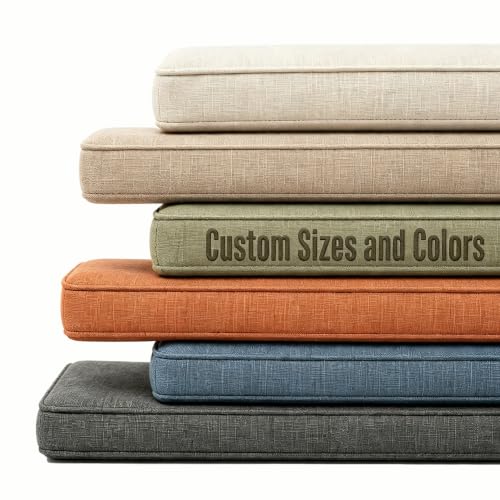
Custom cushions solve these issues by matching the exact geometry of your furniture. The result is a cleaner look, better drainage, more even weight distribution, and a longer service life. For anyone planning to keep their outdoor furniture for several seasons, custom sizing is often the more efficient choice in the long run. If you are replacing tired cushions, our guide on custom-made replacement cushions covers how to transition from old, worn pieces to a fresh, accurate fit.
It also helps to understand the broader cushion ecosystem. Our outdoor cushion guide explains the fundamentals of construction and care, while the cushion buying overview compares ready-made versus made-to-order options. Reading both before ordering will make the specification process much smoother.
How to Measure Your Furniture for Custom Cushions
Accurate measurement is the single most important step. A difference of even half an inch can cause a cushion to slide, wrinkle, or fail to sit flat. Measure the furniture frame, not the old cushions, and take every measurement at the widest point. Use a metal tape measure and record everything in writing before you contact a maker.
Seat Width
Measure the full interior width between the arms, then measure the frame width at the front and back separately. Many frames taper, so record both numbers.
Seat Depth
Measure from the front edge of the seat to the backrest. If the backrest is angled, measure along the flat seat surface rather than up the slope.
Seat Thickness
Decide on cushion thickness — typically 3, 4, 5, or 6 inches. Thicker cushions suit deep seating, while slimmer profiles work for dining chairs and benches.
Backrest Height & Width
Measure the visible backrest height and width. Note whether the back cushion needs to wrap around posts, arms, or a curved frame.
Curves & Angles
For curved or angled frames, sketch the outline and note the radius. Photograph the frame with the tape measure in view for the maker.
Clearance Points
Check arms, ties, and any hardware that might interfere. Note where straps or ties should attach so the cushion stays in place.
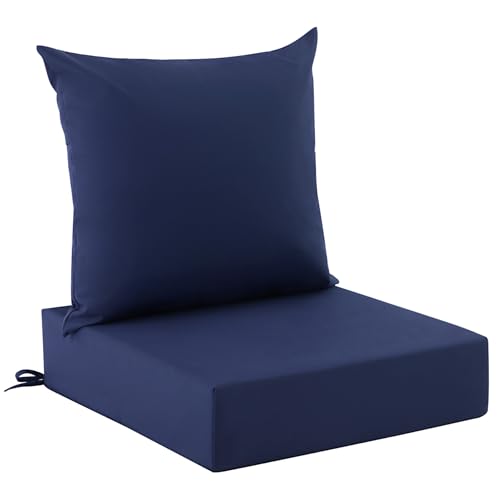
For deep-seat frames, thickness and depth interact closely. Our guide on deep seat cushions explains how to balance a generous fill with a depth that still lets you sit back comfortably. If your furniture has a fixed deep-seat geometry, that page is essential reading before you finalize dimensions. Similarly, owners of older metal frames will find useful context in the article on cushions for vintage wrought iron furniture, since those frames often have irregular dimensions and narrow seat pans.
Measurement tip: Always add a small allowance — usually half an inch to one inch — for fabric thickness and foam compression, but confirm the exact allowance with your chosen maker. Over-measuring is a common cause of cushions that bunch at the seams.
Choosing the Right Fabric for Outdoor Cushions
Fabric determines how long a custom cushion will look good and how much maintenance it demands. Outdoor cushions face sun, rain, humidity, and repeated use, so the material must be engineered for those conditions. The table below compares the most common categories using relative market positioning rather than specific figures.
| Fabric Category | Tier | Best For | Key Characteristics |
|---|---|---|---|
| Solution-Dyed Acrylic | Premium / top-tier | Long-term outdoor use, high-sun areas | Color penetrates the fiber, excellent fade resistance, mildew resistant, soft hand feel |
| Performance Polyester | Mid-range | Everyday patios, covered porches | Good moisture resistance, broad color range, easy to clean, solid durability |
| Olefin | Entry-level to mid-tier | Shaded areas, occasional use | Lightweight, fast drying, stain resistant, less UV-stable than acrylic |
| Cotton / Linen Blends | Indoor-only tier | Not recommended outdoors | Comfortable but absorbs moisture, prone to mildew, fades quickly |
For most outdoor settings, solution-dyed acrylic is the flagship tier choice because it holds color and resists moisture without sacrificing comfort. Performance polyester is a balanced tier option that suits covered patios and moderate sun exposure. Whichever fabric you choose, confirm that the maker offers removable covers with hidden zippers so cleaning is practical. The cushion guide goes deeper into fabric care, while deep seating cushions covers how fabric choice interacts with larger cushion dimensions.
Foam, Fiber, or Wrapped Fill: Choosing the Right Core
The fill inside the cushion determines comfort, shape retention, and how the cushion behaves after rain. There are three common approaches, and each suits different seating types.
- High-density foam: The most supportive option and the standard choice for seat cushions. It holds shape well, resists compression, and works best when wrapped in a moisture-resistant liner. Open-cell foam drains and dries faster than closed-cell foam.
- Polyester fiber: Softer and more sink-in, ideal for back cushions and decorative pillows. Fiber fill needs regular fluffing and is less supportive for seats that get daily use.
- Foam core with fiber wrap: A hybrid approach that combines structural support with a plush surface. This is the balanced tier solution for homeowners who want both comfort and durability.
For curved or unusually shaped frames, a wrapped fill often conforms better than a rigid foam block. If you are ordering for deep-seat sectionals, the article on deep seat outdoor cushions in 26 x 24 dimensions illustrates how fill choice affects the final fit and feel. Reading it alongside this guide will help you specify the right combination of foam density and wrap thickness.
Ordering Custom Cushions: What to Prepare
Once measurements and materials are decided, the ordering process itself is straightforward if you prepare properly. Most makers ask for the same set of details, so having them ready avoids back-and-forth messages.
- A dimension sheet: Width, depth, thickness, and back height for each cushion, clearly labeled by furniture piece.
- Photos of the frame: Include one straight-on shot and one angled shot, with a tape measure visible where possible.
- Fabric selection: Provide the exact fabric name and color code rather than a general description.
- Fill preference: Specify foam density or wrap style, and note whether back cushions use the same fill as seats.
- Attachment method: Ties, straps, hook-and-loop fasteners, or non-slip backing — choose what suits your frame and climate.
- Quantity and lead time: Confirm the number of cushions and the expected production window before placing the order.
If your furniture is custom-built or unusual, the page on custom furniture explains how bespoke frames are typically specified, which is useful context when talking to a cushion maker. And if you are also refreshing the surrounding setup, our overview of cushioned patio chairs shows how cushions integrate with different chair styles.
Maintenance and Longevity Tips
Custom cushions are an investment, and a small amount of routine care keeps them looking sharp for years. Brush off loose debris weekly, spot-clean with mild soap and water, and allow cushions to air-dry fully before placing them back on the frame. During heavy rain seasons, bring cushions inside or use a breathable cover that does not trap moisture. Store cushions in a dry, ventilated space during the off-season.
For a full seasonal routine, the weatherproofing guide and the cushion storage guide cover protective measures in detail. If you plan to cover the entire furniture set, the article on custom canvas covers explains how covers and cushions work together to extend service life.
Frequently Asked Questions
How do I measure outdoor furniture for custom size cushions?
Measure the seat width, depth, and thickness at the widest points, then measure the backrest height and width separately. Always measure the furniture frame rather than old cushions, and account for any arms, curves, or tapered edges that affect fit.
What is the best fabric for custom outdoor cushions?
Solution-dyed acrylic and performance polyester are the most reliable choices for outdoor use. They resist fading, mildew, and moisture while remaining breathable and easy to clean. Olefin is a solid mid-tier option, while standard cotton and untreated linen are best avoided outdoors.
Should I choose foam, fiber, or a wrapped fill for outdoor cushions?
High-density foam holds shape best for seat cushions, polyester fiber offers a softer sink-in feel, and a foam core wrapped in fiber balances support with comfort. For back cushions, fiber fill is usually the better fit.
Are custom size cushions worth it compared to standard sizes?
Custom cushions are worthwhile when your furniture has non-standard dimensions, curved frames, or deep seating that standard cushions cannot fill properly. They prevent gaps, sliding, and premature wear, making them a long-term investment for quality patio furniture.