Daybed Outdoor: Your Complete Guide to the Ultimate Backyard Retreat
A daybed outdoor transforms any patio, deck, or poolside into a luxurious lounging destination. Whether you are researching hanging swings, canopy daybeds, or solid-frame loungers, this guide covers everything you need to make a confident, informed choice.
Explore Daybed TypesWhy an outdoor daybed? A daybed outdoor combines the comfort of a sofa with the relaxation of a lounger, giving you a versatile piece that works for reading, napping, entertaining, or simply enjoying fresh air. Unlike a standard patio sofa, a daybed offers full-body support and an unmistakable resort-style feel that elevates any outdoor space.
Types of Outdoor Daybeds Explained
Not all daybeds are created equal. The right type depends on your available space, climate, and how you plan to use it. Below are the most common outdoor daybed categories, each positioned within a distinct market tier so you can match your expectations to the right product class.
Hanging Daybed Swing
A suspended daybed, typically hung from a pergola, porch ceiling, or sturdy tree branch. Hanging daybeds offer a gentle rocking motion and an airy, romantic feel. Entry-level models use powder-coated steel frames and polyester cushions, while top-tier versions feature solid wood frames, stainless steel chains, and solution-dyed acrylic cushions. Ideal for porches and covered patios.
Canopy Daybed
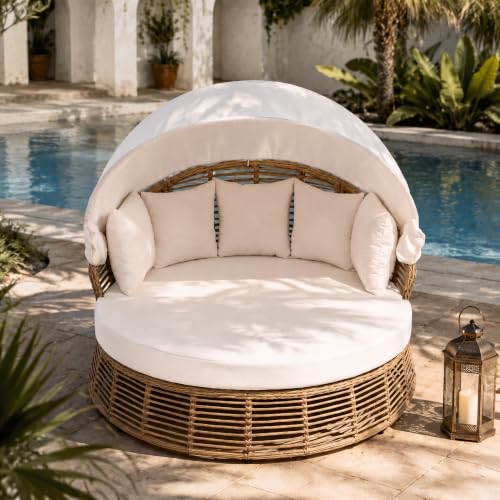
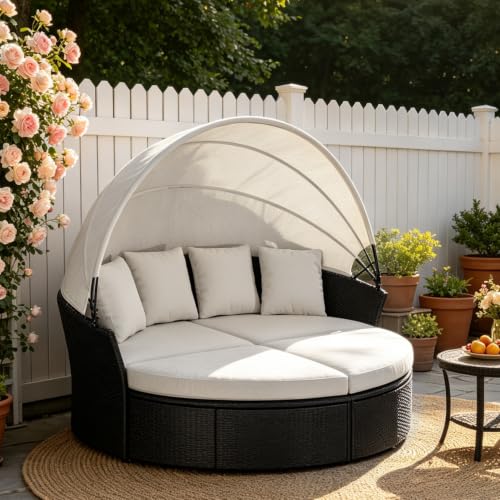
Equipped with a built-in fabric or metal canopy, this style provides shade and a sense of enclosure. Canopy daybeds are excellent for sunny poolside areas and open lawns. Mid-range models use aluminum frames with UV-resistant canopy fabric, while premium versions add retractable canopies and reinforced joints for long-term outdoor exposure.
Solid-Frame Platform Daybed
A freestanding daybed with a rigid base, often constructed from powder-coated aluminum, teak, or PE wicker. Platform daybeds are the most versatile choice for patios and decks because they require no overhead anchor point. They pair beautifully with outdoor rugs and side tables, and many models include trundle or storage options.
Daybed with Canopy and Curtains
A step up from the basic canopy, this style includes side curtains for privacy and insect protection. Premium daybeds in this category often feature machine-washable curtains, rust-proof aluminum frames, and thick, quick-dry foam cushions. They are a favorite for poolside lounging and romantic backyard setups.
Modular or Sectional Daybed
These high-end tier daybeds function as convertible seating: by day they serve as a sofa, and by night they flatten into a full lounging surface. Luxury modular daybeds use marine-grade materials, customizable cushion configurations, and often integrate side tables or built-in shade. Best suited to large patios and commercial-grade outdoor lounges.
Folding or Portable Daybed
A lightweight, foldable option for balconies, small patios, and travel. Starter-tier folding daybeds use aluminum frames and quick-dry fabric, making them easy to store and move. They are not designed for permanent outdoor exposure but are an excellent first step into outdoor lounging.
If you are also considering a hanging option for your porch, you may want to explore our guide to a daybed porch swing to compare suspension styles. For those who prefer a swing-style lounger without a full frame, a daybed swing overview can help clarify the differences in anchoring and comfort.
Materials and Durability: What Holds Up Outdoors
The lifespan of any daybed outdoor depends almost entirely on its frame, cushion, and finish quality. Outdoor environments expose furniture to UV rays, moisture, temperature swings, and pests. Choosing the right materials is the single most important decision in your purchase.
Frame Materials
- Powder-coated aluminum: Lightweight, rust-proof, and the most common choice for mid-range and premium daybeds. Look for a thick powder coating to resist scratching.
- Stainless steel: Heavy-duty and highly durable, often used in commercial-grade daybeds. Marine-grade stainless steel is the top-tier choice for coastal areas.
- PE wicker (synthetic rattan): Provides a natural woven look with excellent UV resistance. High-grade PE wicker can last many seasons without fading or cracking.
- Teak and acacia wood: Naturally weather-resistant hardwoods. Teak is the premium choice for its natural oils, while acacia offers a solid balance of durability and character.
Cushion and Fabric Materials
- Solution-dyed acrylic: The benchmark for outdoor fabric. Resists fading, mildew, and water damage. Found on premium and luxury daybeds.
- Olefin: A durable, fast-drying synthetic fabric. Common in mid-range daybeds and a good value for its tier.
- Polyester blends: Entry-level option. Adequate for covered patios but less resistant to prolonged UV exposure.
- Quick-dry foam: Open-cell foam that drains water quickly. Essential for poolside and uncovered daybeds.
For a deeper dive into cushion selection, refer to our outdoor cushion guide, which explains fill types, thickness, and fabric ratings in detail.
How to Choose the Right Daybed for Your Space
Selecting a daybed outdoor is as much about spatial planning as it is about style. Use the following framework to narrow your options efficiently.
1. Measure Your Space First
Standard outdoor daybeds range from roughly 60 to 80 inches in width. Leave at least 18 to 24 inches of clearance around the daybed for walking and access. For compact balconies, a folding or hanging model preserves floor space. If your patio is small, our small patio ideas guide offers layout strategies that pair well with compact daybeds.
2. Match the Daybed to Your Climate
Coastal and humid climates demand rust-proof frames and mildew-resistant fabrics. Dry, sunny climates require UV-stable materials. Cold-winter regions benefit from a daybed that can be easily covered or moved into storage. A high-end tier aluminum frame with solution-dyed acrylic cushions is the safest all-climate configuration.
3. Decide on Anchoring and Shade
Hanging and canopy daybeds require either a structural anchor or a built-in frame. If you do not have a pergola or porch ceiling, a solid-frame platform daybed is the practical choice. For sun exposure, a canopy model or a daybed placed under a pergola provides reliable shade.
4. Consider the Surrounding Furniture
A daybed should feel integrated with your existing outdoor setup. Pair it with a matching outdoor rug to define the lounging zone, and add a concrete outdoor coffee table or a deck table for drinks and accessories. For visual cohesion, choose a daybed frame finish that echoes other pieces on your patio.
5. Plan for Storage and Cushion Care
Cushions are the most vulnerable component of any outdoor daybed. Plan where you will store them during rain and off-season. A deck box or deck storage box placed near the daybed makes daily cushion storage convenient and extends cushion life significantly.
Care and Maintenance Essentials
Regular maintenance keeps your daybed outdoor looking new and functioning safely for years. The routine differs slightly by material, but the core principles are universal.
Routine Cleaning
- Rinse frames with a mild soap solution every few weeks during peak season.
- Brush or vacuum cushions to remove debris and prevent mildew growth.
- Clean wicker with a soft brush and avoid high-pressure washing.
- Treat wood frames with a suitable sealant or oil annually.
Seasonal Protection
During heavy rain or winter, cover the daybed with a breathable, waterproof cover. Cushions should be stored indoors when not in use for extended periods. For comprehensive seasonal advice, see our winter storage guide and weatherproofing guide. If your daybed uses steel components, our rust removal tips can help you address minor corrosion early.
Hardware and Safety Checks
For hanging daybeds, inspect chains, ropes, and anchor points every season. Tighten bolts on frame connections and replace any worn straps or hardware. Safety should always come before aesthetics, especially for suspended models.
Daybed Style Comparison at a Glance
Use this comparison table to quickly evaluate which daybed outdoor style aligns with your priorities. Tiers reflect relative market positioning and feature depth, not absolute figures.
| Style | Tier Positioning | Best For | Key Strength |
|---|---|---|---|
| Hanging Daybed Swing | Essential to Mid-Range | Covered porches, pergolas | Gentle rocking motion and airy feel |
| Canopy Daybed | Balanced to Premium | Poolside, sunny lawns | Built-in shade and enclosure |
| Solid-Frame Platform Daybed | Mid-Range | Decks, patios, any flat surface | Versatility and no anchor requirement |
| Daybed with Canopy and Curtains | Premium | Poolside, romantic setups | Privacy and insect protection |
| Modular Sectional Daybed | Luxury | Large patios, commercial spaces | Convertible seating and lounging |
| Folding Portable Daybed | Starter Tier | Balconies, travel, small spaces | Portability and easy storage |
Advantages of an Outdoor Daybed
- Full-body lounging comfort
- Resort-style aesthetic that elevates any space
- Versatile for reading, napping, and entertaining
- Available in a wide range of tiers and styles
- Can serve as a focal point for your patio design
Considerations Before Buying
- Requires more floor space than a single chair
- Cushions need regular storage and cleaning
- Hanging models depend on structural anchors
- Heavier models may need two people to reposition
- Fabric and frame quality directly affect lifespan
Ready to Create Your Outdoor Retreat?
Now that you understand the types, materials, and maintenance requirements, you are equipped to choose a daybed outdoor that fits your space and lifestyle. Explore recommended options below and take the next step toward your dream patio.
View Recommended DaybedsFrequently Asked Questions
What is the best material for an outdoor daybed?
Powder-coated aluminum and high-grade stainless steel are the most reliable frame materials for long-term outdoor use. For a natural look, PE wicker and teak wood are excellent choices. Cushions should always use solution-dyed acrylic or olefin fabric for fade and mildew resistance.
How do I protect my outdoor daybed from weather damage?
Use a waterproof cover when the daybed is not in use, store cushions indoors during rain and off-season, and clean the frame regularly. Placing the daybed under a covered area extends its lifespan considerably. For detailed steps, see our covering patio furniture for winter guide.
Can an outdoor daybed be left outside year-round?
Aluminum and stainless steel frames can generally remain outside year-round in most climates. Wood and wicker benefit from covering during harsh winters. Cushions should always be brought inside during extended bad weather, regardless of the frame material.
What size outdoor daybed is best for a small patio?
For compact spaces, choose a daybed around 60 to 70 inches wide or a hanging model that frees up floor space. Corner configurations and folding daybeds are also smart options. Always keep 18 to 24 inches of clearance around the daybed for comfortable movement.
Continue Exploring Outdoor Lounging
If a daybed outdoor is part of a larger patio refresh, these related guides can help you build a cohesive space:
- Outdoor living essentials for a complete patio planning framework
- Patio styles to match your daybed with a consistent design theme
- Lounge chairs for complementary seating options
- Outdoor planters to soften the area around your daybed
- Outdoor lighting to extend evening lounging hours
- Cushion storage solutions for keeping daybed cushions protected