Deck Table Buying Guide: Sizing, Materials & Smart Choices
Everything you need to choose a deck table that fits your space, your lifestyle, and your entertaining style — from compact two-seaters to full dining setups for a crowd.
Explore the GuideWhy this guide matters: A deck table is one of the most-used pieces of outdoor furniture you will ever buy. It anchors your outdoor dining, doubles as a workspace, and often becomes the center of backyard gatherings. Because it is a long-term purchase, the right choice depends on more than looks alone. This guide walks you through sizing, materials, build quality, and the practical details that separate a table you tolerate from one you genuinely enjoy for years.
What Exactly Is a Deck Table?
A deck table is an outdoor table designed specifically for use on wood, composite, or elevated deck surfaces. Unlike general-purpose patio tables, deck tables are engineered with the deck environment in mind: they are typically lighter in build, sized to fit railing-to-railing footprints, and finished to withstand the moisture, UV exposure, and temperature swings that deck surfaces experience.
Deck tables come in three broad formats: dining tables built for meals and seating four to eight people, bistro and café tables for compact two-person setups, and multi-purpose tables that work as a dining surface, a prep station, or a gathering spot. If you are still deciding between deck and patio as your primary outdoor zone, our comparison of deck vs patio layouts is a useful starting point before you commit to a table size.
Many buyers discover that a deck table works best when paired with matching seating. A complete deck table and chairs set removes the guesswork around height, clearance, and chair tuck-in space — but if you already own chairs, measuring your seat height first is essential.
How to Size a Deck Table Correctly
Size is the single most common source of buyer regret with deck tables. A table that looks proportionate in a showroom can overwhelm a narrow deck, while an undersized table leaves guests awkwardly spaced. The practical rule is to leave at least 36 inches (roughly 90 cm) of clearance on every side where chairs will be pulled out, and about 24 inches between the table edge and any railing or wall.
Use these guidelines as a starting point:
- Two-person decks: a 30- to 32-inch round or square bistro table is usually the sweet spot. It seats two comfortably without crowding the walking path.
- Four-person dining: a 42- to 48-inch round table or a 60-inch rectangular table gives each diner adequate elbow room.
- Six to eight diners: look at 72- to 84-inch rectangular or oval tables. These suit open decks and covered porches, and they pair well with bench seating on one side.
If your deck is tight, do not assume a rectangular table is out of the question — a narrow, longer table can sometimes fit where a round one cannot. Conversely, on a square deck, a round table often creates smoother circulation. For a compact alternative that mimics the function of a full dining surface, a corner bench dining table for small spaces can free up significant floor area.
Also consider table height. Standard dining height (28–30 inches) suits full meals; counter height (34–36 inches) works well for casual grazing and pairs with taller stools; bar height (40–42 inches) is best reserved for true bar-style setups. Whichever you choose, keep chair seat height aligned with the table — mixing heights is the fastest route to an uncomfortable setup.
Deck Table Materials Compared
The material you choose determines how the table ages, how much maintenance it needs, and how it feels in daily use. Here is how the main options stack up:
Wood Deck Tables
Wood remains the most popular deck table material for good reason: it is warm, repairable, and ages gracefully. Teak and acacia are the standouts — teak for its natural oils and weather resistance, acacia for its density and striking grain. Eucalyptus and cedar are solid alternatives. Wood tables generally need periodic sealing or oiling to maintain their finish, and lighter woods will patina over time unless treated. The trade-off is worthwhile if you value a natural look and are willing to do light seasonal maintenance.
Metal Deck Tables
Powder-coated aluminum is the workhorse of outdoor tables: it is lightweight, rust-resistant when properly coated, and requires almost no maintenance. Steel offers greater weight and stability but demands a high-grade rust-proof finish to survive wet climates. Wrought iron delivers a classic look and heavy-duty presence, though it is heavier to move and more prone to chipping if the finish is compromised. For windy decks, the added mass of metal is a genuine advantage.
Composite and Resin Deck Tables
Composite tables — made from wood fiber and polymer — mimic the look of wood while resisting rot, splitting, and insect damage. They are a practical choice for buyers who want wood aesthetics without the upkeep. High-density polyethylene (HDPE) resin tables are similarly low-maintenance and easy to clean, and they hold up well in coastal environments. The main caveat is that composites can fade or chalk over many years of direct sun exposure, so UV-stabilized formulations are worth prioritizing.
Concrete and Stone Deck Tables
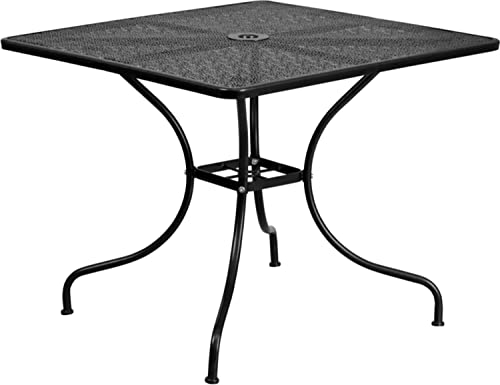
For a permanent, architectural statement, a concrete outdoor table brings unmatched solidity and heat retention (which cuts both ways in summer). Concrete is heavy — verify your deck's structural load capacity before committing — but it is virtually indestructible and requires no sealing if properly finished. If you want the concrete look with a more refined edge, a concrete outdoor dining table with an umbrella hole combines durability with practical shade compatibility.
Material Comparison at a Glance
| Material | Maintenance Level | Weather Resistance | Weight & Stability | Best For |
|---|---|---|---|---|
| Teak / Acacia | Moderate — oil or seal annually | High when sealed | Medium to heavy | Natural look, long-term investment |
| Powder-coated Aluminum | Low — wipe clean | High (rust-resistant coating) | Light — easy to reposition | Low-maintenance daily use |
| Steel / Wrought Iron | Low to moderate — inspect finish | High with rust-proof finish | Heavy — wind-stable | Windy decks, classic styling |
| Composite / HDPE Resin | Very low — soap and water | High; UV-stabilized formulas best | Medium | Wood look without upkeep |
| Concrete / Stone | Very low — occasional rinse | Excellent | Very heavy — check deck load | Permanent, architectural statement |
Understanding Quality Tiers
Rather than comparing across arbitrary numbers, it helps to think in tiers. Each tier represents a different balance of construction, materials, and longevity — and each suits a different type of buyer.
Starter Tier
Lightweight frames, thinner tabletop stock, and simpler joinery. Suitable for occasional use, renters, or buyers testing how much they will actually use a deck table. Expect shorter lifespan and more frequent replacement.
Balanced Tier
Solid aluminum or mid-grade wood construction with better coatings and reinforced joints. This tier is where most households land — it balances durability, comfort, and design flexibility.
High-End Tier
Teak, marine-grade aluminum, or heavy composite builds with precision joinery and premium finishes. These tables are designed for daily year-round use and typically carry longer warranties.
Flagship Tier
Architectural concrete, solid stone, or custom hardwood builds with commercial-grade fasteners. These are permanent installations — think of them as built-in outdoor furniture.
The jump from entry-level to mid-range usually delivers the most noticeable improvement in stability and finish quality, while premium and flagship tiers are about longevity and material prestige. If your deck is exposed to harsh weather, investing a tier higher than you initially planned is often the more efficient long-run decision.
Choosing the Right Shape
Shape is about more than aesthetics — it dictates conversation flow and traffic patterns. Round tables encourage inclusive conversation and fit neatly into square or compact footprints. Rectangular tables maximize seating along a wall or railing and suit formal dining. Oval tables soften rectangular footprints and are easier to walk around. Square tables work well for four-person setups and double as game tables.
If you plan to add shade, confirm that your chosen table accommodates an umbrella. A counter-height outdoor table with an umbrella hole is a practical option for casual decks, while standard-height dining tables with center holes remain the most versatile. Pairing a table with a dedicated deck umbrella with base keeps shade stable on breezy days.
Think about the surrounding furniture too. A deck table rarely lives alone — it sits alongside deck chairs, a deck bench, or a deck storage box for cushions and serving pieces. Mapping the full layout before buying the table prevents the frustrating situation where a great table simply does not fit the remaining space.
Build Quality Checklist
What to Inspect Before You Commit
- Frame thickness and weld quality: Look for clean welds and thick-gauge metal; thin frames flex and eventually fail at joints.
- Tabletop attachment: The top should be secured with proper fasteners, not just adhesive or friction. Check for expansion gaps on wood and composite tops.
- Finish coverage: Powder coating should be uniform, including underneath the table and inside legs where water collects.
- Hardware material: Stainless steel or zinc-plated fasteners resist rust far better than untreated steel.
- Weight distribution: A well-built table sits flat without wobble. Test this if shopping in person; if buying online, check reviews for stability mentions.
- Umbrella compatibility: If shade matters, verify hole diameter and whether a stabilizing base is required.
- Warranty terms: Frame warranties of several years indicate manufacturer confidence; finish warranties are usually shorter.
Deck Tables for Small Spaces
Small decks demand discipline. The most effective strategy is to choose a table that serves multiple functions: a bistro table that doubles as a workspace, a drop-leaf design that expands only when guests arrive, or a bench-and-table combo that tucks seating under the surface. Wall-mounted or folding tables are worth considering for balconies and narrow decks where every inch counts.
Vertical storage matters just as much as table size. A deck box or deck storage solution keeps cushions, covers, and serving items out of the way, effectively expanding your usable table area. For a broader set of layout ideas, see our guide to small patio design — many of the same principles apply directly to compact decks.
Keeping Your Deck Table in Shape
Maintenance needs vary by material, but a few habits extend the life of any deck table. Wipe spills promptly, especially on wood and composite surfaces where stains can set. Cover the table during off-season months, and store removable components indoors if your climate brings hard freezes. For wood, reapply oil or sealer according to the manufacturer's schedule — usually annually. For metal, touch up any chips in the coating before rust has a chance to take hold.
If your deck is fully exposed, consider a fitted cover. A properly sized cover reduces UV fading, keeps debris out of umbrella holes, and prevents standing water from pooling on the surface. Our guide to covering patio furniture for winter covers the full routine in more detail.
Frequently Asked Questions
What size deck table fits four people comfortably?
A 42- to 48-inch round table or a 60-inch rectangular table is the standard recommendation for four diners. Allow at least 24 inches of table width per person and keep 36 inches of clearance on seating sides for chair pull-out.
Is wood or metal better for a deck table?
Wood offers warmth and repairability but requires periodic sealing. Metal — especially powder-coated aluminum — is lower maintenance and lighter to move. Choose wood if you value natural aesthetics and don't mind seasonal upkeep; choose metal for a set-and-forget approach.
Can I put a concrete deck table on a wooden deck?
Only if your deck is rated for the load. Concrete tables are extremely heavy and concentrate weight on a small footprint. Consult a structural professional before placing one on an elevated wooden deck, and consider a lighter alternative if the load rating is uncertain.
How do I stop my deck table from wobbling?
Wobble usually comes from uneven deck boards or a table with adjustable feet that haven't been leveled. Use furniture shims or built-in levelers, and confirm all fasteners are tight. On older decks, check for warped boards under the table legs.
Do deck tables need an umbrella hole?
Not necessarily, but an umbrella hole adds significant versatility if your deck gets direct sun. If you choose a table without a hole, a freestanding umbrella with a weighted base provides similar shade without altering the table.
How often should a wooden deck table be treated?
Most wooden deck tables benefit from oiling or sealing once per year, ideally before the wet season. Tables in full sun or coastal climates may need treatment more frequently. Composite and metal tables generally need only routine cleaning.
Choosing a deck table is ultimately about matching three things: the space you have, the way you actually use your deck, and the level of maintenance you are willing to take on. Get those aligned, and the table becomes an investment you will appreciate every season — not just on the day it arrives.